
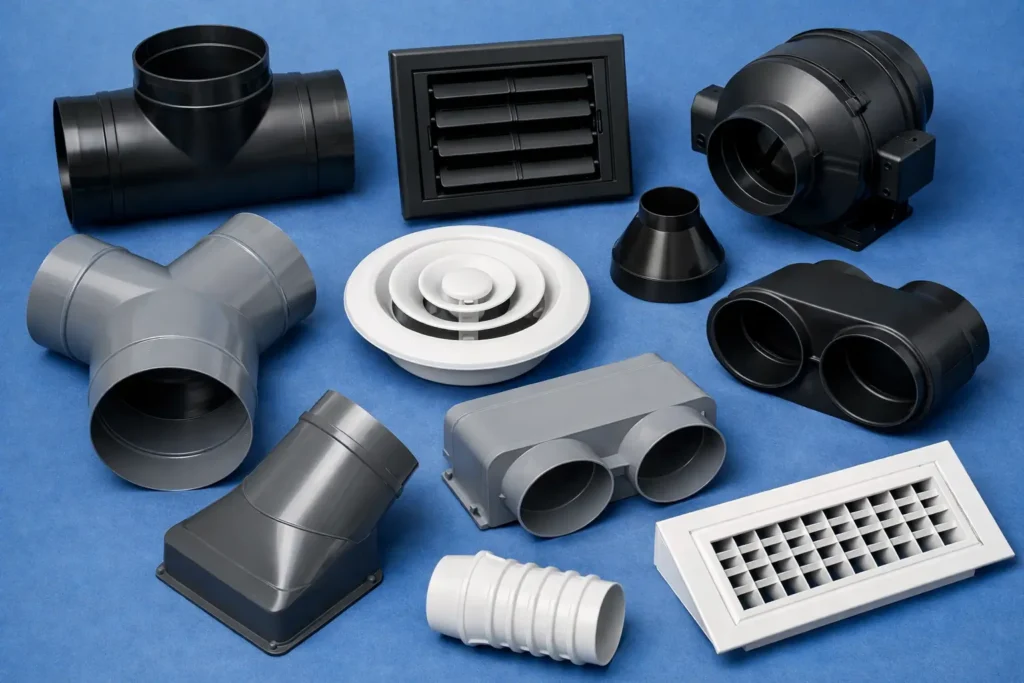
– Metal-to-plastic conversion can reduce component weight by 30–50%, directly extending EV range and improving fuel efficiency.
– Long Glass Fiber Reinforced Polypropylene (LGF-PP)** is the industry standard for replacing aluminum in structural HVAC bases.
– Transport refrigeration manufacturing utilizes microcellular foaming (MuCell) to lower density while maintaining stiffness.
– Vibration damping is a hidden benefit of plastic; it absorbs road shock better than rigid sheet metal, reducing fatigue failure.
Why Lightweighting Matters in Transport HVAC
In residential HVAC, a unit sits on a concrete pad. In transport refrigeration manufacturing, the unit sits on a moving roof, vibrating at 60Hz, exposed to road salt, UV radiation, and freezing rain.
For internal combustion trucks, weight reduction equals fuel savings (approx. 0.5% fuel saved for every 1% weight reduction). For Electric Buses and Light Rail, the stakes are higher: every kilogram saved on the HVAC unit equals extended range or increased passenger capacity.
As a manufacturer, I have overseen the shift from stamped steel and aluminum housings to injection-molded structural plastics. This is not just cosmetic; it is a structural revolution.
Key Parameters: Metal vs. Engineered Plastic
When evaluating vehicle HVAC components, we look at density, but also stiffness and fatigue resistance.
| Parameter | Aluminum (5052/6061) | Steel (Galvanized) | LGF-PP (30-40% Long Glass Fiber) | Impact on Transport |
|---|---|---|---|---|
| Density (g/cm³) | ~2.7 | ~7.8 | ~1.15 | Plastic is less than half the weight of aluminum. |
| Tensile Modulus | ~70 GPa | ~200 GPa | 6–10 GPa | Plastic requires ribbing/geometry to match metal stiffness. |
| Corrosion Resistance | Good (oxides) | Poor (requires coating) | Excellent (Native) | Plastics eliminate rust from road salt spray. |
| Vibration Damping | Low (Transmits noise) | Low | High | Plastic absorbs road noise, making the cabin quieter. |
Step-by-Step: The Metal-to-Plastic Conversion Process
In a recent project for a lightweight HVAC rooftop unit for an electric city bus, we replaced the aluminum base frame with a molded component. Here is the workflow:
1. Material Selection (The "Skeleton")
We chose Long Glass Fiber Polypropylene (LGF-PP). Unlike short fibers, long fibers (10-12mm) form an internal skeleton.
- Używamy It offers high impact strength (for hail or debris) and resists "creep" (deformation under constant load) at elevated rooftop temperatures (70°C+).
2. Topology Optimization (The Design)
You cannot just copy the metal design. Metal relies on uniform thickness; plastic relies on geometry.
- Action: We used CAD simulation to remove material from low-stress areas and added honeycomb ribbing in high-stress zones.
- Result: We reduced the part volume by 40% compared to the metal equivalent.
3. Manufacturing Process (MuCell / Foaming)
To further reduce weight, we used microcellular injection molding (MuCell).
- Process: We injected supercritical nitrogen gas into the melt. As the plastic enters the mold, the gas expands, creating a micro-foam core with a solid skin.
- Benefit: This reduced the part density by another 10–15% and eliminated sink marks on thick structural ribs.
4. Assembly Integration
We integrated 20+ fasteners into the mold design. Instead of welding brackets for the condenser fan, the mounting points were molded directly into the base.
- Time Savings: Assembly time dropped from 45 minutes (riveting/welding) to 12 minutes.
This is incorrect. While plastics have a lower modulus than steel, materials like Long Glass Fiber Polypropylene (LGF-PP) have excellent fatigue resistance. They dampen vibrations rather than transmitting them, often outlasting welded metal joints that suffer from fatigue cracking.
Injection molding allows complex geometries. A single molded housing can replace a metal assembly consisting of a shell, four brackets, gaskets, and twenty rivets. Eliminating the hardware and overlap areas significantly reduces total mass.
Advantages and Disadvantages of Molded Transport HVAC
| Strategy | Advantages | Disadvantages |
|---|---|---|
| Automotive Injection Molding | Highest weight savings. Complex aerodynamics (better airflow). Corrosion proof. | High initial tooling cost ($50k – $200k). Hard to modify design once mold is cut. |
| Thermoforming (ABS/TPO) | Lower tooling cost. Good for large covers (bus roofs). | Limited structural strength. Wall thickness variations. Cannot mold complex internal ribs. |
| Sheet Metal (Traditional) | No tooling cost (laser cut/bend). High fire resistance (steel). | Heavy. Prone to corrosion. Labor-intensive assembly. |

Practical Tips for Fuel Efficiency HVAC Design
- Beware of "Creep" in Mounting Points: Plastic flows over time under load. If you bolt a heavy compressor directly to a plastic base, the plastic will compress, and the bolt will loosen. Use metal compression limiters (inserts) in the mold to take the torque load.
- UV Stabilization is Critical: Transport units live outside. Standard white ABS turns yellow and brittle in 6 months. We use ASA (Acrylonitrile Styrene Acrylate) or UV-stabilized PP with carbon black for external covers to ensure 10+ year life.
- Draft Angles for Aerodynamics: When designing for automotive injection molding, use the draft angle (taper) to your advantage. A well-designed shroud not only releases from the mold but reduces drag on the vehicle, further contributing to fuel efficiency.
HVAC Application Scenarios
- Refrigerated Truck (Reefer) Evaporators: We use Zrewolucjonizuj HVAC dzięki inteligentnej technologii for the internal evaporator housings. It resists the freezing/thawing cycles and is food-safe (FDA compliant) for transporting perishables.
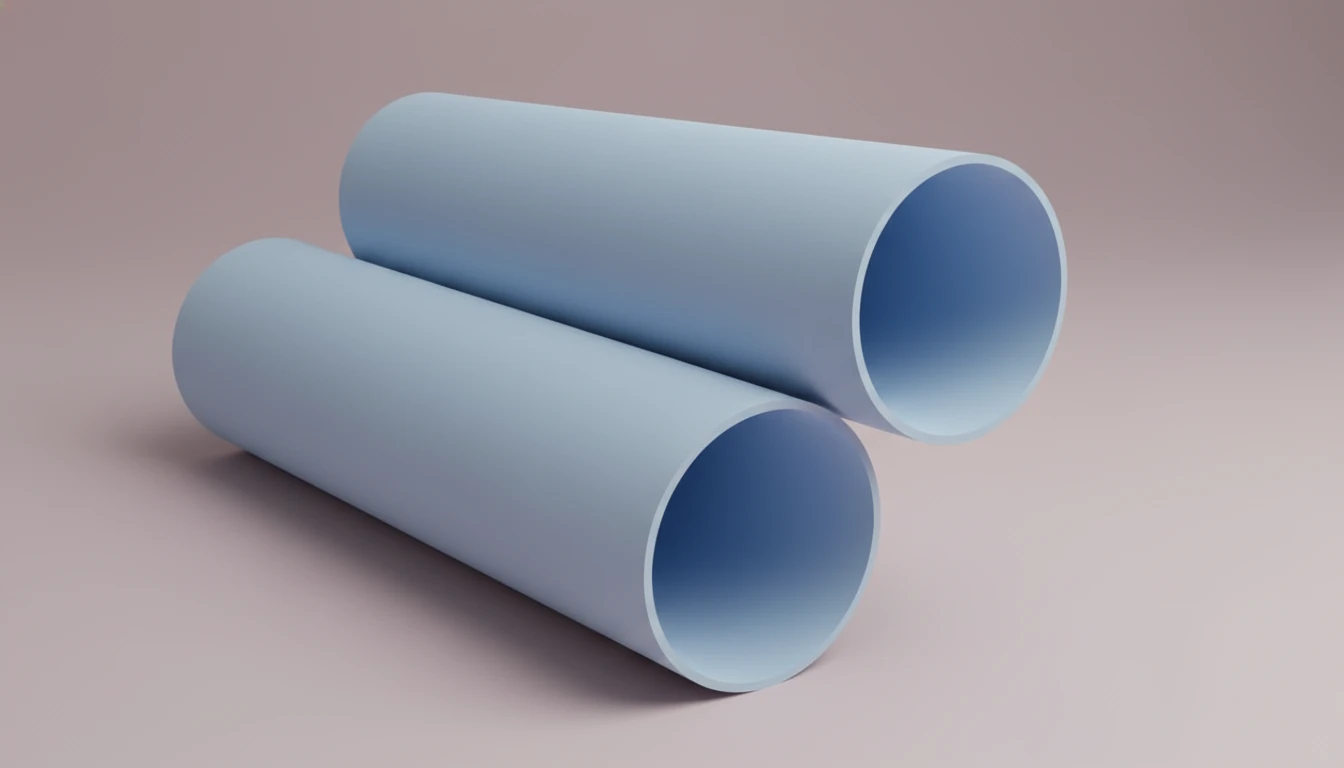
- Rail/Train Ducting: Here, weight is secondary to fire safety. We use Flame Retardant PC/ABS that meets EN 45545-2 (European Railway Standard) for smoke and toxicity.
- Bus Rooftop Covers: Large, thin-wall parts made via Structural Foam Molding. These cover the entire mechanism, offering aerodynamic streamlining to reduce the bus’s drag coefficient.
In transport HVAC, volumes are lower (5,000–20,000/year). However, the savings in labor (assembly) and the reduction in part weight (fuel savings value to the customer) often justify the tooling investment at volumes as low as 2,000 units/year.
By using gas expansion to pack the mold rather than high holding pressure, MuCell reduces internal stress in the plastic. This results in significantly flatter parts, which is critical for large, flat HVAC covers and bases.
FAQ: Transport HVAC Manufacturing
Can plastic withstand the heat of a diesel engine compartment?
For "under-hood" HVAC components (like compressor brackets), standard PP melts. We use PA66 (Nylon) with 30-50% glass fiber, which handles temperatures up to 130°C–150°C easily.
How do we repair a plastic housing if a truck hits a low bridge?
This is a disadvantage. You cannot hammer it back into shape like steel. However, thermoplastic welding (hot air or ultrasonic) works for cracks. Major damage usually requires part replacement, which is modular and faster than metal repair.
Does lightweighting compromise sound insulation?
Thin plastic transmits sound. To counter this, we often "overmold" or bond TPE (Thermoplastic Elastomer) or attach heavy-mass vinyl pads to the inside of the plastic shell to block compressor noise.
Is tooling expensive for large bus AC parts?
Yes. A mold for a 2-meter long bus cover can cost $150,000. To mitigate this, we often use "Family Molds" or explore Low-Pressure Molding technologies which allow for cheaper aluminum molds.
What about fire compliance for public transport?
This is the biggest hurdle. Plastics are fuel. For rail and bus, we must use heavily modified grades (V-0 rated, low smoke). These additives increase density slightly and cost more, but are non-negotiable for safety.
Technical Summary
Lightweighting in transport refrigeration manufacturing is a sophisticated engineering challenge. It is not simply about swapping steel for plastic; it requires a complete redesign using ribbing, topology optimization, and advanced materials like LGF-PP. By leveraging automotive injection molding techniques such as structural foam and MuCell, manufacturers can deliver HVAC systems that are 40% lighter, corrosion-immune, and vibration-damped, directly contributing to the fuel efficiency HVAC goals of modern logistics and transit fleets.





