
0.90 – 1.05.
Traditionally, heavy gauge steel was relied upon to block noise via the "Mass Law" (more mass = less sound transmission). However, in modern quiet HVAC design, we are fighting a different enemy: structure-borne vibration and resonance.
This is where acoustic properties of plastics shine. Unlike steel, which rings like a bell when struck (or vibrated by a compressor), polymers have high internal damping. They absorb vibrational energy and turn it into negligible heat rather than re-radiating it as noise.
This article analyzes the physics behind HVAC noise reduction using polymer housings and shares my experience in NVH injection molding (Noise, Vibration, and Harshness) to lower decibel ratings.
Key Takeaways
- Polymers possess a higher "Loss Factor" (Tan Delta) than metals, meaning they dissipate vibration rather than transmitting it.
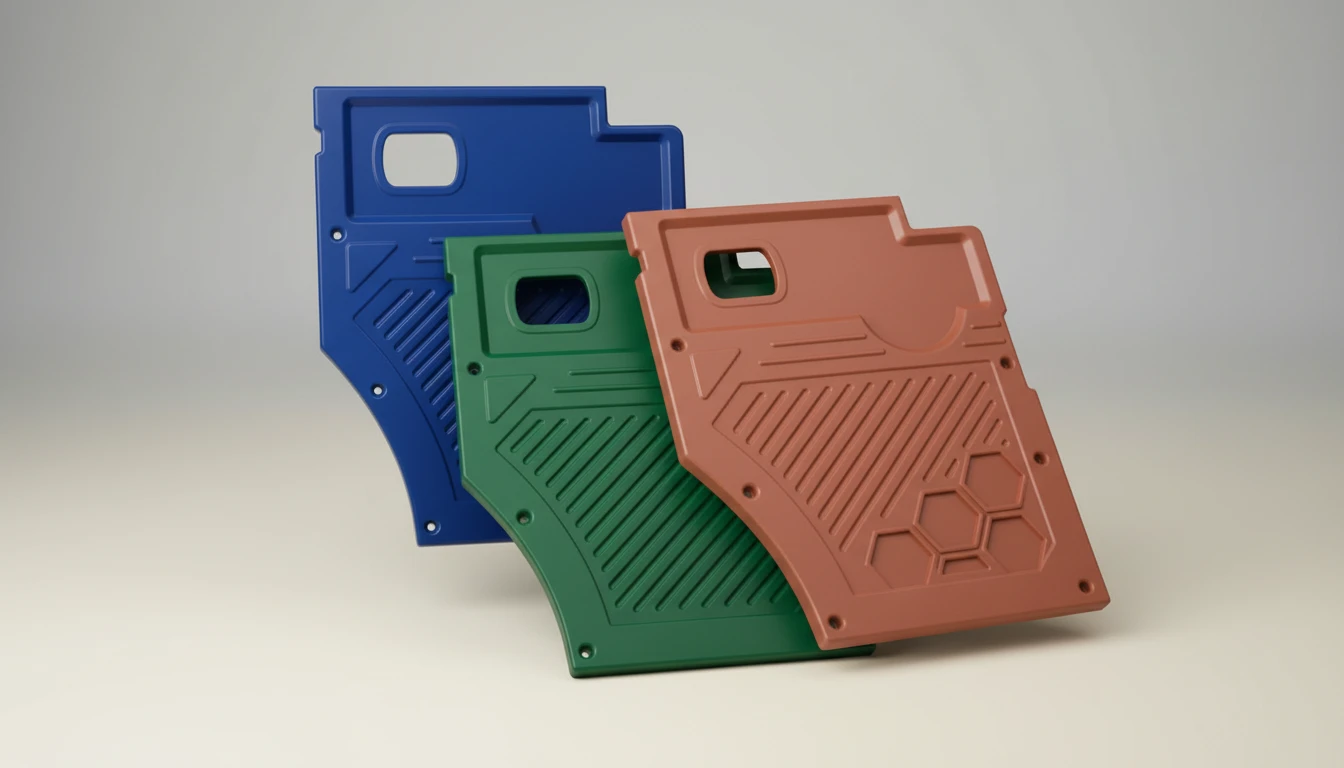
- Designing complex rib patterns in plasticbreaks up large flat surfaces, preventing the "drum skin" effect common in sheet metal.
- Mineral fillers (like Talc or Glass) can be adjusted to tune the resonant frequency of the part away from the compressor’s operating frequency.
- Overmolding TPE (thermoplastic elastomers) directly onto rigid housings creates integrated vibration isolators, reducing assembly costs.
What Is the Acoustic Difference Between Metal and Plastic?
To understand vibration dampening materials, we must distinguish between two acoustic concepts:
- Sound Transmission Loss (STL): The ability to block airborne sound from passing through a wall. Heavy metal wins here.
- Structural Damping (Internal Loss): The ability to stop the material itself from vibrating. Plastic wins here.
In HVAC, most annoying noises are structural. The motor vibrates, shaking the chassis, which shakes the side panels. If the side panels are steel, they resonate and amplify the sound. If they are plastic, the molecular chains rub against each other (viscoelasticity), "killing" the vibration before it becomes audible noise.
Key Parameters: Metal vs. HVAC Plastics
When we select materials for NVH (Noise, Vibration, Harshness), we look at the Loss Coefficient (or Damping Factor). A higher number means better damping.
| Parameter | Steel / Aluminum | Polypropylene (PP) | ABS (Acrylonitrile Butadiene Styrene) | HVAC Impact |
|---|---|---|---|---|
| Loss Coefficient ($\eta$) | 0.001 – 0.002 | 0.06 – 0.10 | 0.02 – 0.04 | Plastic is 50x–100x better at killing vibration "ring." |
| Density (g/cm³) | 7.85 (Steel) | 0.90 – 1.05 | Büyük, düz bir plastik yüzey, bir davul derisi gibi davranır. Kolayca titreşir. | Metal blocks airborne sound better; Plastic dampens structure-borne sound. |
| Young’s Modulus (GPa) | ~200 | 1.2 – 1.8 | 2.0 – 2.6 | Lower stiffness in plastic moves resonance to lower (less annoying) frequencies. |
| Design Freedom | Low (Stamping) | High (Molding) | High (Molding) | Molding allows stiffening ribs to kill "drumming" effects. |
How Does Injection Molding Solve Noise Issues? (Factory Case Study)
The "Singing" Wall Unit
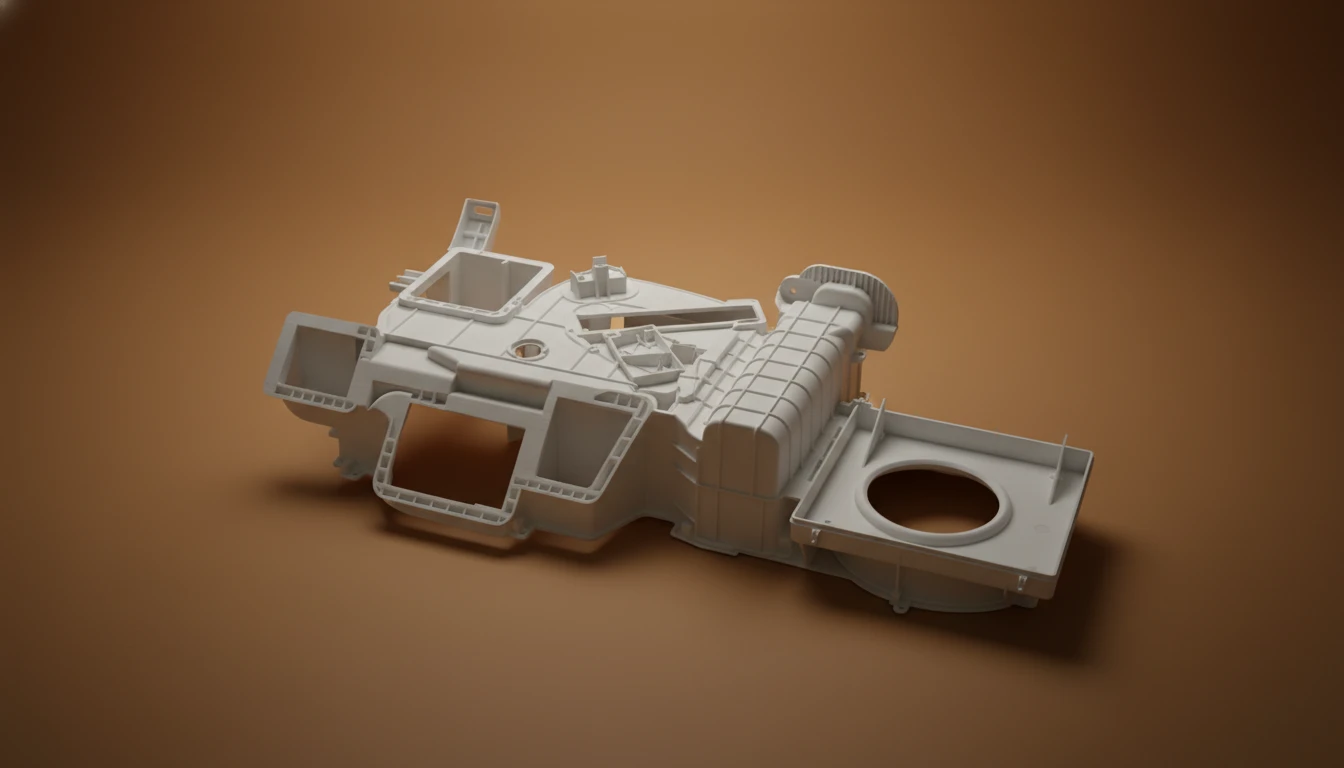
We were producing a high-wall mini-split unit. The original design used a stamped sheet metal front panel for a "premium" feel.
- The Problem: At specific compressor speeds (50Hz–60Hz), the metal panel hit its natural resonant frequency. It began to hum loudly, adding 4 dB to the overall noise rating.
- The Fix: We switched to an injection-molded HIPS (High Impact Polystyrene) panel.
- The Engineering:
- Material: The HIPS material naturally dampened the vibration.
- Ribbing: We added variable-spacing ribs on the backside. By making the spaces between ribs uneven, we prevented the formation of "standing waves."
- Result: The humming disappeared. The overall sound pressure level dropped by 3 dB, and the sound quality (psychoacoustics) became a dull "whoosh" rather than a metallic "hum."
Myth vs. Fact: Plastic Acoustics
While mass helps block airborne sound, simply thickening a plastic part can increase its stiffness, potentially pushing its resonant frequency right into the audible range of the fan or compressor. It is better to use damping fillers (like Talc) or engineered ribs than brute-force thickness.
Softer polymers (low modulus) generally have higher internal friction (viscoelasticity), which dissipates vibration energy as heat. Rigid, glass-filled plastics can sometimes 'ring' almost like ceramic or metal if not designed correctly.
What Are the Advantages and Disadvantages of Plastic for NVH?
| Material Approach | Advantages | Polikarbonat (PC) |
|---|---|---|
| Plastic Housings | • High internal damping (no metallic ringing) • Ability to mold non-flat shapes (diffuses sound waves) • Can overmold soft seals (TPE) to isolate parts • No rust (rust changes acoustic properties) |
• Lower mass allows low-frequency "rumble" to pass through • High-frequency noise (whining) can penetrate thin walls • Requires complex rib design to prevent panel flutter |
| Metal Housings | • High mass blocks airborne noise effectively • Cheap for large, simple flat shapes |
• Low damping (rings like a bell) • Joints can loosen and rattle over time • Requires secondary "sound blankets" or bitumen pads |
Practical Tips for Designing Quiet Plastic Parts
From the perspective of an NVH injection molding engineer, here is how we optimize parts before the mold is cut:
1. Disrupt the "Drum Skin"
A large, flat plastic surface acts like a drum skin. It vibrates easily.
- Technique: HVAC Sessiz Tasarım Plastik ile: Gürültüyü Etkili Bir Şekilde Azaltın.
2. The Sandwich Technique (2K Molding)
For premium air purifiers or quiet fans, we use 2-Shot molding.
- Process: We mold a rigid structural shell (PP-GF30) and overmold a soft TPE skin on the inside.
- Effect: The TPE layer acts as a Constrained Layer Damper (CLD). It absorbs energy as the rigid layer tries to vibrate. This mimics expensive sound-deadening mats used in cars but is done automatically in the mold.
3. Tune the Frequency via Fillers
If a plastic fan shroud is resonating with the motor (e.g., at 120Hz), we change the material density.
- Adjustment: Adding 20% Talc filler increases the density and changes the stiffness. This shifts the natural frequency of the part away from 120Hz. We solve the noise issue without changing the mold geometry.
HVAC Application Scenarios
-
Centrifugal Fan Volutes (Scrolls):
- Replaced galvanized steel with Glass-Reinforced Polypropylene. The plastic absorbs the air turbulence noise (blade pass frequency) much better than steel, which tends to reflect high-frequency noise down the duct.
-
Compressor Grommets & Feet:
- Instead of bolting the compressor to the metal chassis, we mount it on TPU (Thermoplastic Polyurethane) vibration isolators that are snap-fitted into the plastic base pan. This "decouples" the noise source from the housing.
-
Air Return Grilles:
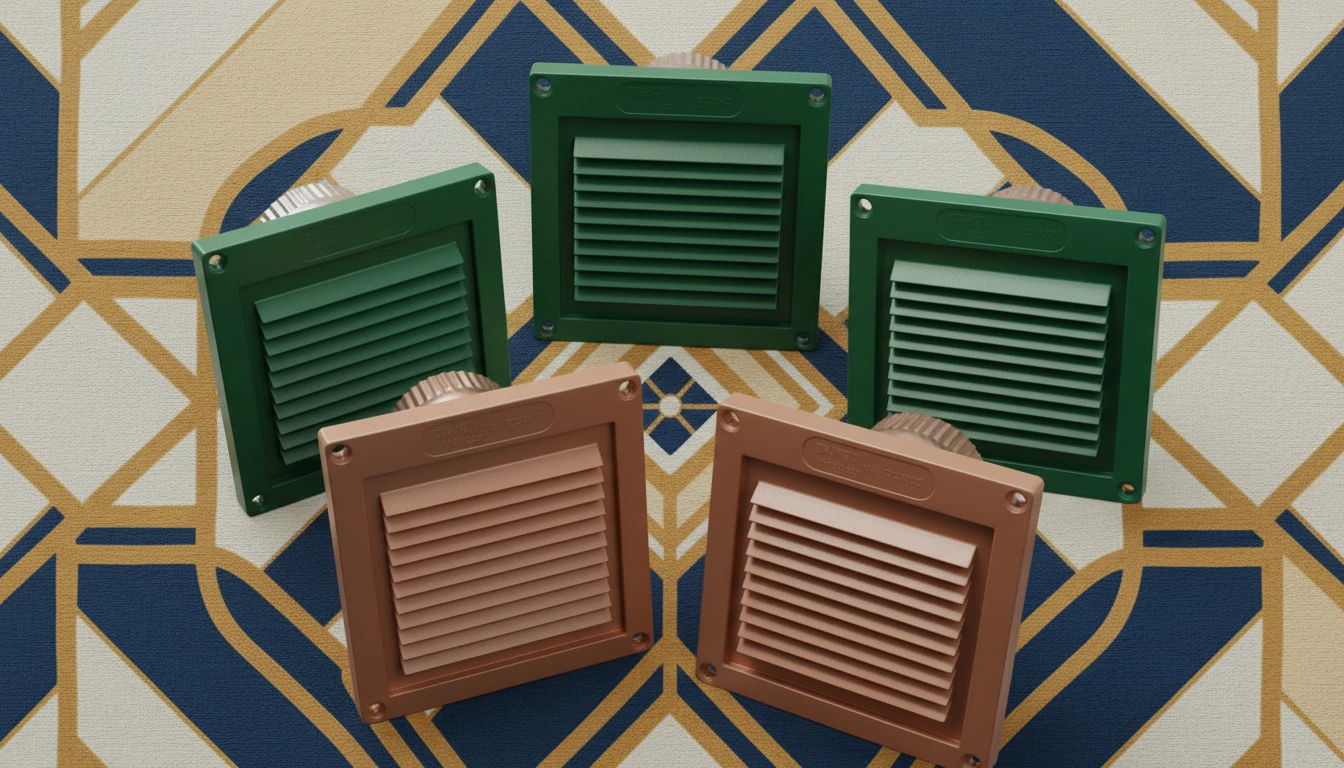
- Using ABS allows for airfoil-shaped louvers. Metal louvers are usually flat (stamped). Airfoil shapes reduce air turbulence, which is the primary source of "wind noise" in HVAC systems.
Frequently Asked Questions (FAQ)
1. Does plastic block compressor noise as well as metal?
For blocking airborne noise (the direct sound you hear), metal is slightly better due to its weight. However, plastic is far superior at stopping regenerated noise (the casing itself shaking and making noise). For the best result, we use a plastic housing lined with a heavy damping pad (bitumen) or a dense foam.
2. Which plastic material is best for sound dampening?
Polypropylene (PP) is generally better than ABS or PC because it is softer and has a semi-crystalline structure that absorbs energy. PP filled with 20% Talc (PP-TD20) is the industry workhorse for quiet fan housings and blower wheels.
3. How do you prevent plastic parts from rattling against each other?
We design "crush ribs" or flexible interference fits in the mold. When two plastic parts mate, these tiny ribs deform slightly, ensuring a tight fit that leaves no room for movement or rattling, even as the unit ages.
4. Can mold flow lines cause acoustic issues?
Indirectly, yes. If a part has severe flow lines or poor knit lines, it is structurally weaker. Under high vibration, these weak points can flex more than intended, leading to unpredictable harmonics or even stress-cracking which causes clicking sounds.
5. What is the role of Overmolding in noise reduction?
Overmolding allows us to place soft rubber (TPE) exactly where parts touch—like where a fan motor mounts to the housing. This integrated rubber gasket acts as a shock absorber, isolating the vibration at the source so it never travels to the exterior shell.

Technical Summary
In the pursuit of HVAC noise reduction, plastic housings offer a distinct advantage over metal through structural damping. While metal relies on mass to block sound, polymers like Polypropylene (PP) and ABS utilize their viscoelastic molecular structure to dissipate vibration energy as heat, effectively preventing the housing from becoming a speaker. By leveraging NVH injection molding techniques—such as tuning resonant frequencies with mineral fillers, designing non-uniform ribbing to break standing waves, and integrating TPE isolators—manufacturers can significantly lower the operating decibels of HVAC equipment. The result is a unit that not only meets strict acoustic standards but feels more solid and premium to the end-user.





