

- ASHRAE standards shape HVAC plastic component decisions indirectly through airflow, temperature, safety, and long-term performance requirements.
- Engineers should translate each standard into material, tolerance, sealing, and validation targets before requesting tooling quotes.
- For molded HVAC plastics, compliance is rarely about one standard alone; it usually combines ASHRAE requirements with UL94, internal specs, and field conditions.
- The best suppliers can explain how ventilation, condensation, heat, and dimensional drift affect plastic parts long before production release.
I often see engineers mention ASHRAE in a specification review without clearly connecting it to the plastic part in front of them. That is where preventable confusion starts. ASHRAE standards is the industry framework that defines performance expectations for ventilation, thermal conditions, and energy behavior in HVAC systems. Plastic components do not certify a building alone, but they absolutely support or weaken compliance in service. In our factory, the practical question is never whether a molded part is “ASHRAE compliant” by itself. The real question is whether its material, geometry, sealing, and tolerance behavior help the overall system meet the standard under real operating conditions.
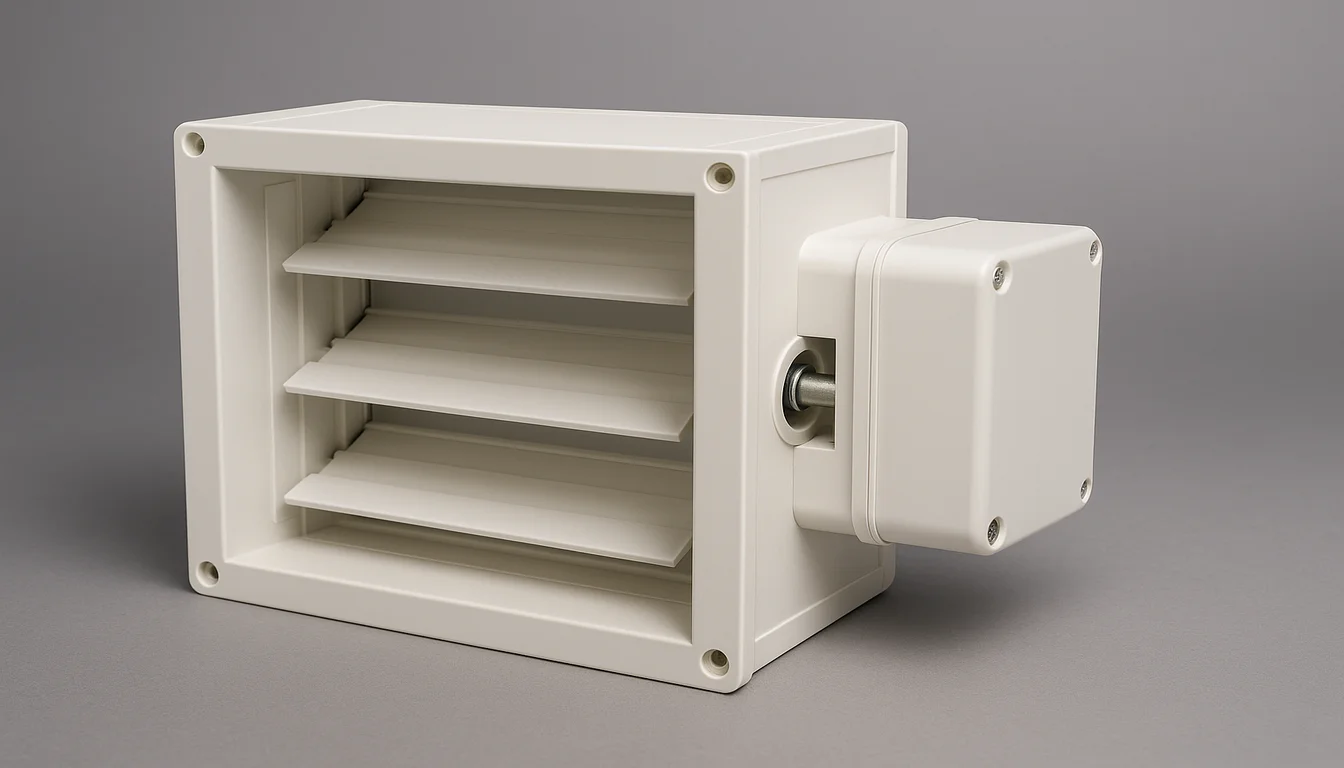
Why do ASHRAE standards matter when you design HVAC plastic components?
ASHRAE standards matter for 4 reasons: airflow, temperature exposure, durability, and system-level safety. Plastic parts in HVAC systems are not passive decorations. Diffusers guide air, housings protect electronics, clips secure assemblies, and drain-related components manage moisture. When a standard affects ventilation rate, leakage, thermal comfort, or energy efficiency, the plastic component design usually feels that pressure immediately.
Take ASHRAE 62.11 as an example. It does not tell you which resin to use for a diffuser frame, but it does make airflow consistency and ventilation delivery important. If a molded vane distorts, leakage increases, or an access cover cannot seal properly, the system may drift away from the intended ventilation performance. The same logic applies to energy-oriented requirements. A housing that warps near a warm motor can affect fit, noise, or sealing, which in turn affects the system behavior the engineer was trying to preserve.
“ASHRAE standards often influence plastic part design indirectly through system performance targets.”True
Ventilation, leakage, temperature, and energy goals translate into material and geometry decisions for molded HVAC components.
“ASHRAE standards only matter to ducts, coils, and controls, not to molded plastic parts.”False
Plastic diffusers, housings, drains, clips, and dampers all support the system functions that standards are written to protect.
That is why we treat standards review as part of design input, not paperwork after the mold is built. If the engineering team already knows the component’s temperature window, installation zone, cleaning exposure, and sealing role, then the molding strategy becomes much clearer from the start.
Which ASHRAE standards influence plastic parts most in real HVAC applications?
In real HVAC applications, 5 standard families influence plastic parts most: 62.1, 62.2, 90.1, 55, and equipment-specific requirements. Commercial projects usually lean hardest on ASHRAE 62.1 for ventilation, while residential assemblies often connect more to 62.2. ASHRAE 90.1 matters when leakage, insulation interfaces, or equipment efficiency are sensitive to part fit. ASHRAE 55 matters when airflow distribution components influence thermal comfort. None of these standards names a specific molded resin, but together they define the operating envelope around that resin.
| Standard | System focus | Plastic component impact | Common factory concern |
|---|---|---|---|
| ASHRAE 62.1 | Commercial ventilation | Diffusers, dampers, housings, access parts | Leakage and airflow consistency |
| ASHRAE 62.2 | Residential ventilation | Fan housings, grilles, duct accessories | Moisture and long-term fit |
| ASHRAE 90.1 | Energy efficiency | Seals, covers, duct accessories | Dimensional stability and assembly loss |
| ASHRAE 55 | Thermal comfort | Air distribution plastics | Vane geometry and repeatability |
From a molding point of view, the engineer should convert those standards into measurable part requirements. That usually means defining operating temperature, acceptable leakage, load on fasteners, UV exposure, and service life expectations. We also ask whether the part sits near electronics, condensate, or cleaning chemicals, because system compliance can be undermined by a component that becomes brittle, swells, or creeps in service.
If the part belongs to a broader custom assembly path, I often point teams to our overview of hvac injection molding. It helps connect system requirements to manufacturing limits before drawings are frozen.
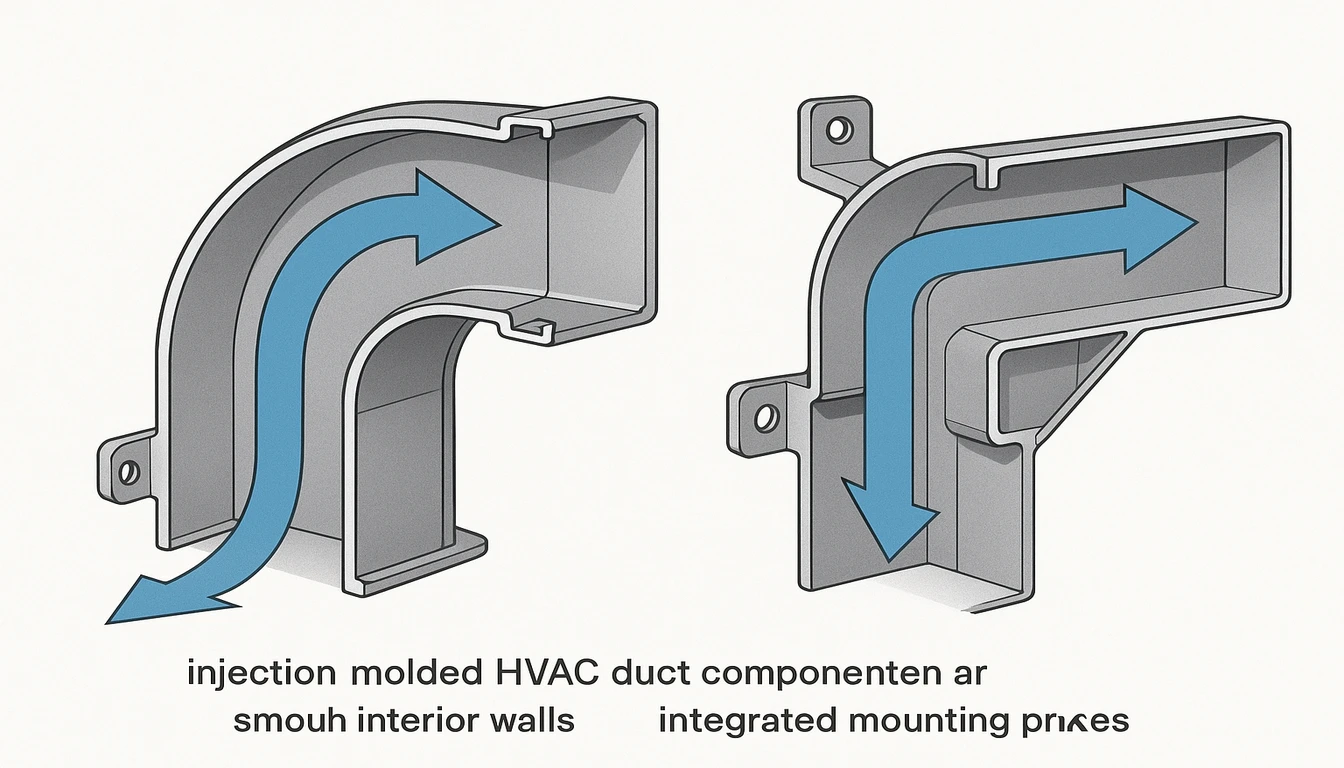
How do engineers translate ASHRAE requirements into material selection?
Engineers should translate ASHRAE requirements into 4 material filters: thermal stability, flame behavior, moisture resistance, and dimensional control. Standards usually describe system outcomes, but resin choice decides whether the plastic part supports those outcomes over time. If the component lives near warm airflow or electrical hardware, the conversation often moves from commodity ABS toward PC-ABS or reinforced nylon. If moisture cycling matters, water absorption and creep become part of the review immediately. In our factory, we commonly review operating windows such as 60°C to 85°C cabinet exposure and dimension targets like ±0.10 mm on sealing-related features before approving the resin path.
This is also where UL942 ASHRAE-Normen für HVAC-Kunststoffe | HVACore.
For example, a lightly loaded interior diffuser detail may use a simpler resin than a structural actuator bracket or motor-adjacent housing. Different HVAC part families may legitimately use very different material strategies across the same system, depending on heat, stiffness, and service load.
What design details usually decide whether a molded part holds performance in service?
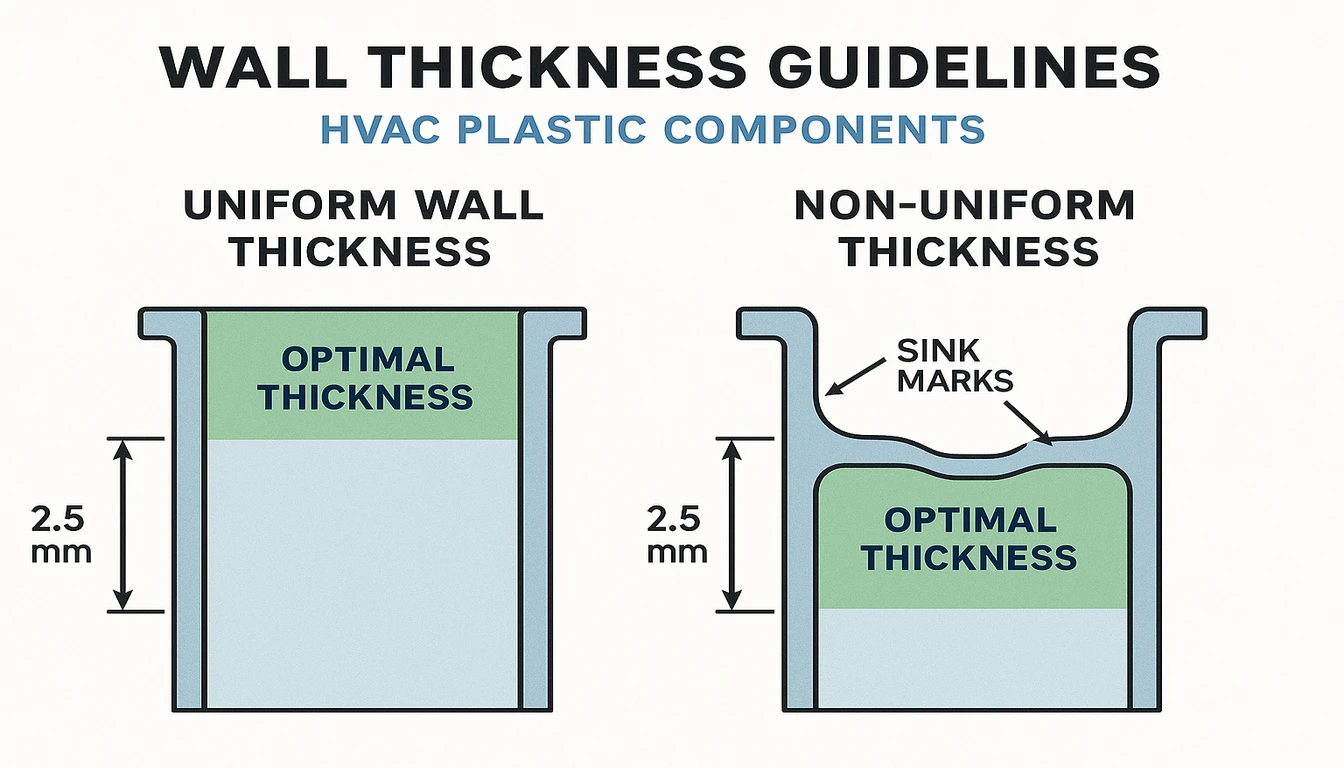
The 5 design details that matter most are wall balance, rib ratio, sealing geometry, fastening method, and thermal expansion allowance. Engineers sometimes focus on the standard number and forget the tiny molded features that actually preserve function. A plastic damper blade or housing flange does not fail because someone ignored the word ASHRAE. It fails because the design did not account for creep, heat, or assembly stress over time.
One common issue is not allowing enough room for coefficient of thermal expansion3. Plastics move more than metals as temperature changes, so a housing that looks perfect at room temperature can bind, leak, or squeak in service. Another issue is aggressive rib design. When ribs exceed about 60 percent of nominal wall thickness, sink and local stress become harder to control. That may not show up in a basic dimensional report, but it will show up in cosmetic and fit complaints later.
We also pay attention to sealing interfaces in duct and enclosure components. If a part has to keep airflow predictable, then flatness, gasket compression, and screw sequence all matter. That is why prior experience with ductwork components and damper assemblies transfers well into standards-driven reviews.
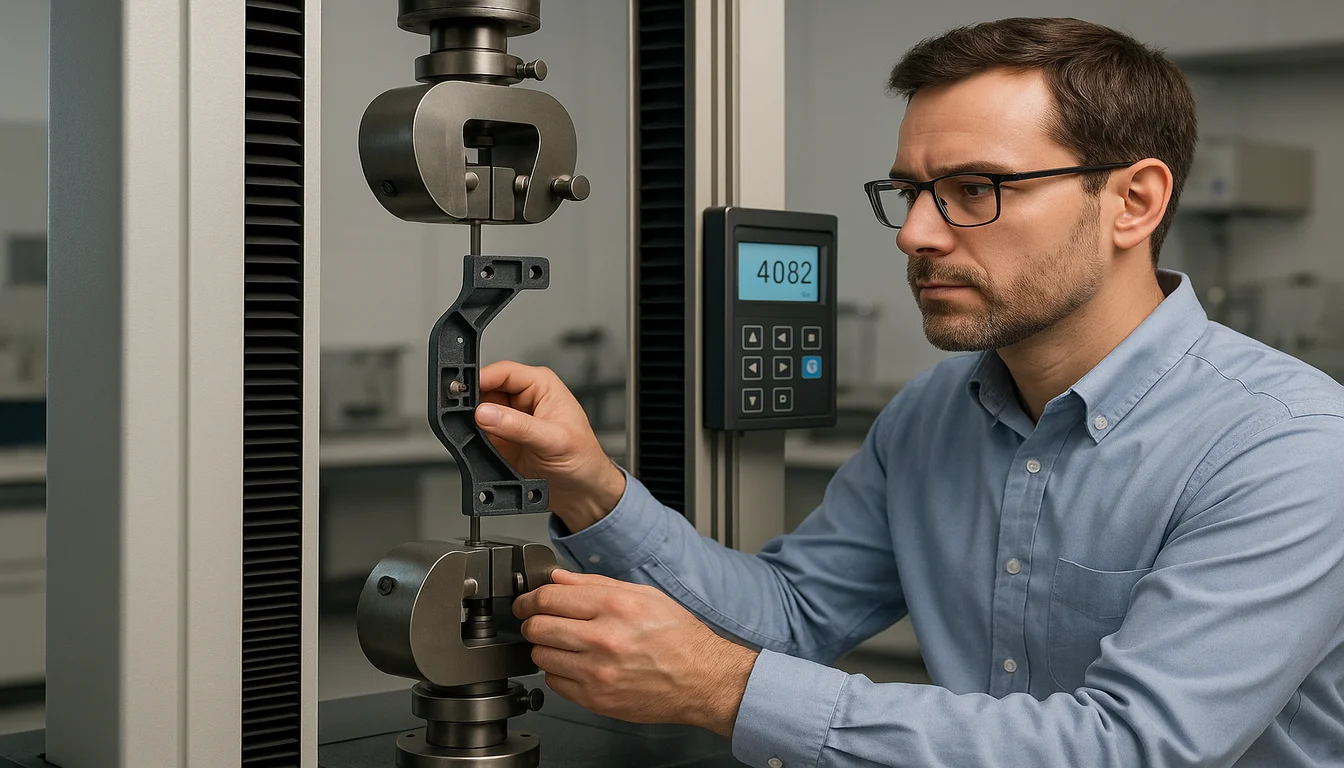 heat aging4 flame resistance and dimensional stability” style=”max-width:100%;height:auto;” />
Which tests should suppliers run before approving HVAC plastic components?
A practical approval plan needs 6 checks: dimensions, assembly, heat aging, appearance, traceability, and function tests. If the part supports airflow or sealing, we also want a leakage or fit verification linked to the final assembly. The exact list changes by component, but the pattern should stay disciplined.
heat aging is especially important for plastic parts near warm air paths, motors, transformers, or rooftop enclosures. A part that passes T1 at 23°C may shift after time at 70°C or more, especially if the design has residual stress or poor support. We normally ask the customer to define the expected use condition first, then build the validation plan around it instead of using a generic checklist.
At HVACore, we usually separate drawing approval from service approval. A part can be dimensionally correct and still fail the application after thermal cycling or assembly load. On mature HVAC programs, that extra validation step has saved rework on housings, grilles, and snap-fit features that looked acceptable in the first report but drifted under real-use stress. We also watch repeat issues such as snap-fit relaxation after 72-hour heat exposure and vane angle drift beyond roughly 1 degree on airflow-sensitive parts.
“Dimensional approval alone is not enough for standards-sensitive HVAC plastic parts.”True
Service conditions such as heat, airflow, vibration, and moisture can expose failures that static measurements miss.
“If a molded part fits at room temperature, no further validation is usually needed.”False
Thermal cycling, loading, and moisture can change fit and function long after the first assembly trial passes.
For new programs, rapid prototype learning can reduce rework before hard tooling. That is one reason we often recommend the approach discussed in rapid prototyping HVAC when the part carries compliance-sensitive risk.
How do standards affect tolerance strategy and dimensional control?
Standards affect tolerance strategy by prioritizing the few dimensions that protect airflow, sealing, vibration, and retention. The answer is usually not “everything equally.” A sealing land, vane angle, clip interface, or sensor mounting feature may carry most of the functional risk, while the outer flange or hidden wall can tolerate more movement. Good molders want that distinction early because the tool, gating, steel-safe plan, and inspection plan all depend on it.
In our factory, we try to keep critical expectations realistic. Plastics are not machined aluminum. Shrink variation, fiber orientation, and tool temperature all influence final geometry. If the drawing asks for uniform metal-style precision everywhere, the supplier will either overprice the tool or underdeliver in production. Better results come from defining the dimensions that tie directly to airflow, sealing, vibration, or assembly retention and controlling those with more discipline.
That approach also improves quality reporting. Instead of drowning the team in dozens of non-critical numbers, the supplier can show process capability on the few features that truly matter to standards-driven performance. That makes decisions faster and more honest.
What supplier questions should engineers ask before releasing tooling?
Before tooling release, engineers should ask 6 supplier questions covering resin, temperature, critical features, warpage, validation, and correction response. Engineers should ask 6 questions before tooling release: What resin grade was selected and why? What operating temperature was assumed? Which features are critical to function? How will warpage risk be controlled? What validation plan matches the application? What happens if the first sample misses the target? Those questions reveal whether the supplier understands the link between standards and molded reality.
I would also ask what the supplier already manufactures in adjacent HVAC categories. Experience with drains, covers, housings, clips, dampers, or multi-material sealing often changes how they review the new part. If waterproofing or insert capture may matter later, overmolding knowledge can be relevant even if the first tool is simple.
The point is not to turn every supplier call into a formal audit. The point is to make sure the molder is thinking about real service behavior, not only cavity count and press size. Standards-sensitive plastic components reward that kind of discipline.
How can HVAC teams reduce compliance risk during supplier approval?
HVAC teams reduce compliance risk with 5 habits: define environment, mark critical features, validate materials, separate approvals, and control changes. That sounds basic, but many problems start when teams skip one of those habits in the rush to lock pricing or meet a pilot build date.
We have learned that the biggest hidden risk is ambiguity. If the engineer says the part must survive “high temperature,” that is not usable for tooling or resin confirmation. If the real condition is 75°C intermittent with occasional cleaning exposure and a snap-fit load, that becomes a real design target. Standards create the framework, but the supplier still needs translated engineering language to manufacture the part correctly.
A lower-risk workflow is simple: define the standard context, convert it into material and geometry requirements, test the actual risk points, then lock the process only after the part proves itself in service-like conditions. It is slower by a little at the front and faster by a lot at the back.
Frequently asked questions about ASHRAE standards?
Was sind ASHRAE-Standards?
ASHRAE standards are published technical requirements and guidance documents used across the HVAC industry to define expectations for ventilation, thermal comfort, energy efficiency, and related system performance. For plastic component engineers, the key point is that these standards shape the environment the part must survive and support. A molded part is rarely certified by the standard alone, but its geometry, sealing, and material behavior can strongly affect whether the complete HVAC system performs as intended. For component engineers, the value is that standards convert broad building expectations into concrete design limits and validation questions.
Wie funktionieren ASHRAE-Standards?
ASHRAE standards work by setting performance criteria for HVAC systems and building conditions, then leaving engineers and manufacturers to choose designs that can meet those criteria. That means plastic components are evaluated through their effect on airflow, leakage, fit, temperature stability, and service reliability. In practice, teams review the relevant standard, define what it means for the component, then choose material, tolerances, and test plans that support the final system. The standard creates the target. Engineering and manufacturing create the path.
Was sind die Vorteile der ASHRAE-Standards?
The biggest advantage is alignment. ASHRAE standards give designers, contractors, suppliers, and owners a shared technical baseline for ventilation, comfort, and energy performance. For plastic part development, that reduces guesswork because the engineer can translate system requirements into more specific component targets. Standards also support better documentation and supplier communication. When teams know why a part needs certain sealing behavior, flame performance, or dimensional stability, they can validate the right risks instead of discovering them in the field after launch.
Wie viel kosten die ASHRAE-Standards?
ASHRAE standards do not create a direct part cost by themselves, but they influence cost through design choices, testing, and validation effort. If a standards-driven application needs tighter sealing, better thermal stability, or more rigorous material review, the plastic component may require a different resin, a more controlled tool, or added testing. Those costs are not waste. They are the price of reducing field failure and protecting system performance. The wrong way to measure standards cost is only by added tooling expense without considering avoided rework and compliance risk.
Welche Materialien werden in ASHRAE-Normen verwendet?
ASHRAE standards do not prescribe one plastic material for all HVAC components. Instead, engineers choose materials that help the finished system meet the relevant performance targets. That often means evaluating ABS, PP, PC-ABS, reinforced nylon, or flame-rated grades based on temperature, stiffness, moisture exposure, and long-term dimensional stability. In some cases, the deciding factor is airflow or sealing. In others, it is heat or electrical safety. Material selection should always be tied to the application environment, not to the standard name alone.
Wie lange dauert es, ASHRAE-Standards zu erarbeiten?
Compliance-related development time depends on the complexity of the part and how early the team defines the real requirements. If the use environment, critical dimensions, and test plan are clear from the beginning, supplier review and validation move much faster. If the team adds heat, flame, or sealing expectations after tooling starts, the schedule can extend significantly because resin choice, warpage behavior, and sampling criteria may all change. In most HVAC molding projects, early requirement clarity saves more time than any late-stage rush effort can recover.
-
ASHRAE 62.1: ASHRAE 62.1 is a ventilation standard that defines minimum outdoor air and indoor air quality requirements for commercial and institutional buildings. ↩
-
UL94: UL94 is a plastics flammability standard used to classify how a material burns in horizontal or vertical test conditions. ↩
-
coefficient of thermal expansion: Coefficient of thermal expansion is a material property measured in dimensional change per unit length as temperature changes. ↩
-
heat aging: Heat aging refers to exposing a material to elevated temperature over time to evaluate changes in strength, color, fit, or stability. ↩





