
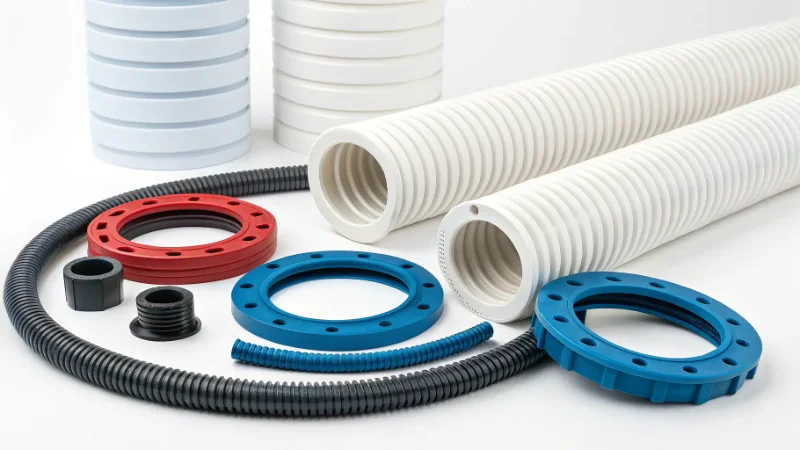
In the bidding phase of almost every commercial project, there is a "Value Engineering" meeting. The mechanical contractor looks at the blueprints, points to the drain lines, and asks: "Can we switch the copper to PVC?"
As a manufacturer who produces PVC components but also understands the rigorous demands of commercial specifications, I see this debate daily. From a raw material standpoint, the cost difference is staggering. However, in commercial HVAC piping cost analysis, the purchase price of the pipe is only one variable. We must also consider labor hours, fire codes, thermal expansion, and the chemical composition of the condensate itself.
This article provides a strict cost-benefit analysis of copper vs PVC drain lines, helping engineers and buyers decide when to pay the premium and when to embrace the economy of plastic.
Key Takeaways
- PVC offers superior chemical resistance to the acidic condensate produced by high-efficiency units).
- Copper Type M or L is often mandatory in "plenum" spaces due to flame spread and smoke generation codes.
- The labor cost for installing PVC (solvent weld) is roughly 50% lower than soldering or pressing copper.
- Copper drain lines require insulation to prevent sweating; PVC has better natural thermal resistance but still requires insulation in humid zones.
Definition: Commercial Condensate Systems
In commercial HVAC, the "drain line" manages water removal from cooling coils (AHUs), humidifiers, and high-efficiency boilers. Unlike residential gravity drains, these systems often involve:
- Plenum Spaces: The open space above a drop ceiling used for air return.
- Aggressive Chemistry: Condensate can be highly acidic (pH 3–5) or laden with biological film.
- Long Runs: Horizontal runs spanning hundreds of feet across office floors.
Key Parameters: Copper vs. PVC
The following table contrasts Standard Schedule 40 PVC against Type M Copper (the standard for non-pressure drainage).
| Parameter | Schedule 40 PVC | Type M Copper | Impact |
|---|---|---|---|
| Material Cost (Approx) | Base | 4x–6x Base | PVC is vastly cheaper. |
| Installation Method | Solvent Weld (Glue) | Solder / ProPress | PVC is faster to install. |
| Flame/Smoke Rating | High Smoke (Non-Plenum) | Non-Combustible | Copper wins in Plenums. |
| Corrosion Resistance | Excellent (Inert) | Poor (Acid Sensitive) | PVC wins for condensing boilers. |
| Thermal Conductivity | Low (Insulator) | High (Conductor) | Copper sweats profusely; needs insulation. |
| Rigidity | • 매우 높은 재료 비용 | Rigid (needs support every 8-10′) | Copper requires fewer hangers. |

Cost Analysis and Performance: The Engineering Reality
1. The Acid Factor (Durability of PVC vs. Copper)
In the factory, we test PVC against various acids. It is virtually impervious. Copper is not.
Modern high-efficiency condensing boilers and furnaces produce acidic wastewater.
- The Failure: If you run acidic condensate through copper without an acid neutralizer, the bottom of the pipe will eventually rot out (pitting corrosion).
- The Verdict: For high-efficiency condensing equipment, PVC is not just cheaper; it is technically superior. Paying for copper here is actually buying a future leak.
2. The Plenum Constraint
This is the single biggest driver for using copper.
- The Code: International Mechanical Code (IMC) strictly limits materials in return air plenums. Standard PVC releases toxic chlorine gas when it burns. It generally fails the ASTM E84 "25/50" flame/smoke test.
- The Workaround: You can use Plenum-Rated PVC (often CPVC or PVDF), but the cost jumps significantly, narrowing the gap with copper. Often, engineers specify copper in plenums simply because it is a "safe" known quantity that inspectors will never flag.
3. Labor: The Hidden Multiplier
When estimating commercial HVAC piping cost, labor dominates.
- PVC: Cut, chamfer, prime, glue. A 2-inch joint takes less than a minute.
- Copper: Cut, ream, sand, flux, solder, cool. Or, use expensive ProPress fittings.
- Real World: A crew can run 500 feet of PVC in the time it takes to run 150 feet of copper.
Myth vs. Fact: Material Selection
This is incorrect. While copper is durable against physical impact, it is vulnerable to 'formicary corrosion' and acidic attack. In systems with untreated acidic condensate, copper lines can develop pinhole leaks in as little as 5 years.
Standard Schedule 40 PVC is prohibited in plenums because of its high smoke-developed index. However, specific plenum-rated plastics (like specialized CPVC or PVDF) meet the ASTM E84 standard and are permitted, though they cost significantly more than standard PVC.
Advantages and Disadvantages
| Material | Advantages | Disadvantages |
|---|---|---|
| PVC (Sch 40) | • Lowest material cost • Fast installation • Immune to acid corrosion • Lightweight |
• Not Plenum Rated (major limitation) • Requires more frequent hangers • Noisier (water trickle is audible) |
| Copper (Type M/L) | • Plenum Approved (Non-combustible) • Long span between hangers • Professional appearance • Quieter operation |
• Extremely high material cost 1. PVC는 구리만큼 오래 지속되나요? • High theft risk on job sites • Slower installation |
Practical Tips for HVAC Material Comparison
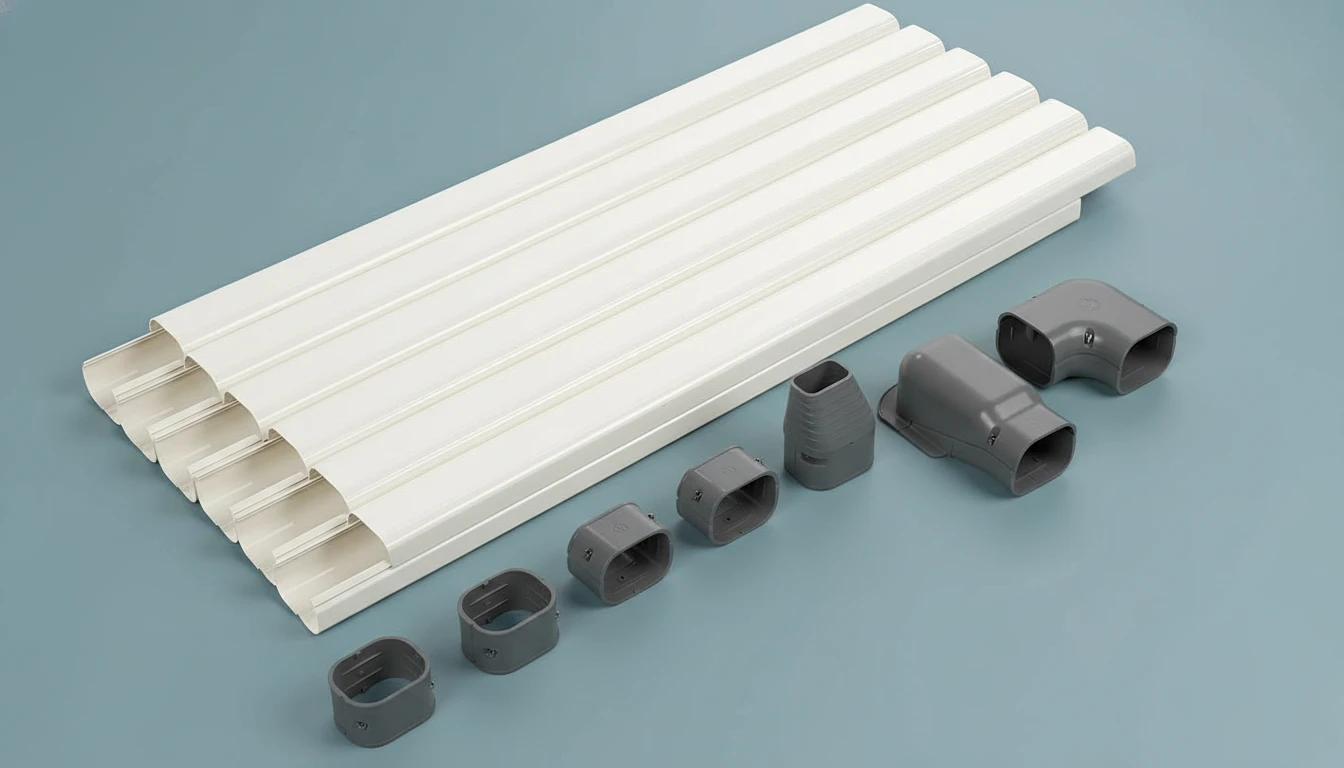
As a manufacturer, I often advise on "Hybrid Systems" to balance cost and code.
- The Hybrid Approach: Use copper only where required by code (in the plenum) and switch to PVC once the line drops down a vertical shaft or exits the fire-rated zone. Use a dielectric union or a simple fernco coupling (if non-pressure) to transition.
- The Neutralizer Trap: If you must use copper (e.g., exposed architectural ceilings) with high-efficiency units, you absolutely must install a condensate neutralizer cartridge immediately at the unit discharge. This treats the acid before it touches the metal.
- Insulation is Mandatory: Do not skip insulation on copper condensate lines. Copper conducts cold perfectly. In a humid mechanical room, a 45°F copper drain pipe will drip condensation along its entire length, mimicking a leak. PVC sweats less, but we still recommend insulating it in unconditioned spaces.
Common Commercial Scenarios
1. Data Centers and Server Rooms
- Choice: Copper.
- Reason: Durability and leak risk. PVC can crack if stepped on or impacted. In mission-critical environments, the mechanical strength of copper is worth the premium.
2. Office Buildings (Plenum Returns)
- Choice: Copper (or Plenum-Rated Plastic).
- Reason: Fire Code compliance. Standard PVC is illegal here.
3. Rooftop Units (RTUs)
- Choice: PVC.
- Reason: The drain is usually exterior or drops directly into a chase. There is no benefit to using copper on a roof where UV-resistant PVC (painted) or standard PVC performs fine for drainage.
Stepwise Recommendations for Specification
When evaluating a bid:
- Check the Plenum: Is the drain line running through a return air space?
- Yes: Copper or Plenum-Rated CPVC.
- No: Go to Step 2.
- Check the PH: Is the equipment condensing (90%+ efficiency)?
- Yes: PVC is preferred (Copper requires neutralizer).
- No: Go to Step 3.
- Check the Exposure: Is the pipe visible in a high-end lobby?
- Yes: Copper (hard drawn) looks professional.
- No: PVC.
- Calculate the Savings: If the line is hidden, non-plenum, and neutral pH, switching to PVC can save 60-70% on that specific line item.
Frequently Asked Questions (FAQ)
1. Does PVC last as long as copper?
PVC 대 구리: HVAC 배수 라인 비용 분석.
2. Can I press (ProPress) copper drain lines?
Yes, but verify the O-ring material. Standard EPDM O-rings are fine for water, but ensure the fittings are compatible with the specific copper type (Type M usually requires specific jaws or fittings compared to Type L).
3. Why is PVC noisier than copper?
PVC has a lower density and mass than copper. Water trickling through a PVC pipe vibrates the wall of the pipe more easily, transmitting sound. In quiet offices, cast iron or copper is preferred for vertical drops to dampen sound.
4. Is PVC theft a concern?
No. Copper theft is a massive issue on commercial sites. We have seen projects where the copper drain lines were stripped the night before the ceiling grid went in. PVC has zero scrap value, making it "theft-proof."
5. What is the support spacing for commercial condensate piping?
Standard PVC needs support every 4 feet to prevent sagging (which creates water traps). Copper can span 8 to 10 feet. This difference affects the number of unistrut/hangers required.
Technical Summary
When analyzing copper vs PVC drain lines for commercial applications, PVC is the clear winner for cost, chemical resistance, and ease of installation. It is the superior choice for high-efficiency, acidic condensate systems. However, commercial HVAC piping cost must be weighed against building codes; Copper remains the standard for plenum spaces due to fire safety regulations (ASTM E84). The optimal "Value Engineering" strategy is often a hybrid design: use copper strictly within plenum boundaries and switch to PVC for vertical risers and non-plenum runs, ensuring acid neutralization is present if copper is used with condensing equipment.





