– UL 94 determines a material’s tendency to either extinguish or spread a flame once ignited.
– V-0 rated plastics offer the highest level of safety for vertical burning, extinguishing within 10 seconds without dripping flaming particles.
– Material thickness significantly impacts certification; a resin certified at 3.0mm may fail at 0.8mm.
– Proper processing prevents thermal degradation of flame retardants, ensuring regulatory compliance manufacturing.
What Is the UL 94 Standard and Why Is It Critical for Safety?
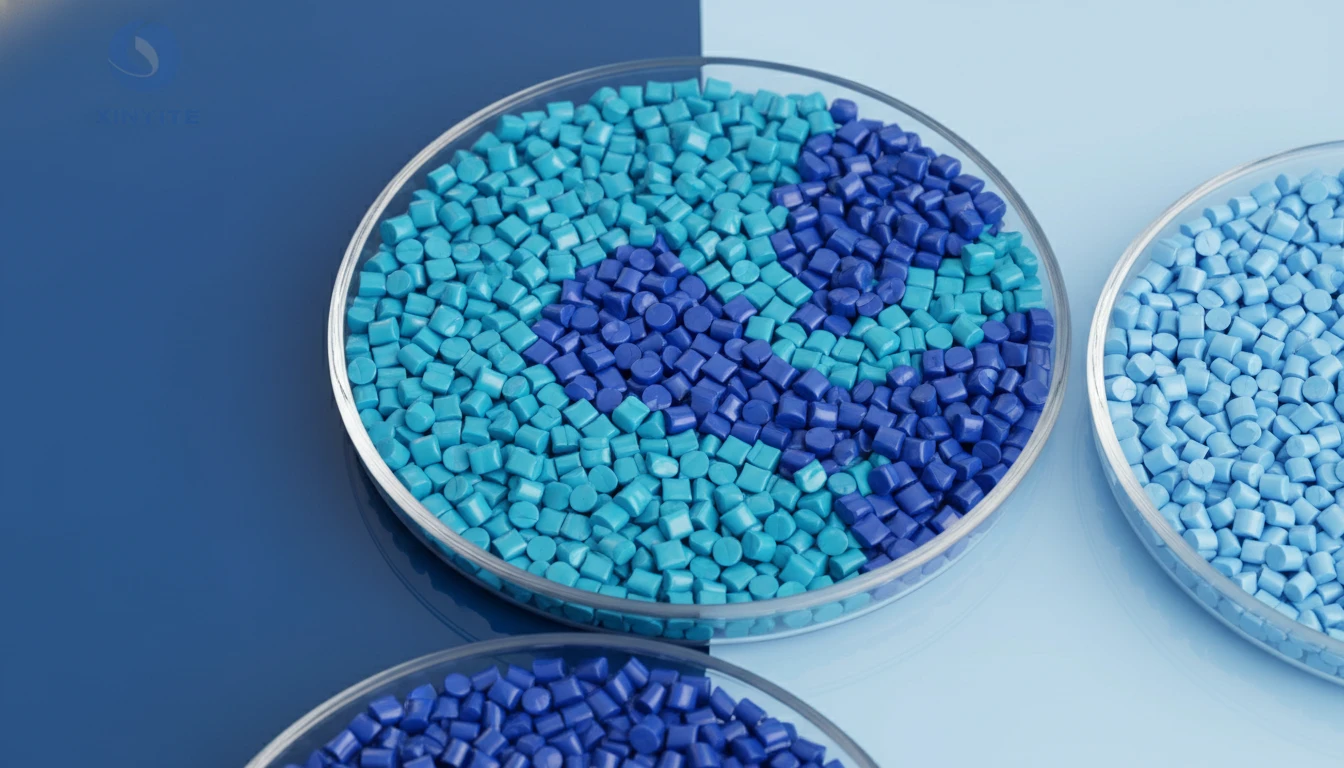
The Underwriters Laboratories (UL) 94 standard is the globally recognized benchmark for testing the flammability of plastic materials used in parts in devices and appliances. It evaluates how a material responds to an open flame, specifically measuring the rate of burning, time to extinguish, and whether the material drips flaming particles that could ignite surrounding combustible materials.
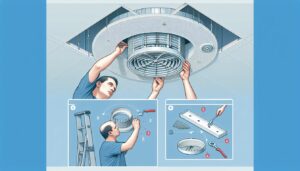
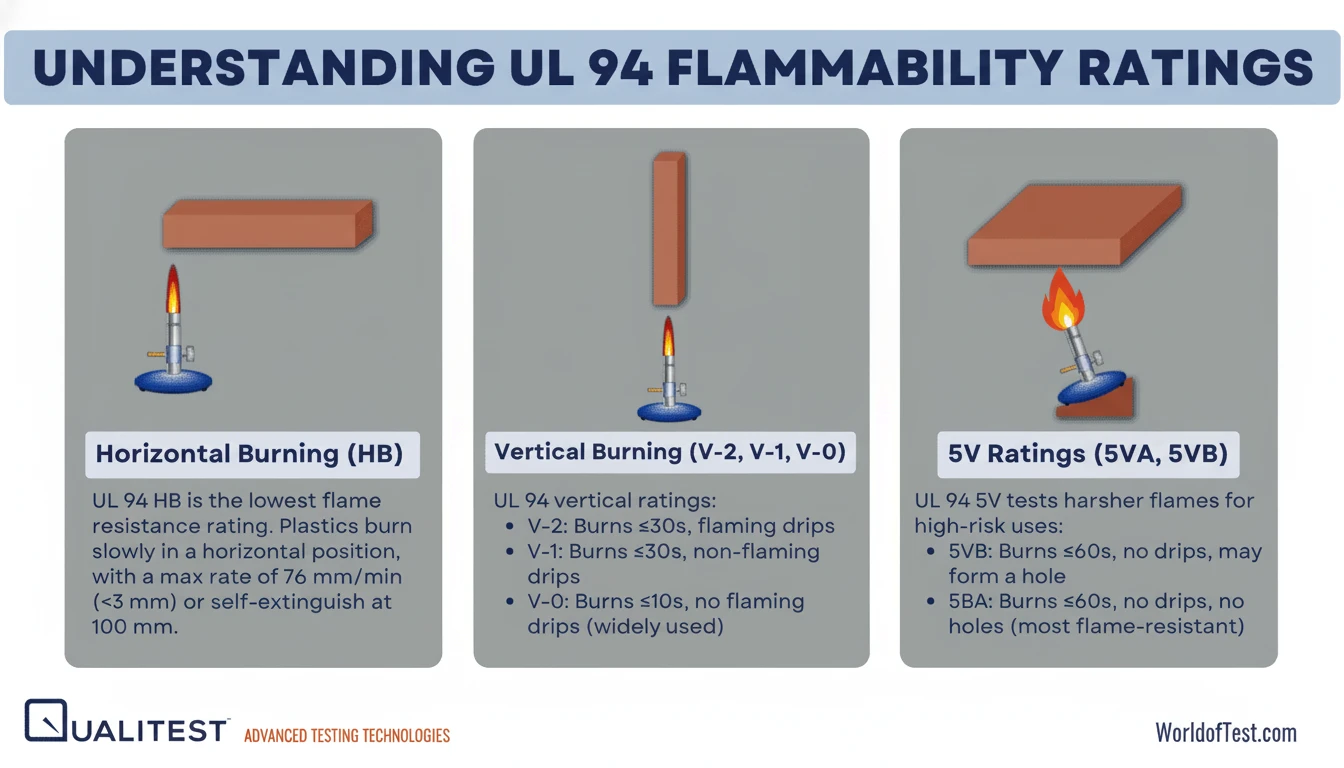
For industries requiring strict regulatory compliance manufacturing, such as automotive, electronics, and HVAC (Heating, Ventilation, and Air Conditioning), selecting flame retardant plastics is not optional; it is a safety mandate. The standard classifies plastics into categories based on burning orientation (Horizontal or Vertical) and performance, ranging from HB (slowest burning) to 5VA (highest resistance).
What Are the Critical Parameters for UL 94 Testing Ratings?
The following table outlines the criteria for the most common classifications found in injection molding. Engineers must reference the "Yellow Card" (UL’s official material safety data sheet) to verify a specific resin’s rating at the intended wall thickness.
| Classification | Orientation | Burning Stop Time (per specimen) | Total Burn Time (5 specimens) | Flaming Drips Allowed? | Cotton Ignition Allowed? |
|---|---|---|---|---|---|
| HB (Horizontal Burn) | Horizontal | Rate < 40mm/min or < 75mm/min (thickness dependent) | N/A | No | No |
| V-2 | Vertical | ≤ 30 seconds | ≤ 250 seconds | Yes | Yes |
| V-1 | Vertical | ≤ 30 seconds | ≤ 250 seconds | No | No |
| V-0 | Vertical | ≤ 10 seconds | ≤ 50 seconds | No | No |
| 5VB | Vertical | ≤ 60 seconds (after 5th flame) | N/A | No | No (No hole allowed) |
| HVAC 비용 절감: 금속에서 플라스틱으로 전환의 이점 | Vertical | ≤ 60 seconds (after 5th flame) | N/A | No | No (No hole allowed) |
Note: "Cotton Ignition" refers to surgical cotton placed below the specimen. If molten plastic drops and ignites the cotton, the material fails the higher ratings (V-0/V-1).
V-0 indicates the material self-extinguishes within 10 seconds and does not produce flaming drips; it can still burn while the flame source is applied.
Flammability resistance decreases as the material becomes thinner, so engineers must verify the UL rating specifically for the wall thickness of their part.
How Is the Testing Process Conducted Step-by-Step?
To achieve 장비 유지보수: certification, materials undergo rigorous testing. Understanding this workflow helps engineers design parts that pass verification.
- Specimen Preparation:
- Test bars are molded to standard dimensions (typically 125mm x 13mm).
- Samples are conditioned for 48 hours at 23°C / 50% Relative Humidity (RH), and a separate set is aged for 168 hours at 70°C.
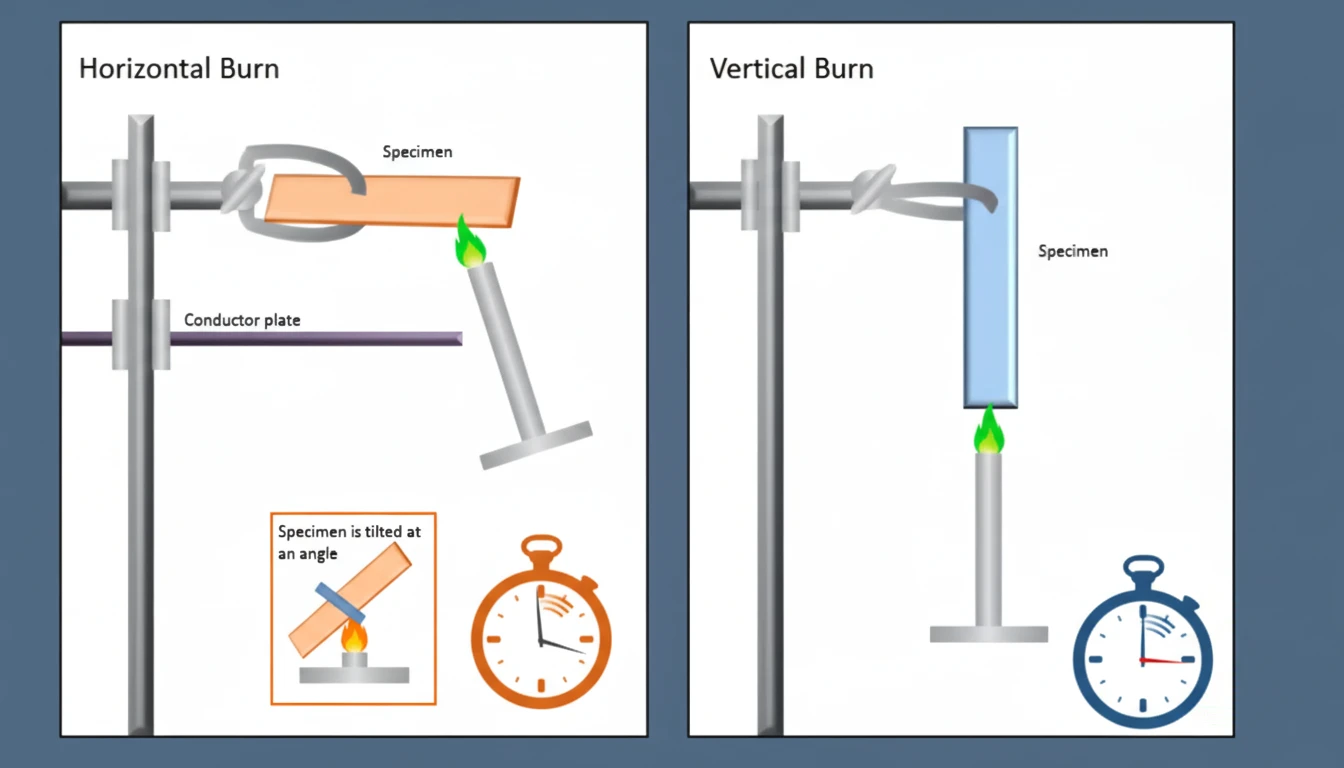
- Vertical Burn Setup:
- The specimen is clamped vertically.
- Surgical cotton is placed 300mm below the specimen to detect flaming drips.
- Flame Application (T1):
- A calibrated Bunsen burner flame (20mm high) is applied to the bottom of the bar for 10 seconds.
- The flame is removed, and the afterflame time (t1) is recorded.
- Flame Re-application (T2):
- As soon as the fire extinguishes, the flame is applied for another 10 seconds.
- The flame is removed, and afterflame time (t2) plus afterglow time (t3) are recorded.
- Assessment:
- The cumulative time is calculated. The material is checked for flaming drips that ignite the cotton.
What Are the Advantages and Disadvantages of Flame-Retardant Resins?
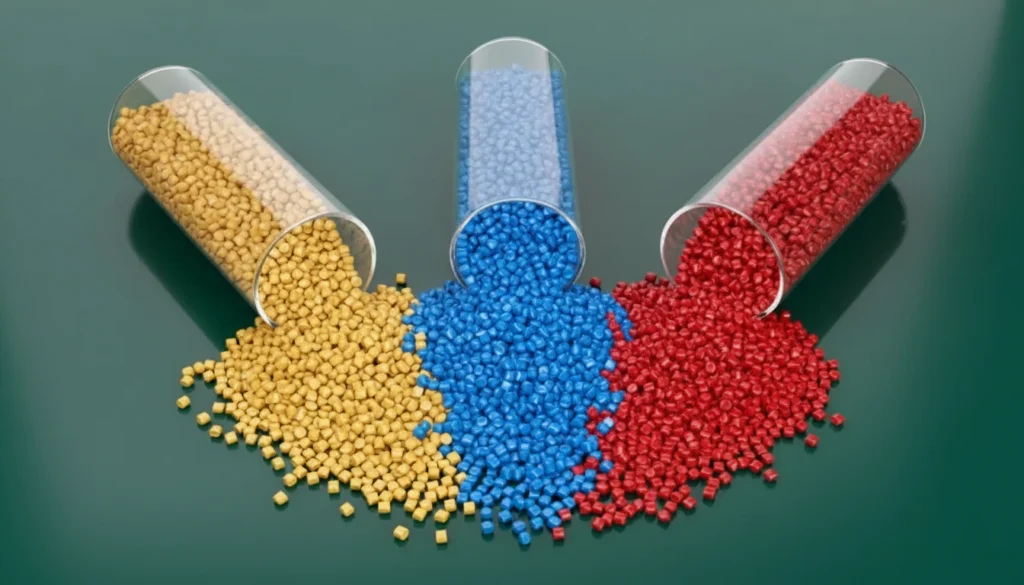
Incorporating flame retardants (FR) into polymers like Polyamide (PA66) or Polycarbonate (PC) alters their processing and physical characteristics.
| Feature | Advantages | Disadvantages |
|---|---|---|
| Safety | Prevents fire propagation; self-extinguishing properties protect end-users. | – |
| Compliance | Meets strict building codes (HVAC) and automotive safety standards (FMVSS). | – |
| Processing | – | Narrow Processing Window: FR additives are thermally sensitive. Overheating causes degradation and loss of FR properties. |
| Mechanicals | High stiffness is often maintained in filled grades. | Reduced Impact Strength: High loadings of FR additives can make the material brittle. |
| Tooling | – | Mold Corrosion: Halogenated flame retardants can release corrosive gases, requiring stainless steel or plated molds. |
Which Practical Tips Ensure Compliance During Design and Molding?
Drawing from factory floor experience, achieving UL 94 standards compliance requires more than just buying the right material. It requires correct processing.
- Respect the "Yellow Card": Never assume a generic material meets V-0. Always request the UL Yellow Card for the specific grade and color. Note that coloring agents can alter flammability ratings.
- Design for Thickness: If your part design features a 1.0mm wall section, but the material is only V-0 rated at 1.5mm, the part is not compliant. You must either thicken the wall or select a resin with a higher performance rating at thin gauges.
- Control Melt Temperature: Flame retardants are volatile. If the barrel temperature is too high, the additives may degrade (gas out) before the plastic even enters the mold, resulting in a part that fails flammability testing despite using the correct resin.
- Venting is Crucial: Poor venting leads to compressed gas burn (Diesel effect). In FR materials, this localized overheating destroys the FR additives at the weld line, creating a weak point for fire resistance.
- Equipment Maintenance: UL 94 가연성 기준.
Where Are UL 94 Rated Components Typically Applied?
Different industries require specific ratings based on the risk of fire and proximity to ignition sources.
- HVAC Safety Compliance:
- Components: Control board housings, fan blades, drip pans.
- Requirement: typically HVAC 비용 절감: 금속에서 플라스틱으로 전환의 이점 or V-0. Fire must not escape the enclosure if an electrical fault occurs.
- Consumer Electronics:
- Components: Laptop chargers, TV casings, power strips.
- Requirement: V-0 or V-1. Thin-wall performance is critical here.
- Automotive:
- Components: Battery connectors (EVs), fuse boxes, engine covers.
- Requirement: V-0 for high voltage; HB for interior trim (slow burn rate).
- Medical Devices:
- Components: Housings for electrosurgical devices.
- Requirement: V-0 to prevent ignition from sparks or heat generation.
What Steps Should Be Followed for Material Selection?
To ensure regulatory compliance manufacturing, follow this selection workflow:
- Identify Regulatory Requirements: Does the application require V-0, V-2, or 5VA? Does it need to meet outdoor suitability (f1 rating)?
- Verify Wall Thickness: Calculate the minimum wall thickness of the design.
- Search UL Prospector: Filter materials that meet the required rating at or below your design’s minimum thickness.
- Mold Trial Validation: Run samples using optimal processing parameters (low residence time, controlled shear).
- Verification Testing: Send molded parts (not just raw pellets) to a certified lab to confirm that the molding process did not degrade the flame retardant properties.
Frequently Asked Questions (FAQ)
Q: What is the main difference between UL 94 V-0 and V-2?
A: The primary difference is dripping. 장비 유지보수: must extinguish within 10 seconds and cannot drip flaming particles. V-2 materials must also extinguish within 30 seconds but are allowed to drip flaming particles that ignite cotton. V-0 is significantly safer.
Q: Can I use 100% regrind and still claim UL compliance?
A: Generally, no. UL certification typically allows for a specific percentage of regrind (often up to 25% by weight) without re-testing. Using 100% regrind would require a separate certification, as the heat history degrades the flame retardant additives.
Q: Does adding color concentrate affect the UL rating?
A: Yes. Pigments can act as fuel or interact with flame retardants. You must use a pre-colored compound listed on the Yellow Card or use a color concentrate that is UL-recognized for use with that specific base resin.
Q: Is UL 94 the same as the Glow Wire Test (IEC 60695)?
A: No. UL 94 uses an open flame, while the Glow Wire Test applies a heated element to the plastic. European markets often prioritize Glow Wire testing (GWFI/GWIT), while North America prioritizes UL 94. Many materials carry ratings for both.
Q: Why do flame retardant materials often have "splay" or surface streaks?
A: Splay is often caused by moisture or thermal degradation. FR additives are hygroscopic (absorb moisture) and thermally sensitive. Ensuring the material is dried to below 0.02% moisture and keeping melt temperatures low helps eliminate splay.
Summary
Meeting UL 94 flammability standards UL 94 표준: 가연성 시험에 필수적 HVAC safety compliance1 and high-voltage electronics, selecting 장비 유지보수: is only the first step. Engineers must verify ratings against specific wall thicknesses and ensure that the injection molding process2 preserves the integrity of the flame-retardant additives. By adhering to the UL Yellow Card data and optimizing mold parameters, manufacturers can ensure reliable, compliant, and safe components.