
العملية الأكثر ملاءمة لتصنيع أقواس التكييف والتهوية، والتي توفر دقة عالية وسلامة هيكلية ممتازة. Mounting Parts
Precision-engineered mounting solutions with ±0.1mm tolerances. Serving global HVAC markets with reliable, durable brackets and mounting components.
Table of Contents
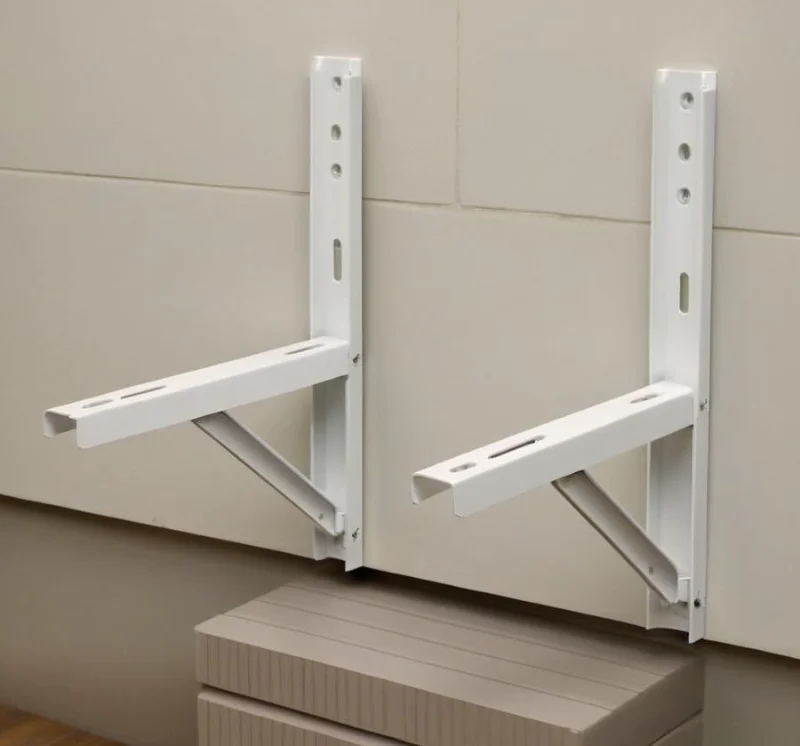
What are HVAC Brackets & Mounting Parts?
HVAC brackets and mounting parts are essential structural components that provide secure support and proper positioning for HVAC equipment and ductwork. These components are engineered to withstand various loads, vibrations, and environmental conditions while maintaining system integrity and safety. They come in diverse designs and materials to accommodate different installation requirements, from residential units to large commercial systems. Properly designed brackets and mounting parts ensure equipment stability, reduce stress on connections, and extend the lifespan of HVAC systems by preventing premature wear and failure.
Key Function: Structural Support → Load Distribution → Vibration Damping → Positional Stability
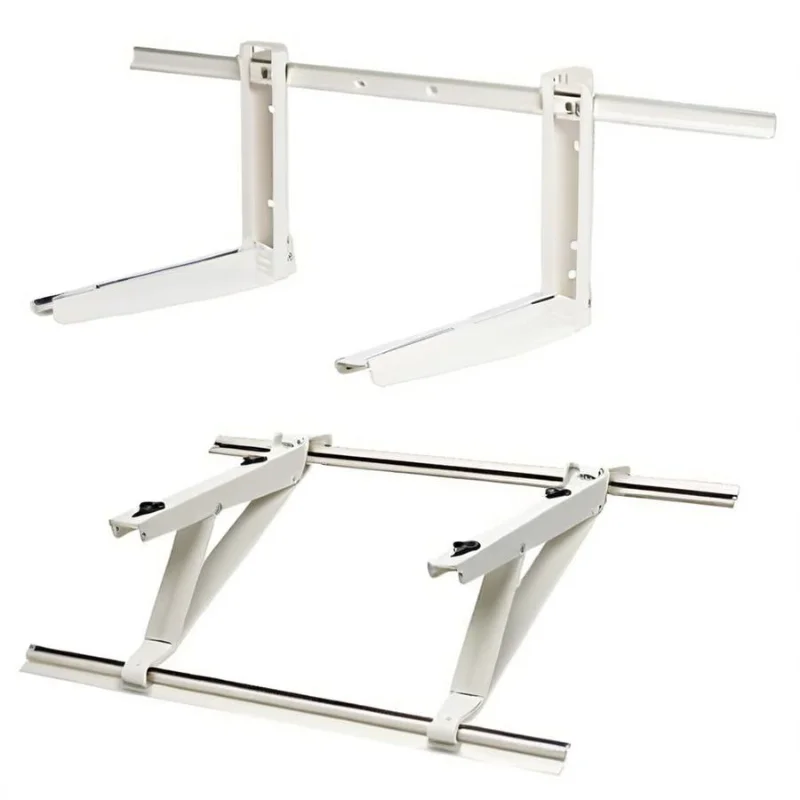
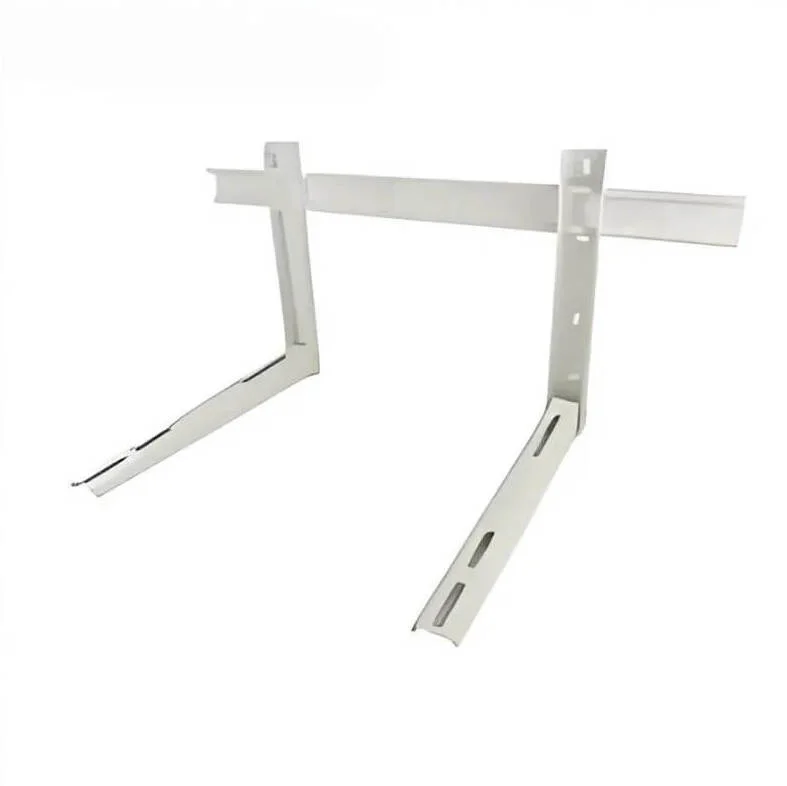
Types & Functions
Wall Mount Brackets
Designed to secure HVAC units to vertical surfaces, featuring reinforced structures and appropriate spacing for weight distribution.
Why it's crucial for HVAC: Provides stable support for wall-mounted units, preventing stress on mounting points and ensuring proper airflow clearance.
Ceiling Suspension Systems
Include hangers, rods, and frames that support ductwork and air handlers from overhead structures, often with vibration-damping features.
Why it's important for HVAC: Enables proper installation of ceiling-mounted equipment while maintaining structural integrity and reducing noise transmission.
Floor Stand Brackets
Provide elevated support for floor-standing units, incorporating stable bases and adjustable height mechanisms for optimal positioning.
Why it's important for HVAC: Ensures proper elevation for airflow and maintenance access while protecting equipment from floor moisture and debris.
Design & Materials
Material Selection
Common materials include reinforced polymers, glass-filled nylon, and composite materials offering high strength-to-weight ratios.
Why it's crucial for HVAC: Material choice affects load capacity, corrosion resistance, and longevity in various environmental conditions.
Structural Engineering
Incorporates ribbed designs, reinforced mounting points, and stress distribution features to maximize strength while minimizing material usage.
Why it's crucial for HVAC: Proper structural design ensures safe load-bearing capacity and prevents deformation over time.
Vibration Damping
Advanced designs incorporate flexible elements and isolation features to reduce vibration transmission from equipment to building structures.
Why it's crucial for HVAC: Vibration damping reduces noise, prevents component fatigue, and extends equipment lifespan.
Types of HVAC Brackets & Mounting Parts
HVAC systems require various types of brackets and mounting parts to ensure proper installation, stability, and longevity. These components are specifically designed to support different equipment types, accommodate various installation environments, and address specific challenges such as weight distribution, vibration control, and accessibility for maintenance. Understanding the different types of brackets and mounting parts is essential for selecting the right components for each application, ensuring system reliability, safety, and optimal performance.
Key Categories: Wall Mounts • Ceiling Suspensions • Floor Stands • Specialty Brackets
| Bracket Type | Primary Use | Key Features |
|---|---|---|
| Wall Mount Brackets | Securing wall-mounted air conditioners, heat pumps, and ventilation units. | Reinforced construction, adjustable tilt angles, weather-resistant coating, vibration isolation pads. |
| Ceiling Suspension Systems | Hanging ductwork, air handlers, and ceiling-mounted indoor units. | Adjustable length rods, spring-loaded vibration dampers, load distribution plates, safety locking mechanisms. |
| Floor Stand Brackets | Supporting floor-standing units, condensers, and outdoor equipment. | Stable base design, adjustable height, corrosion-resistant materials, cable management channels. |
| Duct Support Brackets | Securing and aligning ductwork throughout the system. | Adjustable width, quick-release mechanisms, thermal expansion accommodation, reinforced joints. |
| Vibration Isolation Mounts | Reducing vibration transmission from compressors and fans. | Elastomeric elements, spring-loaded designs, adjustable damping characteristics, load-specific sizing. |
| Pipe and Conduit Hangers | Supporting refrigerant lines, condensate drains, and electrical conduits. | Insulated clamps, adjustable spacing, corrosion-resistant hardware, thermal break features. |
Which Plastic Molding Processes are Suitable for HVAC Brackets?
Selecting the appropriate plastic molding process for HVAC brackets is crucial for achieving the required strength, durability, and dimensional accuracy. Different molding techniques offer varying advantages in terms of structural integrity, production efficiency, and cost-effectiveness. This analysis evaluates the most common molding processes to determine their suitability for manufacturing different types of HVAC brackets and mounting parts, helping manufacturers optimize production based on specific application requirements.
Key Processes: Injection Molding → Structural Foam Molding → Gas-Assisted Injection Molding → Compression Molding
Injection Molding
The most suitable process for manufacturing HVAC brackets, offering high precision and excellent structural integrity.
Structural Foam Molding
Excellent for larger brackets requiring high strength-to-weight ratios and dimensional stability.
Limitations:
Gas-Assisted Injection Molding
Suitable for complex brackets with hollow sections requiring high strength and reduced weight.
Limitations:
Compression Molding
Suitable for simple, large brackets made from fiber-reinforced materials requiring high strength.
Limitations:
What are the Key Performance Metrics for HVAC Brackets?
Evaluating HVAC brackets and mounting parts requires a comprehensive assessment of several critical performance areas. Structural integrity ensures the bracket can support the required loads without deformation or failure. Environmental resistance determines how well the bracket withstands temperature variations, moisture, and chemical exposure. Installation efficiency and adjustability affect the ease and accuracy of installation, while long-term durability ensures the bracket maintains its performance throughout the system's lifespan. These metrics collectively determine the suitability of a bracket for specific HVAC applications.
Key Dimensions: Structural Integrity • Environmental Resistance • Installation Efficiency • Long-Term Durability
| Key Metric | What It Is | Why It Matters |
|---|---|---|
| 🏗️ Structural Integrity | ||
| Load-Bearing Capacity | The maximum weight the bracket can support without deformation or failure, typically measured in kilograms or pounds. | Ensures the bracket can safely support the HVAC equipment throughout its operational life, preventing catastrophic failures. |
| Deflection Under Load | The amount of bending or deformation that occurs when the bracket is subjected to its maximum rated load. | Excessive deflection can cause equipment misalignment, stress on connections, and potential system failures. |
| Safety Factor | The ratio between the bracket's failure load and its intended maximum working load (typically 3-5 for HVAC applications). | A higher safety factor provides greater assurance against unexpected loads, vibrations, or material degradation over time. |
| Fatigue Resistance | The ability of the bracket to withstand repeated loading cycles without failure, particularly important for systems with vibration. | HVAC systems experience constant vibration and thermal cycling; fatigue resistance prevents premature failure. |
| 🌡️ Environmental Resistance | ||
| Temperature Range | The range of temperatures the bracket can withstand without losing structural integrity or deforming. | HVAC brackets may be exposed to extreme temperatures, especially for outdoor units; maintaining properties is critical. |
| UV Resistance | The ability to resist degradation from exposure to ultraviolet radiation, particularly important for outdoor applications. | UV exposure can cause plastic brackets to become brittle and lose strength over time, leading to failure. |
| Chemical Resistance | The ability to withstand exposure to chemicals such as cleaning agents, refrigerants, and environmental pollutants. | Chemical exposure can cause material degradation, compromising the structural integrity of the bracket. |
| Moisture Resistance | The ability to resist water absorption and maintain properties in humid or wet environments. | Moisture absorption can lead to swelling, reduced strength, and potential microbial growth in some materials. |
| 🔧 Installation Efficiency | ||
| اقتصادي: يقدم أداءً جيدًا بسعر معقول. | The range of adjustment the bracket allows for proper positioning and alignment of HVAC equipment. | Proper alignment is crucial for system efficiency, reducing stress on connections and ensuring optimal performance. |
| Installation Time | The average time required to properly install the bracket, including any necessary adjustments. | Reduced installation time lowers labor costs and minimizes the potential for installation errors. |
| Tool Requirements | The types and number of tools required for proper installation of the bracket. | Simplified tool requirements reduce installation complexity and the likelihood of improper installation. |
| ⏱️ Long-Term Durability | ||
| Creep Resistance | The ability to resist gradual deformation under constant load over extended periods. | Creep can cause misalignment and stress on connections over time, potentially leading to system failures. |
| Corrosion Resistance | The ability to resist degradation from environmental factors that cause corrosion, particularly for metal components. | Corrosion can significantly reduce the structural integrity of brackets, especially in harsh environments. |
| Maintenance Requirements | The frequency and complexity of maintenance needed to ensure the bracket continues to perform as intended. | Lower maintenance requirements reduce long-term ownership costs and minimize system downtime. |
What are the Common Plastics Used for HVAC Brackets & Mounting Parts?
When selecting materials for HVAC brackets and mounting parts, you have several excellent options to consider. Glass-filled nylon offers exceptional strength and heat resistance for high-load applications, making it ideal for supporting heavy equipment. Polycarbonate provides superior impact resistance and dimensional stability for critical mounting points. For cost-effective applications with moderate loads, ABS delivers good strength and ease of processing. When chemical resistance and electrical insulation are priorities, PP stands out with its excellent properties. Your choice ultimately depends on your specific needs: load requirements, environmental conditions, fire safety standards, and cost constraints.
Key Materials: Glass-Filled Nylon • Polycarbonate • ABS • Polypropylene
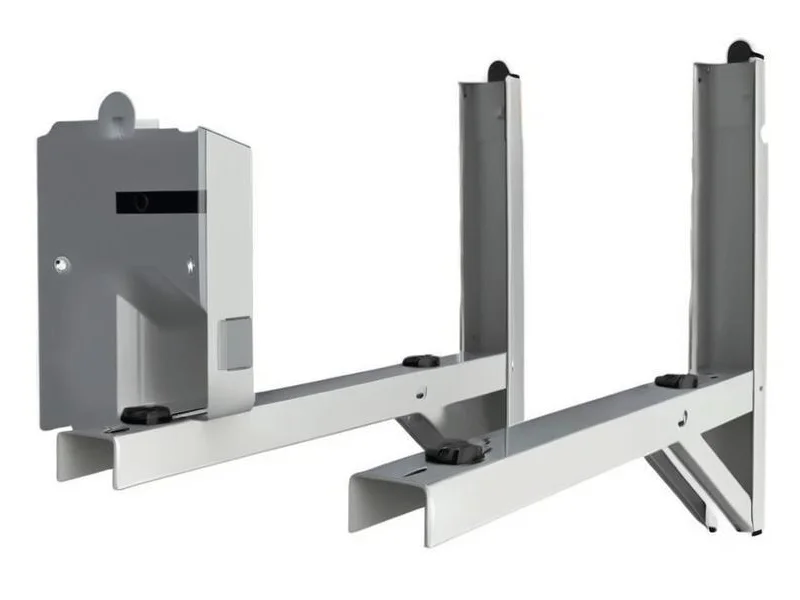
Glass-Filled Nylon (PA6 GF)
Glass-filled nylon is a high-performance engineering plastic reinforced with glass fibers, offering exceptional strength and heat resistance for demanding HVAC applications.
Key Properties:
- Exceptional strength and stiffness: Glass fibers significantly increase mechanical properties, allowing it to replace metal in many applications.
- Excellent heat resistance: Maintains properties at elevated temperatures (up to 120°C continuous use).
- Low creep and excellent dimensional stability: Maintains shape and precision under long-term load.
- Good fatigue resistance: Withstands repeated loading cycles without failure.
- Chemical resistance: Resists oils, fuels, and many industrial chemicals.
خصائص متوازنة، مقاومة جيدة للهب، فعالة من حيث التكلفة
- Heavy-duty compressor mounting brackets
- Structural support components for large HVAC units
- Vibration dampening mounts and isolators
- High-load bearing brackets for condenser units
Consideration: Higher material cost and requires more robust processing equipment due to abrasive nature of glass fibers.
Polycarbonate (PC)
Polycarbonate is a high-performance engineering plastic known for its exceptional impact resistance and dimensional stability, making it ideal for critical mounting applications.
Key Properties:
- Outstanding impact strength: Virtually unbreakable, ensuring reliability in high-stress applications.
- Excellent dimensional stability: Maintains precise tolerances across a wide temperature range.
- Good heat resistance: Can withstand temperatures up to 115°C without deformation.
- Transparent options available: Useful for applications requiring visual inspection.
- Good electrical insulation properties: Suitable for applications near electrical components.
خصائص متوازنة، مقاومة جيدة للهب، فعالة من حيث التكلفة
- Electrical component mounting brackets
- Control panel housing and supports
- Protective covers and guards for moving parts
- Transparent inspection windows for equipment monitoring
Consideration: Higher material cost than ABS and requires careful processing to avoid stress cracking.
ABS (Acrylonitrile Butadiene Styrene)
ABS is a versatile engineering thermoplastic that offers a good balance of strength, impact resistance, and cost-effectiveness for many HVAC mounting applications.
Key Properties:
- Good strength and rigidity: Suitable for moderate load applications.
- Excellent impact resistance: Withstands sudden impacts without cracking.
- Cost-effective: Offers good performance at a reasonable price point.
- يعد تصميم القالب الفعال أمرًا بالغ الأهمية لإنتاج أقواس وأجزاء تركيب عالية الجودة لأنظمة التدفئة والتهوية وتكييف الهواء التي تلبي المتطلبات الوظيفية والهيكلية. يجب أن يوازن عملية التصميم بين الهندسة الدقيقة والقابلية للتصنيع، مع مراعاة عوامل مثل تدفق المواد، وكفاءة التبريد، وآليات الإخراج. تتيح تصاميم القوالب المتقدمة دمج وظائف متعددة في مكون واحد، مما يقلل خطوات التجميع ويحسن موثوقية المنتج. إن فهم هذه الاعتبارات ضروري لتحسين كفاءة الإنتاج، وتقليل العيوب، وضمان أداء المنتج النهائي كما هو مقصود في تطبيقات أنظمة التدفئة والتهوية وتكييف الهواء.
- Good surface finish: Can be manufactured with smooth or textured surfaces.
خصائص متوازنة، مقاومة جيدة للهب، فعالة من حيث التكلفة
- Standard mounting brackets for residential HVAC units
- Cable management clips and organizers
- Protective covers for valves and fittings
- Decorative trim and finishing components
Consideration: Limited heat resistance compared to PC or glass-filled nylon, not suitable for high-temperature applications.
Polypropylene (PP)
Polypropylene is a versatile thermoplastic known for its excellent chemical resistance, low density, and good fatigue resistance, making it suitable for specific HVAC mounting applications.
Key Properties:
- Excellent chemical resistance: Resists acids, alkalis, and organic solvents.
- Low density: Lightweight material, reducing overall system weight.
- Good fatigue resistance: Withstands repeated flexing without failure.
- Excellent electrical insulation: High dielectric strength.
- Low cost: One of the most economical engineering plastics.
خصائص متوازنة، مقاومة جيدة للهب، فعالة من حيث التكلفة
- Cable ties and fasteners for wire management
- Low-load mounting brackets for lightweight components
- Chemical-resistant clips and fasteners
- Living hinge components for access panels
Consideration: Lower strength and heat resistance compared to other engineering plastics, not suitable for high-load applications.
Material Comparison at a Glance
| Material | Strength | Heat Resistance | Cost | Best For |
|---|---|---|---|---|
| Glass-Filled Nylon | Excellent | Excellent | High | Heavy-duty structural applications |
| Polycarbonate | Very Good | Very Good | High | Critical mounting points, impact resistance |
| ABS | Good | Fair | Medium | General purpose mounting applications |
| Polypropylene | Fair | Fair | Low | Chemical-resistant, low-load applications |
Special Additives and Grades
To enhance these base plastics for HVAC applications, manufacturers often use special formulations:
- Glass-Filled Grades: Adding glass fibers (typically 10-40%) significantly increases strength, stiffness, and heat resistance.
- Flame-Retardant (FR) Grades: Additives are mixed into the plastic to meet strict fire safety standards (e.g., UL 94 V-0).
- UV-Stabilized Grades: UV absorbers and inhibitors prevent degradation and yellowing from sun exposure.
- Lubricated Grades: PTFE or other lubricants improve wear resistance for moving parts.
- Antimicrobial Additives: Silver ion or other agents inhibit the growth of bacteria and mold.
How to Choose the Right Material
When selecting a plastic for HVAC brackets and mounting parts, consider these factors:
Load Requirements
For high-load applications, choose glass-filled nylon or polycarbonate.
Temperature Exposure
For high-temperature environments, select glass-filled nylon or polycarbonate.
Chemical Exposure
For chemical resistance, polypropylene or glass-filled nylon are ideal choices.
Fire Safety Requirements
Specify flame-retardant grades for applications with strict fire codes.
Budget Constraints
For cost-sensitive projects, ABS or polypropylene offer the best value.
What are Mold Design Considerations for HVAC Brackets & Mounting Parts?
Effective mold design is critical for producing high-quality HVAC brackets and mounting parts that meet both functional and structural requirements. The design process must balance precision engineering with manufacturability, considering factors such as material flow, cooling efficiency, and ejection mechanisms. Advanced mold designs enable the integration of multiple functions into a single component, reducing assembly steps and improving product reliability. Understanding these considerations is essential for optimizing production efficiency, minimizing defects, and ensuring the final product performs as intended in HVAC applications.
قم بدمج حواف منحنية وأقطار مناسبة في الزوايا
Structural Design & Strength
Rib Design
Strategic placement of ribs significantly increases strength and stiffness without adding excessive material or weight.
Why it's crucial: Proper rib design allows plastic brackets to replace metal parts while maintaining required load-bearing capacity.
Wall Thickness Optimization
Balancing wall thickness ensures sufficient strength while minimizing material usage and preventing sink marks.
Why it's crucial: Optimized wall thickness reduces cycle time, material costs, and prevents warping or sink marks.
Stress Distribution
Designing features that distribute stress evenly prevents concentration points that could lead to failure under load.
Why it's crucial: Proper stress distribution ensures long-term durability and prevents premature failure in critical applications.
Fillets and Radii
Incorporating appropriate fillets and radii at internal corners reduces stress concentration and improves material flow.
Why it's crucial: Proper fillets prevent stress cracks and improve the overall strength of the bracket.
Manufacturing & Assembly
Draft Angles
Appropriate draft angles (typically 1-3°) ensure easy ejection from the mold without damaging the part.
Why it's crucial: Proper draft angles prevent ejection damage and reduce cycle time, improving production efficiency.
Integrated Fastening Features
Designing integrated snap-fits, clips, and mounting holes eliminates the need for additional hardware.
Why it's crucial: Integrated fastening features reduce assembly time, parts count, and overall system cost.
Ejection System Design
Strategic placement of ejector pins and lifters ensures damage-free demolding of complex geometries.
Why it's crucial: Proper ejection system design prevents damage to critical features and maintains production efficiency.
Gate Placement
Optimizing gate location ensures proper material flow and minimizes visible marks on critical surfaces.
Why it's crucial: Strategic gate placement improves part quality and reduces post-processing requirements.
Design for Load-Bearing Applications
1
Reinforcement Strategies
Incorporating strategic reinforcements like gussets, ribs, and thicker sections at stress points significantly increases load-bearing capacity without excessive material usage.
2
Material Selection
Choosing high-strength materials like glass-filled nylon or polycarbonate for critical load-bearing applications ensures long-term performance and reliability under stress.
3
Testing & Validation
Implementing rigorous testing protocols including stress analysis, load testing, and finite element analysis validates design performance before mass production.
How to Control Quality and Prevent Defects in HVAC Brackets & Mounting Parts?
When sourcing HVAC brackets and mounting parts, consistent quality directly impacts system reliability and safety. A comprehensive quality control system addresses common defects in plastic molding before they become your problems, ensuring every bracket meets your exact specifications. This approach prevents issues like warping, stress cracks, and dimensional inaccuracies that could compromise installation and performance. By implementing rigorous inspection protocols from material verification to load testing, you receive components that maintain structural integrity, dimensional accuracy, and load-bearing capacity. This proactive quality management protects your projects from costly failures and warranty claims while ensuring reliable long-term performance of your HVAC systems.
Quality Focus: Structural Integrity • Load Testing • Dimensional Accuracy
Common Defect Analysis & Solutions
Understanding potential defects helps you evaluate suppliers more effectively. Here's how we prevent the most common issues that can compromise your bracket quality.
Warping & Deformation
Unintended deformation of the bracket that affects its ability to mount properly and bear loads, potentially causing system failure.
Common Causes:
- Uneven cooling of thick and thin sections
- High internal stresses from improper flow
- Material shrinkage variations
- Improper ejection mechanism design
Solutions:
- Design uniform cooling channels in mold
- Optimize injection speed and pressure profile
- Select materials with lower shrinkage rates
- Implement proper ejection system design
Stress Cracking
Cracks that develop over time, particularly at stress concentration points, leading to sudden failure under load.
Common Causes:
- Sharp internal corners creating stress concentration
- High residual stresses from molding process
- Chemical exposure incompatible with material
- Excessive loading beyond design capacity
Solutions:
- Incorporate proper fillets and radii at corners
- تقدم الأقواس البلاستيكية مجموعة فريدة من المزايا، مما يجعلها منافسًا قويًا في العديد من تطبيقات التدفئة والتهوية وتكييف الهواء. تجعلها فعاليتها من حيث التكلفة، ومقاومتها للتآكل، ومرونة تصميمها مثالية للبيئات المحددة. ومع ذلك، فإن لها أيضًا قيودًا واضحة، خاصة فيما يتعلق بقدرة التحمل النهائية ومقاومة درجة الحرارة، والتي يجب أخذها بعين الاعتبار بعناية. يعتمد الاختيار بين الأقواس البلاستيكية والمعدنية في النهاية على التوازن بين الميزانية، والظروف البيئية، ومتطلبات الأداء.
- Select chemically resistant materials
- Design with appropriate safety factors
Dimensional Inaccuracy
Deviations from specified dimensions that prevent proper installation and alignment of HVAC components.
Common Causes:
- Improper shrinkage compensation in mold design
- Inconsistent processing parameters
- Wear or damage to mold components
- Material property variations
Solutions:
- Accurate shrinkage analysis and compensation
- Implement strict process control protocols
- Regular mold maintenance and inspection
- Material property verification before processing
Insufficient Strength
Brackets that fail under expected loads, potentially causing equipment damage or safety hazards.
Common Causes:
- Inadequate wall thickness or reinforcement
- Material degradation during processing
- Poor material selection for application
- Voids or sink marks reducing effective cross-section
Solutions:
- Optimize design for required load capacity
- Control processing to prevent material degradation
- Select appropriate materials for application
- Eliminate voids through proper mold design
Quality Assurance Process
First Article Inspection (FAI)
FAI Includes:
- Complete dimensional verification using CMM
- Material certification and property testing
- البلاستيك غير موصل بشكل طبيعي، مما يوفر عزلًا كهربائيًا ممتازًا للمكونات الحساسة.
- Fit and function testing with mating parts
- Load testing to verify strength requirements
FAI Benefits:
- Identifies issues before mass production
- Establishes baseline quality standards
- Validates tooling and process parameters
- Reduces costly rework and field failures
- Ensures your requirements are met
Load Testing
Testing Methods:
- Static load testing to verify strength
- Dynamic load testing for vibration resistance
- Long-term creep testing
- Environmental stress cracking resistance
- Temperature cycling under load
Testing Standards:
- ASTM D638 for tensile properties
- ASTM D790 for flexural properties
- ASTM D256 for impact resistance
- Custom testing for application-specific loads
- Statistical analysis of test results
Advanced Testing Equipment
Dimensional Verification:
- Coordinate Measuring Machine (CMM): Provides precise 3D measurements with accuracy up to ±0.002mm
- Optical Comparators: For 2D profile verification of complex geometries
- Digital Calipers & Micrometers: For routine dimensional checks
- 3D Scanning Systems: For comprehensive surface analysis
Mechanical Testing:
- Universal Testing Machines: Measure tensile, compressive, and flexural strength
- Impact Testers: Verify resistance to sudden impacts
- Vibration Testing Equipment: Simulate operational conditions
- Environmental Chambers: Test performance under various conditions
What are the Advantages and Disadvantages of Plastic vs. Metal Brackets?
Plastic brackets offer a unique set of advantages, making them a strong contender in many HVAC applications. Their cost-effectiveness, corrosion resistance, and design flexibility make them ideal for specific environments. However, they also have distinct limitations, particularly regarding ultimate load capacity and temperature resistance, which must be carefully considered. The choice between plastic and metal brackets ultimately depends on a balance between budget, environmental conditions, and performance requirements.
التصميم الهندسي لاستبدال المعادن:
Plastic Brackets Advantages
Cost-Effectiveness
Plastic brackets are typically 30-50% less expensive than metal equivalents, both in material and production costs.
Why it's crucial: Lower material and production costs reduce overall system expenses, especially beneficial for high-volume applications.
Corrosion Resistance
Plastic is inherently resistant to environmental factors that degrade metals, such as moisture, chemicals, and salt spray.
Why it's crucial: Ideal for humid or corrosive environments without needing protective coatings or treatments.
Design Flexibility
Injection molding allows for complex geometries, integrated features, and customization that would be cost-prohibitive with metal.
Why it's crucial: Enables integration of multiple functions into a single part, reducing assembly steps and potential failure points.
Plastic Brackets Disadvantages
Lower Ultimate Strength
Even high-performance engineering plastics typically have lower ultimate strength than metals like steel or aluminum.
Why it's crucial: Not suitable for extremely high-load applications where metal's superior strength is required.
Temperature Limitations
Plastics have lower heat resistance and can deform or lose strength at elevated temperatures.
Why it's crucial: Not suitable for applications near high-heat components or in environments with extreme temperature fluctuations.
Creep Under Load
Plastics can deform slowly over time when subjected to constant loads, especially at elevated temperatures.
Why it's crucial: Requires careful design with appropriate safety factors for long-term load-bearing applications.
Material Comparison: Plastic vs. Metal Brackets
| Property | Plastic (Glass-Filled Nylon) | Aluminum | Steel |
|---|---|---|---|
| Density | Low (1.15-1.35 g/cm³) | Medium (2.7 g/cm³) | High (7.85 g/cm³) |
| Tensile Strength | Good (150-250 MPa) | Very Good (300-500 MPa) | Excellent (400-2000 MPa) |
| Corrosion Resistance | Excellent | Good (with coating) | Poor (requires coating) |
| Heat Resistance | Fair (up to 120°C) | Good (up to 200°C) | Excellent (up to 500°C) |
| Cost | Low | Medium | Medium to High |
| Design Flexibility | Excellent | Fair | Poor |
Frequently Asked Questions
Find answers to your key concerns in HVAC brackets and mounting parts injection molding FAQ. Get expert guidance on selecting the right materials—glass-filled nylon, polycarbonate, ABS, or polypropylene—for your specific load requirements. Explore precision mold design for complex mounting structures, ensuring strict dimensional tolerances within ±0.1mm and efficient production cycles. Discover comprehensive solutions that meet both your structural performance and cost requirements, with various mounting options and integrated features to perfectly match your HVAC system needs.
Key Services: Material Selection • Load Analysis • Precision Mold Design • Quality Control • Integrated Features
Which Plastic Material is Best for High-Load HVAC Brackets?
Customer concern: Material selection for applications requiring high load-bearing capacity.
+
Which Plastic Material is Best for High-Load HVAC Brackets?
Customer concern: Material selection for applications requiring high load-bearing capacity.
Our Solutions:
Material Recommendations for High-Load Applications:
For high-load applications, we recommend materials based on specific requirements:
| Material | Load Capacity | Best Applications |
|---|---|---|
| Glass-Filled Nylon | Excellent (highest strength) | Compressor mounts, structural supports |
| Polycarbonate | Very Good | Critical mounting points, impact resistance |
| ABS | Good | Standard mounting brackets, moderate loads |
Can Plastic Brackets Replace Metal in Heavy-Duty Applications?
Customer concern: Viability of plastic brackets replacing traditional metal components.
+
Can Plastic Brackets Replace Metal in Heavy-Duty Applications?
Customer concern: Viability of plastic brackets replacing traditional metal components.
Our Solutions:
Engineering Design for Metal Replacement:
Design Strategies:
- Strategic rib placement to increase stiffness without excessive material
- Optimized geometry to distribute loads effectively
- Material selection based on specific load requirements
- Incorporation of safety factors appropriate for the application
Success Factors:
Successful metal replacement requires careful analysis of load requirements, environmental conditions, and long-term performance expectations. Our engineering team can evaluate your specific application and recommend appropriate solutions.
How Do You Ensure Brackets Maintain Strength Over Time?
Customer concern: Long-term performance and durability of plastic brackets.
+
How Do You Ensure Brackets Maintain Strength Over Time?
Customer concern: Long-term performance and durability of plastic brackets.
Our Solutions:
Long-Term Performance Strategies:
We implement several strategies to ensure brackets maintain strength over time:
Creep Resistance:
We select materials with low creep characteristics and design with appropriate safety factors to account for long-term deformation under load.
Environmental Resistance:
Material formulations include UV stabilizers and other additives to prevent degradation from environmental exposure over the product's service life.
Testing Protocols:
Our testing includes long-term load testing and environmental aging to validate performance over the expected service life.
Can You Produce Brackets with Integrated Fastening Features?
Customer concern: Integration of multiple functions into a single bracket component.
+
Can You Produce Brackets with Integrated Fastening Features?
Customer concern: Integration of multiple functions into a single bracket component.
Our Solutions:
Integrated Design Capabilities:
We specialize in designing brackets with integrated features to reduce assembly steps and improve reliability:
Common Integrated Features:
- Snap-fit connections for tool-free assembly
- Integrated cable management channels
- Built-in alignment features for precise positioning
- Combined mounting and vibration isolation functions
- Multi-component assemblies molded as single parts
Benefits:
Integrated features reduce parts count, assembly time, and potential failure points while improving overall system reliability and reducing total cost.
What's the Typical Production Cycle Time for Brackets?
Customer concern: Production efficiency and delivery timelines.
+
What's the Typical Production Cycle Time for Brackets?
Customer concern: Production efficiency and delivery timelines.
Our Solutions:
Cycle Time Range:
Production cycle times for brackets typically range from 20-45 seconds, depending on part complexity, size, and material.
Factors Affecting Cycle Time:
- Part size and wall thickness
- Material type (glass-filled materials require longer cooling)
- Geometric complexity
- Required dimensional precision
Optimization Strategies:
We optimize cooling channels, gate design, and ejection mechanisms to minimize cycle time while maintaining part quality and dimensional stability.
How Do You Verify Load-Bearing Capacity of Brackets?
Customer concern: Validation of bracket performance under expected loads.
+
How Do You Verify Load-Bearing Capacity of Brackets?
Customer concern: Validation of bracket performance under expected loads.
Our Solutions:
Testing Methodology:
We employ comprehensive testing protocols to verify load-bearing capacity:
Testing Methods:
- Static load testing to verify strength requirements
- Dynamic load testing for vibration resistance
- Finite element analysis (FEA) to predict performance
- Long-term creep testing under constant load
- Environmental testing under temperature extremes
Validation Process:
Our validation process includes testing at multiple points in production