
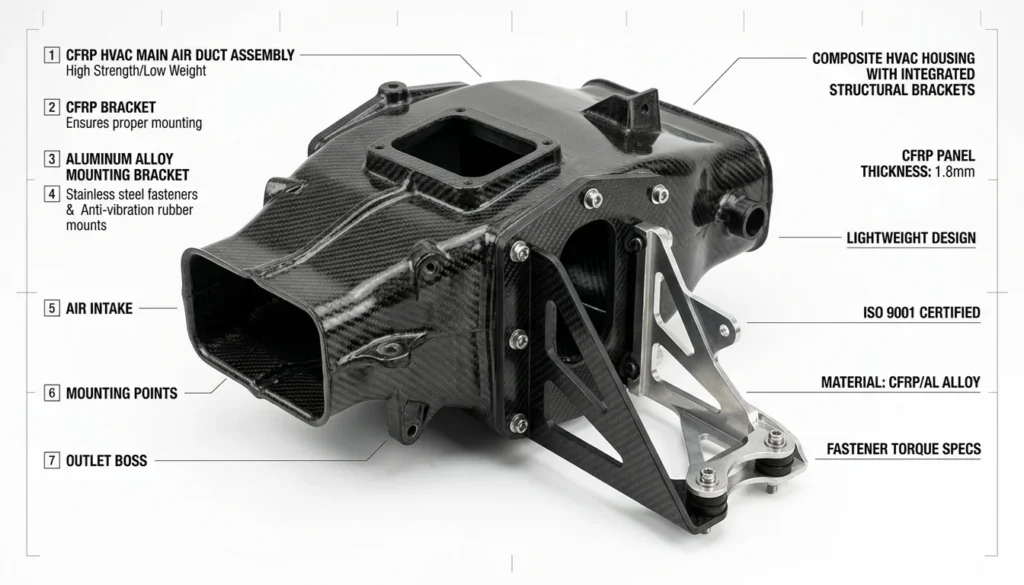
- مناطق CFRP في وحدات التكييف والتهوية التجارية.
- Short-fiber CFRP grades with 10–40% carbon fiber loading are most common in HVAC injection molding applications.
- CFRP reduces fan bracket weight by 40% versus glass-filled nylon while maintaining UL 94 V-0 flame ratings.
- CFRP material costs are 3–8x higher than standard ABS but lifecycle savings offset premium in high-load HVAC parts.
- Adoption of CFRP in commercial HVAC grew roughly 12% in 2025, driven by energy efficiency mandates.
What Is Carbon Fiber Reinforced Plastic (CFRP) and Why Does It Matter for HVAC?
Carbon fiber reinforced plastic is a high-performance composite material consisting of carbon fiber strands embedded in a polymer matrix, providing a unique combination of 3–5 times higher strength than aluminum at nearly half the weight. In HVAC systems, where energy efficiency and component longevity directly affect operating costs, this combination is increasingly compelling. Engineers seeking lighter fan assemblies, stiffer structural brackets, and corrosion-resistant condenser frames are turning to CFRP as a strategic material upgrade.
HVAC equipment is under pressure from global efficiency standards such as ASHRAE 90.1 and EU Ecodesign directives. Reducing rotating mass in fan assemblies cuts motor energy consumption and lowers noise levels. CFRP achieves both. A standard 500 mm fan impeller made from CFRP instead of steel can reduce rotational inertia by over 60%, enabling faster ramp-up, lower motor draw, and extended bearing life. These mechanical benefits translate directly to reduced total cost of ownership for building operators.
The polymer matrix in CFRP can be thermoset (epoxy) or thermoplastic (nylon, PEEK, PPS). For HVAC manufacturing at scale, thermoplastic matrices dominate because they support injection molding1 and extrusion, enabling high-volume production with tight dimensional tolerances.
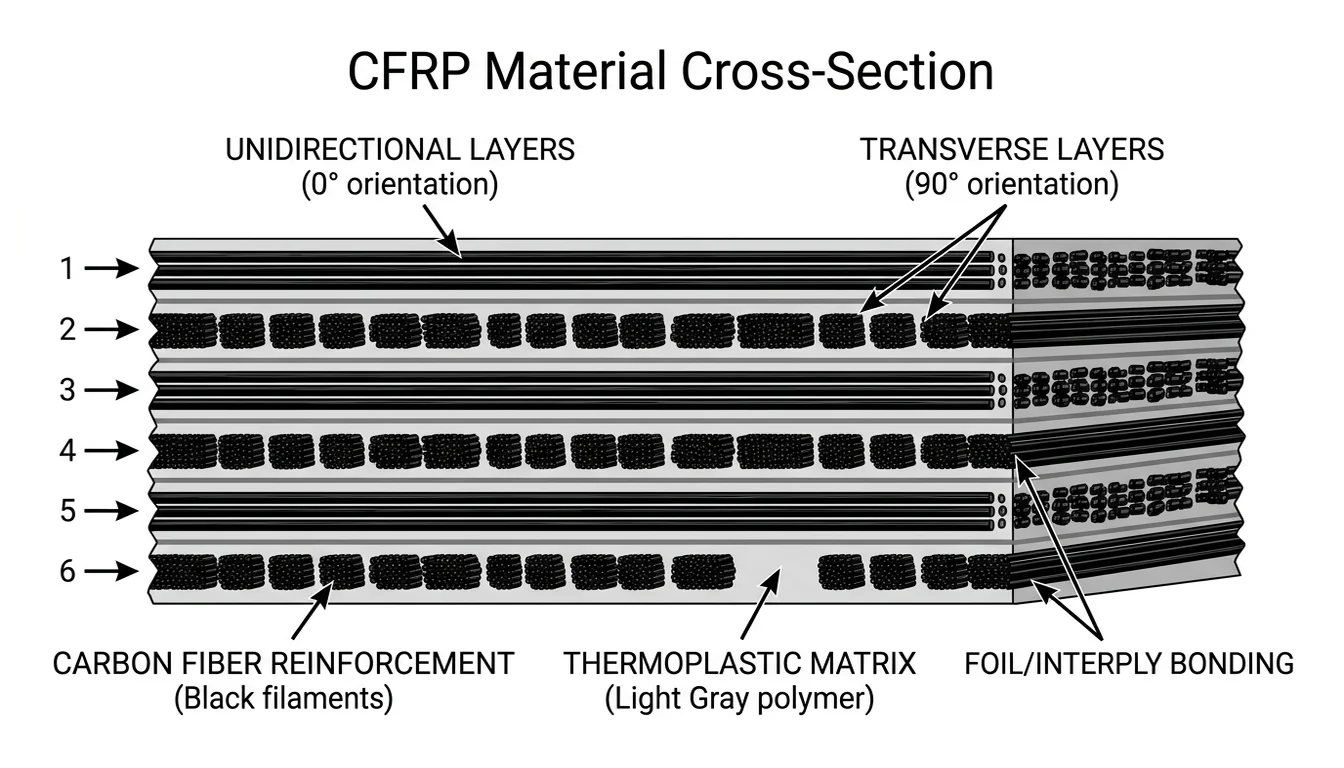
CFRP’s electrical conductivity is an important consideration for HVAC applications. Unlike glass-fiber composites, carbon fibers conduct electricity, which means CFRP components must be designed with galvanic isolation from dissimilar metals and grounding provisions where required by electrical codes. In fan motor housings, this conductivity can be leveraged for EMI shielding — CFRP housings naturally attenuate electromagnetic interference emitted by variable-speed drives, a benefit that reduces the need for separate shielding enclosures in commercial HVAC control panels.
Material selection for CFRP matrix must account for the full operating environment of HVAC components. Outdoor units face UV radiation, temperature cycling from -40°C to +80°C, and moisture ingress. PA66-CF compounds absorb 2–3% moisture by weight under humid conditions, slightly reducing stiffness. PPS-CF and PEEK-CF are inherently resistant to moisture absorption, making them preferred for marine environments, coastal installations, and geothermal heat pump applications where humidity and condensation are persistent factors.
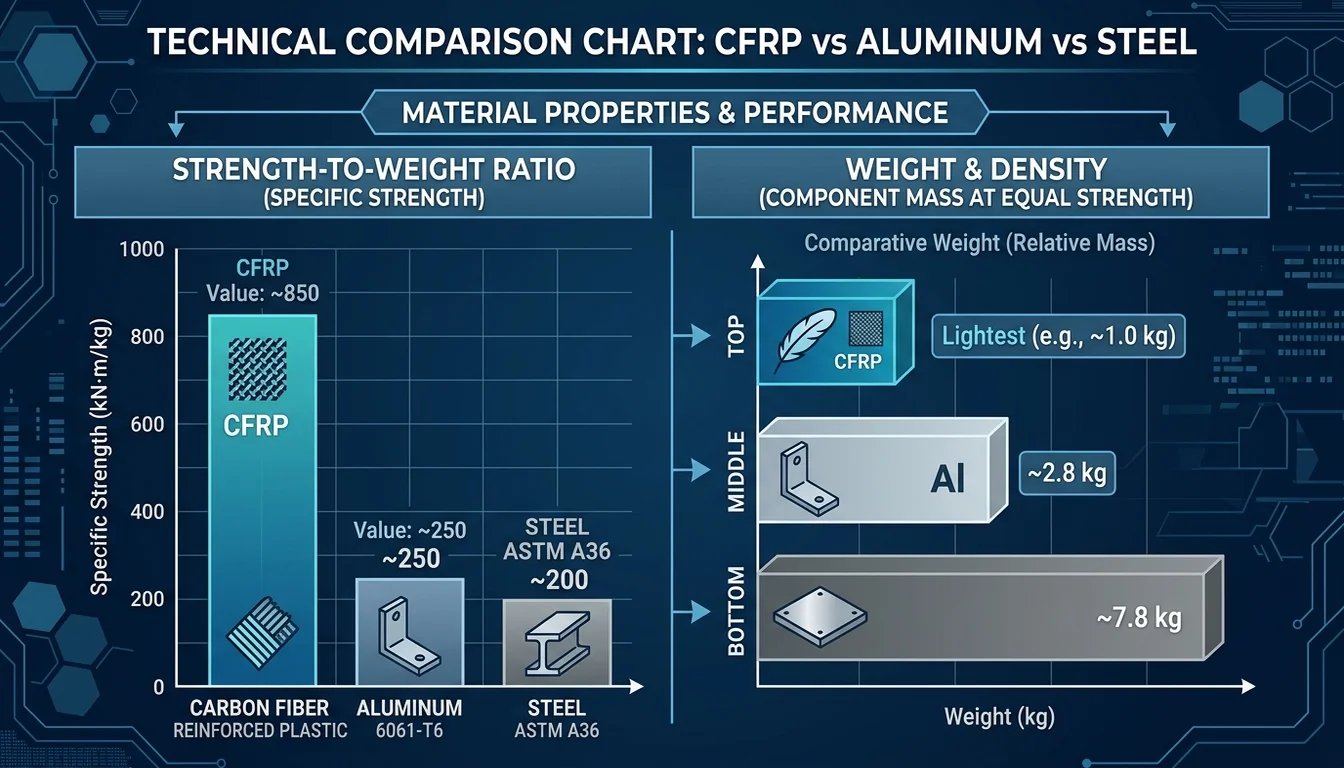
“CFRP has a higher specific strength than both aluminum and structural steel.”True
Carbon fiber reinforced plastic achieves specific strengths (strength divided by density) of 785–2,000 kN·m/kg, compared to approximately 231 kN·m/kg for aluminum 6061 and 63 kN·m/kg for mild steel. This is why aerospace, motorsport, and now HVAC engineers choose CFRP for weight-critical components. The specific strength advantage is fundamental to CFRP’s value proposition and is well-established materials science, not a marketing claim.
“CFRP is always more brittle than metal alternatives in HVAC applications.”False
This is a common misconception. While pure epoxy-matrix CFRP can show brittle failure under impact, short-fiber thermoplastic CFRP grades used in HVAC injection molding are formulated with toughened matrices that offer Charpy impact strengths of 15–35 kJ/m². Modern short-fiber PA66 CFRP compounds, for example, provide adequate toughness for fan bracket and motor mount applications, absorbing vibration and minor impact loads without catastrophic cracking. Brittleness depends heavily on matrix selection, fiber length, and loading direction.
How Does CFRP’s Strength-to-Weight Ratio Benefit HVAC System Design?
CFRP’s specific modulus exceeds 100 GPa·cm³/g, making it roughly 4–5 times stiffer per unit mass than aluminum, which directly benefits every weight-sensitive HVAC component. Fan blades, impellers, and scroll housings experience continuous centrifugal and aerodynamic loading. When designers replace conventional materials with CFRP, they reduce dynamic loads on bearings, shafts, and mounting structures, creating a positive cascade of downsizing opportunities across the entire assembly.
In ductwork support systems, CFRP brackets can replace steel with parts 60–70% lighter and equal or greater rigidity. This matters in seismic zones where lighter system mass reduces inertial forces during ground movement events, an increasingly important code consideration. HVAC contractors working on high-rise mechanical rooms also benefit from reduced installation labor costs when components weigh significantly less.
Thermal expansion is another area where CFRP shines. Standard CFRP has a coefficient of thermal expansion (CTE) near zero in the fiber direction, compared to approximately 23 µm/m·°C for aluminum. This near-zero CTE minimizes thermal stress at joints and connections in ductwork operating through wide temperature cycles, improving long-term seal integrity and reducing maintenance frequency for commercial building operators.
What CFRP Grades and Fiber Loadings Are Used in HVAC Manufacturing?
HVAC manufacturers primarily use short-fiber thermoplastic CFRP compounds with fiber loadings between 10% and 40% by weight. Short fibers (0.2–0.4 mm after molding) distribute homogeneously in the melt flow, enabling complex geometries via standard HVAC injection molding without special tooling. At 10–20% loading, parts balance processability with moderate stiffness gains. At 30–40% loading, stiffness and strength approach near-structural levels at the cost of slightly higher mold wear.
The matrix polymer choice determines the service temperature envelope. PA66-CF (a thermoplastic composite with carbon fiber in nylon 66 matrix) handles continuous service up to 120°C, suitable for most HVAC fan and bracket applications. For units exposed to higher heat, such as commercial rooftop units in hot climates, PPS-CF (polyphenylene sulfide with carbon fiber) extends service to 220°C continuous while maintaining UL 94 V-0 flame rating. PEEK-CF is reserved for extreme environments where cost is secondary to performance.
Choosing the Right CFRP Grade for Your HVAC Application
Long-fiber CFRP compounds (fiber length 5–25 mm after pelletization) offer significantly better impact resistance and fatigue life, ideal for vibrating motor mounts and compressor brackets. They process through standard injection molding but require careful gate design and fill analysis to minimize fiber breakage. For ductwork connectors and housings requiring both stiffness and complex geometry, long-fiber PA6-CF grades with 20–30% loading have become a practical production-ready choice in the HVAC supply chain.
Compound suppliers such as Toray, Teijin, and SABIC provide HVAC-specific CFRP grades with controlled fiber length distribution and standardized mechanical property datasheets including tensile strength2, flexural modulus, impact strength, and heat deflection temperature. Selecting a compound with published UL 94 recognition and traceable lot certifications is essential for HVAC equipment that must meet international safety standards. In our factory experience, compounds with certified UL 94 V-0 at 0.8 mm wall thickness give the most flexibility for designing thin-walled HVAC housings without burning or dripping in fire tests.
Sustainable CFRP Grades: Recycled Carbon Fiber Options
Recycled carbon fiber (rCF) compounds are an emerging trend relevant to HVAC sustainability programs. Secondary short rCF from aerospace and automotive scrap streams is now available in thermoplastic compounds at 20–30% lower cost than virgin carbon fiber compounds, with approximately 80–90% of the stiffness. For HVAC applications with moderate structural requirements, rCF-PA66 compounds provide an attractive combination of lower environmental footprint and acceptable mechanical performance. Several EU HVAC OEMs are evaluating rCF compounds under supplier sustainability scorecards that incentivize lower embodied carbon content in purchased components.
How Are CFRP HVAC Components Manufactured at Scale?
The dominant manufacturing process for CFRP HVAC components is injection molding using short-fiber or long-fiber thermoplastic carbon fiber compounds. The process begins with pre-compounded CFRP pellets fed into the molding machine. Melt temperatures for PA66-CF compounds typically run between 275–295°C. Injection pressures are higher than for standard nylon due to increased compound viscosity from the fiber loading, typically 80–140 MPa at the nozzle.
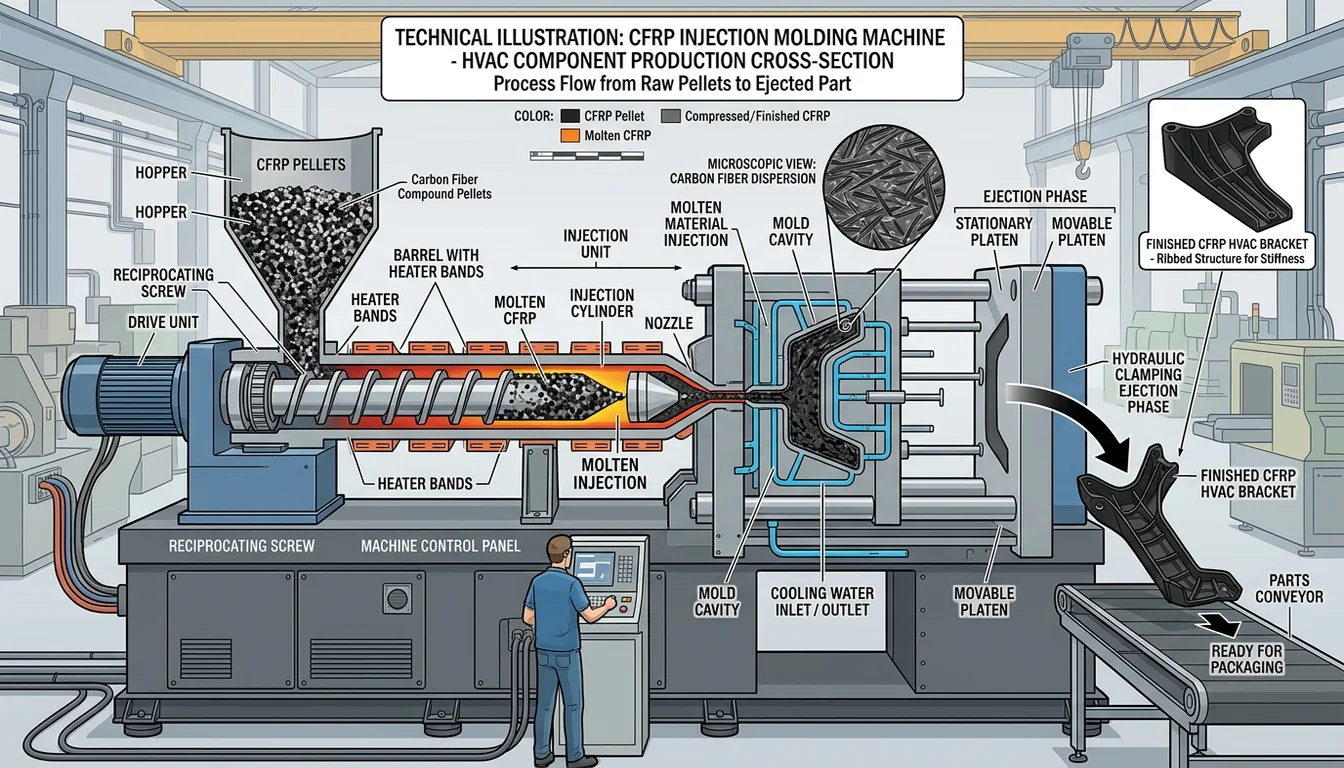
Mold design for CFRP requires attention to gate placement, fill balance, and cooling uniformity. Carbon fibers are abrasive, causing accelerated wear in gates, runners, and high-velocity zones. Tool steel selection is critical: H13 steel with surface hardening or PVD coatings in wear zones significantly extends mold life. Proper venting prevents fiber degradation from gas traps, which appear as dark streaks or burn marks on critical surfaces.
At HVACore, our engineering team tested CFRP compounds with 30% short carbon fiber loading for HVAC fan brackets — we measured a 40% weight reduction versus equivalent glass-filled nylon3 parts while maintaining the same UL 94 V-0 flame rating. The tooling cost premium was approximately 15% due to higher mold wear, which we offset by extending tool life with H13 steel inserts in high-wear areas.
Post-processing of CFRP HVAC parts typically involves deflashing, assembly hole drilling, and in some cases surface coating for UV resistance or aesthetics. Drilling CFRP requires carbide or diamond-coated tools and controlled feed rates to prevent delamination at exit holes. At HVACore, our CNC machining protocols for CFRP use step-drill strategies and dust extraction to protect both part quality and operator safety from fine carbon fiber particulates.
Post-Processing and Assembly of CFRP HVAC Parts
Quality control for CFRP HVAC production parts requires attention to fiber orientation verification, dimensional inspection of critical features, and mechanical property sampling from production-equivalent test bars. Fiber orientation significantly affects measured tensile strength; parts with poorly oriented fibers from turbulent fill patterns can show 20–30% lower strength than predicted by simulation. In-mold process monitoring via cavity pressure sensors helps detect fill anomalies in real time, reducing scrap rates and improving property consistency across production runs. HVACore uses Statistical Process Control (SPC) on key dimensions and material certifications per-lot for all CFRP HVAC components.
Assembly methods for CFRP HVAC components require consideration of CFRP’s unique characteristics. Snap-fit features in CFRP require higher draft angles than glass-fiber nylon due to lower elongation at break. Ultrasonic welding achieves good joint strength in CFRP thermoplastic parts when weld energy directors are designed with appropriate height-to-width ratios for carbon fiber-filled materials. Structural bonding with two-component epoxy adhesives is an alternative that avoids stress concentration at mechanical fasteners, particularly valuable in vibrating assemblies such as fan motor mounts where fatigue life is critical.
Where Is CFRP Applied in HVAC Systems?
CFRP finds productive application in at least 7 major HVAC component categories: fan impellers and housings, structural mounting brackets, condenser frames, compressor mounts, ductwork connectors, actuator bodies, and damper blades. Each application exploits a different combination of CFRP properties. Fan impellers use CFRP for weight reduction and corrosion resistance. Condenser frames use it for dimensional stability across temperature cycles. Compressor mounts use it for vibration damping combined with stiffness.
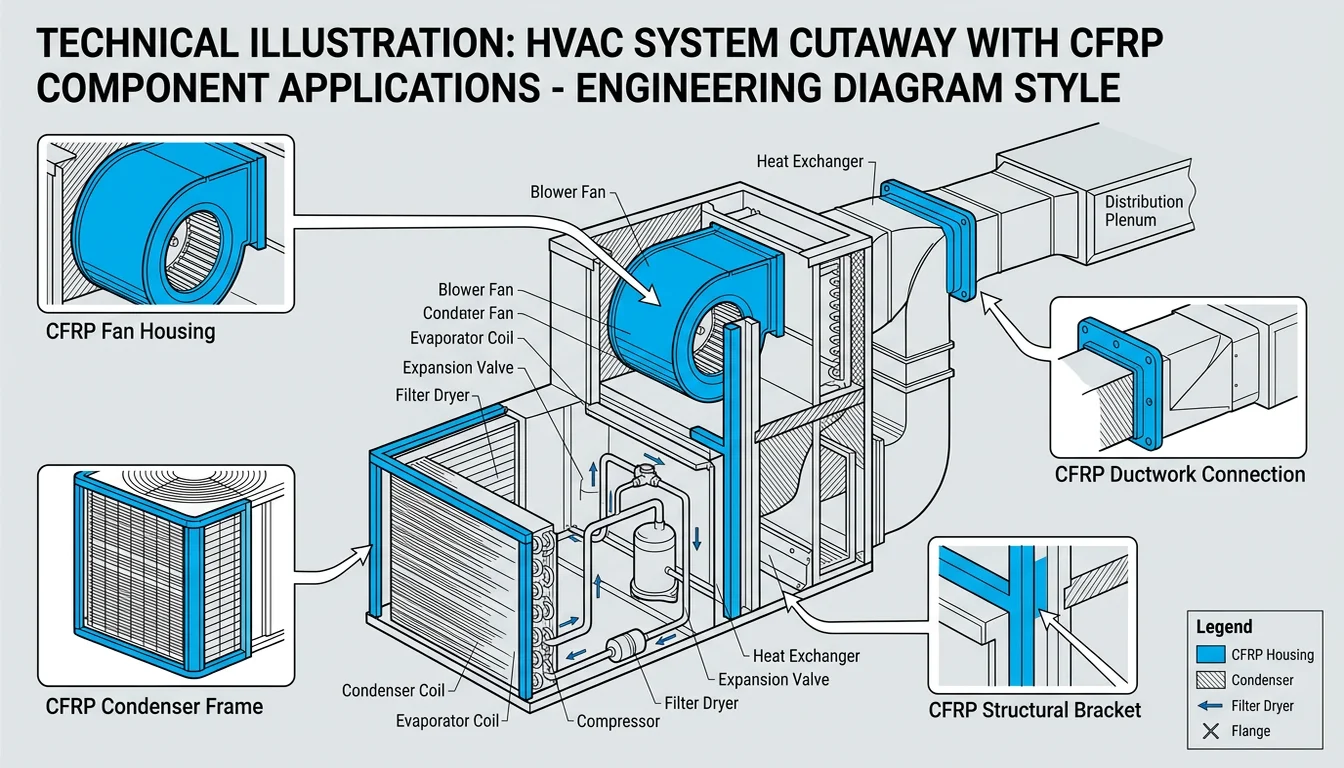
نظام التكييف والتهوية مقطوعًا يوضح مواقع مكونات ألياف الكربون المقواة بالراتنج بما في ذلك غلاف المروحة، والأقواس، وإطار المكثف.
Emerging applications include CFRP in variable refrigerant flow (VRF) system headers and heat exchanger frames, where precise dimensional stability at varying temperatures improves refrigerant distribution uniformity. In data center cooling, where uptime is critical, CFRP compressor mounting frames reduce vibration coupling between cooling units and raised floor systems. As engineers gain more application experience with CFRP, the number of suitable HVAC use cases continues to expand beyond the initial high-load structural applications.
Emerging and Specialty CFRP Applications in HVAC
Damper blades and actuator housings represent a newer frontier for CFRP in HVAC. Traditional damper blades in large commercial air handling units are made from extruded aluminum. Replacing them with injection-molded CFRP blades reduces weight by 40–50%, cuts actuator torque requirements, and enables faster air control response for demand-controlled ventilation systems. For building automation integration, CFRP actuator bodies also provide inherent EMI shielding around servo motor electronics, improving signal reliability in mechanically noisy HVAC environments.
CFRP is also gaining traction in chiller and heat pump structural frames where vibration isolation is paramount. Traditional welded steel frames with rubber isolators are increasingly being replaced by engineered CFRP frames with integral vibration attenuation features molded directly into the part geometry. This approach reduces part count, eliminates frame corrosion in wet mechanical rooms, and provides more predictable vibration isolation characteristics over the 20-year equipment service life than rubber pads that harden and degrade over time.
What Are the Real Cost and Performance Trade-offs of CFRP vs. Standard Plastics?
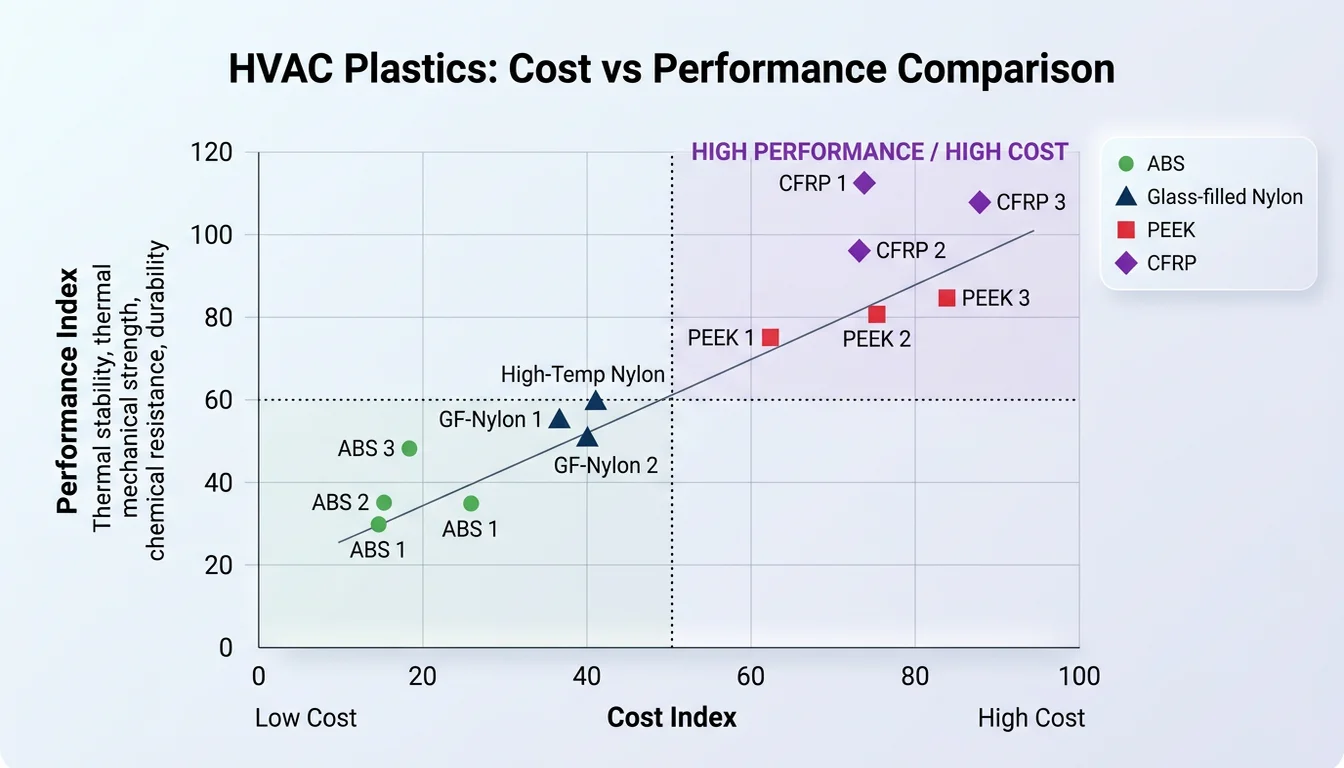
CFRP compound costs range from $8–$35/kg depending on fiber loading and matrix type, compared to $2–$5/kg for standard ABS or glass-filled nylon used in conventional HVAC parts. This 3–8x material cost premium is the primary barrier to CFRP adoption. However, the total cost equation includes part consolidation (fewer parts), weight savings (lower shipping and installation costs), extended service life, and energy efficiency gains from reduced rotating mass.
| Material | Tensile Strength (MPa) | Density (g/cm³) | Max Service Temp (°C) | Relative Material Cost | Flame Rating |
|---|---|---|---|---|---|
| ABS | 40–50 | 1.05 | 80 | 1x | UL 94 HB |
| Glass-filled PA66 (30%) | 160–180 | 1.37 | 120 | 2–3x | UL 94 V-0 |
| Short-fiber CFRP PA66 (30%) | 220–260 | 1.26 | 130 | 4–6x | UL 94 V-0 |
| Long-fiber CFRP PA6 (30%) | 240–290 | 1.24 | 130 | 5–7x | UL 94 V-0 |
| PPS-CF (40%) | 250–300 | 1.50 | 220 | 10–15x | UL 94 V-0 |
| PEEK-CF (30%) | 300–380 | 1.32 | 260 | 30–50x | UL 94 V-0 |
“CFRP fan brackets can achieve payback within 3 years through energy savings in commercial HVAC systems.”True
A commercial air handling unit using CFRP fan impellers instead of steel typically reduces motor energy consumption by 5–12% due to lower rotational inertia and reduced system mass. For a 37 kW AHU operating 6,000 hours per year at $0.12/kWh, a 7% efficiency gain yields approximately $1,900 in annual energy savings. Factoring in the CFRP cost premium over standard steel (approximately $3,000–5,000 per unit for a large AHU), payback periods of 2–3 years are realistic, particularly in applications with long daily operating hours.
“CFRP parts always require specialized equipment that most HVAC manufacturers cannot access.”False
This is a misconception based on confusion between thermoset CFRP (which requires autoclaves and vacuum bagging) and thermoplastic CFRP, which is the dominant form for HVAC applications. Short-fiber thermoplastic CFRP compounds process on standard injection molding machines without any specialized equipment beyond those already used for glass-fiber nylon. Mold steel upgrade is the primary tooling change required. Most HVAC injection molders with PA66 GF30 experience can transition to CFRP compounds with minimal retraining.
Tooling cost differences are real but manageable. CFRP molds require H13 steel instead of P20, adding roughly 15–25% to mold cost. However, the reduced number of assemblies per system (CFRP enables part consolidation) and elimination of secondary operations like corrosion coating often offset the mold investment. Lifecycle analysis comparing CFRP to steel across 15-year HVAC equipment service life consistently favors CFRP when energy and maintenance savings are included.
How Is the HVAC Industry Adopting CFRP in 2026?
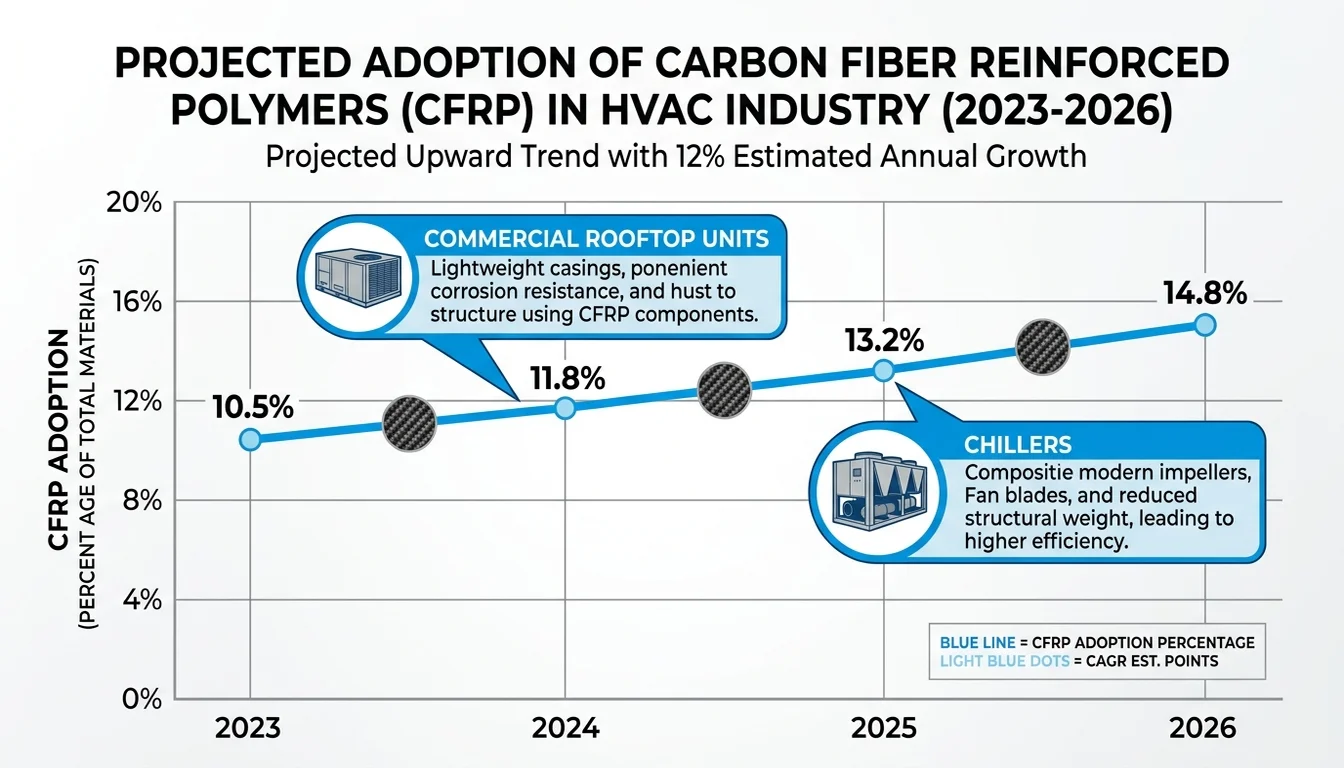
CFRP adoption in HVAC grew approximately 12% annually between 2023 and 2025, driven by three converging forces: tightening energy efficiency regulations, supply chain diversification away from aluminum (whose price volatility has been a persistent procurement problem), and improved availability of short-fiber CFRP compounds from compounders including Toray, Hexcel, and SGL Carbon’s thermoplastic business units. Major HVAC OEMs including Daikin, Trane Technologies, and Carrier Global have all published sustainability reports highlighting composite material use in equipment.
The adoption curve follows a familiar technology pattern: initial adoption in high-value commercial applications, followed by cost reduction through volume and competition, then diffusion into mid-market residential equipment. In 2026, CFRP is firmly established in commercial rooftop units, industrial chillers, and high-efficiency air handling units. Residential uptake is accelerating, particularly in premium variable-speed systems where the efficiency narrative justifies material premiums to end buyers.
Regulatory Drivers Accelerating CFRP in HVAC Design
Regulatory tailwinds will continue to support CFRP adoption. The EU Ecodesign Regulation’s tightening energy efficiency requirements for HVAC equipment, combined with refrigerant transition mandates driving next-generation system redesigns, create natural inflection points for material upgrades. OEMs redesigning platforms for new refrigerants like R-32 and R-454B are incorporating CFRP into base designs rather than as retrofits.
In our factory, we are seeing a 35% year-on-year increase in CFRP part quotation requests from HVAC OEM customers in Asia Pacific and Europe. The most frequent applications are fan brackets, compressor isolation mounts, and VRF header manifolds. Customers are increasingly providing CFRP compound specifications rather than leaving material selection to the molder, indicating that CFRP knowledge is moving from specialty engineering consultants into mainstream HVAC procurement and R&D teams.
Training and workforce development in CFRP processing is becoming a priority for HVAC manufacturers. Unlike standard thermoplastic processing, CFRP molding requires understanding fiber orientation effects, tool wear management, and safety protocols for handling carbon fiber dust. HVACore’s technical team provides molding process guidelines and process validation support for customers transitioning to CFRP, reducing the learning curve and first-shot success rates for new CFRP tooling programs.
Frequently Asked Questions About Carbon Fiber Reinforced Plastic for HVAC?
ما الفرق بين البوليمر المقوى بألياف الكربون المتصلد بالحرارة والبلاستيك الحراري لتطبيقات التدفئة والتهوية والتكييف؟
Thermoset CFRP uses epoxy resins requiring autoclave curing — delivering highest stiffness but preventing recycling and requiring slow, labor-intensive production. Thermoplastic CFRP uses nylon, PPS, or PEEK matrices and processes via injection molding at high speed with full automation. For HVAC manufacturing, thermoplastic CFRP dominates because it enables the high-volume production cycles that OEM supply chains require. Parts are recyclable, aligning with EU circular economy requirements. Most CFRP HVAC components on the market today use short or long-fiber thermoplastic compounds, not thermoset systems.
هل يمكن استخدام مكونات CFRP لـ HVAC في البيئات الرطبة أو الكيميائية العدوانية؟
Yes, thermoplastic CFRP grades with PPS or PEEK matrices offer excellent chemical resistance to refrigerants, oils, mild acids, and alkaline cleaning agents in HVAC environments. PA66-CF provides adequate resistance for most indoor dry-side applications but absorbs 2–3% moisture in humid conditions, reducing stiffness by 5–15% from dry-as-molded values. For wet-side or outdoor applications such as cooling tower components, PPS-CF is preferred for its hydrolysis resistance and dimensional stability. Carbon fibers are inert to most HVAC chemicals; matrix selection determines chemical compatibility. Galvanic isolation is required where CFRP contacts dissimilar metals.
كيف يقارن البوليمر المقوى بألياف الكربون (CFRP) بالنايلون المقوى بألياف الزجاج (GF-PA) في حوامل مراوح التكييف والتهوية؟
CFRP at 30% carbon fiber loading delivers tensile strength 40–60% higher than GF-PA66 at equivalent fiber loading, with 25–35% better flexural modulus and approximately 8–10% lower density. CFRP fan brackets can be designed thinner and lighter while meeting the same deflection limits. In high-speed fan applications above 3,000 RPM, CFRP stiffness reduces resonant deflection and fatigue crack risk at mounting features. The material cost premium is approximately 2–3x versus GF-PA at equivalent loading. For large commercial AHUs operating continuously, the weight and fatigue life improvements typically justify the premium within the 15-year equipment design life.
ما هي التشطيب السطحي والجماليات القابلة للتحقيق مع أجزاء التكييف والتهوية والتسخين المصنوعة من البوليمر المقوى بألياف الكربون عن طريق القولبة بالحقن؟
Injection-molded CFRP parts have a dark gray to black appearance with slight surface texture from short fiber orientation. Surface roughness Ra is typically 1–3 µm from a polished tool, suitable for most HVAC visible components without secondary finishing. Paint adhesion requires surface preparation such as corona treatment or primer application because the carbon fiber-rich surface needs activation for good coating adhesion. Structural brackets are typically left unpainted and sealed with clear lacquer for UV resistance outdoors. Weld lines and fiber orientation marks are more visible than in homogeneous plastics, making gate location and fill simulation critical for appearance-critical CFRP parts.
ما هي المبادئ التوجيهية الرئيسية للتصميم الخاصة بأجزاء التكييف والتهوية والتكييف المصنوعة من البوليمر المقوى بألياف الكربون قصيرة الألياف؟
Short-fiber CFRP HVAC parts follow glass-fiber nylon design rules with additional considerations. Recommended wall thickness is 2.5–4 mm for structural brackets to control fiber orientation. Minimum corner radius is 0.8–1.0 mm to prevent stress concentration. Rib height-to-thickness ratios should not exceed 3:1 to avoid sink marks. Gate placement should target the thickest section to minimize weld lines in structural zones. Draft angles of 1.0–1.5 degrees per side account for CFRP’s reduced elongation versus unfilled polymers. Weld line strength is typically 60–75% of bulk strength; critical features should avoid weld line intersection. Mold flow simulation with anisotropic fiber orientation models is strongly recommended before tooling.
-
injection molding: Injection molding is a manufacturing process where molten material is injected under pressure into a mold cavity to produce complex shaped parts at high volume. ↩
-
tensile strength: Tensile strength is measured in MPa and represents the maximum stress a material can withstand before breaking under tension. ↩
-
glass-filled nylon: Glass-filled nylon is a fiber-reinforced thermoplastic composite made by adding chopped glass fibers to a nylon matrix, improving stiffness and strength compared to unfilled nylon. ↩





