

مصيدة المكثفات (P-Trap):.
– Key components include drain pans, primary and secondary drain lines, fittings, and P-traps, all of which rely on high-quality plastic parts for durability.
– PVC is the industry-standard material due to its chemical resistance to slightly acidic condensate, low cost, and durability, but proper material selection is vital for longevity.
– Precision injection molding with tolerances of ±0.1mm is essential for creating leak-free fittings, traps, and components that ensure system integrity.
– Adherence to building codes like the IMC and standards like ASHRAE 62.1, which dictate pipe size, slope, and trap design, is mandatory for safe and effective operation.
What Is a Condensate Drain Line in an HVAC System?
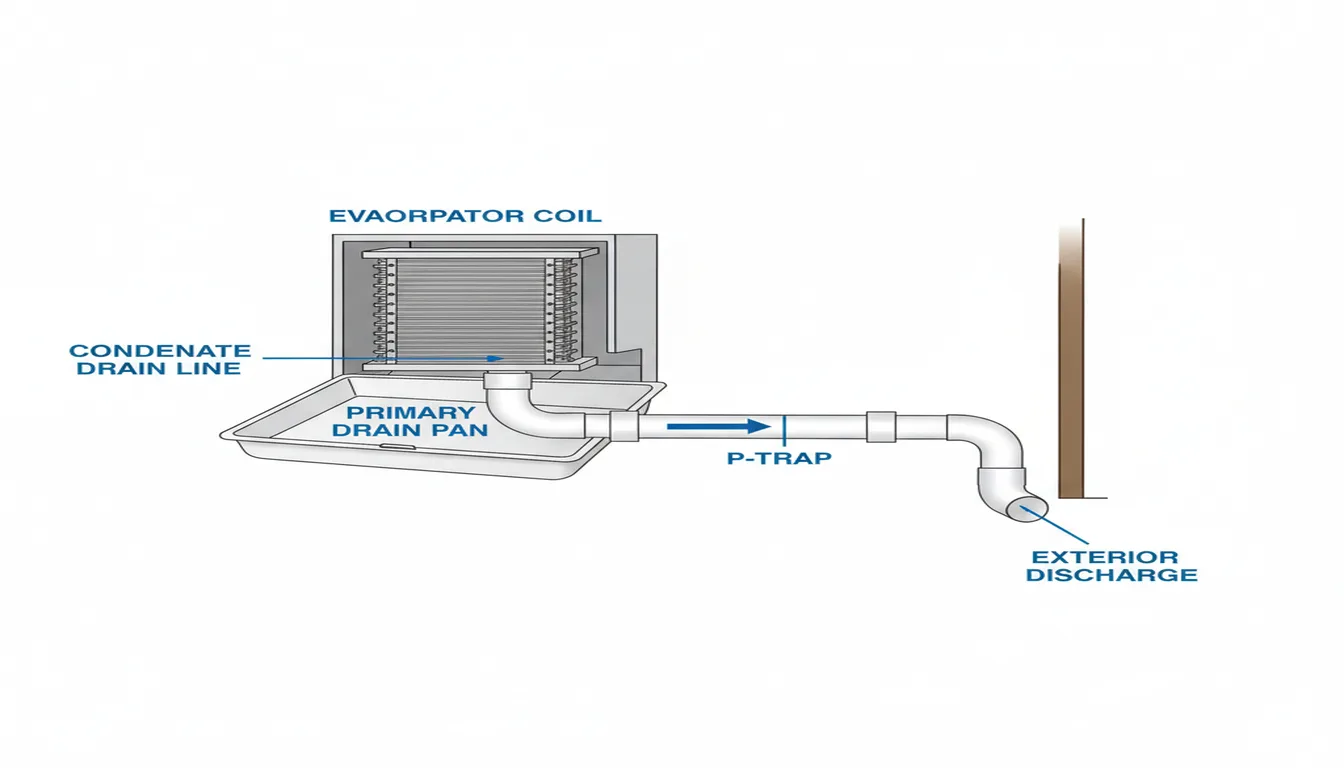
An HVAC condensate drain line is the unsung hero of your air conditioning system. While the compressor and condenser get most of the attention, this simple network of pipes and fittings performs a mission-critical task: safely removing water from your home or building. As your air conditioner cools the air, it also dehumidifies it. Moisture from the warm, humid air condenses on the cold evaporator coil, much like water droplets forming on a cold glass of water on a summer day. This water, known as condensate, drips from the coil into a collection pan.
From there, the HVAC condensate drain line takes over. It acts as a dedicated plumbing system designed to channel this water away from the indoor air handler unit and deposit it safely outside or into a suitable plumbing drain. Without a properly functioning drain line, this water would overflow the pan, leading to significant water damage, structural rot, and the potential for hazardous mold and mildew growth within your walls, ceilings, and HVAC unit itself.
| Component | Material | Function |
|---|---|---|
| Drain Pan | High-Impact Polystyrene (HIPS) | Collect condensate, prevent overflow |
| Drain Line | Schedule 40 PVC | Transport condensate to drain point |
| P-Trap | PVC or CPVC | Prevent sewer gas backflow |
| Float Switch | ABS housing | Overflow protection shutoff |
The condensate produced is not pure water. As it forms, it captures airborne dust, dirt, pollen, and other particulates. This mixture creates a slightly acidic solution, typically with a pH between 5.5 and 7.5. This chemical composition is a key reason why material selection for the drain line is so important. Metal pipes would corrode quickly, whereas specific plastics, like PVC, offer excellent resistance, ensuring the long-term integrity of the system. In essence, the condensate drain line is a fundamental component for protecting both your property and your indoor air quality.
What Are the Key Components That Make Up a Condensate Drain Line System?
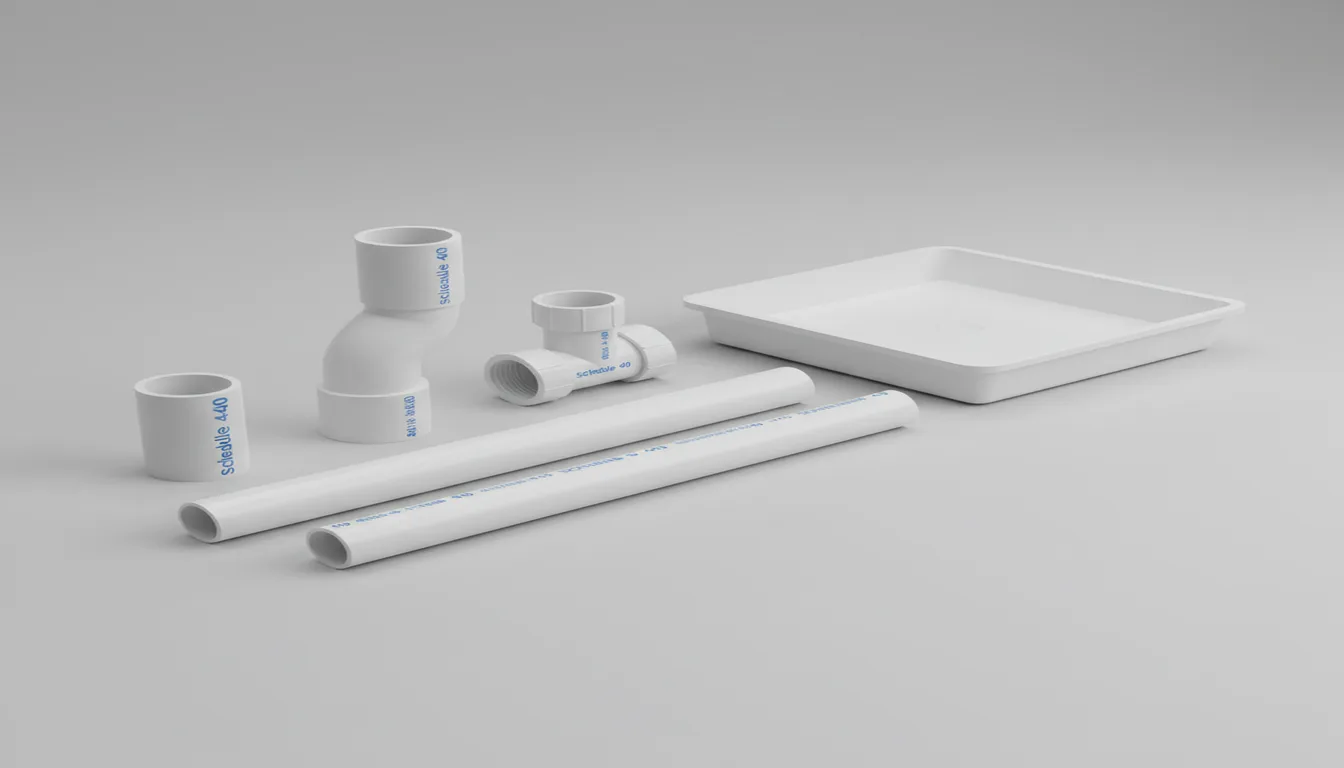
A complete condensate management system is more than just a single pipe. It’s a series of interconnected, purpose-built parts that work in concert. As a manufacturer of condensate drain line plastic components, we produce many of these critical elements. Understanding each part reveals why precision and material quality are non-negotiable.
- Primary Condensate Drain Pan: Located directly beneath the evaporator coil, this pan is the first point of collection for condensate. It is sloped to direct water toward the drain line connection. In our facility, we injection mold these pans from high-impact polystyrene (HIPS) or ABS to ensure they are seamless and leak-proof.
- Primary Drain Line: This is the main pipe that carries water away from the primary drain pan under normal operating conditions. It’s typically constructed from 3/4-inch or 1-inch diameter plastic pipe.
- Secondary (or Auxiliary) Drain Pan and Line: A crucial safety feature, especially for units installed in attics or above finished ceilings. If the primary line clogs, condensate overflows into this secondary pan. Its drain line is often routed to a conspicuous location (like over a window) to alert the homeowner of a problem. Some systems replace the secondary line with a float switch that shuts off the AC unit if water is detected.
- Fittings and Couplings: These small but vital components connect sections of pipe, navigate corners (using 90° or 45° elbows), and adapt to different sizes. The integrity of every single fitting is paramount to a leak-free system. At HVACore, our 45 injection molding lines produce these fittings with a precision tolerance of ±0.1mm, ensuring a perfect solvent-weld or threaded connection every time.
- The Condensate Trap (P-Trap): 3/4 بوصة كحد أدنى للوحدات السكنية.
- Cleanout Ports: These are T-shaped fittings with a removable cap installed in the line, usually near the trap and the air handler. They provide easy access for technicians to inspect the line and flush out clogs without having to cut the pipe. We mold these with high-quality threads to ensure a tight seal after maintenance.
| Material | Temp Rating | Best For |
|---|---|---|
| Schedule 40 PVC | Up to 60°C | Residential systems |
| CPVC | Up to 93°C | High-temp condensate |
| Copper | Up to 100°C+ | Commercial buildings |
Each of these components plays a specific role. A failure in even the smallest part, like a cracked fitting or a poorly molded pan, can compromise the entire system and lead to costly water damage. This is why a focus on manufacturing excellence for every plastic part is so essential.
Why Does Plastic Material Selection Determine Condensate Drain Line Longevity?
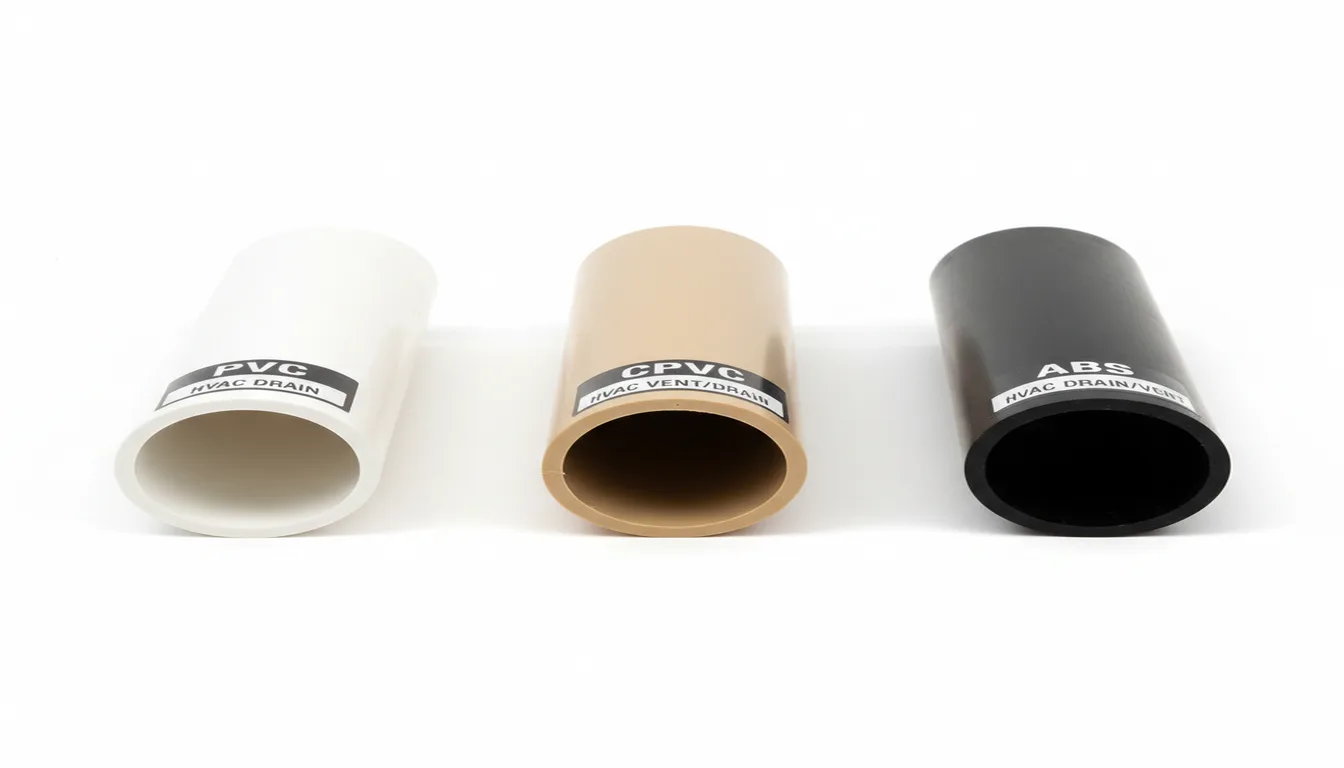
Choosing the right material for an HVAC condensate drain line is a foundational decision that directly impacts the system’s reliability and lifespan. While various plastics might look similar, their chemical and physical properties differ significantly. At HVACore, our material scientists work with over 400 different thermoplastic resins, and we understand that selecting the right one for the job is the first step in quality manufacturing.
The primary choice for condensate drain lines is Schedule 40 PVC1 (Polyvinyl Chloride). It provides an ideal balance of properties for this application:
- Chemical Resistance: It is inert to the slightly acidic nature of HVAC condensate, preventing the corrosion and pitting that would plague metal pipes.
- Durability and Strength: Schedule 40 PVC has a rigid structure that resists impact and prevents sagging when properly supported, maintaining the crucial drainage slope.
- Cost-Effectiveness: It is significantly more affordable than alternatives like copper or even other plastics like CPVC, making it the go-to choice for both residential and commercial projects.
- Ease of Installation: PVC pipes and fittings are easily joined using a simple two-step primer and solvent cement process, creating a permanent, watertight, cold-welded bond.
“PVC is the preferred material for HVAC condensate drain lines because of its chemical resistance and low cost.”True
Schedule 40 PVC is industry-standard for condensate drain lines. It resists the slightly acidic condensate, doesn’t corrode, and costs far less than copper or galvanized steel — explaining why it accounts for over 85% of residential HVAC drain line installations.
“Any plastic pipe can replace Schedule 40 PVC in HVAC condensate drain lines without performance issues.”False
Not all plastics handle HVAC condensate equally. CPVC offers higher heat resistance but costs 3-4× more. ABS is not approved for all jurisdictions. Random polypropylene lacks the dimensional stability needed for precision-fit fittings. Material specification matters significantly.
However, other materials have their place in specific scenarios. Below is a comparison of common plastics used in or around HVAC systems.
| Material | Key Properties | Best Use Case in Condensate Systems | Limitations |
|---|---|---|---|
| PVC (Polyvinyl Chloride) | Excellent chemical resistance, rigid, low cost, strong. | The standard for primary and secondary drain lines and fittings. | Becomes brittle with prolonged UV exposure unless treated. Lower temperature rating than CPVC. |
| CPVC (Chlorinated PVC) | Higher temperature resistance than PVC (up to 200°F). | Used in plenums or for hot water lines. Can be used for condensate from gas furnaces with high-temperature exhaust. | More expensive and slightly more brittle than PVC. Often overkill for standard AC condensate. |
| ABS (Acrylonitrile Butadiene Styrene) | High impact strength and toughness, even at low temperatures. | Commonly used for drain pans and housings due to its durability. Less common for pipes. | Not always approved by local plumbing codes for condensate lines. Lower chemical resistance than PVC. |
| HIPS (High Impact Polystyrene) | Lightweight, easy to form, very low cost. | Excellent for primary and secondary drain pans where structural load is minimal. | Not suitable for pressurized applications or as a piping material. Can become brittle over time. |
As manufacturers, our responsibility is to guide our OEM partners toward the optimal material. For a standard condensate fitting, PVC is king. For a drain pan that needs to withstand an accidental tool drop during servicing, ABS might be the superior choice. The right material ensures the final product performs flawlessly for the life of the HVAC unit.
What Are the Most Common Condensate Drain Line Problems and How Do We Prevent Them?
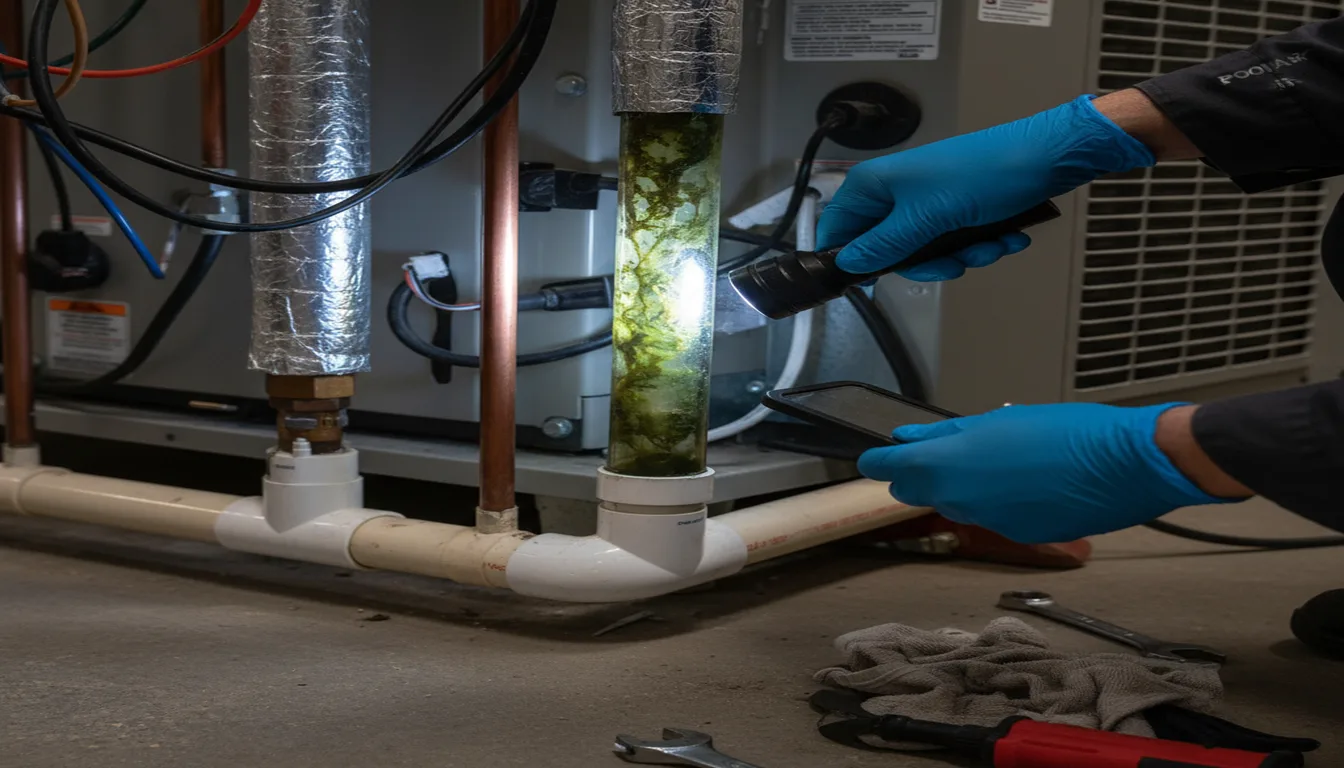
Despite its simple design, a condensate drain line can be a major source of service calls and property damage if not designed and installed correctly. From our 20+ years of experience in manufacturing HVAC components, we’ve seen how design and production quality directly address the most frequent failure points.
- Clogs from Biological Growth: This is the number one enemy of a condensate drain line. The dark, damp environment is a perfect breeding ground for algae, mold, and bacteria. This growth forms a slimy “gunk” or biofilm that can build up and completely block the pipe.
- Prevention: A correctly designed P-trap2 can help, but the best prevention is easy access for maintenance. We manufacture cleanout ports with robust, easy-to-open caps that don’t crack or strip after a few uses. This encourages regular flushing, which is the most effective way to prevent buildup. The smooth interior surface finish of our injection-molded PVC fittings, free from the porosity found in lower-quality parts, also makes it harder for biofilm to gain a foothold.
Key Factor Detail Pipe slope Minimum 1/8 inch per foot toward drain Diameter 3/4 inch minimum for residential units Material الأنبوب الموصى به Trap depth 2–4 inch water seal in P-trap - Improper Slope: Condensate lines are gravity-fed. Building codes mandate a minimum downward slope of 1/8 inch per foot of pipe to ensure water flows freely. If a line is installed level or, worse, with an upward slope, water will stagnate, promoting clogs and potential overflows.
- Prevention: While installation is key, component quality helps. Rigid Schedule 40 PVC pipe and sturdy, well-made fittings resist sagging between supports. Our precision-molded pipe hangers and supports are designed to securely hold the pipe at the correct angle without pinching or deforming it.
Check Point Frequency Method Visual inspection Monthly Check for leaks, cracks, discoloration Flow test Quarterly Pour water into pan, verify drainage Algae treatment Every 3 months Diluted bleach or algaecide tablets Full system check Annually Professional inspection and cleaning - Cracked Fittings or Pans: A crack in a drain pan or a fitting can lead to a slow, persistent leak that causes immense damage before it’s discovered. These cracks often occur due to material degradation, manufacturing defects, or physical stress.
- Prevention: This is where manufacturing control is paramount. We prevent this by using 100% virgin resin (no inconsistent regrind), maintaining precise temperature and pressure controls on our 45 molding machines, and conducting rigorous quality checks. Our ±0.1mm tolerance ensures that fittings are not stressed during installation, a common cause of premature failure.
- Air Lock / Trapping Issues: An improperly designed or located trap can cause problems. If the trap is on the positive pressure (downstream) side of the blower, it can prevent water from draining. If there’s no trap on a negative pressure (upstream) side, it can suck unconditioned air into the system, reducing efficiency and potentially pulling in contaminants.
- Prevention: We manufacture P-traps and other fittings to exact specifications that align with ASHRAE and IMC guidelines. We can also custom-mold specialized traps or fittings for unique OEM unit designs, ensuring the fluid dynamics are correct for the specific air pressure of the unit.
How Does Injection Molding Produce Precision Condensate Drain Fittings and Traps?

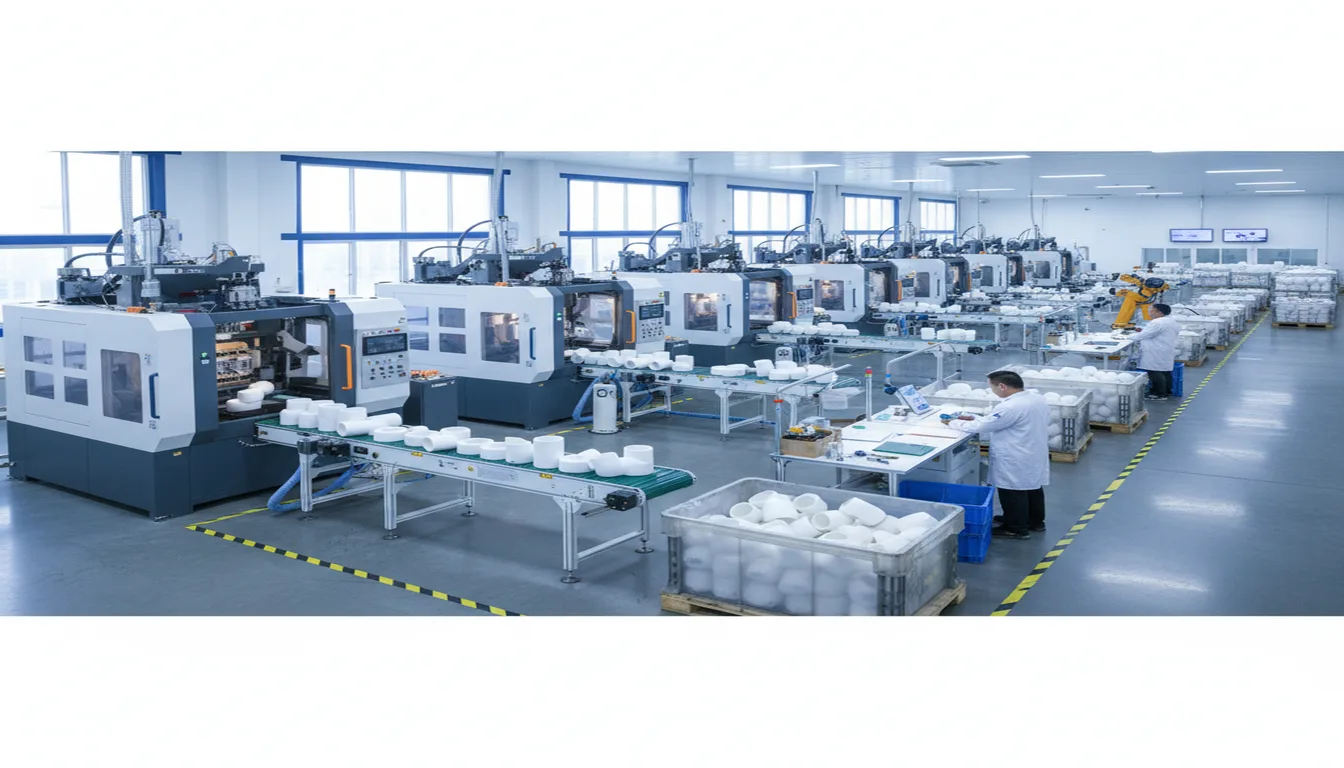
The difference between a reliable, leak-free condensate system and one that fails prematurely often comes down to microns of precision in its components. This is where the science of high-pressure injection molding becomes a critical advantage. Unlike fabrication methods or lower-quality molding, our process creates injection molded condensate fittings with unparalleled consistency and accuracy.
The process begins with a mold, a meticulously engineered block of steel machined to tolerances far tighter than the final part. Here’s how we turn a plastic pellet into a perfect fitting:
- Material Preparation: We start with a specific grade of PVC, ABS, or other specified polymer. The raw resin pellets are dried to an exact moisture content, as even trace amounts of water can cause cosmetic defects and structural weaknesses in the final part.
- Injection: The dried pellets are fed into the barrel of one of our 45 injection molding machines. The barrel contains a reciprocating screw that heats, melts, and plasticizes the resin into a homogenous, molten state. The screw then injects this molten plastic into the mold cavity under immense pressure—often between 10,000 and 30,000 PSI. This high pressure ensures the molten plastic fills every single detail of the mold, from sharp corners to threaded sections for cleanout caps.
- Cooling and Solidification: Once the cavity is filled, the mold is cooled by internal water channels. The plastic solidifies into the shape of the fitting. The cooling phase is precisely controlled; cooling too fast can introduce internal stresses, while cooling too slow hurts production efficiency.
- Ejection: The mold opens, and ejector pins gently push the finished, solid fitting out of the cavity. The cycle, which can take anywhere from a few seconds to a minute, then repeats.
| Optimization | Benefit | Implementation |
|---|---|---|
| Smooth-bore PVC | Reduce friction loss 15–20% | Use Schedule 40, avoid corrugated |
| Larger diameter | Handle higher condensate loads | Upsize to 1 in. for commercial units |
| Insulation | Prevent condensation on pipe exterior | Wrap with foam pipe insulation |
| UV-resistant fittings | Extend outdoor run lifespan | Use ABS or CPVC for exposed sections |
Why does this matter for a simple condensate elbow or P-trap?
- Dimensional Stability and Tolerance (±0.1mm): Our process control allows us to hold incredibly tight tolerances. For a solvent-weld fitting, the socket depth and diameter are perfect. This ensures an ideal interference fit with the pipe, creating a maximum surface area for the solvent cement to bond and eliminating potential leak paths.
- Perfectly Smooth Surfaces: The high-pressure injection against a polished steel mold creates a glass-smooth interior surface on our fittings. This “laminar flow” surface minimizes friction and gives algae and bacteria fewer microscopic anchor points to begin forming a clog.
- No Voids or Weak Points: The immense pressure compacts the plastic, eliminating air bubbles or voids that could become stress concentration points and lead to cracks over time. Every part is solid and robust.
- Repeatability: Whether we are producing the first fitting or the millionth, our automated and process-controlled machines ensure each one is a perfect replica. This consistency is something OEMs can rely on, eliminating part variation as a source of assembly line issues or field failures.
| Scenario | Recommended Pipe | Notes |
|---|---|---|
| من خلال تصنيع المكونات التي تسهل الامتثال - مثل التركيبات ذات الأحجام المناسبة، والفخاخ ذات الهندسة الصحيحة، ومنافذ التنظيف المتينة - فإننا نمكّن متخصصي التكييف والتهوية من بناء أنظمة ليست مجرد أنظمة وظيفية فحسب، بل آمنة ومتوافقة مع المواصفات القياسية أيضًا، مما يقلل من المسؤولية ويضمن أداءً موثوقًا. | 3/4 in. PVC | Standard installation |
| Commercial AHU | 1–1.5 in. PVC | Higher condensate volume |
| Attic installation | 3/4 in. + secondary | Float switch required |
| Rooftop unit | 1 in. CPVC | UV and heat resistance needed |
This level of precision is simply not achievable with other methods. It’s the hidden science that guarantees a simple plastic part performs its job flawlessly for decades.
What ASHRAE and Code Standards Govern Condensate Drain Line Design?

The design and installation of an HVAC condensate drain line are not left to guesswork. To ensure safety, performance, and longevity, technicians and manufacturers must adhere to a set of codes and standards, primarily the International Mechanical Code (IMC) and guidelines from the American Society of Heating, Refrigerating and Air-Conditioning Engineers (ASHRAE).
As an ISO 9001 certified manufacturer, we design and produce our components to meet or exceed these critical standards. Key requirements include:
- Pipe Sizing: The IMC (Section M1411.3) generally specifies a minimum of a 3/4-inch nominal pipe size for residential condensate drain lines (for cooling coils up to 20 tons). For larger commercial systems, this often increases to 1 inch or more. Our fittings are available in all standard sizes to match these requirements.
- Slope: This is one of the most critical rules. The code mandates a minimum downward slope of 1/8 inch per linear foot (approximately a 1% grade). This ensures that gravity can effectively drain the water and prevent stagnation.
- Trap Requirement: A trap is mandatory. The IMC and ASHRAE 62.13 both require a trap to be installed to prevent air from entering or leaving the air handler. The trap must be located on the drain line before it connects to any other drain, and its design (inlet/outlet height) is specified based on the air pressure of the fan.
- Material and Fittings: The code explicitly lists approved materials. PVC is a primary approved material, along with ABS, CPVC, and others. The code also requires that fittings match the piping material and be installed according to the manufacturer’s instructions (e.g., using the correct primer and solvent cement for PVC).
- Discharge Location: Condensate cannot be discharged in a way that creates a nuisance. The code specifies that it must terminate in an approved location, such as an indirect waste receptor, a French drain, or simply to the exterior, provided it doesn’t cause erosion or a slip hazard. It must never be connected directly to a sanitary sewer line without an air gap.
| Summary Item | Key Specification |
|---|---|
| Minimum pipe size | 3/4 in. diameter (IMC 307) |
| Minimum slope | 1/8 in. per foot toward drain |
| Preferred material | Schedule 40 PVC (standard) |
| Maintenance interval | Monthly inspection, quarterly flush |
“Regularly flushing the condensate drain line is a critical maintenance step to prevent clogs.”True
Both the IMC and maintenance best practices call for providing access for cleaning. Regularly flushing the line with water, or approved biocidal tablets/solutions, removes the biofilm and sediment that cause the vast majority of clogs and water overflows.
“A P-trap is optional for a condensate drain line as long as the line has a continuous downward slope.”False
This is a dangerous misconception. The IMC and ASHRAE 62.1 mandate a trap. Without it, air can be sucked in or blown out of the unit through the drain, preventing proper drainage and significantly reducing the unit’s efficiency and indoor air quality.
By manufacturing components that facilitate compliance—like correctly sized fittings, traps with proper geometry, and durable cleanouts—we empower HVAC professionals to build systems that are not just functional but also safe and code-compliant, minimizing liability and ensuring reliable performance.
How Do We Maintain Quality in Injection-Molded Condensate Drain Components?

Achieving a ±0.1mm tolerance and ensuring every one of the millions of parts we ship is free of defects is not an accident; it’s the result of a comprehensive, multi-layered quality assurance system. Our ISO 9001:2015 certification is the framework for this system, but our commitment to quality goes deeper. For an OEM partner, this means fewer warranty claims and higher customer satisfaction.
Our quality process for condensate drain line plastic components includes:
- Incoming Material Inspection: Quality starts with the raw material. Every batch of polymer resin we receive comes with a Certificate of Analysis from the supplier, which we verify. We also perform our own tests, such as melt flow index (MFI) testing, to ensure the resin’s viscosity is within our strict processing window.
- First Article Inspection (FAI): Before a full production run begins, the first parts off the line (the “first article”) are taken to our quality lab. There, they undergo a full dimensional layout check using advanced tools like Coordinate Measuring Machines (CMMs), smart scopes, and digital calipers. The part must match the CAD model perfectly before we proceed.
- In-Process Monitoring: Our 45 injection molding lines are equipped with real-time process monitoring software. We track critical variables like injection pressure, melt temperature, cycle time, and cooling rates. If any variable deviates from the established setpoints, an alarm is triggered, and a technician immediately investigates. This prevents the production of out-of-spec parts.
- Automated and Human Visual Inspection: For many components, we employ automated camera systems that can detect cosmetic defects like short shots, flash, or splay at a rate of hundreds of parts per minute. This is supplemented by our highly trained quality inspectors who perform regular spot checks on the production floor, looking for subtle issues that an automated system might miss.
- Specialized Testing: Depending on the component’s application, we conduct further tests. For fittings, we perform burst pressure testing and fitment checks with calibrated gauges. For parts intended for outdoor use, we ensure the correct percentage of UV stabilizers has been added and may subject parts to accelerated weather testing to simulate years of sun exposure.
| Issue | Cause | Solution |
|---|---|---|
| Blocked drain | Algae/debris buildup | Monthly bleach flush |
| Slow drainage | Insufficient slope | Ensure 1/8 in./ft slope |
| Joint leaks | Poor sealing | Re-apply PTFE tape |
| Issue | Cause | Solution |
|---|---|---|
| Blocked drain | Algae/debris buildup | Monthly bleach flush |
| Slow drainage | Insufficient slope | Ensure 1/8 in./ft slope |
| Joint leaks | Poor sealing | Re-apply PTFE tape |
This relentless focus on quality, from raw material to final packaging, is how we have built a 20+ year reputation for reliability. We understand that our OEM partners are putting their brand name on the line with every HVAC unit they sell, and our components must be a source of strength, not a point of failure.
How Do We Optimize the Full Condensate Drain Line System for Peak Efficiency?
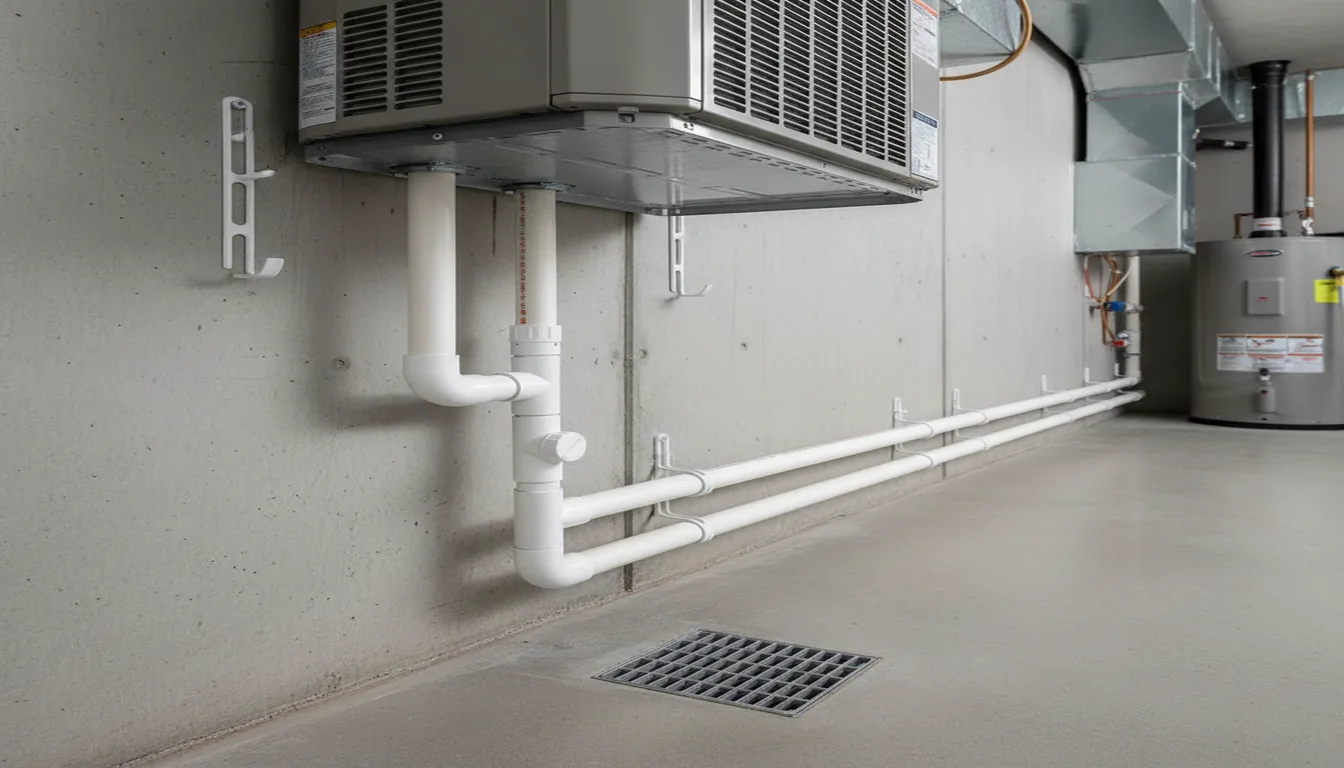
Optimizing the condensate drain line goes beyond just individual component quality; it involves looking at the system as a whole. A truly efficient system is one that is reliable, easy to install, simple to maintain, and cost-effective. At HVACore, we work with our OEM clients as partners to achieve this systemic optimization.
First, we focus on Design for Manufacturability (DFM). Our engineers collaborate with the OEM’s design team early in the product development cycle. We can provide feedback on a proposed part design, suggesting minor modifications that can improve its strength, reduce cycle time (and thus cost), or enhance its functionality. For example, we might recommend adding a slight radius to an internal corner to improve material flow during molding and eliminate a potential stress point.
Second, we can help with part consolidation. Sometimes, two or three separate components can be redesigned into a single, more complex injection-molded part. This reduces the total number of parts in the bill of materials (BOM), simplifies assembly on the factory floor, and eliminates potential leak points between the consolidated components. This is a powerful way to reduce both cost and future failure modes.
| Standard | Requirement | Application |
|---|---|---|
| IMC Section 307 | Min 3/4 in. diameter primary drain | All HVAC condensate systems |
| ASHRAE 62.1 | Prevent biological growth in drain pans | Commercial HVAC ventilation |
| IPC Section 802 | Indirect waste connection required | Condensate-to-drain connections |
| Local codes | Secondary drain or float switch | Attic/overhead installations |
Finally, we optimize the system for the end-user and service technician. This means designing components that make installation and maintenance intuitive. This includes:
- Cleanouts with ergonomic, high-torque caps that are easy to open by hand but seal tightly.
- P-traps that include a built-in brush port for easy cleaning.
- Drain pans with clear, unambiguous connection points and molded-in slope indicators.
By thinking about the entire lifecycle of the component—from manufacturing to installation to long-term service—we help create a condensate drain line system that is more than just a collection of pipes. It becomes an integrated, reliable, and efficient subsystem that enhances the value and reputation of the entire HVAC unit.
What Are the Most Frequently Asked Questions About Condensate Drain Lines?

خطوط تصريف المكثفات: المواد، الامتثال للكود والتشكيل
The white pipe most commonly used for an AC condensate drain line is Schedule 40 PVC (Polyvinyl Chloride). It is the industry standard due to its rigidity, durability, resistance to the mild acidity of condensate, and low cost.
How often should you clean your HVAC condensate drain line?
It is recommended to clean your condensate drain line at least once or twice a year to prevent clogs from algae and mold buildup. A good practice is to do it in the spring before the cooling season begins and again at the end of summer. If you live in a very humid climate, more frequent cleanings may be necessary.
Can I pour bleach down my AC drain line?
While many sources suggest using bleach, it can be overly corrosive to the metal evaporator coil and drain pan if it splashes. A safer and often recommended alternative is distilled vinegar. Pouring about a cup of distilled white vinegar down the cleanout port every few months can help kill algae and bacteria without the harshness of bleach.
| Parameter | Specification | Why It Matters |
|---|---|---|
| Pipe diameter | Min 3/4 in. (primary) | Adequate flow capacity |
| Slope | ≥1/8 in. per foot | Gravity drainage, prevent pooling |
| P-trap depth | 2–4 in. water seal | Block sewer gas backflow |
| Secondary drain | Required for overhead units | Overflow protection |
What happens if the condensate drain line gets clogged?
A clogged drain line will cause water to back up and overflow the primary drain pan. This can shut down your AC unit if a float switch is installed. If not, the water will spill into the secondary drain pan or, if one is not present, directly into your home, causing significant water damage to ceilings, walls, and insulation.
What is the difference between a primary and secondary drain line?
The primary drain line is the main pipe that carries condensate away during normal operation. The secondary drain line is a backup system. It is connected to a secondary or overflow pan that catches water only if the primary line is clogged. It’s a crucial safety feature, especially for units in attics, to prevent water damage.
Why Is a Focus on Component Quality the Key to a Reliable Condensate Drain Line?
In the complex world of HVAC engineering, the humble condensate drain line is often overlooked. Yet, as we’ve explored, this system’s failure can lead to catastrophic water damage and compromise indoor air quality. The integrity of the entire system hinges on its most basic elements: the pans, pipes, traps, and fittings.
The transition from generic parts to purpose-built, injection molded condensate fittings and components represents a fundamental shift in reliability. The a
The transition from generic parts to purpose-built, injection molded condensate fittings and components represents a fundamental shift in reliability. The ability to maintain tolerances of ±0.1mm, create perfectly smooth interior surfaces, and ensure material purity through a controlled process like injection molding directly combats the most common failure points.
s with the confidence that this critical, yet often forgotten, subsystem is built to last.
-
A specific thickness standard for PVC pipe, designed to handle certain pressure ratings. It is the most common choice for residential HVAC condensate drain lines due to its durability and cost-effectiveness. ↩
-
A U-shaped bend in a drainpipe designed to hold a small amount of liquid, creating a water seal that prevents sewer gases or unwanted air from moving through the pipe. ↩
-
A standard published by the American Society of Heating, Refrigerating and Air-Conditioning Engineers that specifies minimum ventilation rates and other measures for new and existing buildings to provide indoor air quality that is acceptable to human occupants. ↩





