20+ Years OEM/ODM Experience
+86 152 2111 0591
HVACore

HVAC Industry Solutions

HVAC Industry Insights

Latest Blog

Stay updated with the latest trends, innovations, and insights from the HVAC manufacturing industry.

Read More
Custom HVAC plastic components manufacturing banner
Apr 7, 2026

PETG vs ABS for HVAC Components: Selection Guide

Compare PETG and ABS for HVAC plastic parts: heat resistance, chemical resistance, warpage, processability, and cost. Choose the right resin for housings, ducts, and panels.
Read More

Read More
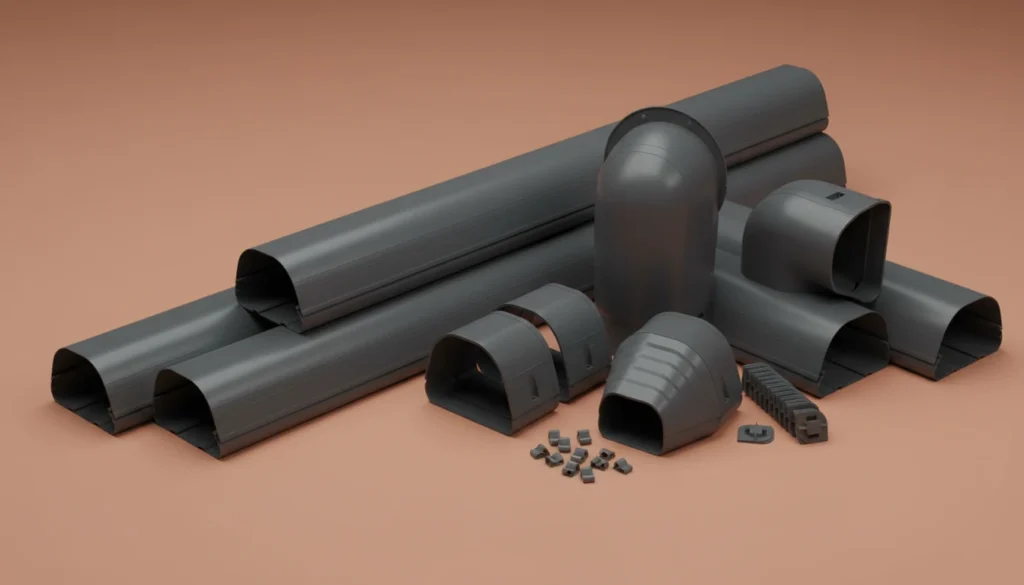
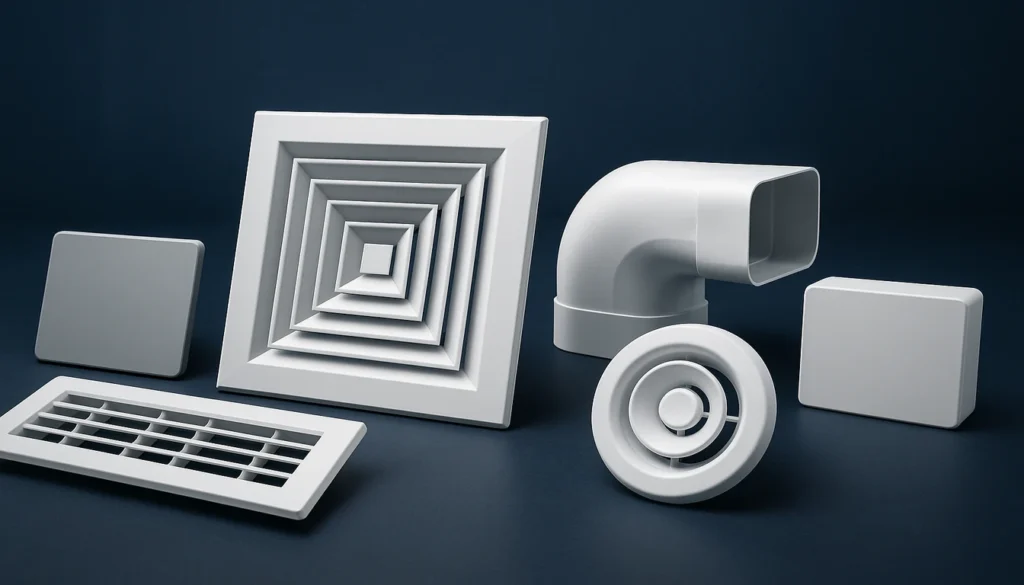
Collection of gray plastic HVAC components including ducts, elbows, and connectors arranged on a neutral background.
Apr 6, 2026

How Do Plastics Outperform Metal in HVAC Noise & Vibration Control?

Key Takeaways Plastics have a loss coefficient 5–100x higher than steel and aluminum, meaning they dissipate vibration energy as heat instead of amplifying it as sound. Two-Shot (2K) molding bonds rigid structural nylon to soft TPE isolation layers in a single cycle, eliminating the micro-rattle caused by separate rubber grommets. Adding 20–40% talc filler to […]
Read More
Read More
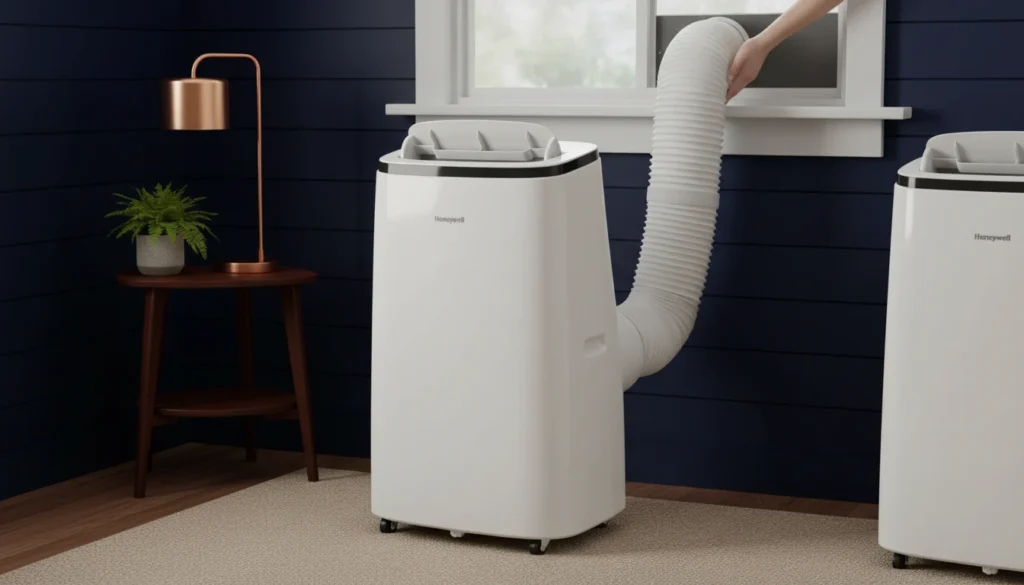
Portable air conditioner with flexible exhaust hose installed in a window, next to a side table with a lamp and plant in a stylish room.
Apr 5, 2026

How Do We Mold Precision Housings for Smart HVAC Sensors and Controls?

Key Takeaways Smart HVAC sensor housings require tolerances below 0.05 mm to prevent touchscreen cracking and antenna detuning. PC/ABS blends dominate smart thermostat housings because they combine 65 kJ/m2 impact strength with a heat deflection temperature of 110 degrees Celsius. Conformal cooling channels reduce cycle time by 25-35% and cut warpage by up to 60% […]
Read More
Read More
PETG vs ABS: Which Plastic Wins for HVAC Component Manufacturing?
Apr 4, 2026

PETG vs ABS: Which Plastic Wins for HVAC Component Manufacturing?

Key Takeaways ABS offers higher heat resistance (HDT 88–103 °C) vs PETG (65–80 °C), making it better for components near heat sources. PETG outperforms ABS in chemical resistance to acids, oils, and cleaning agents used in HVAC maintenance. ABS has lower mold shrinkage variance and better dimensional stability for tight-tolerance HVAC housings. PETG is naturally […]
Read More
Read More
Glass-Filled Nylon in HVAC: Why It Wins Over Brass Every Time
Apr 3, 2026

Glass-Filled Nylon in HVAC: Why It Wins Over Brass Every Time

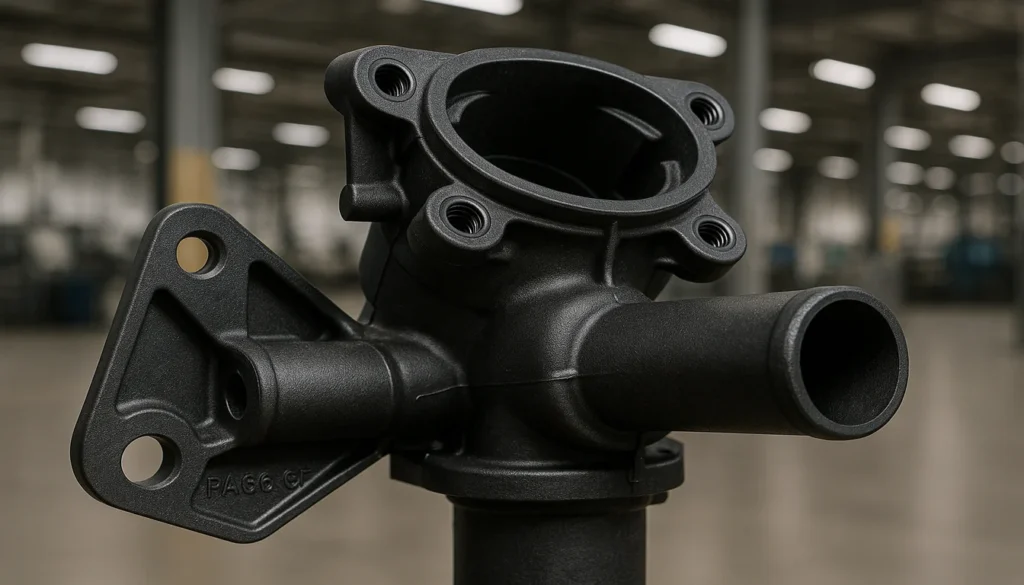
Key Takeaways Glass-filled nylon (PA66-GF) replaces metal in HVAC at 30–40% weight savings with equivalent strength. 30% glass fiber content hits the sweet spot: tensile strength 180–200 MPa, heat deflection 220°C+. Weld line placement is the #1 failure point — position gates to push weld lines away from stress zones. At HVACore, we run PA66-GF […]
Read More
Read More
How Do We Ensure Durability with Insert Molding in HVAC Frames?
Apr 2, 2026

How Do We Ensure Durability with Insert Molding in HVAC Frames?

Key Takeaways Boss wall thickness must be 2.5x to 3.0x the insert outer diameter to prevent hoop stress cracking under repeated assembly cycles. Pre-heating brass inserts to 80–100°C before molding reduces delayed stress cracking failures by eliminating the 200°C+ thermal delta at the metal-plastic interface. Diamond knurl patterns provide 30–40% higher torque retention than straight […]
Read More
Chat on WhatsApp