20+ Years OEM/ODM Experience
+86 152 2111 0591
🇫🇷

HVAC Industry Solutions

空気配分ブログ | カスタムHVACソリューション | HVACore

Latest Blog

Stay updated with the latest trends, innovations, and insights from the HVAC manufacturing industry.

Read More
Custom HVAC plastic components manufacturing banner
重要なポイント プラスチックは鋼やアルミニウムに比べて損失係数が5~100倍高く、振動エネルギーを音として増幅するのではなく熱として消散させる。2ショット(2K)成形では、硬質構造ナイロンと軟質TPEアイソレーション層を単一工程で接着し、別体のゴムグロメットによるマイクロラトルを排除する。ポリプロピレンに20~40%タルク充填剤を添加すると質量密度が増加し、損失係数が0.08~0.15に上昇し、ブロワー筐体の最適材料となる。プラスチック製ファンガードの可変リブ間隔は定在波を乱し、等間隔金属グリルに共通する音調付きサイレン効果を解消する。製造時の金型温度と射出速度の制御は分子緩和に直接影響し、従って[…]

HVACプラスチック部品におけるPETGとABSの比較:耐熱性、耐薬品性、反り、加工性、コスト。適切な樹脂を選択...

塗装性 / 密着性.
Read More

Read More
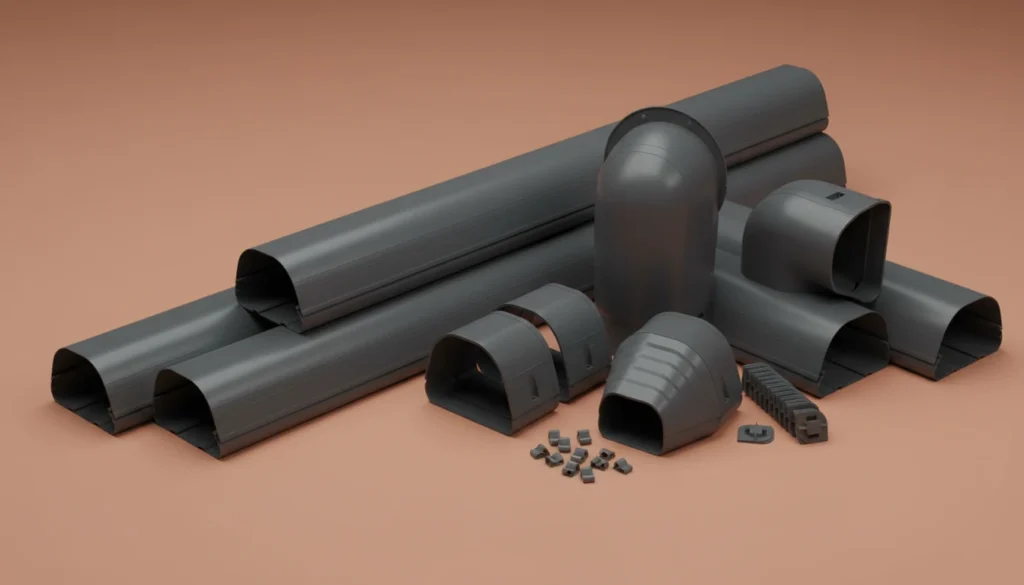
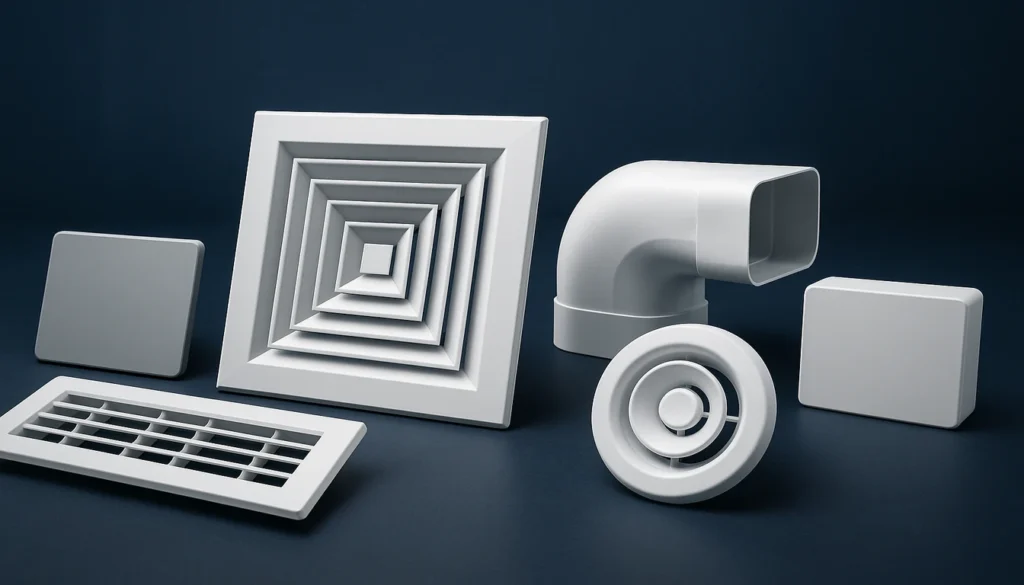
Collection of gray plastic HVAC components including ducts, elbows, and connectors arranged on a neutral background.
4月 6, 2026

灰色のプラスチック製HVAC部品のコレクションで、ダクト、エルボ、コネクターがニュートラルな背景に配置されています。

Key Takeaways Plastics have a loss coefficient 5–100x higher than steel and aluminum, meaning they dissipate vibration energy as heat instead of amplifying it as sound. Two-Shot (2K) molding bonds rigid structural nylon to soft TPE isolation layers in a single cycle, eliminating the micro-rattle caused by separate rubber grommets. Adding 20–40% talc filler to polypropylene increases mass density and raises the loss coefficient to 0.08–0.15, making it the preferred material for blower housings. Variable rib spacing on plastic fan guards disrupts standing waves and eliminates the tonal siren effect common in evenly-spaced metal grilles. Controlling mold temperature and injection speed during production directly affects molecular relaxation and therefore the […]
Read More
Read More
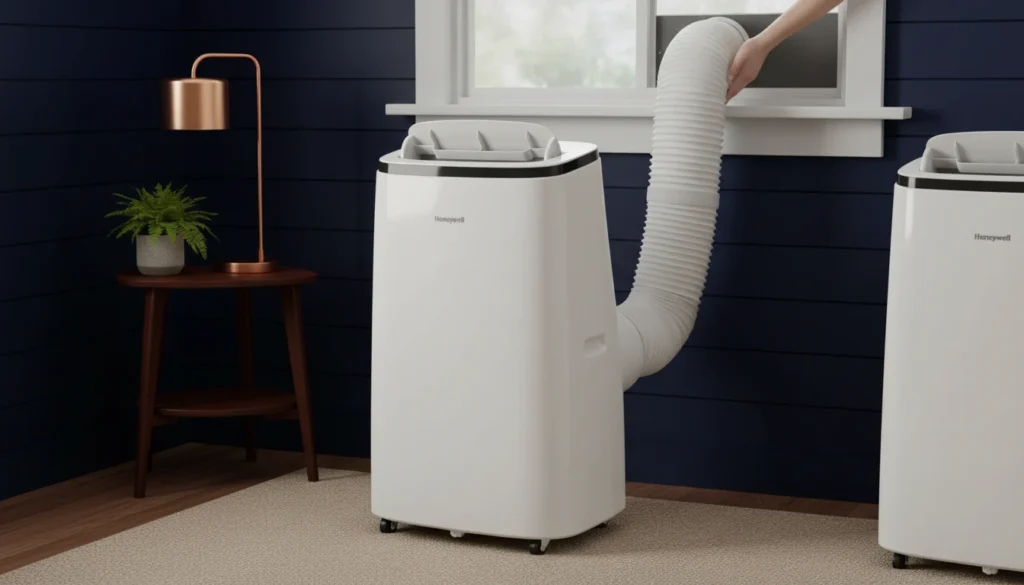
Portable air conditioner with flexible exhaust hose installed in a window, next to a side table with a lamp and plant in a stylish room.
キーポイント スマートHVACセンサー筐体は、タッチスクリーンの割れやアンテナのデチューニングを防ぐために0.05mm以下の公差が必要です。PC/ABSブレンドは、65kJ/m²の衝撃強度と110℃の熱変形温度を兼ね備えるため、スマートサーモスタット筐体の主流となっています。コンフォーマル冷却チャネルは、直穴冷却ラインと比較して、サイクルタイムを25~35%短縮し、反りを最大60%削減します。EMIシールディングには導電性フィラーコンパウンドまたはインサート成形した金属メッシュが必要で、部品コストを8~15%増加させますが、成形後の塗装を不要にします。すべての筐体は、CMM検証、RFインピーダンステスト、1000時間加速耐候性試験を含む5段階の品質ゲートを通過します。スマートHVACセンサー筐体は従来の筐体と何が違うのか?スマートHVACセンサー[…]

設計では、フロントフェイスプレートが壁に取り付けられたベースプレートにカチッとはまるスナップフィット構造が求められていました。T1試作段階において、ベースプレートの中央がバナナのように反り(反り量1.2mm)、石膏ボードにネジ止めするとスナップ機構が位置ずれを起こし、フェイスプレートがロックできなくなりました。

Key Takeaways Smart HVAC sensor housings require tolerances below 0.05 mm to prevent touchscreen cracking and antenna detuning. PC/ABS blends dominate smart thermostat housings because they combine 65 kJ/m2 impact strength with a heat deflection temperature of 110 degrees Celsius. Conformal cooling channels reduce cycle time by 25-35% and cut warpage by up to 60% compared to straight-drilled cooling lines. EMI shielding requires either conductive filler compounds or insert-molded metal mesh, adding 8-15% to part cost but eliminating post-mold painting. Every housing undergoes a 5-stage quality gate including CMM verification, RF impedance testing, and 1000-hour accelerated weathering. What Makes Smart HVAC Sensor Housings Different from Traditional Enclosures? Smart HVAC sensor […]
Read More
Read More
主なポイント ABSはPETG(65~80°C)に比べて耐熱性が高く(HDT 88~103°C)、...付近の部品により適しています。
主なポイント ABSはPETG(65〜80°C)よりも高い耐熱性(HDT 88〜103°C)を提供し、熱源付近の部品に適しています。PETGは、HVACメンテナンスで使用される酸、油、洗浄剤に対する耐薬品性でABSを上回ります。ABSは金型収縮のばらつきが小さく、厳しい公差が要求されるHVACハウジングに対して優れた寸法安定性を発揮します。PETGは自然透明で超音波溶着との相性が良く、ABSは塗装や接着剤による接合が容易です。ほとんどの構造用HVAC筐体にはABSが適し、凝縮水部品や薬品にさらされる部品にはPETGが適しています。PETGとABSとは何か、HVACにおいてなぜ重要なのか? 当社の工場では毎年、HVAC向けに400トン以上のエンジニアリングプラスチックを加工しています[…]

主なポイント ABSはPETG(65~80°C)に比べて耐熱性が高く(HDT 88~103°C)、...付近の部品により適しています。

Key Takeaways ABS offers higher heat resistance (HDT 88–103 °C) vs PETG (65–80 °C), making it better for components near heat sources. PETG outperforms ABS in chemical resistance to acids, oils, and cleaning agents used in HVAC maintenance. ABS has lower mold shrinkage variance and better dimensional stability for tight-tolerance HVAC housings. PETG is naturally transparent and bonds well with ultrasonic welding; ABS paints and bonds more easily with adhesives. For most structural HVAC enclosures, ABS wins; for condensate components and chemical-exposed parts, PETG wins. What Are PETG and ABS, and Why Do They Matter for HVAC? Every year, our factory processes over 400 tons of engineering thermoplastics for HVAC […]
Read More
Read More
主要ポイント ガラス充填ナイロン(PA66-GF)はHVACにおいて金属を代替し、同等の強度で30〜40%の重量削減を実現。30%のガラス繊維含有量...
キーポイント:金型投入前のDFM適用により、HVAC部品コストを20~35%削減、金型修正サイクルを半減可能。外部HVACハウジング表面は1~2°の抜き勾配が必要、内部リブ・スナップフィット壁は2~3°、テクスチャ加工面は0.025mmの深度ごとに1°追加。肉厚公差:ABS 1.2~3.5mm、PP 0.8~3.8mm、PA-GF 1.5~3.0mm — 25%以上の偏差は反り・シンク発生の原因。ゲート位置は目立つA面や高応力スナップゾーンを避け、ファンゲートで薄肉HVACパネル全体に圧力を分散。リブ肉厚は隣接壁厚の60%、ボス外径はボスコア径の2倍、高さは外径の2倍未満が適正。[…]とは

主要ポイント ガラス充填ナイロン(PA66-GF)はHVACにおいて金属を代替し、同等の強度で30〜40%の重量削減を実現。30%のガラス繊維含有量...

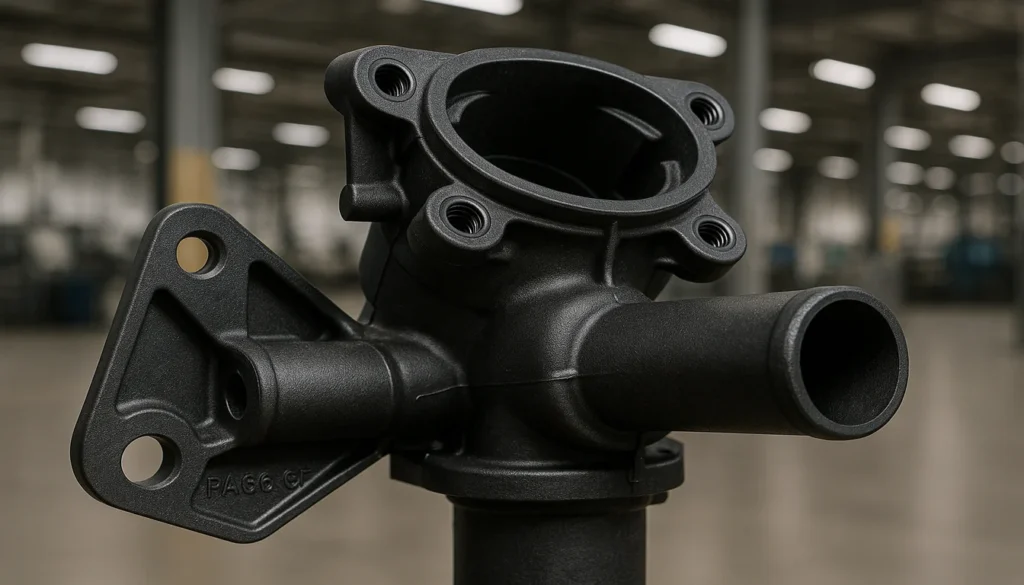
Key Takeaways Glass-filled nylon (PA66-GF) replaces metal in HVAC at 30–40% weight savings with equivalent strength. 30% glass fiber content hits the sweet spot: tensile strength 180–200 MPa, heat deflection 220°C+. Weld line placement is the #1 failure point — position gates to push weld lines away from stress zones. At HVACore, we run PA66-GF at 280–300°C melt temp with 80–100°C mold temp for consistent fiber orientation. Three years ago, a customer called us in a panic. Their HVAC fan bracket — stamped from 2mm steel — kept cracking at the mounting holes after six months in the field. Vibration fatigue. We switched them to 30% glass-filled PA66. The cracking […]
Read More
Read More
青い表面にキャップやボルトを含むプラスチックおよび金属の工業部品。
4月 2, 2026

青い表面にキャップやボルトを含むプラスチックおよび金属の工業部品。

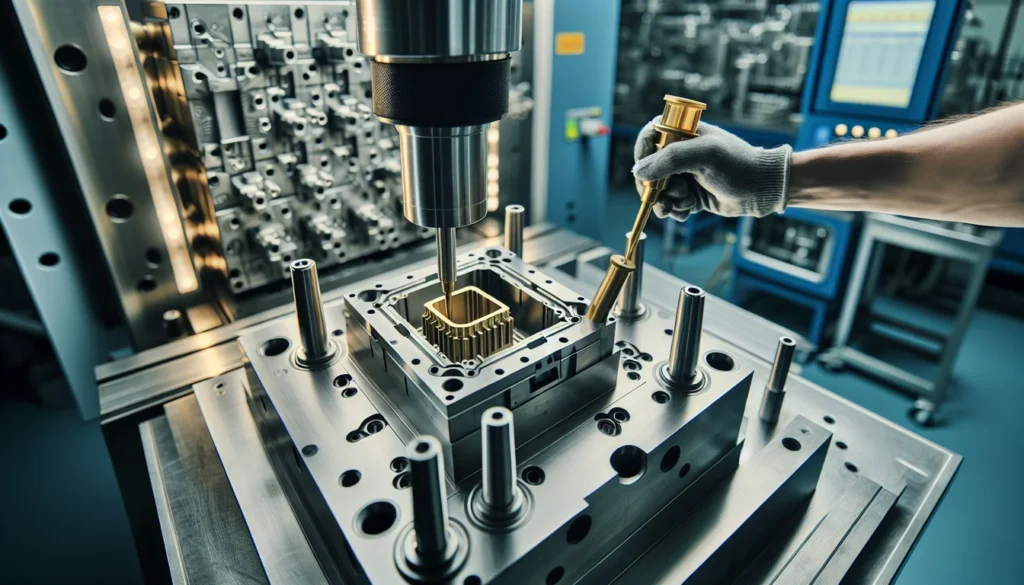
Key Takeaways Boss wall thickness must be 2.5x to 3.0x the insert outer diameter to prevent hoop stress cracking under repeated assembly cycles. Pre-heating brass inserts to 80–100°C before molding reduces delayed stress cracking failures by eliminating the 200°C+ thermal delta at the metal-plastic interface. Diamond knurl patterns provide 30–40% higher torque retention than straight knurls by locking the insert against both rotation and axial pull-out simultaneously. Vertical-clamp injection machines with shuttle tables reduce insert placement time by 35–50% and virtually eliminate insert-falling mold crash incidents. Weld lines on or near the insert boss reduce structural strength by 20–40%; gate location must be optimized via mold flow simulation before cutting […]
Read More
Chat on WhatsApp