
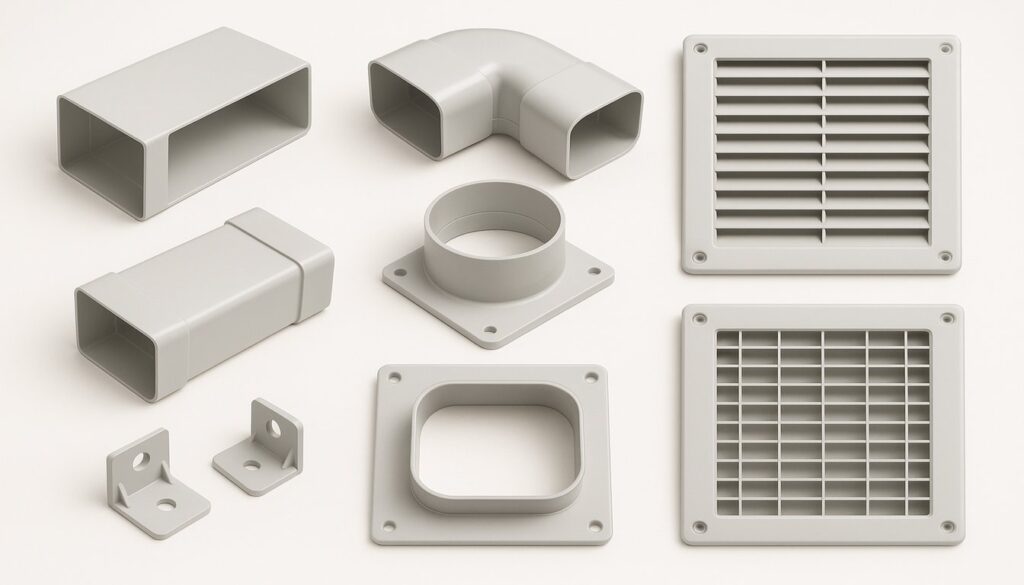
- Ogni nuovo programma presso HVACore inizia con un rapporto DFM scritto che copre la posizione del gate, l'analisi del raffreddamento, la revisione dell'angolo di sformo e la valutazione dello spessore della parete prima dell'autorizzazione degli utensili. Gli utensili per prototipi (monocavitario, acciaio P20) sono disponibili in 4-6 settimane. Gli utensili di produzione (multicavitario, acciaio H13) richiedono 8-10 settimane con documentazione FAI completa.
- Tooling costs for HVAC plastic parts range from $3,000–$8,000 for a single-cavity prototype mold to $20,000–$100,000 for a multi-cavity production mold — 40–60% lower from qualified Chinese suppliers than Western alternatives.
- First-article inspection (FAI) and PPAP documentation are non-negotiable for HVAC OEM programs — any supplier that cannot provide these should be disqualified before production launch.
- UL 94 flame rating compliance for electrical enclosures and plenum components requires specific resin formulations with documented traceability; most general molders lack this capability.
- HVACore has 45 injection molding machines (60–1,500 ton), ISO 9001:2015 certification, and 20+ years of HVAC-specific experience, with prototype tooling available in 4–6 weeks.
What Should You Expect from an Injection Molding Company for HVAC?
A sourcing manager at a mid-size HVAC OEM described the problem concisely: “We’ve had three suppliers. The first couldn’t hold tolerances on snap-fit filter frames. The second had great samples but production parts warped. The third — HVACore — actually understood HVAC.” The difference between a generic injection molding1 company and one with genuine HVAC expertise is measurable in first-pass yield, warranty claims, and development time.
At HVACore, first-article dimensional failures from unqualified suppliers cost OEM customers an average of 6 weeks and $12,000 in rework before switching to us. Our DFM-first process achieves 94% first-article pass rate on new HVAC plastic component programs.
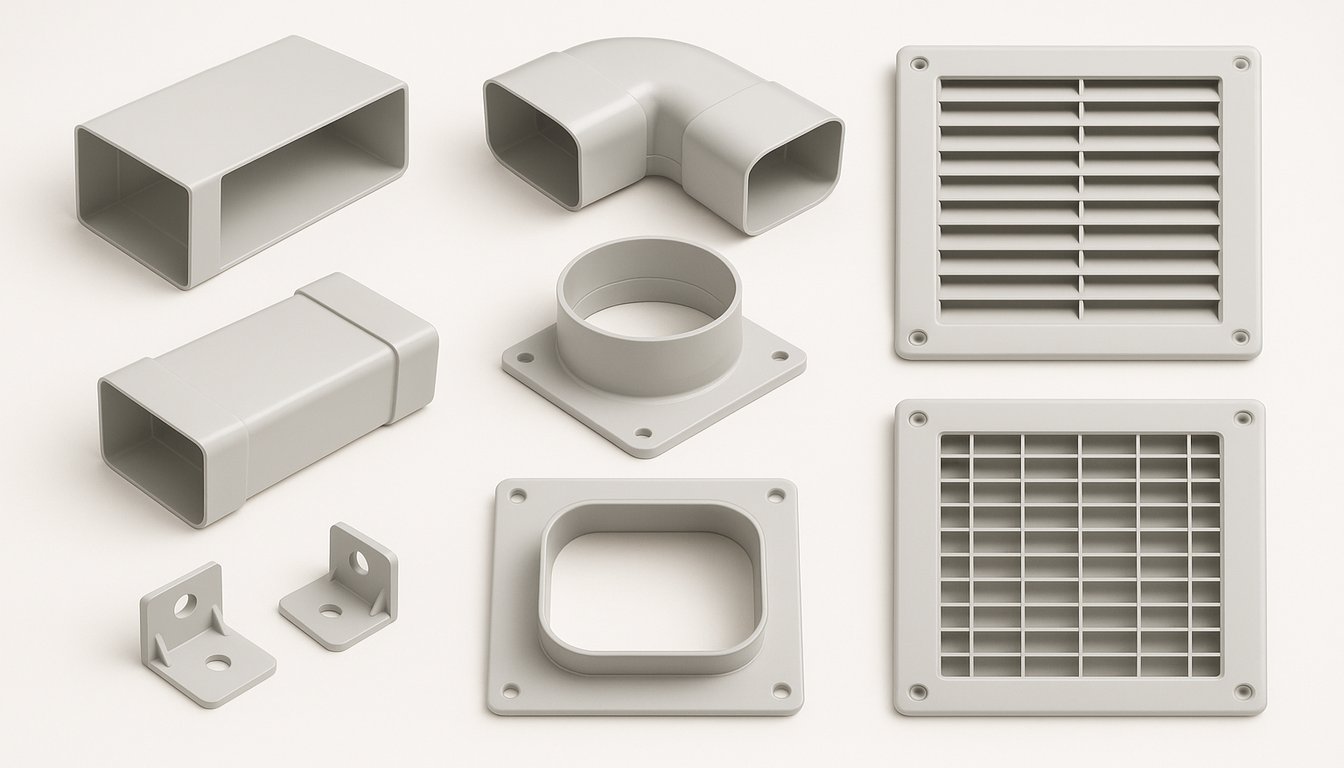
Injection molding for HVAC covers a wide range of components: vent grilles and air registers, filter frames, duct connectors and fittings, mounting brackets, electrical enclosures, condensate drain pans, and flexible seals. Each has different wall thickness requirements, tolerance specifications, material needs, and assembly fit requirements. A supplier that has produced HVAC components understands these differences; a generic molder may not.
The fundamental deliverables from any qualified injection molding company are: competitive tooling2 cost with documented DFM review, first-article inspection report against drawing tolerances, material traceability from raw resin to finished part, ongoing production inspection with defect records, and English-language communication throughout. These aren’t optional — they’re table stakes for HVAC OEM supply.
What Does the Qualification Process for an Injection Molding Supplier Look Like?
Supplier qualification starts with a desk review: ISO 90013 certificate (verify the scope covers plastic injection molding, not just a parent company), customer reference list with HVAC-specific names, machine list (tonnage range should cover your part size), and materials capability list. Request samples from current production programs — not demo parts.
If the desk review passes, request a factory visit or virtual audit. Key items to verify: cleanliness and organization of the production floor, mold storage conditions (climate control, racks, condition tracking), QC laboratory equipment (CMM, hardness tester, colorimeter, gauge block sets), and the mold design team’s capability. In-house mold design reduces lead time and communication errors compared to outsourced tooling.
Finally, run a development program with a prototype mold before committing to production tooling. Review the DFM report — does it address draft angles, gate location, wall thickness uniformity, and cooling time? Evaluate the first-article inspection report against your drawing. A supplier that delivers a clean FAI report on a prototype program will almost always deliver a clean production launch.
| Criterion | Pass | Fail / Disqualify |
|---|---|---|
| ISO 9001 certification | Scope includes plastic injection molding | General certificate, scope unclear |
| HVAC references | ≥3 named OEM accounts, active programs | Cannot provide references |
| Machine range | Covers your part tonnage requirement | Only small or only large machines |
| DFM process | Written DFM report before tooling | No formal DFM, relies on rework |
| First-article inspection | CMM report against drawing tolerances | Visual inspection only |
| Material traceability | Lot cert to each production run | No traceability documentation |
| English PM contact | Dedicated, not shared | Language barrier, no dedicated PM |
How Much Does Injection Mold Tooling Cost for HVAC Parts?
Tooling cost is the upfront investment — mold design, CNC machining, EDM, polishing, and first-article validation. For a single-cavity prototype mold for a simple HVAC vent in P20 steel, expect $3,000–$8,000. A 4-cavity production mold for a filter frame in H13 steel (for 1 million+ shot life) runs $25,000–$60,000. Multi-cavity molds (8–16 cavities) for high-volume simple parts range from $40,000–$100,000.
Qualified Chinese injection molding suppliers typically offer tooling at 40–60% of Western market rates for equivalent mold quality. The savings are greatest on mid-complexity tools. For a $40,000 Western quote, a qualified Chinese supplier should be $18,000–$28,000 — a savings that pays for several years of freight and travel for supplier visits.
“DFM review before tooling is the single most effective way to reduce first-article failure rates and tooling revision costs.”True
Programs that include a formal written DFM report before steel cutting achieve first-article pass rates above 90%. Programs without DFM review average 3–4 revision cycles requiring weld repairs or steel cuts, each costing $1,000–$5,000 and 2–4 weeks of delay. DFM cost is typically included in tooling quotations from reputable suppliers — the only cost is time spent reviewing the report.
“Lower tooling cost always means lower part quality from an injection molding company.”False
Cost differences between suppliers reflect labor rates, overhead, and process efficiency — not inherent quality capability. ISO 9001-certified HVAC injection molding companies in China with dedicated QC teams routinely achieve Cpk >1.33 on critical dimensions and first-pass yields above 98%. Supplier qualification, not price, determines quality. The correct approach is qualifying multiple suppliers to the same standard, then selecting based on total cost of ownership.
What Materials Do HVAC Injection Molding Companies Use?
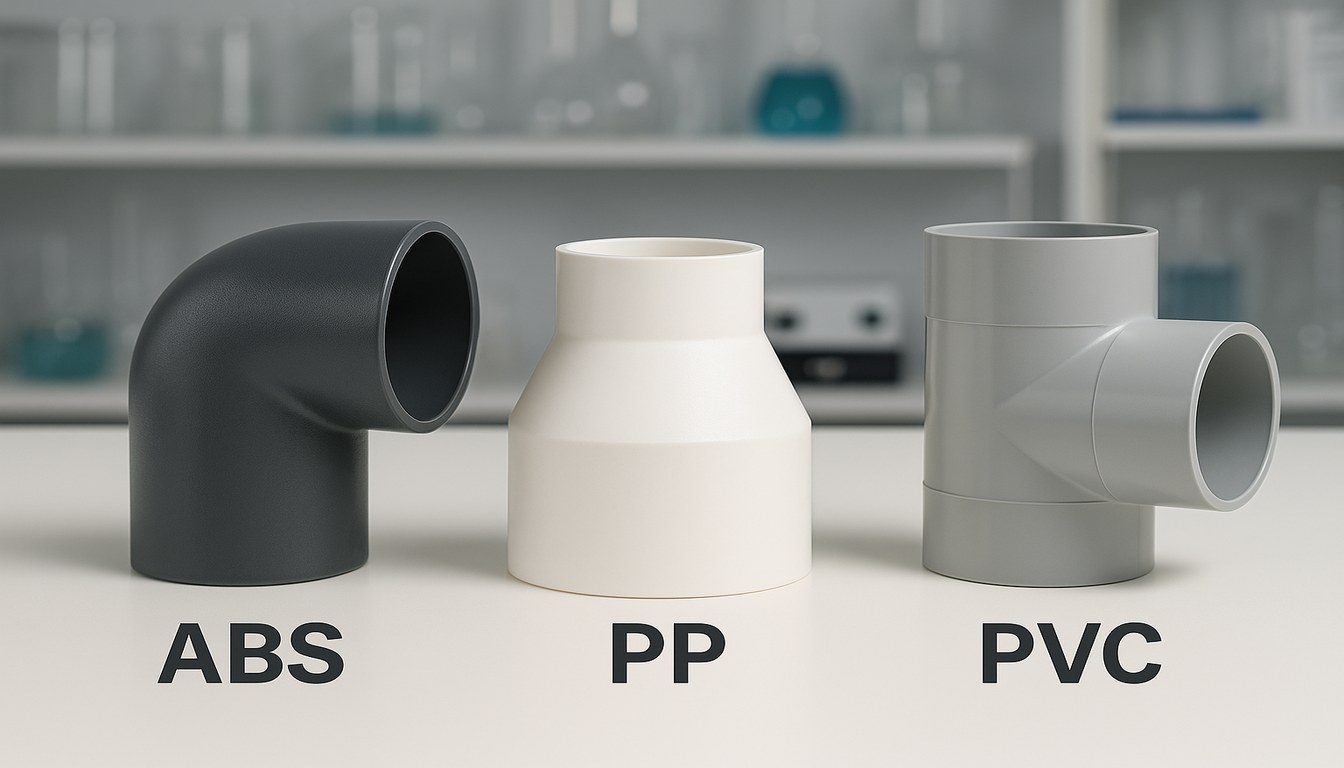
ABS is the most common material for indoor HVAC components: vent grilles, filter frames, and duct fittings. It provides good stiffness, easy processing, and competitive cost. For outdoor applications exposed to UV radiation — mini-split housing covers, rooftop unit enclosures — UV-stabilized ASA is required. Standard ABS becomes brittle within 2–5 years under UV exposure.
Electrical enclosures and components in plenums require UL 94-rated flame-retardant materials — typically FR-ABS (V1 or V0) or PC/ABS (V0). Not all injection molding companies stock these materials or maintain lot traceability documentation. Request the UL Yellow Card number for the specific resin before ordering. At HVACore, we maintain certified FR-ABS and PC/ABS stock for all enclosure programs.
Why Choose HVACore as Your HVAC Injection Molding Company?
HVACore operates 45 injection molding machines ranging from 60 to 1,500 tons, giving us coverage from small terminal clips to large plenum housings. We hold ISO 9001:2015 certification and have maintained active HVAC OEM programs in North America, Europe, and Australia for over 20 years. Our HVAC applications team — not a generalist sales team — manages all programs.
Every new program at HVACore starts with a written DFM report covering gate location, cooling analysis, draft angle review, and wall thickness assessment before tooling authorization. Prototype tooling (single-cavity, P20 steel) is available in 4–6 weeks. Production tooling (multi-cavity, H13 steel) runs 8–10 weeks with full FAI documentation.
Azienda di Stampa ad Iniezione per Componenti HVAC: Guida alla Selezione.
Frequently Asked Questions
“Factory audits and customer reference checks are worth the time investment before awarding a new injection molding program.”True
A 30-minute factory audit or 15-minute reference call eliminates more supply chain risk than any amount of documentation review. Suppliers that perform well on paper but have disorganized production floors, poorly maintained molds, or minimal QC equipment will consistently underperform. For HVAC OEM programs with 5–10 year supply horizons, front-loaded qualification pays dividends throughout the program lifecycle.
“Domestic injection molding companies always deliver better quality than overseas suppliers for HVAC parts.”False
Quality is determined by process capability, quality systems, and supplier qualification — not geography. ISO 9001-certified HVAC injection molding companies in China regularly achieve Cpk >1.33 on critical dimensions. The key differentiator is HVAC domain expertise and quality system maturity, which can be found globally. Domestic suppliers may offer shorter lead times and easier communication, but these advantages do not automatically translate to higher dimensional quality or lower defect rates.
Quanto tempo ci vuole per ottenere uno stampo a iniezione prototipo per parti HVAC?
Prototype tooling for a simple to medium-complexity HVAC component typically takes 4–6 weeks from approved 3D model to first-article parts. This includes 3–5 days for DFM review, 2–3 weeks for CNC machining and EDM, 1 week for polishing and assembly, and 1 week for first-article inspection and report. Complex parts with multiple cores or side actions take 6–8 weeks. Expedited tooling (3–4 weeks) is available at a 25–35% premium for critical-path programs. HVACore’s standard prototype lead time is 4–5 weeks for most HVAC components.
Cos'è il PPAP e ne ho bisogno per le parti HVAC stampate a iniezione?
PPAP (Production Part Approval Process) is a formal documentation package that confirms a production process is capable of consistently producing parts meeting specifications. For HVAC OEM programs, PPAP or equivalent FAI (First-Article Inspection) documentation is standard practice. It includes dimensional measurements on 30+ parts, material certification, process capability study (Cpk), and sample approval. Automotive-grade PPAP Level 3 is sometimes required by Tier 1 HVAC manufacturers. At minimum, request a full dimensional FAI report plus material certificates for every new production program. Suppliers unable to provide this should be disqualified.
Un'azienda di stampaggio a iniezione può mantenere tolleranze strette per le caratteristiche di aggancio a scatto HVAC?
Yes, with the right supplier and DFM process. Snap-fit features require wall thickness of 40–60% of nominal part wall, specific cantilever length, and ABS or PP at appropriate melt flow. Gate location relative to the snap-fit affects residual stress and fatigue life. A supplier with HVAC snap-fit experience will specify these parameters in the DFM report. Dimensional tolerance on snap-fit beam thickness should be ±0.05–0.08mm for reliable function. HVACore achieves ±0.1mm on most HVAC snap features and has validated snap-fit programs for filter frames and duct connectors across multiple OEM programs.
What happens if the first-article parts don’t meet specification?
With a qualified supplier, first-article issues are addressed at no additional charge to the customer for any deviations within the agreed DFM scope. The supplier performs a root cause analysis, modifies the tool (weld repair, EDM, steel cut), and resubmits first articles with an updated inspection report. Deviations caused by customer design changes after tooling authorization may incur modification charges. Always confirm the supplier’s first-article policy and revision coverage in writing before tooling authorization. At HVACore, we guarantee first-article resubmission at no charge for any deviation within our DFM scope.
HVACore supporta programmi HVAC a basso volume o solo la produzione ad alto volume?
HVACore supports HVAC programs from 1,000 parts/year to 1,000,000+ parts/year. For low-volume programs (under 10,000 parts/year), we recommend single-cavity P20 tooling to minimize upfront investment while maintaining full quality documentation. Per-part cost at low volume is higher than at production scale, but all quality standards — FAI, material certification, CMM inspection — are identical regardless of volume. We also support R&D prototype programs with 50–500-part runs from single-cavity tools for product validation before committing to production volumes. Contact HVACore to discuss your volume requirements and receive a tooling quotation and sample first-article documentation.
-
injection molding: Injection molding is a high-pressure manufacturing process in which molten plastic is injected into a steel mold cavity, producing HVAC components with precise dimensions, consistent surface finish, and high repeatability at volume. ↩
-
tooling: Tooling refers to the custom steel injection molds used to manufacture plastic HVAC components. Tooling cost includes design, CNC machining, polishing, and first-article validation — the upfront capital investment before production begins. ↩
-
ISO 9001: ISO 9001 is the international quality management system standard. Certification means the manufacturer maintains documented procedures, traceability, corrective action systems, and regular audits — the baseline for HVAC OEM supply chain qualification. ↩





