

- L'audit a distanza è ora una pratica standard. Inizia con un questionario strutturato che copra: inventario delle presse e valutazioni di tonnellaggio, gradi dell'acciaio degli stampi e registri di manutenzione, attrezzature QC (CMM, comparatore ottico, tester di trazione), procedure di stoccaggio ed essiccazione delle resine, e documentazione di conformità antincendio e sicurezza. Segui con un audit video in diretta del reparto di produzione — percorri il reparto presse, visita il laboratorio QC, fai che estraggano le schede di processo attive per un componente attualmente in produzione. Auditor di terze parti come SGS e Bureau Veritas offrono audit di fabbrica in Guangdong a $600–$1,200 per audit. Per il tuo primo ordine, questo costo ne vale la pena. Richiedi un pacchetto PPAP sulla tua prima produzione indipendentemente dal volume.
- Injection molding dominates HVAC plastic production because cycle times under 60 seconds and mold lives of 500,000+ shots make per-part costs competitive at volumes above 10,000 units.
- Qualifying a Chinese OEM supplier requires auditing mold steel grades, QC documentation (PPAP or equivalent), and material traceability — not just ISO certificates.
- Hidden costs in OEM programs include engineering change orders, tooling amortization disputes, and ocean freight lead times — negotiate these terms before tool steel is cut.
- HVACore runs dedicated tooling programs for HVAC OEMs with T1 samples in 30–45 days and production validation against your drawing package.
What Is OEM Manufacturing in HVAC Plastics?
OEM1 manufacturing means you own the design — dimensions, material spec, performance requirements — and a contract manufacturer builds it. In the HVAC world, that covers everything from damper blades and actuator housings to fan scroll casings and duct connectors. The supplier doesn’t put their name on the box. You do.
This is fundamentally different from buying off-the-shelf catalog parts. With OEM production, the mold tooling is built to your CAD file. Wall thicknesses, draft angles, snap-fit geometry — all defined by your engineering team, not a generic catalog. The supplier’s job is to hit your tolerances, your material callout, and your cosmetic standards. Every shipment.
For procurement managers sourcing HVAC plastic components from China, this distinction matters. You’re not just comparing prices. You’re evaluating a supplier’s ability to hold ±0.05 mm on a damper pivot hole, maintain color consistency across 100,000 parts, and flag dimensional drift before it reaches your assembly line. That’s a different conversation than buying fasteners.
Why HVAC OEMs Rely on Injection Molding for Plastic Parts
I’ve seen procurement teams try thermoforming and rotomolding for HVAC enclosures. They work for specific geometries. But for the majority of HVAC plastic components — damper frames, motor brackets, filter housings, diffuser grilles — injection molding2 wins on unit economics once you’re past the tooling cost threshold.
Here’s why: a single-cavity P20 steel mold running ABS at a 45-second cycle can produce roughly 640 parts per eight-hour shift. At 250 production days per year, that’s over 1.6 million parts from one mold. Tooling amortized over 500,000 shots at $25,000 tool cost equals $0.05 per part in tooling. No other plastic process touches that math at HVAC production volumes.
Dimensional repeatability is the other argument. HVAC assembly lines depend on parts that fit without adjustment. A damper blade that’s 0.3 mm wider than nominal will bind in the frame. Injection molding, with properly designed and maintained tooling, holds ±0.1 mm on critical dimensions across millions of shots. Thermoformed parts can’t make that claim. This is why every major HVAC brand — residential or commercial — runs their plastic components through injection molding. It’s not fashion. It’s engineering reality.
Beyond unit economics and dimensional control, injection molding supports the material flexibility HVAC demands. Your outdoor condenser housing needs UV-stable ASA. Your indoor fan scroll runs fine in ABS. Your motor bracket in a 150°C ambient might need glass-filled nylon. A capable OEM injection molder works across all three without blinking. Switching processes for each material would be operationally unworkable. For a deeper look at how plastic housings improve system performance, see our guide on plastic housings for HVAC systems.
The HVAC OEM Supply Chain: From Tooling to Delivery
Most procurement managers I talk to underestimate how long the OEM tooling process actually takes. Here’s the honest timeline: DFM4 review takes 3–5 business days on a complex part. Mold design and engineering drawings add another 5–7 days. Steel procurement — and if your molder is cutting corners, they’ll use substandard steel here — takes 1–2 weeks. Machining a single-cavity mold for a mid-complexity HVAC housing runs 3–4 weeks. T1 sampling, dimensional report, and first-article inspection add another week. You’re realistically looking at 6–8 weeks from PO to approved T1 sample.
That timeline assumes no DFM issues. In reality, about 40% of HVAC part designs submitted by OEM customers need some revision before tooling starts — undercuts that require side actions, wall thickness variations that cause sink marks, or gate locations that leave visible marks on Class A surfaces. The DFM conversation is not a supplier upsell. It’s how you avoid a $15,000 tool rework three months into the program.

Once T1 is approved, a well-run OEM program includes ongoing process control. SPC (Statistical Process Control) charts on critical dimensions, incoming material COAs (Certificates of Analysis) matched to your resin spec, and cavity-specific part marking so you can trace a defect back to a specific tool insert. These aren’t nice-to-haves. If your quality team is doing proper supplier audits, they’ll ask for all of it. Know what to ask for before the audit, and you’ll qualify suppliers faster.
Packaging and logistics deserve a paragraph too. HVAC parts vary from small snap-fit clips that can ship 5,000 per box to large fan scroll casings that nest in custom foam and ship 20 per pallet. Your supplier’s packaging engineering determines whether parts arrive undamaged after 30 days on a container ship. Ask for photos of production packaging before you place a production order. I’ve seen $0.25 parts arrive with $8 worth of damage because the packaging was designed by the accounting department, not the engineering team.
Qualifying an OEM Supplier: What Actually Matters
ISO 9001 certification is table stakes. It tells you a supplier has documented their processes. It doesn’t tell you whether the documentation matches what actually happens on the shop floor. When I qualify a new injection molder for an HVAC OEM program, I look at five things that ISO auditors often miss.
First: mold steel and hardness records. Ask for the material cert on the mold steel. P20 for prototype or low-volume molds is fine. H13 or S136 for production molds running abrasive glass-filled materials is mandatory. A supplier who can’t produce steel certs is guessing at mold life. Second: press tonnage records matched to part projected area. Running a 150-ton press on a part that needs 220 tons of clamp force produces flash. Ask to see the process sheet.
Third: resin lot traceability. Every bag of ABS or ASA that goes into your part should have a traceable lot number tied to incoming inspection. If there’s a field failure, you need to know which resin lot was running that day. Fourth: first-article dimensional reports. Not just a pass/fail stamp — actual measured values on every controlled dimension, with GD&T callouts matched to your drawing. Fifth: corrective action history. Ask for two or three closed CARs (Corrective Action Reports) from previous customers. How they’ve handled past problems tells you more than any sales pitch. For a comprehensive review of damper part production, see our overview of injection molded HVAC damper parts.
“PPAP3 documentation is required for HVAC OEM supplier qualification.”True
Major HVAC OEMs — particularly those supplying Tier 1 commercial building equipment — require PPAP Level 3 or equivalent before releasing production purchase orders. This includes dimensional results, material certifications, process capability studies (Cpk ≥ 1.33 on critical dimensions), and appearance approval. Suppliers who’ve never done PPAP aren’t disqualified, but they need to understand the process and have the QC infrastructure to execute it. Budget 4–6 weeks for PPAP completion after T1 approval.
“A lower piece price always means better OEM program value.”False
Procurement managers under margin pressure fixate on piece price, but total program cost includes tooling amortization, ECO (engineering change order) fees, rework and scrap rates, and logistics. A supplier quoting $0.15 less per part but charging $3,000 per ECO and running 1.5% scrap versus a competitor’s 0.3% will cost you more over a 200,000-unit annual program. Model the 3-year total program cost, not the piece price on the first RFQ.
“Mold steel grade directly impacts production mold life in HVAC OEM programs.”True
H13 tool steel, properly heat-treated to 48–52 HRC, will run 500,000 to 1,000,000 shots before requiring significant maintenance. P20 steel in the same application may start showing wear at 100,000–200,000 shots — particularly on sharp edges, small cores, and ejector pin holes. For glass-filled materials like 30% GF nylon commonly used in HVAC motor brackets, P20 molds will wear visibly within 50,000 cycles. Specify mold steel grade and hardness in your tooling purchase order, and require a material cert before tool sign-off.
“Chinese OEM injection molders cannot meet PPAP Level 3 documentation requirements.”False
This is a misconception that slows down legitimate supplier qualification. Tier 1 automotive suppliers in China have run PPAP programs for Japanese and US OEMs for over 20 years. The PPAP discipline is well-established in the Pearl River Delta and Yangtze Delta manufacturing corridors. What varies is whether a potential HVAC supplier has ever been asked to produce PPAP documentation — many haven’t, because HVAC OEMs historically didn’t require it. A capable supplier with solid QC infrastructure can execute a PPAP Level 3 package in 4–6 weeks with proper guidance. The bigger risk is qualifying a supplier who claims PPAP capability but has never actually done it.
How HVACore Supports HVAC OEM Programs
HVACore runs dedicated OEM tooling programs for HVAC manufacturers sourcing plastic injection molded components. Our production floor in Dongguan operates 38 injection presses from 60 to 1,200 tons, covering the full range of HVAC plastic part sizes — from small thermostat housings to large air handler panels. All production tooling uses H13 steel with hardness certification. We don’t cut corners on tool steel because our customers can’t afford mold failures at production volume.
Our DFM process is front-loaded. When a new OEM customer submits STEP files, our tooling engineers complete a written DFM report within 72 hours covering wall thickness analysis, gate location recommendations, potential sink and warp risks, and draft angle review. This report goes back to the customer’s engineering team before any steel is purchased. We’ve turned down projects where the design wasn’t viable for injection molding — not because we couldn’t make the tool, but because the resulting part wouldn’t meet the customer’s functional spec.
For HVAC OEM programs requiring flame-rated materials, we work with UL 94 V-0 and V-2 rated resins and can provide lot-level flame rating documentation. Our quality lab runs UL 94 burn tests in-house. For context on compliance requirements in HVAC plastic materials, see our guide on UL 94 compliance for HVAC applications.
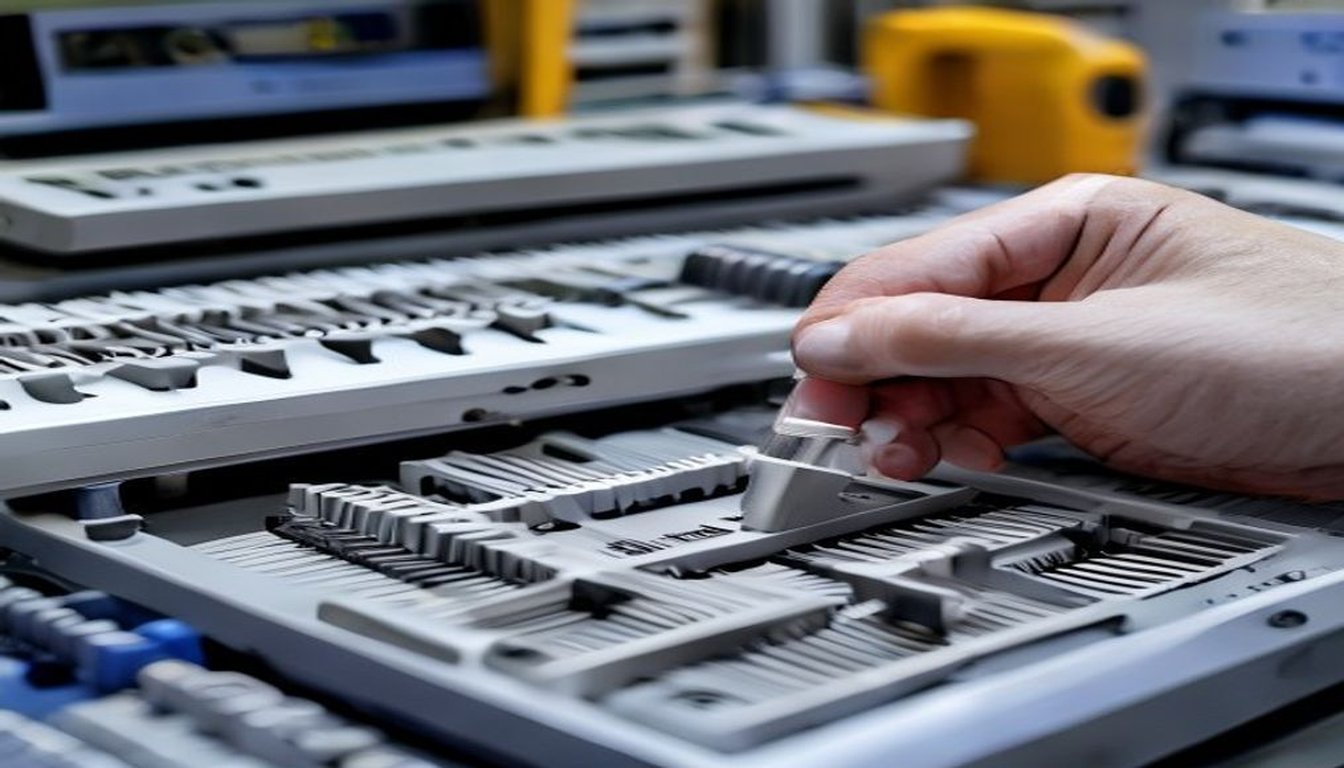
We also support rapid prototyping for OEM programs in pre-production phases. When your engineering team is still iterating on a damper actuator housing, aluminum soft tooling lets us produce functional samples in 2–3 weeks at a fraction of production tool cost. This de-risks mold investment before committing to hardened steel. For more on this approach, see our article on de-risking HVAC mold investments with rapid prototyping.
Frequently Asked Questions About OEM Manufacturing for HVAC?
Qual è la quantità minima d'ordine (MOQ) tipica per i programmi di stampaggio a iniezione OEM per HVAC?
Most Chinese injection molders set MOQ based on tooling amortization, not a fixed unit number. For a $20,000 production mold, a supplier amortizing at $0.04 per part needs 500,000 shots to recover tooling cost. Practically speaking, MOQs for single-cavity HVAC parts from dedicated OEM programs typically run 5,000–15,000 units per order, with annual volume commitments in the 50,000–200,000 range. Smaller OEMs running 10,000 units per year annually can still negotiate OEM programs, but expect a higher per-part tooling amortization charge or an upfront tooling buy.
Chi possiede gli stampi per lo stampaggio a iniezione in un accordo OEM?
This is one of the most negotiated points in any OEM contract — and one of the most consequential. In most Chinese OEM supplier agreements, the customer pays for the mold (typically $8,000–$40,000 depending on complexity) and owns the tool. However, the mold physically stays at the supplier facility unless the customer requests transfer. Get the ownership clause in writing before tooling starts, including: what happens to the mold if the supplier goes out of business, what the transfer fee is, and whether the supplier has a right to produce parts for third parties using your mold geometry. The last point sounds obvious, but it comes up in arbitration more than you’d expect.
Come posso verificare un fornitore OEM di stampi ad iniezione in Cina senza visitare di persona?
Remote auditing is now standard practice. Start with a structured questionnaire covering: press inventory and tonnage ratings, mold steel grades and maintenance logs, QC equipment (CMM, optical comparator, tensile tester), resin storage and drying procedures, and fire and safety compliance documentation. Follow up with a live video audit of the production floor — walk the press floor, see the QC lab, have them pull active process sheets for a part currently in production. Third-party auditors like SGS and Bureau Veritas offer factory audits in Guangdong for $600–$1,200 per audit. For your first order, this cost is worth it. Request a PPAP package on your first production run regardless of volume.
Quali finiture superficiali sono disponibili sulle parti HVAC stampate a iniezione OEM?
Produzione OEM per Componenti Plastici HVAC | HVACore.
I componenti OEM HVAC possono essere prodotti con sovrastampaggio o stampaggio a inserimento?
Yes, and both are common in HVAC applications. Insert molding — placing a metal insert (brass nut, steel shaft, aluminum heat spreader) into the mold before injection — is standard for threaded mounting points on motor brackets, fan housings, and control panels. The metal insert becomes permanently encapsulated in the plastic part. Over-molding adds a second plastic material over a molded substrate — typically a soft TPE over a rigid ABS or nylon base for sealed connector housings or vibration-dampening mounts. Both processes add cycle time and tooling complexity but eliminate secondary assembly operations. For HVAC sealing applications, see our article on overmolding for waterproofing.
-
OEM: OEM (Original Equipment Manufacturer) is a company that designs or specifies parts and equipment produced under contract by a supplier, then sells the finished product under its own brand. ↩
-
injection molding: Injection molding is a manufacturing process in which molten plastic is injected under high pressure into a steel mold cavity to produce high-volume, dimensionally consistent parts. ↩
-
PPAP: PPAP (Production Part Approval Process) refers to a standardized quality documentation package that confirms a supplier can consistently manufacture parts to engineering specifications before mass production begins. ↩
-
DFM: DFM (Design for Manufacturability) is a design practice that optimizes a part’s geometry and material selection to reduce tooling cost, cycle time, and defect rates during injection molding. ↩





