
- 0,08–0,15.
- Two-Shot (2K) molding bonds rigid structural nylon to soft TPE isolation layers in a single cycle, eliminating the micro-rattle caused by separate rubber grommets.
- Adding 20–40% talc filler to polypropylene increases mass density and raises the loss coefficient to 0.08–0.15, making it the preferred material for blower housings.
- Variable rib spacing on plastic fan guards disrupts standing waves and eliminates the tonal siren effect common in evenly-spaced metal grilles.
- Controlling mold temperature and injection speed during production directly affects molecular relaxation and therefore the acoustic damping of the finished part.
What Makes Plastics Better at Vibration Damping Than Metal?
Plastics outperform metal in HVAC vibration damping because their molecular structure is viscoelastic, dissipating 5–100x more vibrational energy per cycle than steel or aluminum. When a metal fan shroud vibrates, its crystalline lattice transmits kinetic energy almost entirely as sound. When a plastic component vibrates, its polymer chains flex and slide against each other, converting vibration into trace amounts of heat through internal molecular friction.
“Replacing a galvanized steel blower housing with a talc-filled polypropylene housing is one of the highest-impact NVH improvements in residential HVAC design.”True
The blower housing is the largest flat-panel resonator in a residential air handler. In steel, it amplifies compressor harmonics at 50–300 Hz, often adding 3–5 dB(A) to the overall unit sound level. Switching to PP + 40% Talc shifts the loss coefficient from approximately 0.005 to 0.12—a 24x improvement—and the added mass improves transmission loss for airborne noise simultaneously. Multiple OEM studies report overall SPL reductions of 3–5 dB(A) from this single material substitution.
“Acoustic foam applied to the inside of a sheet metal housing is as effective as switching to a plastic housing for HVAC noise reduction.”False
Applied acoustic foam provides transmission loss (airborne noise blocking) but does nothing to reduce the structural vibration resonance of the metal panel itself—the primary mechanism by which sheet metal amplifies compressor noise. The steel substrate continues to ring at its resonant frequency; the foam only slightly attenuates sound radiated from the panel surface. Switching to a viscoelastic plastic eliminates the resonance at its source, a fundamentally superior approach for NVH-critical applications.
Sheet metal acts like a diaphragm: it has very low internal damping, meaning once it begins vibrating at its resonant frequency, it continues ringing for a long time. A galvanized steel blower housing struck at 120 Hz—a common compressor harmonic—will sustain that frequency and radiate it through ductwork. The same housing made from mineral-filled polypropylene absorbs the energy within milliseconds, producing a perceptibly quieter unit.
The physical reason is the material’s loss coefficient (η). Metals have η values of 0.001–0.01, meaning they retain over 99% of vibrational energy per cycle. Engineering thermoplastics such as unfilled PP have η values of 0.05–0.10—ten times higher than steel—while soft thermoplastic elastomers reach η values of 0.50–1.00, effectively acting as built-in shock absorbers.
| Property | Sheet Metal (Steel/Al) | Engineering Plastic (PP/ABS) |
|---|---|---|
| Energy behavior | Elastic: stores and re-radiates vibration | Viscoelastic: stores and converts to heat |
| Loss coefficient (η) | 0.001–0.01 (very low) | 0.03–1.00 (5–100x higher) |
| Q factor (resonance) | High: rings at resonant frequency for >1 second | Low: damps within milliseconds |
| Response to compressor harmonics | Amplifies and transmits as structure-borne noise | Absorbs; drops SPL by 3–8 dB(A) vs. steel |
| Design freedom | Uniform wall thickness; ribs require separate stamping | Variable wall thickness and non-uniform ribs in single shot |
Understanding why plastic behaves so differently from metal at a molecular level is the foundation for making effective NVH material decisions. The loss coefficient determines how quickly a vibrating structure dissipates its energy: a low loss coefficient means the structure is an efficient radiator of sound, while a high loss coefficient means vibration energy is converted to heat before it can escape as noise. For HVAC engineers, this distinction is the single most important material selection criterion for components in the acoustic path from the compressor to the occupied space. Choosing the right polymer and filler combination—before detailed structural design begins—prevents the expensive NVH engineering patches that follow when material selection is treated as an afterthought.
Key Material Properties: Loss Coefficient Comparison
Selecting the right plastic for an HVAC NVH application requires matching the loss coefficient, stiffness, and temperature rating to the specific component. The table below shows the key damping properties engineers use when replacing metal with plastic in noise-critical HVAC parts.
| Material | Loss Coefficient (η) | Density (g/cm³) | HVAC Application |
|---|---|---|---|
| Steel / Aluminum | 0.001–0.01 | 2.7–7.8 | Legacy housings; very poor damping, requires add-on rubber mats |
| Polypropylene (PP) | 0.05–0.10 | 0.9 | Standard fan shrouds and housings; 10x better damping than steel |
| ABS | 0.03–0.08 | 1.05 | External covers where aesthetics matter; moderate damping |
| PP + 40% Talc | 0.08–0.15 | 1.25 | ‘Il polipropilene carico di minerale (PP-Talc) è una scelta migliore rispetto al nylon carico di vetro per un alloggiamento della ventola HVAC dove la riduzione del rumore è l'obiettivo principale.’ |
| Glass-Filled PA66 (30% GF) | 0.01–0.03 | 1.38 | Structural motor mounts; stiffer but lower damping than mineral-filled grades |
| TPE (Shore A 50) | 0.50–1.00 | 0.88–1.20 | Isolation mounts and overmolded seals; excellent vibration absorption |
Two trends emerge from this data. First, mineral fillers (talc) raise both density and damping coefficient, making them ideal for low-frequency noise blocking through mass-based transmission loss. Second, glass fiber raises stiffness but lowers the damping coefficient relative to unfilled grades, making glass-filled parts acoustically closer to metal. Engineers who specify glass-filled nylon for all structural HVAC parts—without considering acoustic consequences—often introduce new resonance problems.
| Frequency Range | Dominant Noise Source | Best Plastic Strategy |
|---|---|---|
| 50–300 Hz | Compressor harmonics, motor hum | Mass-law: PP + 40% Talc for high density + high loss coefficient |
| 300–3,000 Hz | Fan aerodynamic noise, turbulence | High loss coefficient: unfilled PP or TPE-overmolded mounts |
| 3,000–10,000 Hz | Airflow whistles through gaps, slot tones | Joint sealing: molded-in snap-fit seals and labyrinth gaskets |
| >10,000 Hz | Inverter switching whine | Mass + thickness: 3–4 mm thick-wall ABS or PC-ABS enclosures |
Material selection for HVAC NVH applications also depends on the frequency range of the target noise. Compressor harmonics concentrate in the 50–300 Hz range, where mass-law materials (talc-PP, mineral-filled PP) perform best. Fan aerodynamic noise spans 300–3,000 Hz, where the material’s internal damping coefficient is the dominant factor. High-frequency inverter whine above 4,000 Hz is primarily addressed through enclosure wall thickness and joint sealing rather than bulk material damping.
| Zone | Temperature Range | Chemical Exposure | Recommended Grade |
|---|---|---|---|
| Indoor air handler housing | 0–60°C | Low; condensation | PP + 40% Talc (UV-stabilized if near windows) |
| Outdoor condensing unit | -30–70°C ambient | UV, moisture, refrigerant oil | UV-stabilized ASA or glass-filled PP (UV grade) |
| Compressor high-side zone | 80–150°C | Refrigerant oil, hot gas | PPS or PA46 glass-filled; TPV for flexible mounts |
| Inverter drive enclosure | 0–85°C | Low; EMI | ABS UL94 V-0 or PC-ABS; 3–4 mm wall thickness |
| Fan guard / outdoor grille | -30–70°C | UV, rain | UV-stabilized PP or ASA; variable slot pitch design |
The operating environment also constrains material choice. Components adjacent to the compressor discharge line experience continuous temperatures above 100°C, where standard PP and ABS soften and lose their damping properties. For these applications, glass-filled PPS or high-temperature PA46 grades maintain structural integrity and adequate damping up to 200°C. For the outdoor condensing unit exposed to UV, moisture, and refrigerant oil, UV-stabilized glass-filled PP or ASA resin is preferred over ABS, which yellows and becomes brittle within two to three years of outdoor exposure.
Matching the correct plastic grade to each component location requires a systematic approach. Engineers should map each component by its peak operating temperature, vibration input frequency range, and exposure to chemical media, then select materials accordingly. A simple matrix covering these three variables for each component category—structural brackets, acoustic panels, flexible seals—will prevent the most common failure modes and ensure that damping performance is maintained over the full 10–15 year design life expected of residential and commercial HVAC equipment.
“Mineral-filled polypropylene (PP-Talc) is a better choice than glass-filled nylon for an HVAC blower housing where noise reduction is the primary goal.”True
Risonanza abitativa alla frequenza del compressore (50–120 Hz).
“All plastic grades with the same Shore hardness will deliver equivalent NVH performance in an HVAC housing.”False
Shore hardness measures resistance to surface indentation, not bulk viscoelastic damping. Two materials with identical Shore D hardness—for example, unfilled PA66 and PP-Talc—can have loss coefficients differing by a factor of three. Specifying HVAC acoustic components by Shore hardness alone ignores the loss coefficient, thermal stability, and filler type that actually determine field noise performance. Grade selection must be based on published damping data from resin suppliers, not surface hardness alone.
True or False: Common Misconceptions About NVH Plastics in HVAC
Noise, Vibration, and Harshness (NVH) engineering in HVAC involves persistent misconceptions that lead to poor material choices and costly design revisions. The following true-or-false statements address the most consequential errors made when specifying plastic materials for noise-critical HVAC components—from fan shrouds and blower housings to motor mounts and variable-speed inverter drive enclosures.
“overmolding1 a soft TPE gasket onto a hard housing reduces micro-rattle better than a separate rubber gasket.”True
An overmolded TPE bond is chemically fused to the substrate, eliminating the microscopic air gaps that exist between a press-fit rubber grommet and a plastic housing. Those tiny gaps are the origin of micro-rattle: as the two surfaces contact and separate under vibration, they produce a high-frequency ticking sound. The overmolded interface has uniform acoustic impedance, blocking vibration transfer more effectively than any mechanical assembly.
“Adding glass fiber to a plastic housing makes the part quieter because it is stronger.”False
Glass fiber increases stiffness and raises the natural frequency of a part, but it significantly reduces the loss coefficient. Glass-filled parts behave acoustically more like metal: they ring and transmit vibration efficiently. For NVH-critical components such as fan shrouds and blower housings, mineral-filled grades (talc-PP) or unfilled engineering resins deliver far better damping than glass-reinforced alternatives.
The most common NVH design errors in plastic HVAC components fall into two categories: material errors (using glass fiber where mineral filler is needed, or using unfilled grades where reinforcement is required) and structural errors (replicating metal geometry in plastic without redesigning for the polymer’s different stiffness characteristics). Avoiding these errors requires material selection to happen at the concept design stage, before structural engineering begins, not as a validation afterthought following a noise complaint from testing.
“Varying rib spacing on a plastic fan guard eliminates the tonal siren effect.”True
When fan blades pass evenly spaced slots at a constant RPM, they generate a pure tone at a predictable frequency—the so-called siren effect. Injection-molded plastic allows designers to vary slot spacing (for example, cycling through 18 mm, 22 mm, and 25 mm intervals) within the same part at no additional tooling cost. This distributes the acoustic energy across a broad frequency range, converting a distinct tone into broadband white noise, which humans perceive as far less intrusive.
“Replacing a metal HVAC bracket with an identical plastic replica will solve the vibration problem.”False
A plastic replica of a metal bracket will fail for two reasons. First, plastic has lower Young’s modulus, so under the same compressor load it will deflect more, potentially misaligning the fan and creating a new source of noise. Second, the plastic part may have a resonant frequency that coincides with a compressor harmonic, producing amplification instead of damping. Effective plastic NVH components require complete structural redesign: variable wall thickness, non-uniform rib spacing, and TPE integration at isolation points.
These four misconceptions share a common root: treating plastic NVH substitution as a direct material swap rather than a system-level acoustic redesign. Successful plastic NVH components require validation across the full compressor operating speed range—from startup torque at 0–30 Hz through steady-state harmonics at 50–300 Hz—in a representative unit assembly.
How Two-Shot Molding Eliminates Vibration at the Source
Two-Shot (2K) molding bonds a rigid engineering plastic to a soft thermoplastic elastomer in a single automated mold cycle, producing integrated vibration isolation mounts with no assembly steps. In traditional HVAC assembly, a motor is bolted to a steel bracket with rubber grommets slid over the mounting bolts. Over time, those grommets compress, harden with heat cycles, or slip out of position, and the motor vibration couples directly into the frame.
With a 2K mold, the first shot injects Glass-Filled PA66 (30% GF) to form the rigid structural bracket—this carries the compressor or fan motor load with essentially zero creep. The second shot injects TPE at Shore A 40–60 directly over the four mounting bosses. The TPE chemically bonds to the nylon substrate, creating isolation mounts that cannot slip, compress unevenly, or fall out. The motor effectively ‘floats’ on a soft elastomeric island within the rigid frame.
| Criterion | Rubber Grommet Assembly | Two-Shot (2K) Molded Mount |
|---|---|---|
| Vibration isolation (100–500 Hz) | –8 to –12 dB (depends on grommet condition) | –15 to –25 dB (consistent, chemically bonded) |
| Failure mode | Grommet compression set, slippage after 3–5 years | No separate component to fail; bonded TPE maintains performance |
| Assembly steps | 3–4 manual steps (insert, align, torque fasteners) | 0 additional steps; isolation is integral to the part |
| Component count | Bracket + 4 grommets + 4 washers + 4 fasteners = 13 parts | 1 integrated 2K bracket |
| Consistency | Grommet installation torque variation causes unit-to-unit SPL spread | Uniform; no operator skill dependency |
The acoustic benefit is measurable. A well-designed 2K motor mount in a residential air handler can reduce structure-borne vibration transmission by 15–25 dB in the 100–500 Hz range—the critical band for compressor noise. Compared to the rubber grommet assembly it replaces, the 2K part also reduces component count, assembly labor, and the risk of field failures caused by degraded grommets.
Beyond motor mounts, two-shot molding is equally effective for fan guard assemblies. The outer structural ring is molded first in glass-filled PA66, then the perimeter sealing lip is overmolded in TPE, sealing the guard-to-unit interface against turbulence noise from gaps. Traditional foam tape is inconsistent in compression and prone to edge flutter at speed.
The economic case for 2K tooling is strongest in high-volume applications. A single 2K tool costing 40–60% more than a conventional single-material tool eliminates two assembly operations (grommet installation and gap sealing), reduces warranty claims from grommet failures, and improves unit-to-unit consistency. insert molding2 is a related technique used when a metal threaded insert must be embedded in the plastic bracket for high-torque fastening points—combining the strength of stainless steel threads with the damping properties of the surrounding nylon matrix. At volumes above 50,000 units per year, the per-part cost savings from assembly elimination typically recover the additional tooling investment within 12–18 months.
Designing Plastic Parts for Silence: Engineering Strategies
Non-Uniform Rib Spacing to Break Resonance
A plastic housing designed with evenly spaced ribs every 20 mm will have a single dominant resonant frequency. To prevent this, structural ribs should be spaced in a non-repeating pattern—for example, 18 mm, 24 mm, 21 mm, 27 mm. This ‘detuning’ strategy spreads the natural frequencies of the structure across a broad range so no single frequency is amplified. The same principle applies to fan guard slot spacing. Production experience shows this technique alone can reduce peak sound pressure level by 3–5 dB(A) in blower housings.
Wall Thickness Variation for Frequency Shifting
Sheet metal has uniform wall thickness throughout. injection molding3 allows engineers to vary wall thickness section by section within the same part at no extra cost. Thickening corners and mounting bosses—where vibration input points are concentrated—raises the local natural frequency above the compressor’s fundamental harmonic (typically 50 Hz or 60 Hz and their second harmonics). Keeping the large flat panels slightly thinner reduces the component’s mass contribution to the unwanted resonance peak.
| Noise Problem | Design Technique | Expected Effect |
|---|---|---|
| Housing resonance at compressor frequency (50–120 Hz) | Supporti di Isolamento del Compressore | Eliminates single resonance peak; SPL reduction 3–5 dB(A) |
| Motor vibration coupling into frame | 2K overmolded TPE isolation at mounting bosses (Shore A 40–60) | Structure-borne vibration reduction 15–25 dB at 100–500 Hz |
| Fan siren tone at blade-pass frequency | Variable slot pitch on plastic fan guard (cycle through 3–4 unequal spacings) | Converts tonal noise to broadband; removes audible whine |
| Airflow turbulence at panel joints | Molded-in tongue-and-groove snap seals replacing foam tape | Turbulence noise at joints reduced 4–8 dB |
| Inverter switching whine (4–16 kHz) | Thick-wall ABS enclosure (3–4 mm) with internal ribs | Attenuation 3–6 dB; eliminates panel resonance modes |
Controlling Mold Process for Molecular Relaxation
High internal stress in an injection-molded part increases its effective stiffness and raises the loss coefficient in the wrong direction—making it more ‘metal-like.’ A part molded with low mold temperature and high packing pressure will have tightly frozen polymer chains that vibrate more readily. For NVH-critical components, using mold temperatures 10–20°C higher than standard and reducing injection speed by 20–30% allows the molecular chains to relax fully before solidification. The ‘relaxed’ part absorbs significantly more acoustic energy.
Minimizing Weld Lines in Structural Acoustic Panels
Weld lines—where two melt fronts meet during filling—are structurally weaker than surrounding material and can amplify panel resonance under cyclic vibration. Poor gate placement can create weld lines across the widest unsupported panel section. Mold flow simulation should position gates so weld lines land on ribbed sections where structural support prevents fatigue failure.
Sealing Gaps to Eliminate Turbulence Noise
In sheet metal assemblies, gaps at panel joints, screws, and seams create broadband turbulence noise. Injection-molded plastic parts integrate tongue-and-groove snap joints and labyrinth seals impossible to achieve in stamped metal at comparable cost. A well-sealed plastic cabinet can reduce joint turbulence noise by 4–8 dB versus screw-fastened sheet metal panels with only foam tape sealing.
Real-World HVAC Applications of Vibration-Damping Plastics
Vibration-damping plastics are now standard in every major HVAC component category, from compressor mounting systems to inverter drive enclosures. Each application exploits a different property of the polymer to solve a specific noise problem.
| Component | Old Material | Plastic Solution | Primary Noise Benefit |
|---|---|---|---|
| Compressor isolation mounts | Natural rubber grommets on steel bolts | TPV injection-molded multi-axis dampers | Isolates compressor bounce and startup torque; oil and UV resistant |
| Blower housing | Galvanized sheet metal | PP + 40% Talc injection-molded housing | Loss coefficient 15x steel; eliminates 120 Hz resonance hum |
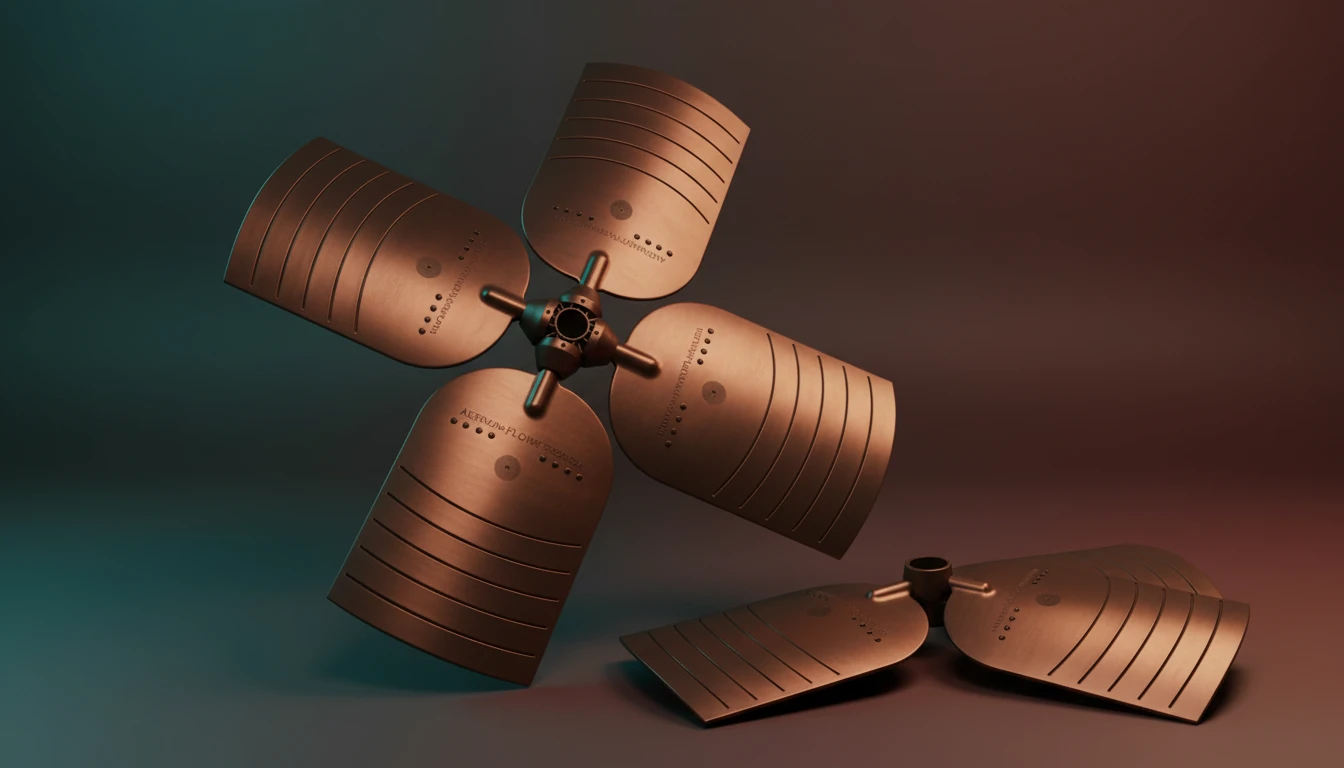
| Axial fan blades | Stamped aluminum | Sickle-profile SAN or PP-GF blades with center gate | Reduces aerodynamic turbulence; absorbs motor hum at hub |
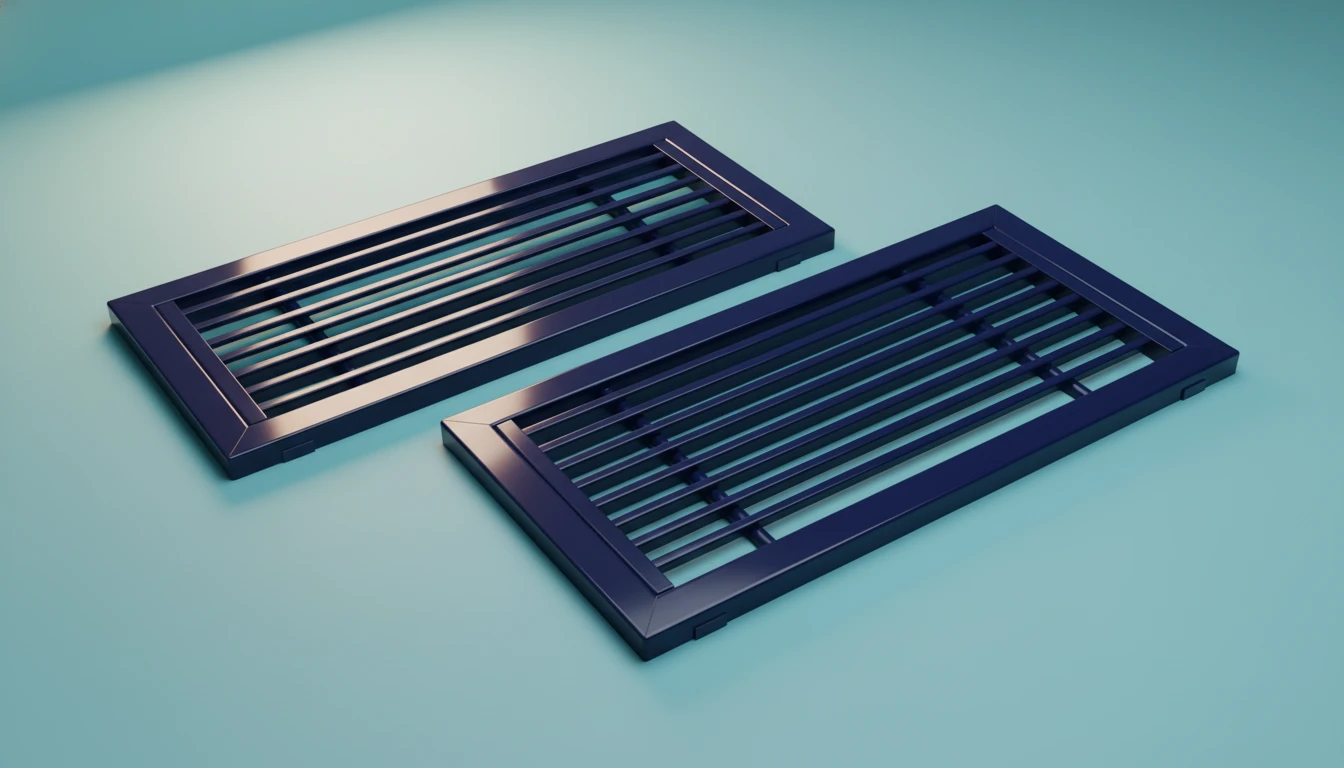
| Fan guard / grille | Stamped steel with uniform slot pitch | Injection-molded plastic with variable slot pitch | Eliminates blade-pass frequency siren tone |
| Inverter enclosure | 0.8–1.0 mm sheet metal | 3–4 mm ABS with internal ribs | Attenuates 4–16 kHz switching whine by 3–6 dB |
| Motor mounting bracket | Steel bracket + rubber grommets | 2K PA66-GF + TPE overmolded bracket | 15–25 dB structure-borne vibration reduction with zero field failures |
Compressor Isolation Mounts
Resistenza alla Temperatura e ai Prodotti Chimici: Selezione del Grado di Plastica per Zone HVAC.
“Injection-molded TPV compressor mounts can provide directional stiffness variation that rubber grommets cannot.”True
Injection molding allows tool engineers to create a TPV mount with asymmetric wall thickness: thinner walls in the vertical direction (lower stiffness for compressor bounce attenuation) and thicker walls in the horizontal direction (higher stiffness against start-up torque displacement). A rubber grommet with uniform cross-section has the same stiffness in all directions. This directional stiffness advantage is a primary reason HVAC OEMs who have switched to molded TPV mounts consistently report lower NVH warranty claim rates than those using rubber grommet alternatives.
“Standard natural rubber mounts are the most durable long-term choice for outdoor HVAC compressor isolation.”False
Natural rubber degrades when exposed to the petroleum-based synthetic refrigerant oils (PAG, POE) used in modern HVAC systems, swelling and losing its isolation properties within 3–5 years in an outdoor condensing unit. It also hardens significantly below -20°C, eliminating its vibration-isolating softness in cold climate applications. Thermoplastic Vulcanizate (TPV) mounts maintain chemical resistance to all common refrigerant oils and stable Shore A hardness from -40°C to 120°C, making them the technically superior choice for long-term outdoor compressor isolation.
Axial Fan Blades for Condensing Units
Outdoor condensing unit fans are a major source of perceived HVAC noise. Glass-reinforced PP or SAN blades in a sickle or swept-back profile reduce aerodynamic turbulence, while the plastic substrate absorbs motor hum at the hub. Center-gated fan blades achieve better rotational balance than edge-gated blades; even a 1-gram mass imbalance at 800 RPM generates measurable first-order vibration that couples directly into the chassis and frame.
| Material / Gate | Rotational Balance | Noise Profile | Best Application |
|---|---|---|---|
| PP + 30% GF / center gate | G1.0 grade achievable without secondary balancing | Low broadband noise, good hub damping | Outdoor condensing unit, residential axial fans |
| SAN / center gate | G1.0 achievable | Low turbulence; moderate hub damping | Decorative fans, visible indoor units |
| PP unfilled / edge gate | G2.5 typical; secondary balance may be needed | Higher turbulence, some tonal content from imbalance | Low-cost indoor fans only |
| Metal (stamped) | G1.0 achievable only with individual dynamic balancing | Low turbulence but amplifies motor hum (low damping) | Industrial applications only; NVH inferior to plastic |
Inverter Drive and Electronics Enclosures
Variable-speed inverter drives generate switching noise in the 4–16 kHz range that sheet metal enclosures transmit efficiently. Thick-walled ABS enclosures (3–4 mm) with molded-in ribs attenuate this whine by combining mass-based transmission loss with intrinsic material damping, preventing the panel resonances that make thin sheet metal enclosures act as speakers for the inverter’s switching frequency. The high stiffness-to-weight ratio of ABS also makes it resistant to the low-frequency panel modes that amplify compressor hum in underdamped enclosures.
Flame-retardant grades are mandatory for inverter drive enclosures in most markets. UL94 V-0 rated ABS or PC-ABS blends provide the required ignition resistance without significantly compromising acoustic properties. Mineral-filled PP in UL94 V-0 grade is increasingly specified for inverter covers, delivering improved damping over standard ABS while maintaining fire safety compliance. This selection also simplifies end-of-life recycling, since mineral-filled PP is recovered as a single polymer stream without the separation challenges of PC-ABS blends.
Advantages and Limitations of Plastics vs. Metal for NVH
Plastics deliver superior NVH performance in most HVAC applications, but they have specific limitations that engineers must account for in high-temperature and high-load environments. Understanding both sides is essential for making correct material substitution decisions.
| Category | Plastic Advantage | Plastic Limitation |
|---|---|---|
| Structural vibration | Loss coefficient 5–100x higher; dissipates vibration as heat | Lower Young’s modulus; requires redesign to maintain stiffness under load |
| Airborne sound blocking | Can achieve higher mass via mineral fillers (talc-PP) | Lower density than steel means inherently worse Sound Transmission Class (STC) |
| Integration | 2K molding fuses isolation mounts and seals in one shot | Creep under constant compressor load if PA66 grade or rib design is inadequate |
| Durability | No corrosion; maintains acoustic integrity for 10+ years | Temperature limits; cannot be used adjacent to compressor discharge lines (>150°C) |
| Design freedom | Variable rib spacing, wall thickness, and geometry at no extra cost | Long mold lead times (6–10 weeks) vs. sheet metal tooling for design iterations |
The most important limitation to manage is creep under sustained compressor load. Under constant vibration and heat cycling, certain plastics—particularly unfilled grades—will deform slowly over months or years, allowing the motor to shift position and creating a new alignment-induced noise. The solution is to specify reinforced grades (PA66 + 30% GF) for load-bearing brackets and reserve the high-damping unfilled or mineral-filled grades for the non-structural acoustic panels and covers.
| Involucri metallici per sistemi HVAC a incasso che mostrano i componenti strutturali | Peak Temperature | Key Chemical Exposure | Plastic Grade |
|---|---|---|---|
| Indoor blower housing | 60°C continuous | Low; condensate | PP + 40% Talc |
| Outdoor condensing unit | 70°C ambient | UV, rain, refrigerant oil | UV-stabilized ASA or PP-GF (UV grade) |
| Compressor high-side | 120–150°C | Refrigerant oil, hot gas refrigerant | PPS or PA46-GF; TPV for seals |
| Inverter drive enclosure | 85°C | Low chemical; EMI | ABS UL94 V-0 or PC-ABS; 3–4 mm wall |
The temperature limitation deserves particular attention in commercial HVAC design. While residential equipment typically keeps plastic components away from high-temperature zones, commercial rooftop units and industrial air handlers may have plastic panels adjacent to heat exchangers where surface temperatures periodically reach 80–100°C. At these temperatures, standard PP and ABS begin to soften, and their damping properties shift. Engineers should specify heat-stabilized grades with documented HDT (Heat Deflection Temperature) values at least 30°C above the expected maximum service temperature.
“A plastic blower housing typically delivers lower total installed cost than a comparable steel housing, despite higher per-part material cost.”True
Total installed cost comparison must include the eliminated add-on NVH treatments required to make a steel housing quiet: rubber anti-vibration mats, foam tape, and manual assembly steps typically add $8–15 per unit. A talc-filled PP housing costing $5 more than its steel equivalent but eliminating $10 in add-on treatments produces a net saving of $5 per unit, plus a reduction in NVH warranty claims worth $2–4 per unit annually in warranty cost programs—making the total cost advantage of plastic housing designs substantial at volume.
“Plastic HVAC outdoor components always outlast metal in UV-exposed environments.”False
While plastic resists rust corrosion, it is vulnerable to UV degradation and thermal cycling fatigue that can exceed corrosion damage in high-UV climates. Standard ABS and PP components without UV stabilization can embrittle and crack within 3–5 years in equatorial environments, whereas metal may corrode slowly over 15–20 years. Outdoor condensing units require UV-stabilized ASA or glass-filled PP grades with documented 5,000-hour xenon arc weatherometer ratings to match or exceed the service life of properly coated sheet metal.
Despite these limitations, the overall case for plastics in HVAC NVH applications is compelling. An increasing number of tier-one HVAC manufacturers now publish internal design standards requiring plastic for all housings, guards, and covers in residential equipment, reserving sheet metal only for the refrigerant circuit enclosures and compressor saddle. This shift is driven primarily by warranty cost reduction—plastic components virtually eliminate field complaints related to panel rattle, loose vibration dampers, and corroded fasteners that account for a disproportionate share of NVH warranty calls in older metal-dominant designs.
| Cost Element | Steel Housing | PP-Talc Housing |
|---|---|---|
| Material + tooling amortized | Baseline | +$5–8 per unit (higher resin cost) |
| Anti-vibration mats eliminated | –$0 | –$6–10 per unit |
| Assembly labor reduction | –$0 | –$2–5 per unit (no mat/grommet install) |
| NVH warranty calls (10yr avg) | $3–5 per unit | $0.5–1.5 per unit |
| Net total installed advantage | Baseline | –$5–10 per unit advantage |
Cost comparison between plastic and metal must account for the total system cost, not just the per-part material price. A plastic blower housing may cost 15–20% more than its stamped steel equivalent, but when the eliminated rubber anti-vibration mats, foam tape, and assembly labor are included, the total installed cost is typically 10–25% lower. The acoustic performance advantage further reduces warranty costs, which in premium residential equipment can equal 3–5% of unit revenue annually for NVH-related claims alone.
Frequently Asked Questions About Plastics in HVAC Noise and Vibration Control?
Perché si aggiunge talco al polipropilene per gli alloggiamenti delle ventole HVAC?
Talc is a platy mineral filler that increases the density of PP from 0.9 g/cm³ to approximately 1.25 g/cm³ at 40% loading, without the embrittlement caused by glass fiber. This added mass improves Transmission Loss (TL)—the ability to block airborne sound from passing through the housing wall—by approximately 3–5 dB. Simultaneously, the talc platelets increase the loss coefficient to 0.08–0.15, making the material better at dissipating structural vibration. The combination of higher mass and higher damping gives talc-PP its distinctive ‘dead’ acoustic character that engineers prize for blower housings and motor enclosures.
Gli supporti motore in plastica stampata a iniezione possono sostenere il peso di un compressore HVAC pesante?
Yes, when designed correctly with the right material and rib geometry. PA66 reinforced with 30–35% glass fiber has a flexural modulus of 9,000–11,000 MPa and tensile strength exceeding 180 MPa, which is sufficient for most residential and light-commercial compressor loads. The critical design requirement is rib geometry that distributes the compressor weight over a large cross-section, keeping stress levels below the material’s creep threshold—typically below 20–25% of the short-term yield stress for long-term service. With proper DFM analysis, plastic motor mounts routinely meet 10-year field life requirements.
In che modo la posizione del gate influisce sulle vibrazioni e sul rumore nelle pale del ventilatore stampate a iniezione?
Gate location determines the weld line position and the density distribution across the blade. An off-center gate on a rotating fan blade creates uneven material distribution: the side closer to the gate receives slightly more material and is marginally heavier. Even a 0.5–1 gram imbalance at 800–1,000 RPM generates centrifugal force that causes first-order vibration at the rotation frequency. Center gating or three-plate tooling with a central pin gate ensures symmetric melt flow and eliminates gate-induced imbalance. Properly gate-balanced HVAC fan blades can achieve dynamic balance within G1.0 grade (ISO 1940) without secondary balancing operations.
Cos'è l'effetto sirena nella progettazione delle griglie di ventilazione HVAC e come lo risolve lo stampaggio a iniezione di plastica?
The siren effect occurs when fan blades pass regularly spaced slots at a fixed RPM, generating a tonal noise at the blade-pass frequency (BPF = RPM/60 × number of blades). At 900 RPM with a four-blade fan passing a guard with uniform 20 mm slot spacing, this produces a 60 Hz tone that is clearly audible in residential environments. Injection-molded plastic guards allow designers to vary slot pitch—cycling through 17 mm, 21 mm, 25 mm, and 23 mm—within the same tool at minimal cost. This distributes acoustic energy across a broad frequency band, converting the pure tone into broadband noise that homeowners perceive as a soft hiss rather than a whine.
La vernice soft-touch o il rivestimento in gomma applicati alle parti plastiche HVAC sono un trattamento NVH efficace?
Soft-touch paint provides negligible acoustic benefit. A soft-touch coating is typically 50–150 microns thick, which is far too thin to provide meaningful damping at the structural vibration frequencies relevant to HVAC (50–500 Hz). Effective NVH treatment must come from the bulk material properties of the substrate—the loss coefficient of the plastic itself—or from overmolded TPE layers of at least 2–4 mm thickness. Applied rubber sheet or constrained-layer damping tape can provide modest improvement (1–3 dB) as a retrofit solution, but is never a substitute for correct material selection in a new design.
Come specifichiamo le materie plastiche per parti HVAC esposte all'olio refrigerante e all'elevata umidità?
Refrigerant oil resistance and humidity stability eliminate several common plastics from consideration. ABS absorbs moisture and loses stiffness, making it unsuitable for compressor-side components. Glass-filled PA66 has excellent oil resistance but absorbs up to 2.5–3.5% moisture in humid climates, causing dimensional change. The preferred materials for wet, oil-exposed HVAC environments are PP (excellent chemical resistance, low moisture absorption), PPS (outstanding temperature and chemical resistance for high-side components), and TPV for flexible seals. All selected grades should be tested per ISO 175 fluid immersion and ISO 175/ASTM D570 moisture absorption protocols before production approval.
-
overmolding: Overmolding is a two-stage injection molding process in which a second material—typically a soft thermoplastic elastomer (TPE)—is molded directly over a rigid substrate to create a chemically or mechanically bonded multi-material component with integrated soft and hard zones. ↩
-
insert molding: Insert molding is a process in which a pre-formed metal or non-plastic component is placed into a mold cavity before plastic is injected around it, creating a single integrated part that combines the strength of metal inserts with the design flexibility and damping properties of the surrounding polymer. ↩
-
injection molding: Injection molding is a manufacturing process in which molten thermoplastic resin is injected under pressure into a temperature-controlled steel mold cavity, where it cools and solidifies into a net-shape part; process variables including mold temperature, injection speed, and packing pressure directly influence the acoustic damping properties of the finished component. ↩





