
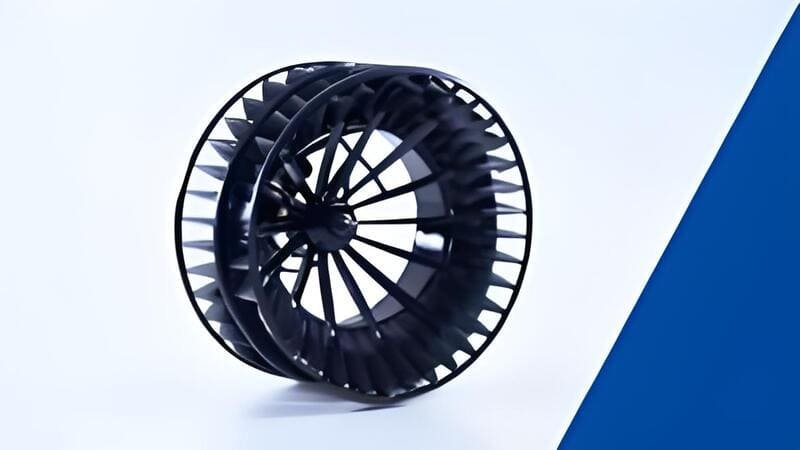
– Polypropylene (PP) offers the best cost-to-performance ratio for general housings but requires mineral fillers for structural rigidity.
– Acrylonitrile Butadiene Styrene (ABS) is the standard for visible aesthetic parts like vents and thermostats due to its superior surface finish.
– Polycarbonate (PC) and Polyamide (PA/Nylon) are essential for high-stress, high-temperature internal components like gears and valves.
– Material selection in HVAC must account for UL 94 flammability ratings and long-term creep resistance under thermal cycling.

What Defines High-Performance Plastics in the HVAC Context?
In the context of HVAC injection molding materials, "high performance" does not always mean the most expensive engineering resin. Instead, it refers to a material’s ability to withstand the specific stressors of heating, ventilation, and air conditioning environments: continuous thermal cycling, humidity, chemical exposure (condensate and cleaners), and vibration.
From my experience on the factory floor, a "best" plastic for one component (like a duct connector) might be a catastrophic failure for another (like a furnace inducer housing). We categorize these materials based on their deflection temperature1, flow rate (Melt Flow Index), and resistance to environmental stress cracking.
What Are the Primary Thermoplastics Used in HVAC Manufacturing?
When developing an HVAC material selection guide, we primarily focus on four resin families. Each brings specific advantages to the molding press and the final installation.
1. Polypropylene (PP)
Polypropylene is the workhorse of the industry.
- Variants: Homopolymer (standard), Copolymer (impact modified), and Mineral-Filled (Talc/Glass).
- Factory Reality: We often use 20% to 40% talc-filled PP for blower housings. Pure PP shrinks too much (1.5–2.0%), but the filler stabilizes dimensions and dampens noise—a critical factor for residential units.
2. Acrylonitrile Butadiene Styrene (ABS)
ABS is favored for its balance of toughness and aesthetics.
- Usage: Diffusers, grilles, and control panel housings.
- Factory Reality: ABS allows for high-gloss finishes that homeowners prefer. However, it lacks chemical resistance against some aggressive coil cleaners, which can cause stress cracking over time.
3. Polycarbonate (PC) and PC/ABS Blends
When high-temperature thermoplastics are required, PC is the go-to.
- Usage: Smart thermostat faces, structural clips, and components near heating elements.
- Factory Reality: PC is difficult to mold. It requires high mold temperatures (80°C–120°C)2 and is highly sensitive to moisture. If we don’t dry the resin to below 0.02% moisture, we get silver streaks (splay) and structural brittleness.
4. Polyamide (PA / Nylon)
Nylon (PA6, PA66) is an engineered resin used for mechanical parts.
- Usage: Valve bodies, gears in damper actuators, and bearing surfaces.
- Factory Reality: Nylon is hygroscopic (absorbs water). In production, we must account for dimensional changes "after conditioning" (absorbing moisture from the air), which actually increases the toughness of the part but changes the tolerances slightly.
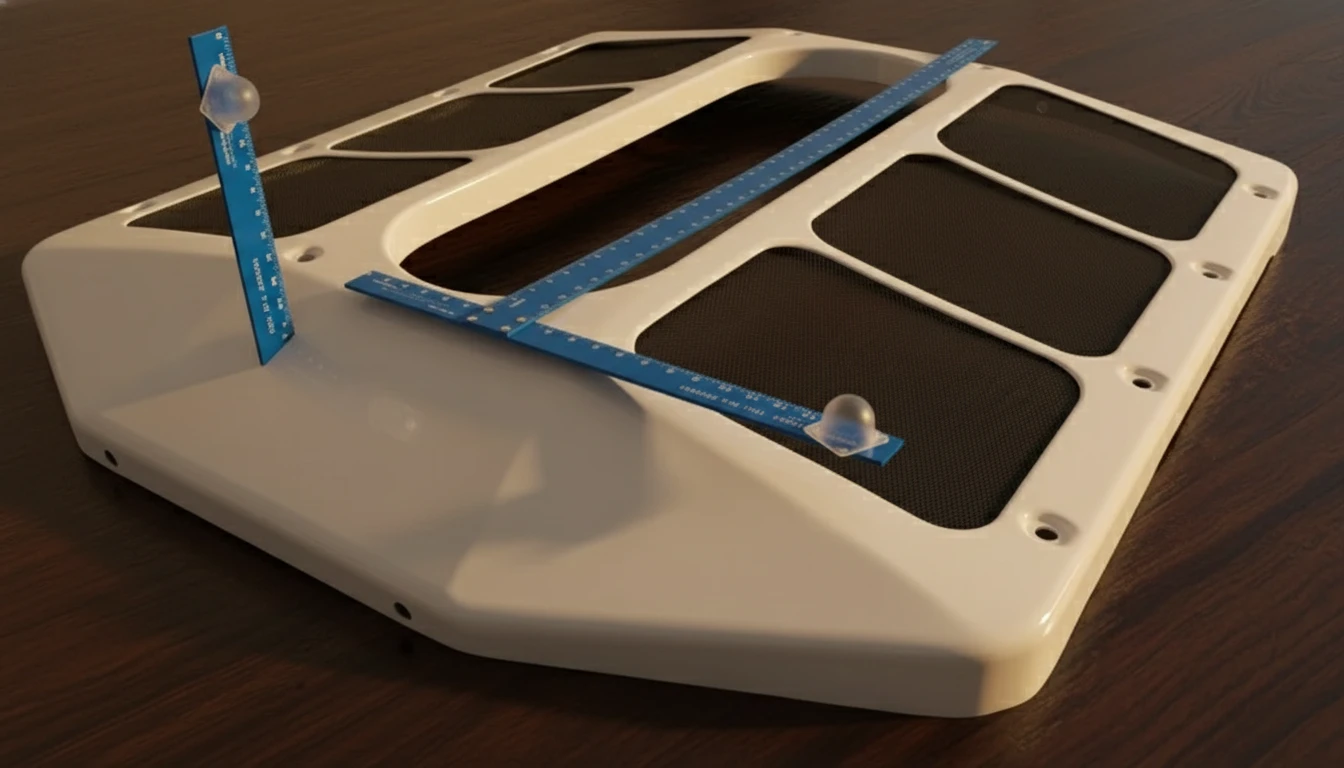
Talc-filled PP offers higher stiffness, better heat deflection, and superior noise-damping properties compared to standard ABS, often at a lower cost.
Nylon (PA).
How Do Key Technical Parameters Compare?
Below is a comparison based on typical grades we run in HVAC OEM production. Note that values change based on filler content.
| Parameter | Polypropylene (PP 20% Talc) | ABS (Standard) | Polycarbonate (PC) | Polyamide (PA66 30% GF) |
|---|---|---|---|---|
| Heat Deflection Temp (HDT) @ 1.8 MPa | 65°C – 85°C | 75°C – 85°C | 125°C – 135°C | 250°C (Glass Filled) |
| Mold Shrinkage | 0.8% – 1.2% | 0.4% – 0.7% | 0.5% – 0.7% | 0.3% – 0.5% (Flow direction) |
| Impact Strength | Moderate | High | Very High | High (Dry) / Very High (Cond.) |
| Chemical Resistance | Excellent | Poor | Moderate | Good |
| Relative Cost | $ | $$ | $$$ | $$$$ |
| Primary HVAC Use | Fan housings, scroll blowers | Grilles, covers, aesthetic parts | Control interfaces, structural clips | Actuator gears, valves |
Case Study: How Did We Solve Warpage in an Air Diffuser?
The Challenge:
In a recent project for a commercial ceiling diffuser, we initially selected standard ABS to match the glossy white aesthetic required by the client. The part was a large, square frame (600mm x 600mm) with thin louvers.
The Failure:
During the pilot run, we encountered severe warpage. The large surface area and varying wall thickness caused differential cooling. Furthermore, when installed in test environments with heating cycles (supply air at 50°C), the ABS frames bowed, creating air leaks and visible gaps against the ceiling.
The Factory-Floor Solution:
- Process Adjustment: We attempted to optimize the cooling time and increase the packing pressure to reduce shrinkage variation, but the internal stress remained too high.
- Material Switch: We transitioned to a PC/ABS blend.
- Why: PC/ABS retains the gloss and colorability of ABS but inherits the higher heat resistance and dimensional stability of Polycarbonate.
- Tooling Tweak: We slightly opened the gates to reduce shear stress during injection.
The Result:
The warpage was eliminated. The PC/ABS blend3 handled the thermal cycling without deformation, and the client accepted the marginal cost increase for the sake of product reliability. This is a classic example of finding the best plastic for HVAC parts through failure analysis.
What Are the Advantages and Disadvantages of These Materials?
| Material | Advantages | Disadvantages |
|---|---|---|
| PP (Filled) | Low cost, chemical resistance, sound dampening. | Difficult to bond/paint, lower surface gloss, potential for sink marks in thick sections. |
| ABS | Excellent surface finish, easy to mold, good impact strength. | Poor UV resistance (yellows), poor chemical resistance to solvents. |
| PC | High transparency, high heat resistance, extreme toughness. | Susceptible to stress cracking, requires strict drying, expensive. |
| Nylon (PA) | https://hvacoretech.com/wp-content/uploads/2025/09/鼓风机叶轮6.jpeg. | Absorbs moisture (swells), dimensional instability if not glass-filled. |
How Should You Approach Material Selection? (Step-by-Step)
When I consult with design engineers on HVAC plastic injection molding, I guide them through this checklist before cutting steel for the mold:
- Define the Thermal Zone:
- Is this part in the combustion chamber vicinity? (Needs PA66 or PPS).
- Is it in the supply airstream? (Needs PC/ABS or PP-Talc).
- Is it a room-side aesthetic part? (ABS or ASA).
- Assess Regulatory Compliance:
- Does the part need a UL 94 V-0 flammability rating? (Common for electronics enclosures). Standard PP burns easily; flame-retardant grades must be specified.
- Evaluate UV Exposure:
- If the unit is a rooftop package unit or an outdoor condenser, standard ABS will degrade and yellow within months. Use ASA (Acrylonitrile Styrene Acrylate) or UV-stabilized PP.
- Check Chemical Compatibility:
- Will the part contact condensate pans or drains? The acidic nature of condensate can attack certain Nylons or PC. PP is chemically inert and safer for drainage.
Mixing up to 15-20% regrind with virgin material is standard industry practice for housings and covers, provided the material has not been degraded by heat history.
Flame retardancy is graded (e.g., HB, V-2, V-0); a material rated HB will still burn, it just burns slowly. You must specify the exact UL rating required by code.
FAQ: Common Questions on HVAC Plastic Manufacturing
Why is shrinkage such a critical factor in HVAC mold design?
In HVAC, we often mate plastic parts with sheet metal components. Sheet metal has virtually no shrinkage, while plastic shrinks as it cools. If we don’t calculate the shrinkage rate of the specific HVAC injection molding material correctly (e.g., 1.5% for PP vs 0.5% for PC), the mounting holes will not align with the metal cabinet during assembly.
Can we use biodegradable plastics for HVAC components?
Currently, PLA and other bioplastics lack the thermal stability and long-term creep resistance required for HVAC equipment that must last 15–20 years. We stick to engineered resins for durability.
What is the best material for outdoor HVAC unit covers?
ASA (Acrylonitrile Styrene Acrylate) is the superior choice. It has similar mechanical properties to ABS but offers exceptional resistance to UV radiation and weathering, preventing the "chalking" and cracking seen in older units.
How do we prevent squeaking noise in plastic HVAC assemblies?
Squeaking often occurs when two similar plastics rub together (e.g., ABS on ABS). We utilize "dissimilar material pairing"—such as mating an Acetal (POM) gear with a Nylon (PA) gear—or use materials like PP with talc fillers that naturally dampen vibration.
When is glass-filled material required?
We switch to glass-filled nylon or PP when the part is under constant structural load (like a motor mount) or high internal pressure (like a hydronic valve). The glass fibers prevent "creep," which is the tendency of plastic to slowly deform under load over time.
Technical Summary
Selecting the right thermoplastic for HVAC applications is a balance of thermal management, structural integrity, and cost. While Polypropylene remains the volume leader for housings due to cost efficiency, ABS dominates aesthetics, and Engineered Resins like Polycarbonate and Nylon are non-negotiable for high-heat, high-stress internal components. Successful HVAC plastic part design requires early collaboration between the design engineer and the molder to align material properties with the physical realities of the injection molding process.
-
Learn how deflection temperature influences material selection for parts exposed to heat in HVAC applications. ↩
-
Discover the challenges and solutions for processing high-performance plastics in HVAC manufacturing. ↩
-
Learn how blending Polycarbonate and ABS enhances heat resistance and dimensional stability in HVAC parts. ↩





