
- 25°–30°.
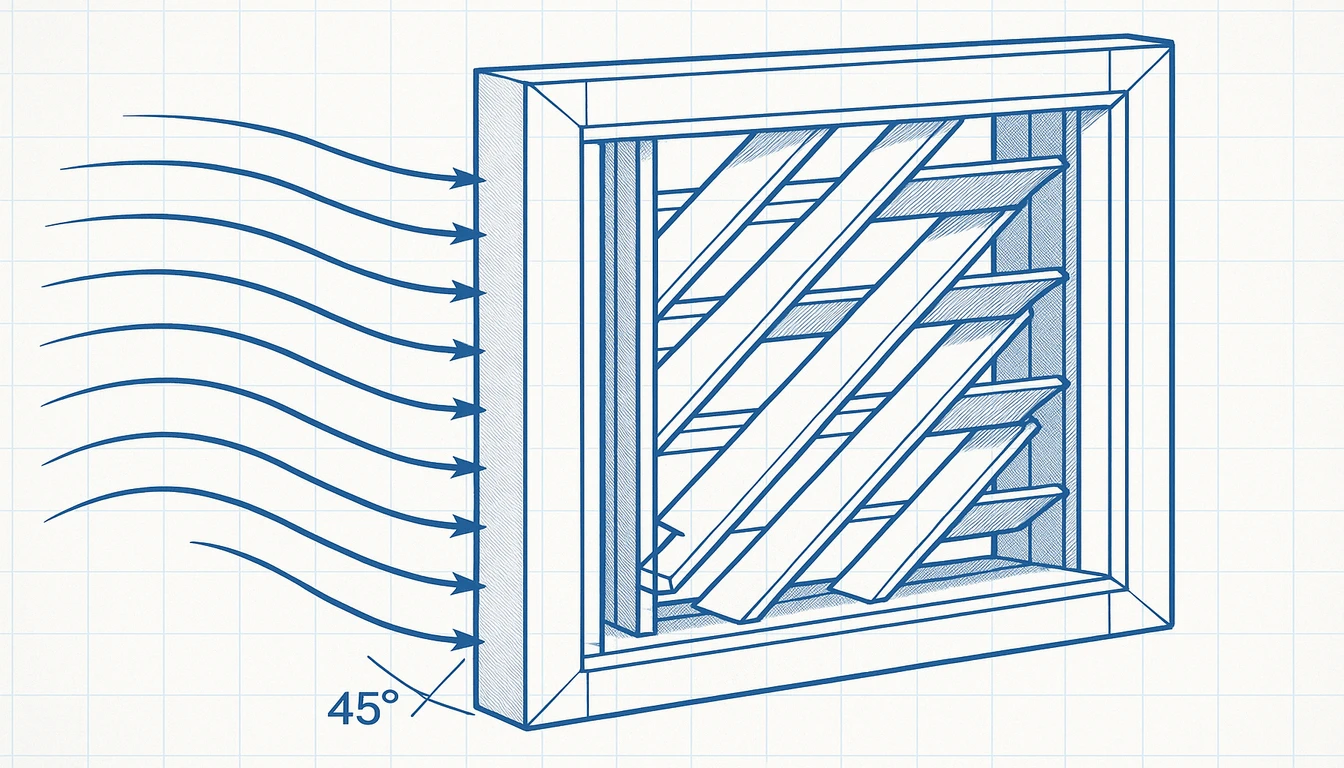
- Optimal grille louver angles range from 35° to 45°, delivering a free area ratio of 55–70% for maximum airflow efficiency.
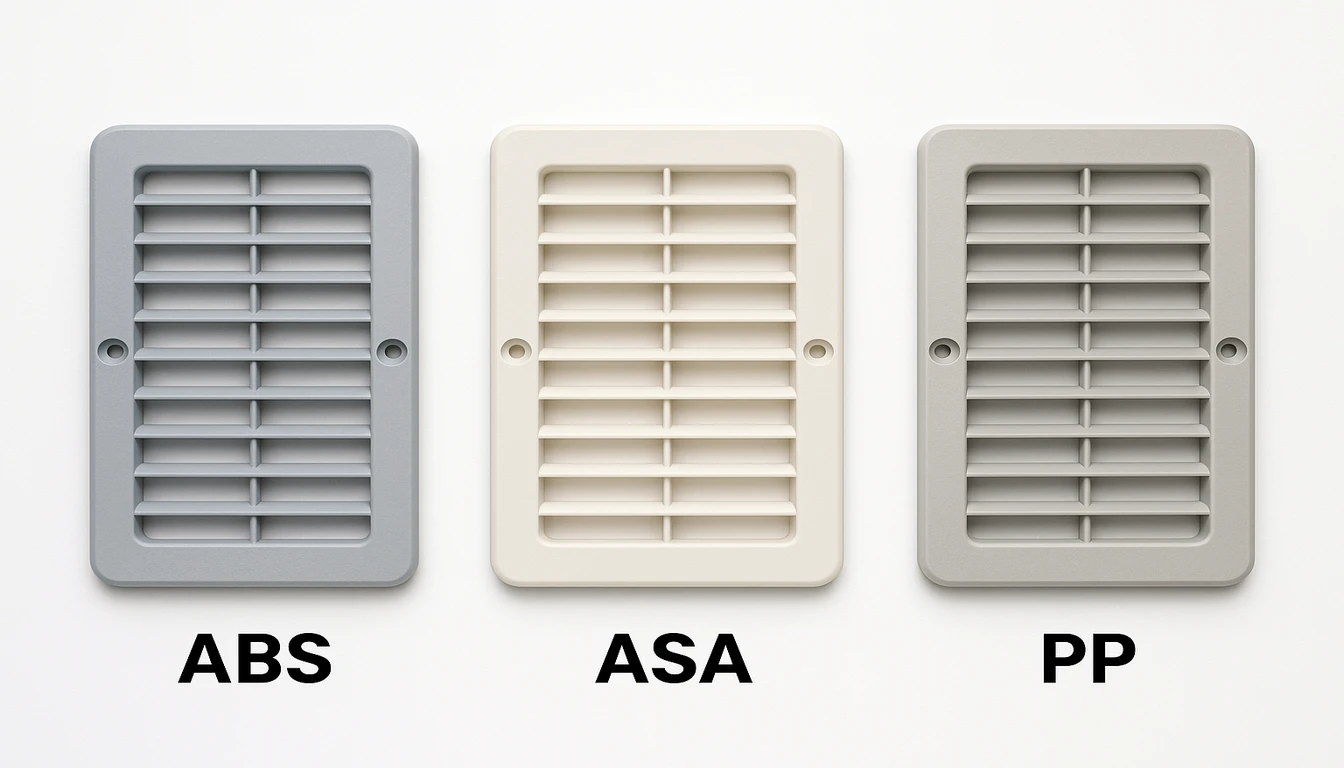
- ABS, ASA, and PP are the three dominant resins for HVAC grilles, each suited to different UV exposure and temperature ranges.
- A typical injection molding cycle for a standard 300×300 mm grille runs 25–40 seconds, enabling high-volume production.
- Custom grilles can be produced in any RAL or Pantone color with surface finishes including matte, gloss, and metallic effect.
What Makes Injection Molded Air Vents Superior to Other Manufacturing Methods?
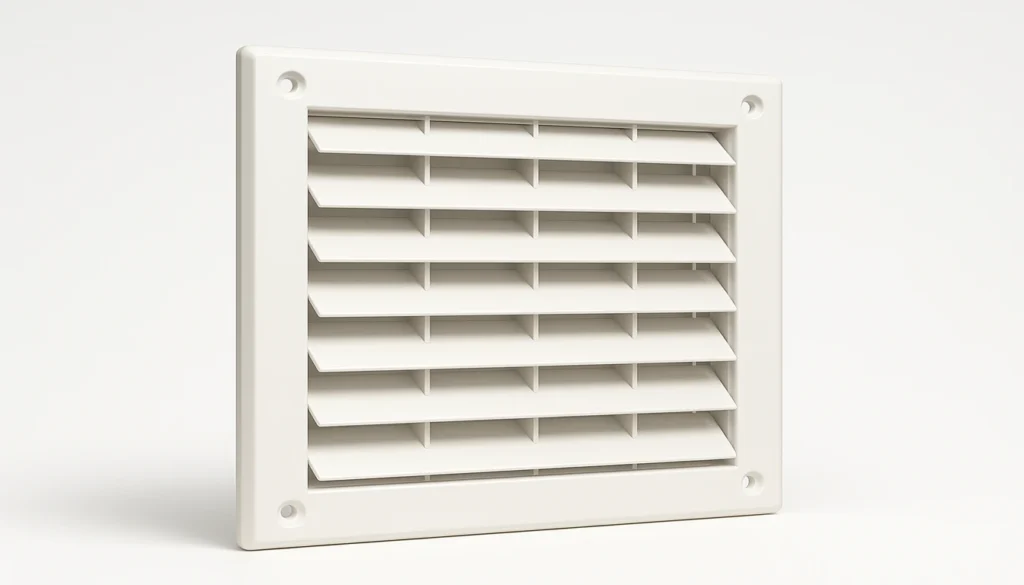
Injection molded air vent1 grilles are dimensionally superior to sheet metal and extruded aluminum, achieving tolerances of ±0.1 mm versus ±0.5 mm for stamped metal—critical when grilles must align flush with drywall reveals or snap into standard duct collars without rattling. Sheet metal stamping holds tolerances of ±0.5 mm; thermoplastic molding routinely achieves ±0.1 mm—critical when grilles must align flush with drywall reveals or snap into standard duct collars without rattling.
| Method | Dimensional Tolerance | Complex Geometry |
|---|---|---|
| Injection Molding (Plastic) | ±0.1 mm | Single-shot louvers, living hinges, snap clips |
| Sheet Metal Stamping | ±0.5 mm | Multiple press operations; no living hinges |
| Extruded Aluminum | ±0.3–0.5 mm | Limited cross-section; secondary machining needed |
Three structural advantages set plastic injection molding2 apart for air vent production. First, complex louver geometries—tapered blades, integrated dampers, curved deflectors—can be molded in a single shot that would require multiple press operations in metal. Second, living hinges and snap-fit clips can be integrated directly into the grille body, eliminating secondary fastener assembly. Third, surface texture, color, and brand embossing are all molded in, not painted on, so they cannot chip or peel over the product’s 15–20 year service life.
“Injection molded grilles maintain tighter tolerances than sheet metal stamped vents at high production volumes.”True
Hardened steel mold cavities preserve ±0.1 mm tolerances across millions of shots. Sheet metal dies wear progressively, causing drift beyond ±0.5 mm after 50,000–100,000 cycles. For HVAC grilles that must snap into standardized duct collars, this precision difference directly affects installation fit and acoustic performance.
“Plastic grilles always have lower load capacity than aluminum, making them unsuitable for ceiling installations.”False
Glass-fiber reinforced ABS or polypropylene grilles can achieve flexural strengths above 80 MPa—comparable to thin-gauge aluminum sheet. Standard residential ceiling grilles carry loads well under this threshold. Properly designed plastic grilles meet or exceed the structural requirements of ASHRAE and UL installation standards without added metal reinforcement.
How Are Plastic Air Vent Grilles Designed for Optimal Airflow?
Grille airflow performance is defined by three geometric parameters: louver blade angle, free area ratio, and blade pitch. Blades angled at 35°–45° from vertical deliver the best balance of air distribution and pressure drop. Steeper angles (55°+) block sightlines to ductwork but restrict flow; shallower angles below 30° increase free area but reduce directional control and allow direct visual access to the duct interior.
How Does Blade Pitch Affect Airflow and Acoustics?
Blade pitch—the center-to-center distance between adjacent louvers—interacts directly with both free area and structural stiffness. A pitch of 12–16 mm suits standard residential applications, giving a visually clean appearance while maintaining adequate blade cross-section for rigidity. Narrower pitches (8–10 mm) increase the number of blades per unit face area, improving directional control at the cost of slightly higher pressure drop. Wider pitches (18–22 mm) are common in industrial supply diffusers where maximum flow volume takes priority over directional precision.
| Blade Pitch | Typical Application | Characteristics |
|---|---|---|
| 8–10 mm (narrow) | Precision directional control | Higher pressure drop; more blades per unit area |
| 12–16 mm (standard) | Residential HVAC | Balance of rigidity, appearance & flow |
| 18–22 mm (wide) | Industrial supply diffusers | Maximum flow volume; reduced directional control |
Acoustic performance is an increasingly important design criterion for premium grilles. Blade edge geometry—whether square-cut, chamfered, or radius-edged—influences tonal quality of airflow noise. Radius edges reduce the vortex shedding frequency that creates tonal whine at medium face velocities. Computational acoustic modeling, combined with physical anechoic chamber testing per ISO 5135, allows manufacturers to certify noise levels as low as NC-25 (45 dB) for bedroom and boardroom supply grilles, a standard impossible to achieve with stamped metal edges.
| Blade Angle | Free Area Ratio | Pressure Drop (Pa @ 2 m/s) | Recommended Use |
|---|---|---|---|
| 25°–30° | 70–75% | Стандартный RAL / Pantone (предварительно окрашенный гранулят) | High-flow supply registers |
| 35°–45° | 55–65% | 2.5–4.0 | Standard residential/commercial |
| 50°–60° | 40–50% | 5.0–7.5 | Privacy, concealed ductwork |
| Adjustable | 45–65% | Variable | Multi-directional diffusers |
Free area ratio—the open area divided by total face area—directly determines how much air the grille passes at a given static pressure. Most residential supply grilles target 55–70% free area, keeping total pressure drop below 5 Pa at standard 2 m/s face velocity. Return air grilles typically push free area to 70–75% because they carry larger volumes at lower velocities. Injection molding enables designers to fine-tune blade thickness down to 1.0 mm, maximizing open area without sacrificing structural integrity—a geometry impossible to achieve with extruded aluminum profiles.
Mold flow simulation (computational fluid dynamics integrated into mold design) lets engineers validate airflow patterns before cutting steel. CFD analysis confirms whether the blade pitch creates uniform distribution across the face, or whether edge effects concentrate flow toward one corner. This virtual prototyping step eliminates costly physical prototype iterations and ensures the first-off-tool grille meets the specified airflow specification.
Which Materials Are Best for Injection Molded HVAC Grilles?
ABS, ASA, and PP are the three thermoplastic resins for injection molded HVAC grilles, each suited to different UV exposure and temperature ranges. Each offers a distinct performance profile matched to specific installation environments. Selecting the wrong resin is the single most common source of premature grille failure—yellowing, cracking, or warping within 3–5 years instead of the expected 15–20 year service life.
Resin selection also affects the economics of the full production run, not just material cost per kilogram. A resin with better flow properties reduces injection pressure requirements, allowing use of smaller, lower-cost machines. Shrinkage rate directly determines whether the mold cavity dimensions need compensation factors; ABS shrinks at 0.4–0.7%, while PP shrinks at 1.5–2.0%, requiring corresponding over-sizing in the mold steel. Getting the shrinkage compensation wrong by even 0.3% on a 300 mm grille face produces a 0.9 mm dimensional error—enough to cause fitment issues with standard duct collars.
| Property | ABS | ASA | Следующие сценарии применения демонстрируют, где |
|---|---|---|---|
| UV Resistance | Low (yellows in 1–2 yr) | High (stable 10+ yr) | Moderate |
| Heat Deflection Temp. | 88–105°C | 80–100°C | 100–115°C |
| Impact Strength (J/m) | 150–400 | 120–300 | 30–80 |
| Chemical Resistance | Moderate | Moderate | Excellent |
| Cost Index | 1.0× | 1.3× | 0.7× |
| Best Use | Interior, no UV | Exterior, UV exposed | Humid/chemical environments |
ABS remains the workhorse for interior residential grilles. Its superior surface finish, paintability, and impact resistance make it ideal for living rooms and offices where UV exposure through direct sunlight is minimal. The material accepts secondary decoration—electroplating, paint adhesion, UV coating—better than any other common HVAC resin.
ASA is the specification choice for exterior wall vents, patio supply grilles, and any application with prolonged UV exposure. Unlike ABS, which yellows visibly within one to two seasons outdoors, ASA retains color fidelity for ten or more years under continuous UV load. The acrylate rubber modifier that distinguishes ASA from ABS absorbs UV energy without chain scission, preventing the chalking and embrittlement that degrades outdoor ABS grilles.
Polypropylene offers the lowest material cost and the best resistance to moisture, cleaning chemicals, and mold growth—making it the preferred resin for hospital, laboratory, and food-processing HVAC grilles. PP grilles tolerate repeated disinfection with chlorine-based cleaners that would stress-crack ABS. The tradeoff is lower impact strength and a slightly rougher surface texture compared to ABS or ASA.
What Does the Injection Molding Process Look Like for Air Vents?
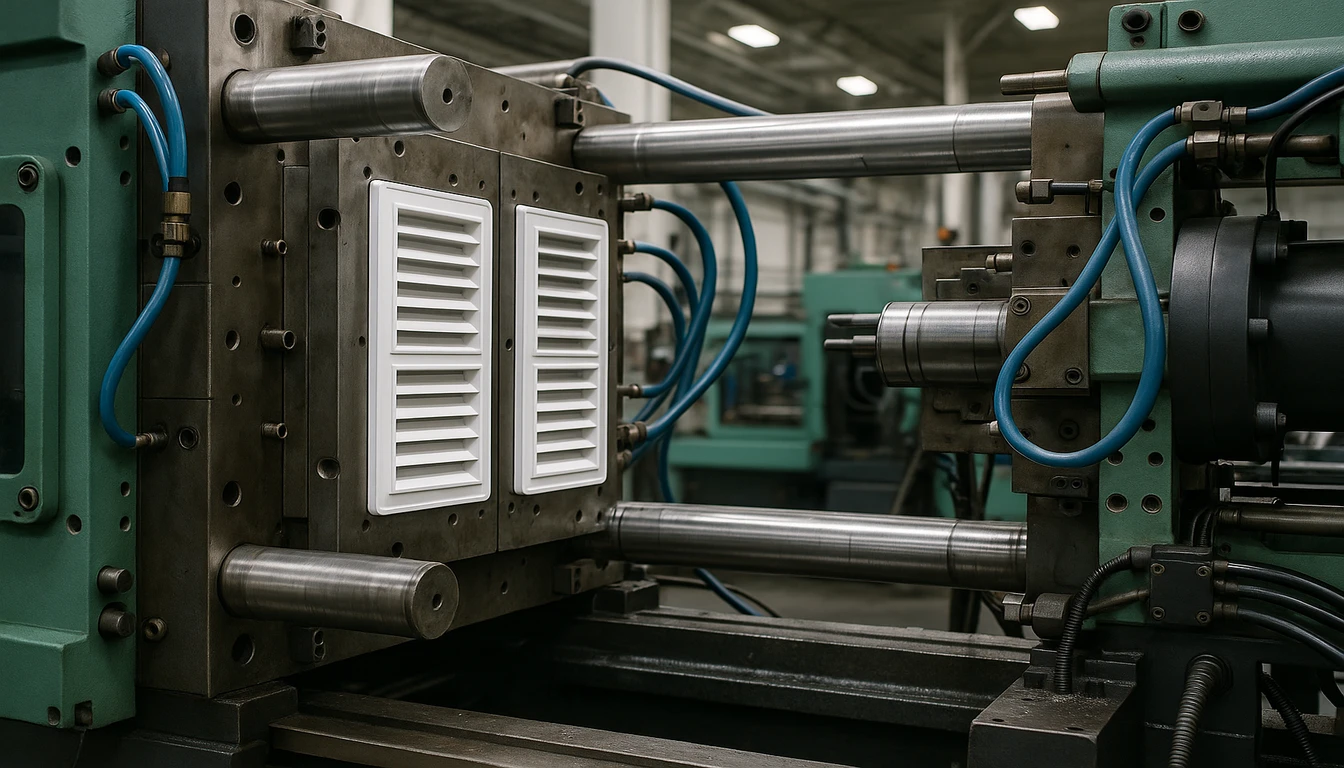
An injection molded air vent grille is produced in five stages—mold design, tooling, injection (80–120 MPa), finishing, and assembly. Each stage has defined quality gates that prevent defects from propagating forward. Understanding this workflow helps buyers specify lead times accurately and anticipate where customization adds cost.
How Is the Grille Mold Designed and Built?
Mold design begins with DFM (design for manufacturability) analysis. Engineers set draft angles at 1°–2° per side to ensure clean ejection, define wall thickness uniformity (target: ±0.3 mm variation), and place gates at thick sections to avoid sink marks on the visible louver faces. A standard residential grille mold requires 45–60 days to fabricate in hardened P20 steel, yielding a tool life of 500,000–1,000,000 shots. High-cavitation production molds with H13 steel can extend tool life beyond 2 million shots.
The injection cycle itself runs 25–40 seconds for a standard 300×300 mm grille. Melt temperature ranges from 220°C to 250°C for ABS, with mold temperature held at 40°–60°C for optimal surface gloss. Injection pressure peaks at 80–120 MPa during fill, dropping to 40–60 MPa during packing to compensate for volumetric shrinkage. Cooling accounts for 60–70% of total cycle time—we recommend optimized conformal cooling channels, which can shave 5–8 seconds per cycle, translating to 15–25% throughput improvement at high volumes.
“Cooling time accounts for 60–70% of the total injection molding cycle for standard HVAC grilles.”True
Thermoplastic resins must solidify below their heat deflection temperature before the mold opens. For ABS grilles molded at 40–60°C mold temperature, achieving sufficient rigidity for ejection without warping requires 15–25 seconds of cooling in a typical 25–40 second total cycle. Optimizing cooling channel layout is therefore the highest-leverage lever for increasing output.
“All injection molded grilles require a separate painting step to achieve a white or beige finish.”False
Color is compounded directly into the resin pellets before molding. A pre-colored masterbatch delivers consistent RAL or Pantone shades through the full wall section—eliminating paint adhesion failures, flaking, and VOC emissions from spray booths. Only specialty metallic or wood-effect finishes require post-mold decoration such as hydrographic transfer printing.
How Do Custom Air Vent Grilles Meet Specific HVAC Requirements?
Custom grilles are sized from 100×100 mm to 600×600 mm, with blade count, mounting method, and color configurable via cavity inserts. Standard face sizes range from 100×100 mm to 600×600 mm; non-standard sizes are accommodated by modifying cavity inserts rather than building entirely new molds, reducing tooling cost by 40–60% for size variants. Blade count, pitch, and angle are tunable within the original mold design using interchangeable core inserts.
How Are Custom Colors and Finishes Specified?
Color customization follows a straightforward workflow. Standard RAL and Pantone colors are available from resin compounders as pre-colored pellets with 4–6 week lead time. For project-specific colors—matching existing interior trim or a client’s brand palette—custom masterbatch development adds 8–12 weeks and a one-time formulation cost of $500–$1,500. Once approved, the masterbatch delivers consistent color across all production runs without inter-batch variation issues common in spray painting.
| Color Option | Lead Time | Additional Cost |
|---|---|---|
| Standard RAL / Pantone (pre-colored pellet) | 4–6 weeks | Воздушная решетка из литьевого пластика: Руководство производителя |
| Custom masterbatch development | 8–12 weeks | $500–$1,500 one-time formulation |
| Hydrographic metallic finish | 2–3 weeks (post-process) | Secondary operation surcharge |
Surface finishing options for injection molded HVAC components3 extend beyond simple color. Matte textures (SPI B-3 to C-1 polish) reduce fingerprint visibility in high-touch environments like hotel lobbies. High-gloss finishes (SPI A-1 to A-2) suit contemporary minimalist interiors. Metallic brush effects applied via hydrographic printing simulate aluminum aesthetics at a fraction of the material cost. Anti-microbial additives compounded into ASA or PP resins are increasingly specified for healthcare and school HVAC installations.
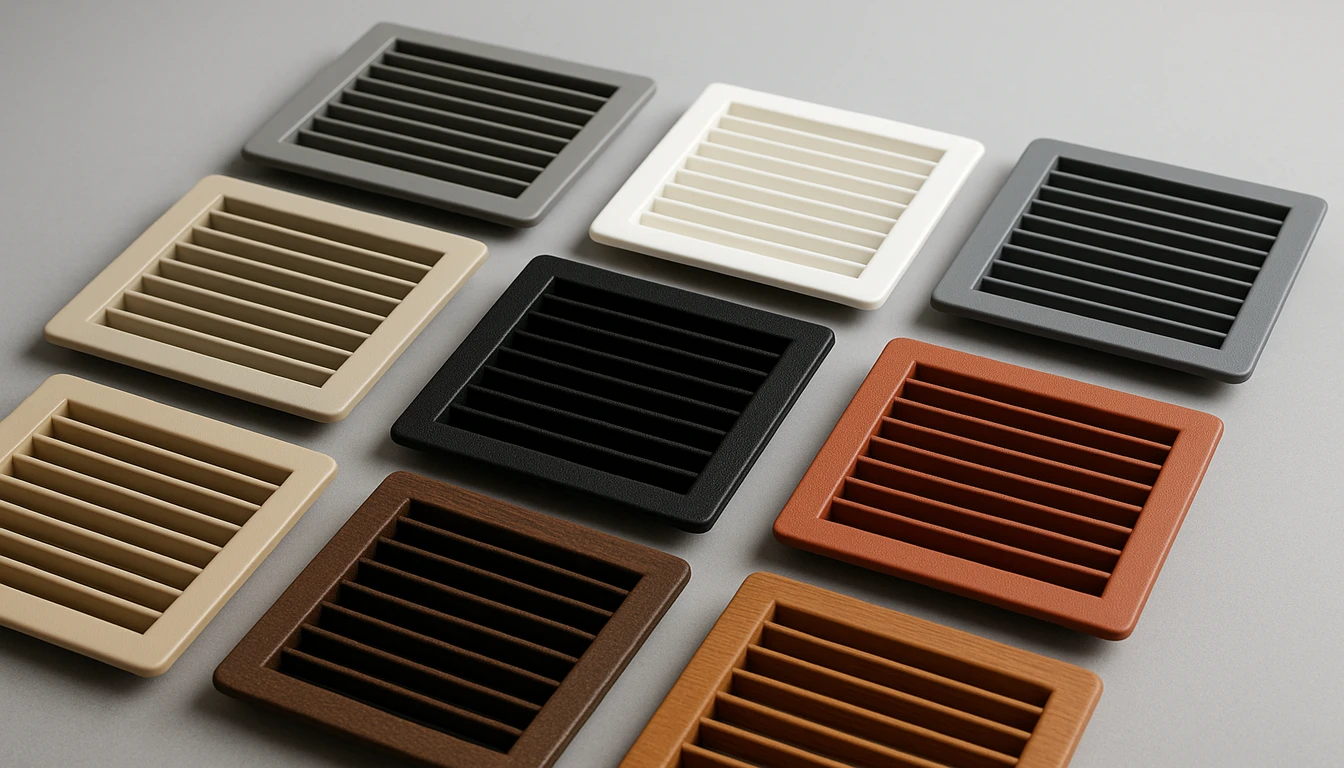
Volume thresholds for custom tooling are lower than most buyers expect. In our production runs, minimum order quantities for a new custom mold typically start at 500–1,000 units per run, with amortized tooling cost becoming negligible above 5,000 units. For OEM HVAC equipment manufacturers ordering 10,000+ grilles annually, dedicated high-cavitation tooling reduces per-unit cost to levels competitive with commodity stamped metal. Based on our factory experience, sample lead time from approved design to first articles runs 45–75 days depending on mold complexity.
Frequently Asked Questions?
What is the standard size range for injection molded air vent grilles?
Standard injection molded air vent grilles are produced in face sizes from 100×100 mm to 600×600 mm, with the most common residential sizes being 150×150 mm, 300×150 mm, and 300×300 mm. Non-standard dimensions can be accommodated by modifying cavity inserts within an existing mold family, reducing tooling cost by 40–60% compared to building a completely new tool. Duct collar sizes typically follow ISO 13370 or regional standards such as ASHRAE 51, and grille frames are designed with ±1 mm fit tolerance to ensure universal compatibility across duct collar manufacturers.
How long does a plastic air vent grille typically last?
A properly specified injection molded air vent grille lasts 15–20 years in standard interior applications. ABS grilles in UV-free interiors retain dimensional stability and color throughout this period. For outdoor or sun-facing installations, ASA grilles extend service life to 10–15 years before any perceptible yellowing. Polypropylene grilles in chemical or moisture-heavy environments maintain structural integrity for 20+ years. Premature failure—typically within 3–5 years—almost always results from incorrect resin selection: ABS placed outdoors, or PP specified where high impact resistance is required.
Can injection molded grilles be used for both supply and return air applications?
Yes, the same grille design can serve both supply (conditioned air out) and return (room air in) functions, but the specifications differ. Supply grilles use angled louver blades (35°–45°) to direct airflow across the room; free area ratios of 55–65% keep face velocity within 0.5–1.5 m/s for low noise. Return grilles prioritize high free area (70–75%) to minimize suction pressure drop, often using a straight-bar egg-crate core. Adjustable supply registers with a moveable damper plate can redirect airflow direction without tool modification, a function unique to injection molded multi-piece assemblies.
What certifications do injection molded HVAC grilles need?
Certification requirements vary by application and market. In North America, residential grilles typically need UL 181 (air duct and air connector systems) compliance and must pass ASHRAE 51 airflow performance testing. Commercial buildings may require SMACNA duct system standards. European markets specify EN 12238 for air terminal devices and CE marking. For healthcare environments, grilles must pass fire safety tests to UL 723 or EN 13501. The resin itself may need UL 94 V-0 flame retardancy rating for plenum-rated installations. Reputable manufacturers provide a full certification matrix with sample submissions for each market.
How are injection molded air vent grilles installed in existing ductwork?
Most injection molded grilles use one of three mounting methods: surface-mount with integral spring clips that snap into the duct collar without tools; screw-mount through the grille face frame into drywall or ceiling T-bar; or magnetic-mount for metal duct collars using embedded neodymium magnets molded into the grille frame. Spring-clip designs are the dominant residential choice because they allow tool-free filter access and allow the grille to be reinstalled hundreds of times without degrading the mounting interface. Commercial grilles for T-bar ceiling grid systems use a lay-in frame that rests on the grid flanges, with a separate core that can be removed for filter service.
-
air vent: An air vent is a grille or register that controls the flow of conditioned air from an HVAC duct into a living or working space, measured by free area ratio (typically 40–75%). ↩
-
injection molding: Injection molding refers to a manufacturing process in which molten thermoplastic resin is injected under high pressure (70–140 MPa) into a closed metal mold cavity to produce precise, repeatable plastic parts. ↩
-
HVAC components: HVAC components is a category defined as the mechanical and electrical parts that make up heating, ventilation, and air conditioning systems, including grilles, registers, diffusers, coils, and controls. ↩





