
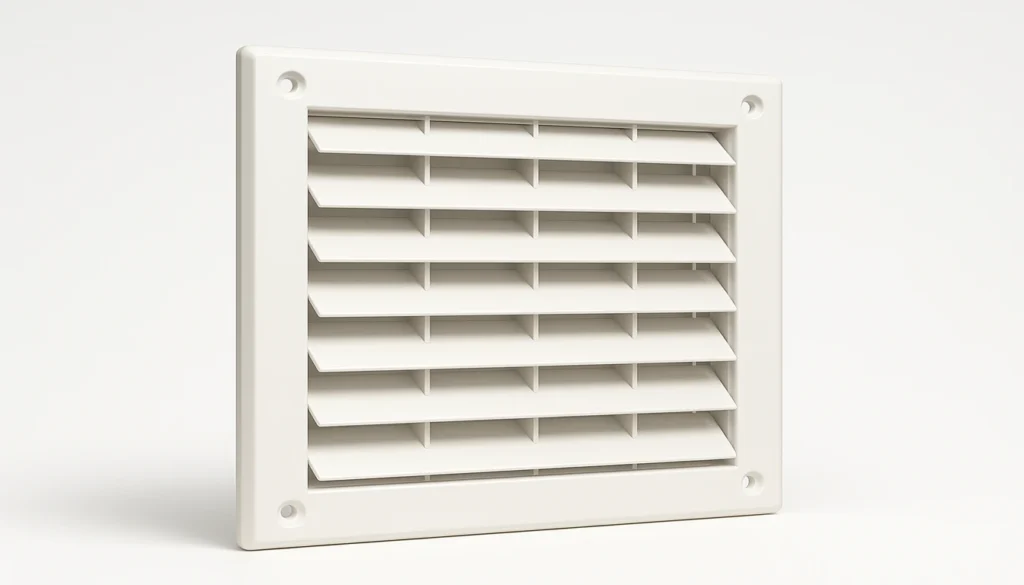
- Injection molding produces air vent grilles with tolerances as tight as ±0.1 mm and consistent wall thickness of 1.5–3.0 mm, far exceeding stamped metal alternatives.
- ABS and polypropylene (PP) are the most common materials; ABS provides superior rigidity and paint adhesion, while PP offers better chemical resistance and lower weight.
- Proper draft angles of 1–3° per side and gate placement opposite the critical face are essential DFM rules that determine whether a grille fills and ejects cleanly.
- HVACore runs full-scale production in less than 4 weeks after mold approval, with UL 94 V-0 and RoHS-compliant material options available for regulated environments.
What Makes Injection Molding the Right Process for HVAC Air Vent Grilles?
injection molding1 is the standard production method for HVAC air vents2 and grilles because it delivers consistent dimensional accuracy, complex geometric freedom, and low per-part cost at mid-to-high volumes. A single mold can produce 500,000+ identical grilles over its lifespan, making tooling amortization cost-effective for most commercial projects.
Grilles present specific manufacturing challenges: thin parallel slats or blades that must remain coplanar, precise airflow openings that affect static pressure, and aesthetic surfaces that must be free of sink marks and weld lines. Injection molding addresses all three because the process fills the entire cavity simultaneously, unlike extrusion or stamping, which struggle with complex 2D arrays of thin fins.
Compared to die-cast aluminum grilles, injection molded plastic grilles are 40–60% lighter and require no secondary deburring, painting, or corrosion treatment for indoor use. Compared to stamped steel, plastic grilles offer integrated snap-fit tabs and undercuts that enable tool-free installation. In our factory, the shift from aluminum to injection molded ABS grilles cut assembly time by 35% for one commercial ceiling register project.
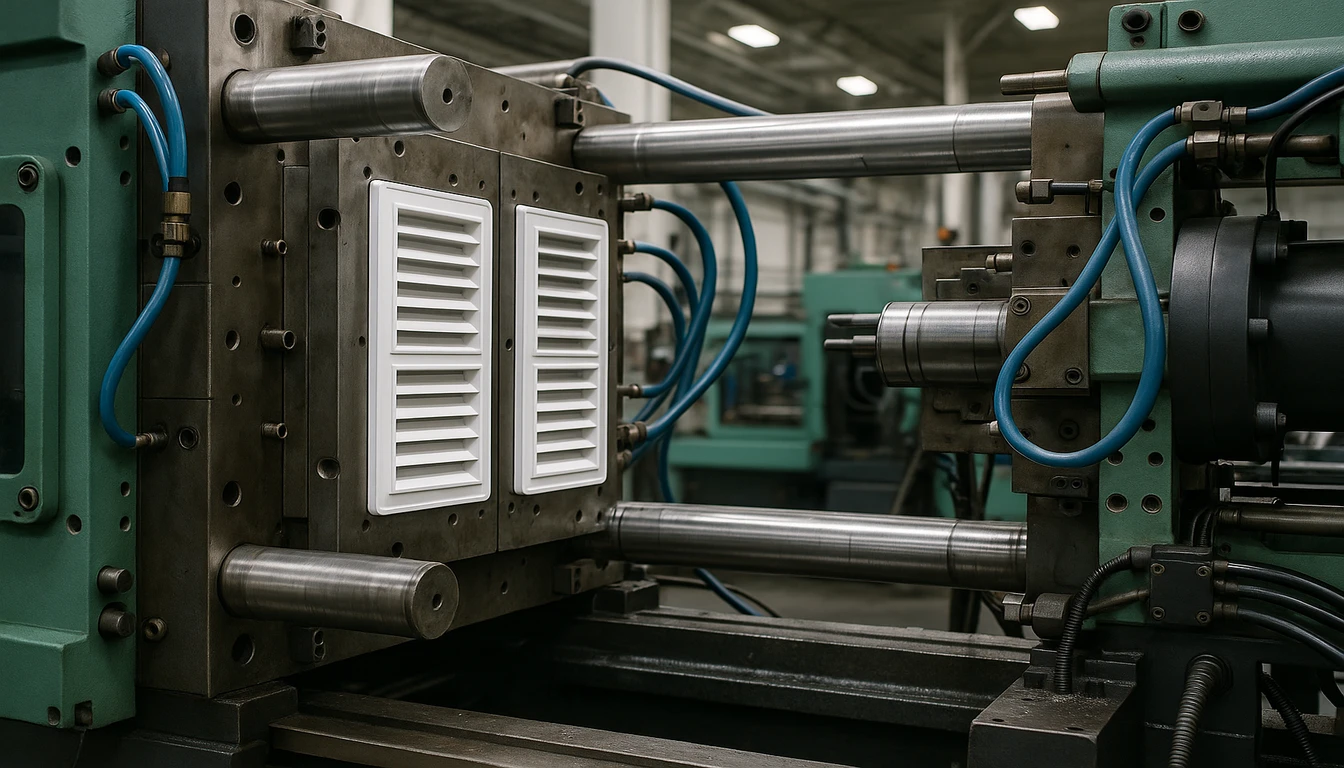
The economics of injection molding favor grille production at volumes above approximately 1,000 pieces per year. Below that threshold, 3D printing or CNC machining may be more economical for prototypes and limited runs. For production quantities, however, injection molding’s cycle time of 15–45 seconds per part keeps unit costs in the range of $0.80–$4.50 depending on size and complexity.
| Attribute | Injection Molding | Die-Cast Aluminum | Stamped Steel |
|---|---|---|---|
| Minimum order | 500–1,000 pcs | 500–1,000 pcs | 1,000+ pcs |
| Unit cost at 10K pcs | $1–$4.50 | $5–$12 | $2–$6 |
| Weight reduction vs. steel | 50–65% lighter | 30–40% lighter | Baseline |
| Dimensional tolerance | ±0.1–0.3 mm | ±0.2–0.5 mm | ±0.3–0.8 mm |
| Surface finish options | 5+ (texture, gloss, matte) | 2 (anodize, paint) | 2 (paint, powder coat) |
| Corrosion resistance (indoor) | Excellent (no treatment) | Requires coating | Requires coating |
| Tooling lead time | 4–6 weeks | 6–10 weeks | 4–8 weeks |
One underappreciated advantage of injection molded grilles is color-through material. Because pigment is mixed into the resin before molding, minor surface scratches during installation do not reveal a different-colored substrate beneath. This is why most residential supply and return air registers are injection molded rather than painted metal—the through-color material maintains a fully consistent appearance even after years of service and repeated cleaning with standard household chemicals or commercial disinfectants.
Which Materials Work Best for Injection Molded Air Vent Grilles?
Material selection for air vent grilles depends on the operating environment: indoor return air registers face very different stresses than outdoor fresh-air louvers or high-temperature duct diffusers. The wrong material choice leads to warping, discoloration, or premature cracking within months of installation. Selecting the right thermoplastics3 grade upfront is the single most cost-effective quality decision in a grille project.
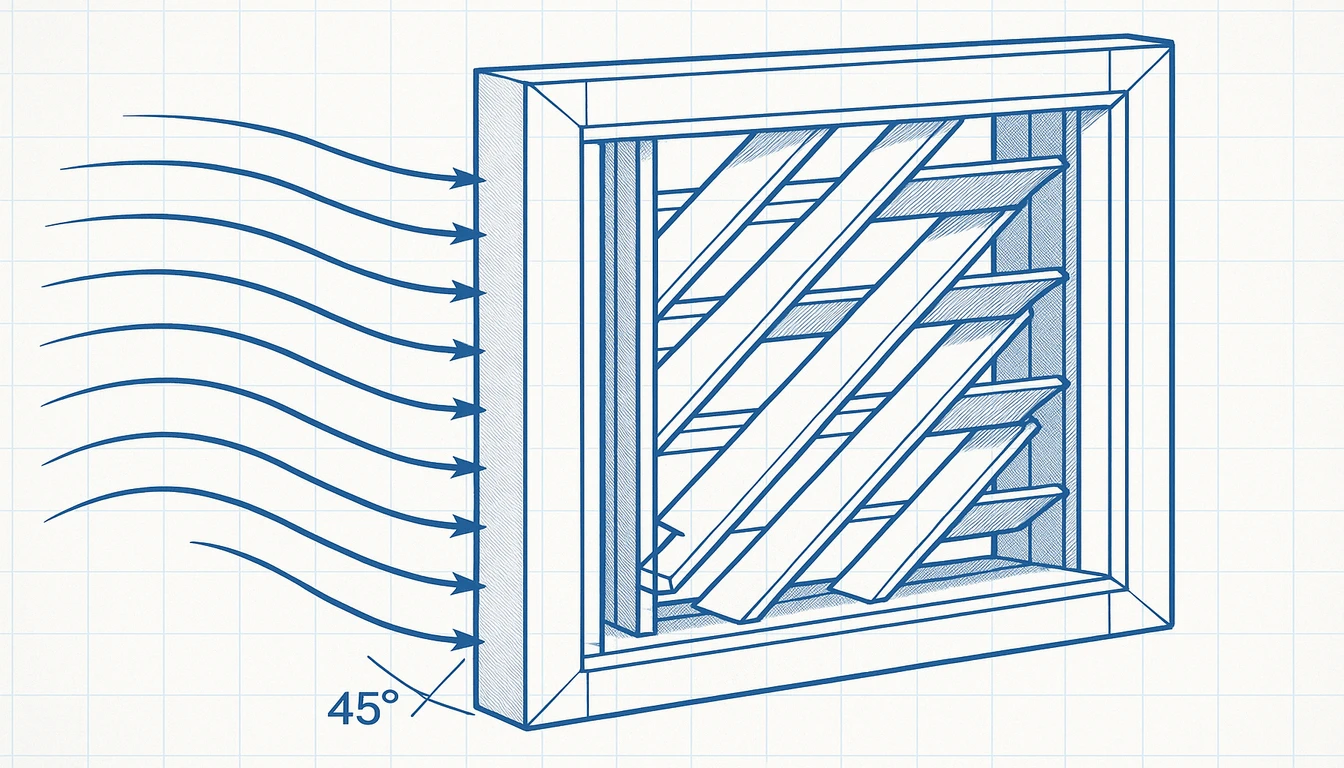
ABS (acrylonitrile butadiene styrene) is the dominant choice for indoor HVAC grilles. Its flexural modulus of 2,300–2,800 MPa keeps slats rigid under airflow pressure, and its surface accepts paint, primer, and UV-cured coatings without adhesion promoters. ABS processes at 220–260°C with a mold temperature of 40–80°C, producing parts with excellent dimensional stability at the 1.5–2.5 mm wall thicknesses typical in grilles.
Polypropylene (PP) is the second most common choice, especially for return air grilles in humid environments such as bathrooms, laundry rooms, and food service facilities. PP’s inherent chemical resistance protects against cleaning agents, and its lower density (0.90–0.91 g/cm³ vs. ABS’s 1.04–1.07 g/cm³) reduces shipping costs. The trade-off is slightly lower stiffness—PP grilles may deflect visibly under high-velocity airflow, which is why slat geometry must be thicker when switching from ABS.
| Property | ABS | Polypropylene (PP) | ASA | PC/ABS Blend | PA6-GF |
|---|---|---|---|---|---|
| Затвор вкладки на лицевой стороне планки создает видимую линию сварки на изделии | 2,300–2,800 | 1,300–1,800 | 2,200–2,700 | 2,500–3,200 | 6,000–9,000 |
| Heat deflection temp. (°C) | 75–100 | 55–65 | 80–100 | 110–130 | 180–210 |
| UV resistance | Poor (yellows 1–2 yr) | Poor | Excellent (5+ yr) | Moderate | Poor |
| Chemical resistance | Moderate | Excellent | Moderate | Moderate | Good |
| Typical application | Indoor supply/return | Humid indoor | Outdoor fresh-air | High-temp diffuser | Structural register frames |
| Relative cost | Low | Lowest | Medium | Medium-high | High |
For outdoor fresh-air louvers and external wall vents, ASA (acrylonitrile styrene acrylate) is the material of choice. ASA’s UV stabilization maintains color and mechanical properties for 5+ years of outdoor exposure—critical for facades and HVAC equipment covers. In our production trials, ASA samples retained greater than 90% of their impact strength after 2,000 hours of accelerated weathering per ASTM G154, compared to just 55% for standard ABS.
High-temperature diffusers near duct registers serving commercial kitchens or industrial spaces may require PC/ABS blends with heat deflection temperatures above 110°C. Glass-filled nylon (PA6-GF30) is reserved for structural register frames that must carry load—the 30% glass fiber content boosts flexural modulus to 8,000+ MPa but makes the material more difficult to mold cleanly at thin walls.
“ABS injection molded grilles are dimensionally stable enough for tight-tolerance HVAC openings in commercial buildings.”True
ABS shrinks predictably at 0.4–0.8% and holds tolerances of ±0.1–0.2 mm on slat pitch and frame dimensions. This consistency ensures grilles fit standard HVAC opening sizes without shimming or adjustment, which is why commercial ceiling T-bar registers are almost universally ABS injection molded.
“Any plastic grille can be used outdoors without additional UV protection.”False
Standard ABS yellows and becomes brittle within 12–24 months of outdoor UV exposure. Only UV-stabilized grades of ASA, polypropylene with UV additives, or specially formulated PC blends are suitable for outdoor HVAC applications. Using standard ABS outdoors voids most manufacturer warranties and leads to premature replacement within 2 years.
How Are HVAC Air Vent Grilles Designed for Injection Molding?
Design for manufacturability (DFM) is critical for grilles because their repeating slat or blade geometry creates multiple potential failure points: short shots at slat tips, sink marks at thick junctions, warping across the flat face, and weld lines across visible surfaces. Addressing these issues requires specific geometric decisions before mold development4 begins. Each decision made at the design stage costs 1/10th what the same change costs after tooling approval.
| DFM Parameter | Recommended Value | Consequence of Non-Compliance |
|---|---|---|
| Slat wall thickness | 1.5–2.5 mm | Short shots (too thin) or sink marks (too thick) |
| Frame-to-slat thickness ratio | ≤1.5:1 | Differential shrinkage → visible sink marks on frame face |
| Draft angle (smooth finish) | 1–3° per side | Ejection drag marks on 100% of parts |
| Draft angle (textured finish) | 3–5° per side | Texture locks onto steel; parts crack during ejection |
| Rib width | 60% of nominal wall | Thick ribs cause sink marks on opposite face |
| Gate type | Fan gate (edge) preferred | Tab gate on slat face creates visible weld line on product |
| Cooling channel proximity | Количество полостей | Uneven cooling → grille face warps 1–2 mm across span |
Wall thickness uniformity is the first DFM priority. Grille slats should maintain 1.5–2.5 mm thickness throughout, with no section thicker than 3.0 mm. Abrupt thickness changes cause differential shrinkage that produces visible sink marks on the opposite face.
The solution is to taper the thickness junction over a 3:1 length-to-thickness ramp, spreading the thermal gradient evenly. We’ve rejected grille designs at DFM review where frame walls exceeded 4.5 mm while adjacent slats were 1.8 mm—that 2.7 mm differential consistently produced sink marks on the frame face that required mold modification to correct.
Draft angles on slat sidewalls must be 1–3° per side to allow clean ejection without scuffing the visible surface. For textured finishes, draft increases to 3–5° per side—the texture depth acts as an interlocking geometry that resists part release. Many designers underestimate this requirement and submit grilles with 0.5° draft, which causes drag marks during ejection on 100% of parts.
Gate location determines where weld lines form. For rectangular grilles, a fan gate along the short perimeter edge pushes flow across the full slat array and moves weld lines to the far end, away from the primary visible face. Tab gates at the center of a slat create weld lines where flow fronts meet—directly in the viewer’s line of sight. In our experience, changing gate location alone eliminated cosmetic rejections on one high-visibility register project without any mold modification.
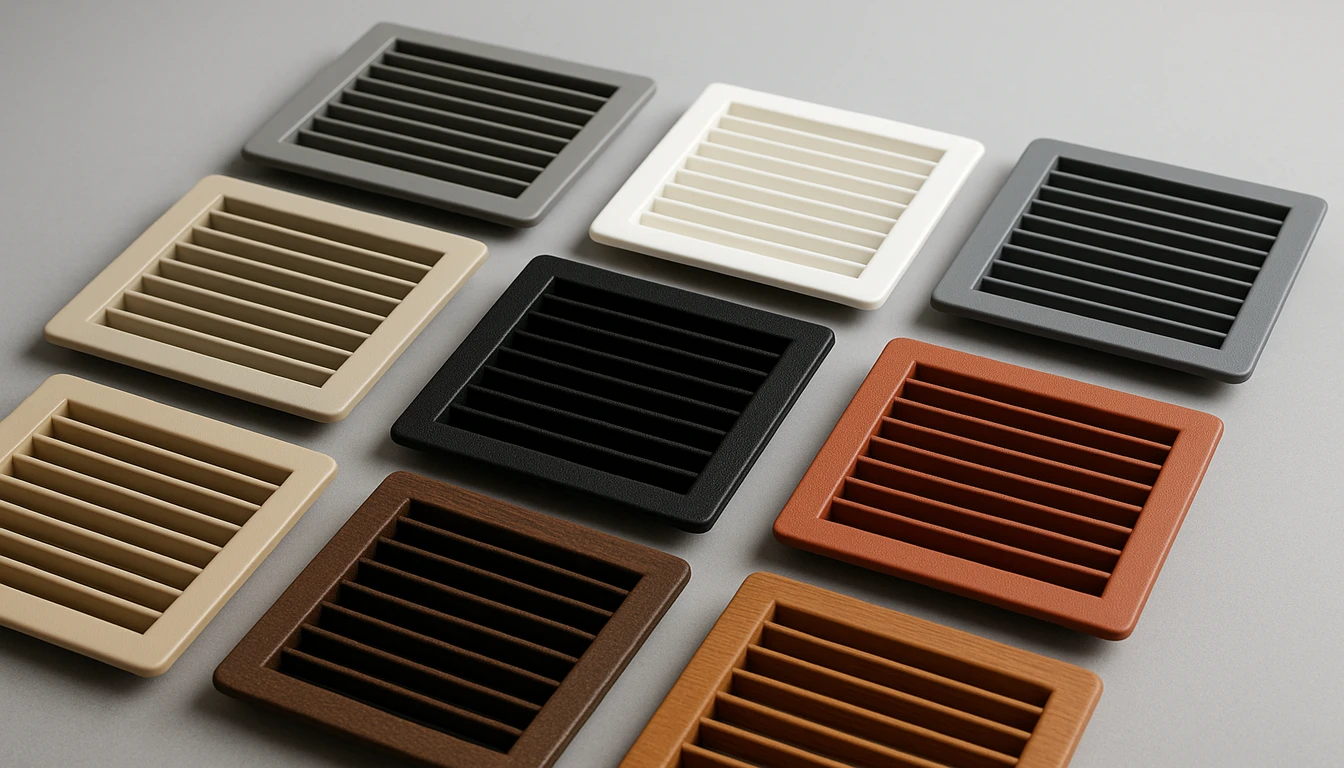
Rib design on the back face of the grille frame improves rigidity without adding wall thickness. Ribs should be 60% of the nominal wall thickness in width and 3× nominal wall in height. They must be oriented parallel to the ejection direction and must not trap air in corners—each rib end needs a 0.5 mm radius to prevent stress concentration. Overcrowding ribs (spacing less than 3× their height) traps air and creates weld lines between adjacent ribs.
Cooling channel layout in the mold directly affects warp. Grille molds benefit from conformal cooling that follows slat geometry—straight-drilled channels miss the slat tips and allow differential temperature gradients that bow the grille face by 1–2 mm across a 300 mm span. We address this with baffled inserts in the slat cores, ensuring coolant reaches within 8 mm of every slat surface.
“A draft angle of at least 1° per side on slat sidewalls is required for clean injection molded grille ejection.”True
Without adequate draft, the molded slat grips the steel core during mold opening, producing drag marks and surface scuffs on every part. Increasing draft to 1–3° per side reduces ejection force by 40–60%, eliminates scuffing, and extends mold life by reducing wear on the ejector pins and slat cores. This is a non-negotiable DFM requirement for any commercially produced grille.
“The gate location does not affect the visual quality of an injection molded grille.”False
Gate location directly controls where weld lines form, where jetting may occur, and where residual stress concentrates. A poorly placed gate on a slat face creates a visible weld line running across the grille’s most prominent surface. Moving the gate to a hidden edge or the perimeter frame pushes weld lines to low-visibility zones and eliminates jetting by forcing flow along the slat length rather than across it.
What Surface Finishes and Customization Options Are Available for Injection Molded Grilles?
Injection molded air vent grilles offer more surface customization options than any competing process. The mold texture is applied directly to the tool steel surface and transfers to every part at zero incremental cost—unlike paint or coating, which adds labor and material cost per unit.
| Finish Grade | Standard | Gloss Level | Typical Application |
|---|---|---|---|
| Mirror gloss | SPI A-1 | High gloss | Premium visible supply registers |
| High gloss | SPI A-2 | High gloss | Architectural and decorative diffusers |
| Semi-gloss | SPI B-2/B-3 | Semi-gloss | Commercial ceiling registers (industry default) |
| Matte | SPI C-1 | Matte | Industrial, data center, and server room environments |
| Medium grain | VDI 18–24 | Textured | Standard residential registers |
| Heavy grain | VDI 30–36 | Leather-like | Contemporary residential and hospitality diffusers |
Standard texture grades follow SPI and VDI classifications as shown above. For most commercial ceiling registers, SPI B-2 or B-3 semi-gloss is the industry default—it hides fingerprints and minor surface defects better than gloss finishes while remaining cost-neutral versus mirror grades. Textured finishes in the VDI 30–36 range require increased draft angles (3–5°) to release cleanly from the mold.
Color is compounded directly into the resin, eliminating the adhesion and chipping risks of post-mold painting. Standard RAL or Pantone colors require a 3–5 day lead time for color matching and a minimum order of 500 pieces per color to justify the masterbatch cost. White (RAL 9010 or 9016) accounts for approximately 65% of our grille production volume. Black, beige, and silver metallic are the next most common. Custom color matching is available for projects with 5,000+ pieces per color run.
Secondary operations available after molding include pad printing for model numbers or brand marks, ultrasonic welding for multi-piece assemblies, and chrome vapor deposition for decorative registers. Some architectural registers receive a powder-coat topcoat over ABS for environments where the standard resin gloss level does not match adjacent trim materials. This requires a special adhesion promoter step and adds $0.30–$0.80 per part depending on coverage area.
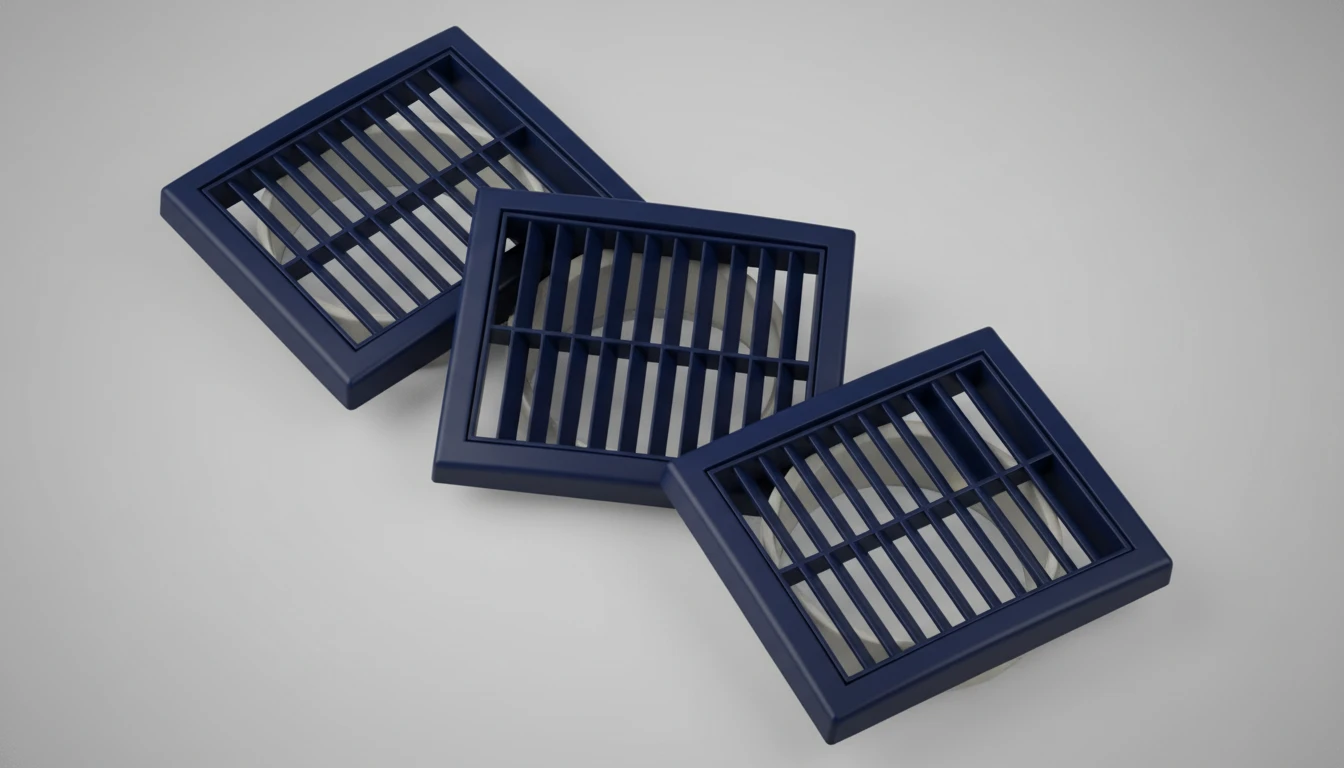
Snap-fit clips and mounting tabs can be molded integrally into the grille frame, eliminating separate fasteners. A typical 4-clip snap-fit design requires a 1.5 mm tab thickness, 3° undercut, and a maximum deflection of 1.0 mm during insertion to remain within ABS’s elastic limit. We model and simulate all snap-fit geometry before tool approval—a snap-fit that breaks during installation is the single most common field complaint we receive from grille customers who self-designed their parts.
How Does HVACore Manufacture Custom Injection Molded Air Vent Grilles?
HVACore’s process for custom injection molded air vent grilles begins with a DFM review within 48 hours of receiving a 3D model or technical drawing. Our engineers check the 12 most common grille-specific failure points—draft angles, wall thickness transitions, rib geometry, gate feasibility, and ejector pin placement—and return a fully marked-up DFM report before any tooling cost is committed.
Mold tooling for a standard rectangular grille (up to 600 mm × 400 mm) is completed in 4–6 weeks from design approval. We maintain a fleet of 47 injection molding machines ranging from 80 to 1,200 tons clamping force, allowing us to match machine size to part projected area without overloading the tool or wasting machine capacity. Grilles in the 150–500 mm range typically run on 200–400 ton machines with 4-cavity tooling for production volumes above 50,000 pieces per year.
| Parameter | Specification |
|---|---|
| Maximum grille size | 600 mm × 400 mm (single cavity) |
| Minimum wall thickness | 1.2 mm (standard resins) |
| Dimensional tolerance | ±0.1 mm (critical dimensions) |
| Cavity count | Воздушные решетки, изготовленные методом литья под давлением: Проектирование и производство |
| Production lead time | 3–4 weeks post-mold-approval |
| MOQ (with tooling) | 500 pieces |
| Available certifications | UL 94 V-0, RoHS, REACH |
| Surface finish range | SPI A-1 to C-3, VDI 18–36 |
| Color options | Standard RAL/Pantone + custom matching |
| Annual capacity | 2,000,000+ grilles |
First article inspection (FAI) includes a full CMM measurement report, color comparison under D65 and A illuminants, and a 24-hour deflection test at 40°C to verify dimensional stability before mass production approval. Our first-pass approval rate for grille molds is 94%—the 6% that require correction typically involve minor gate mark position adjustments or texture depth modifications on the first trial shots. We share the complete FAI dimensional report with customers before releasing any production inventory to final assembly or distribution, ensuring full traceability from tooling to delivery.

For regulated applications, we offer ABS, PP, and ASA grades certified to UL 94 V-0 (flame retardancy), RoHS (restriction of hazardous substances), and REACH (chemical restriction). Material certifications are provided with each production batch, traceable to the raw resin lot number. These certifications are increasingly required for commercial building HVAC equipment sold into the EU and North American markets.
Packaging is engineered to prevent cosmetic damage during shipping. High-gloss grilles are individually wrapped in polyethylene film, while standard matte-finish registers are stacked with interleaved cardboard dividers. Export packaging meets ISPM 15 requirements for solid wood material, and cartons are marked with HVAC-specific fragility labels recognized by major freight carriers.
Frequently Asked Questions About Injection Molded Air Vent Grilles?
What is the typical wall thickness for an injection molded HVAC air vent grille?
Most injection molded HVAC air vent grilles use a wall thickness of 1.5–2.5 mm for slats and 2.0–3.0 mm for perimeter frames. Thinner walls reduce material cost and weight but increase the risk of short shots and warping. Thicker walls slow cooling, extend cycle time, and can cause sink marks on opposite faces. The optimal balance depends on part size—larger grilles (above 400 mm) typically need 2.2–2.5 mm slats to maintain rigidity across the span, while smaller registers (150 mm and below) can use 1.5 mm slats without deflection issues at normal HVAC airflow velocities.
How long does it take to get a first production sample of a custom injection molded grille?
From design approval to first trial shots, the typical lead time is 4–6 weeks for a standard single-cavity grille mold. Complex multi-cavity tools or grilles with side-action features—such as adjustable louvers with living hinges—can take 6–8 weeks. After the first trial shots, DFM adjustments and re-trials add 1–2 weeks if corrections are needed. Most HVACore grille customers receive production-quality samples within 5 weeks of DFM sign-off, with full production starting 2 weeks after sample approval. Customers who provide fully validated CAD models with draft analysis already completed typically save one week from the schedule.
Can injection molded grilles be used in outdoor HVAC applications?
Yes, but only with the correct material. Standard ABS is not suitable for outdoor use—it yellows and embrittles within 12–24 months of UV exposure. For outdoor fresh-air intake grilles, exhaust louvers, and external HVAC equipment covers, ASA (acrylonitrile styrene acrylate) is the industry-standard choice. ASA maintains color and impact strength for 5+ years outdoors. UV-stabilized polypropylene and PC/ABS blends with UV packages are also options for specific applications. Always request UV stability test data (ASTM G154 or ISO 4892) from your supplier before specifying a material for outdoor use.
What certifications should I require for HVAC air vent grilles used in commercial buildings?
For most North American commercial HVAC applications, UL 94 V-0 flame retardancy certification is the minimum requirement for grilles installed in return air plenums or supply air ducts, where the material must not propagate flame. RoHS compliance is required for projects with EU export destinations or for customers in regulated industries. REACH compliance (for restricted chemical substances) is increasingly required in EU commercial construction. For cleanroom or healthcare HVAC applications, additional requirements such as antimicrobial material certification and ASHRAE 170 compliance may apply. Request material certification documents with each batch delivery and verify that the certification applies to the specific resin grade used in production, not just the resin family.
What is the minimum order quantity for custom injection molded air vent grilles?
At HVACore, the minimum order quantity (MOQ) for custom injection molded grilles is 500 pieces when the customer provides or funds tooling. For orders below 500 pieces, 3D printed prototypes or CNC machined samples are more economical alternatives. For standard catalog grille sizes using existing tooling, MOQs can be as low as 100 pieces. High-volume production runs above 50,000 pieces per year typically use multi-cavity tooling (4 to 8 cavities) to reduce per-part cost below $1.50 for standard ABS registers in the 150–300 mm range.
-
injection molding: Injection molding is a manufacturing process in which molten plastic is injected under high pressure into a closed mold cavity, where it cools and solidifies into the desired shape. ↩
-
air vents: Air vents is a term that refers to openings or grilled covers installed in walls, floors, or ceilings to allow conditioned air to flow into or out of a room as part of an HVAC distribution system. ↩
-
thermoplastics: Thermoplastics is a class of polymers that refers to materials that soften and become moldable when heated above their glass transition temperature and solidify when cooled, allowing repeated processing cycles without chemical degradation. ↩
-
mold development: Mold development refers to the engineering and manufacturing process of designing, machining, and validating injection mold tooling for producing plastic parts at scale. ↩





