
これは私たちの運命を決定する化学の問題です.
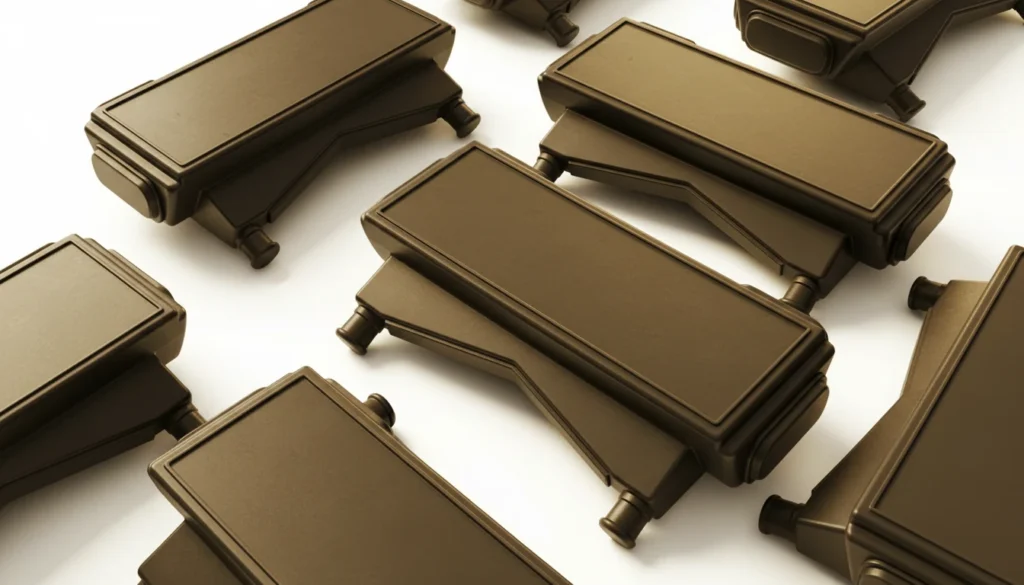
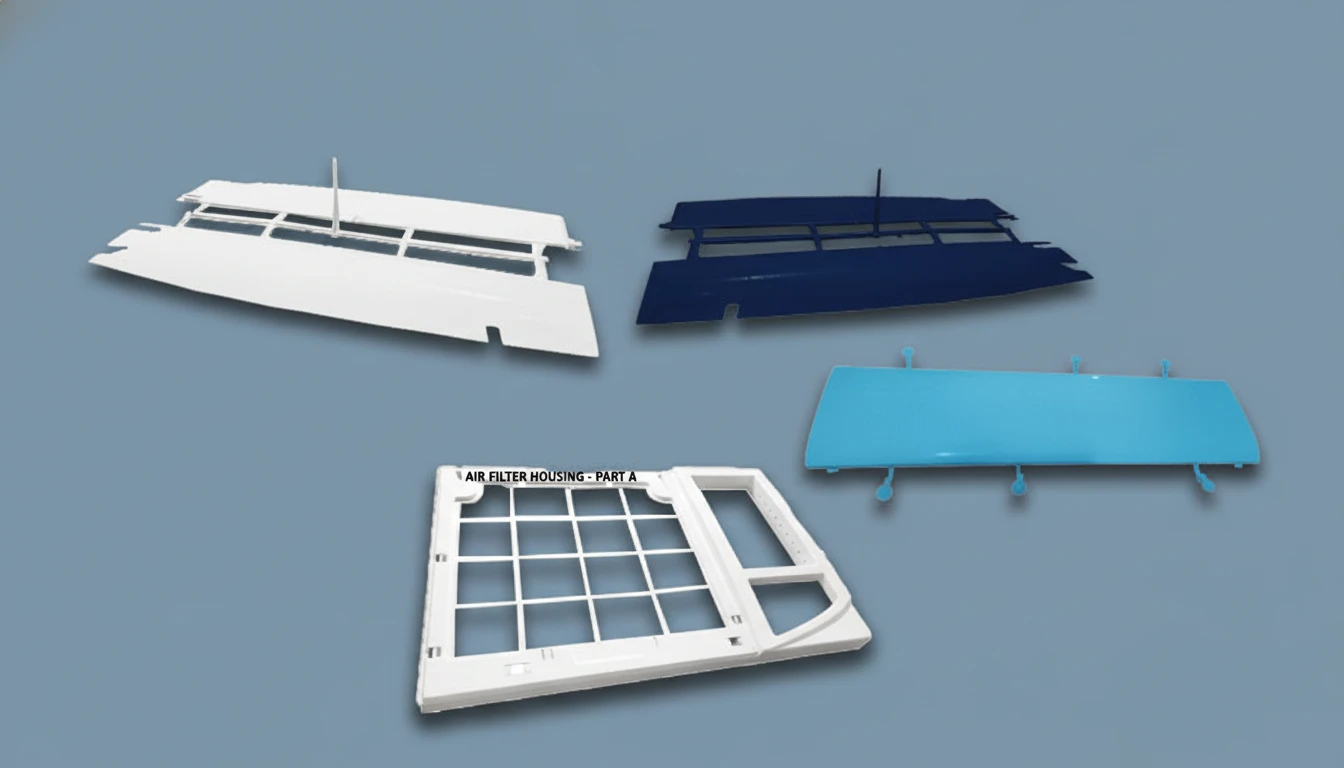
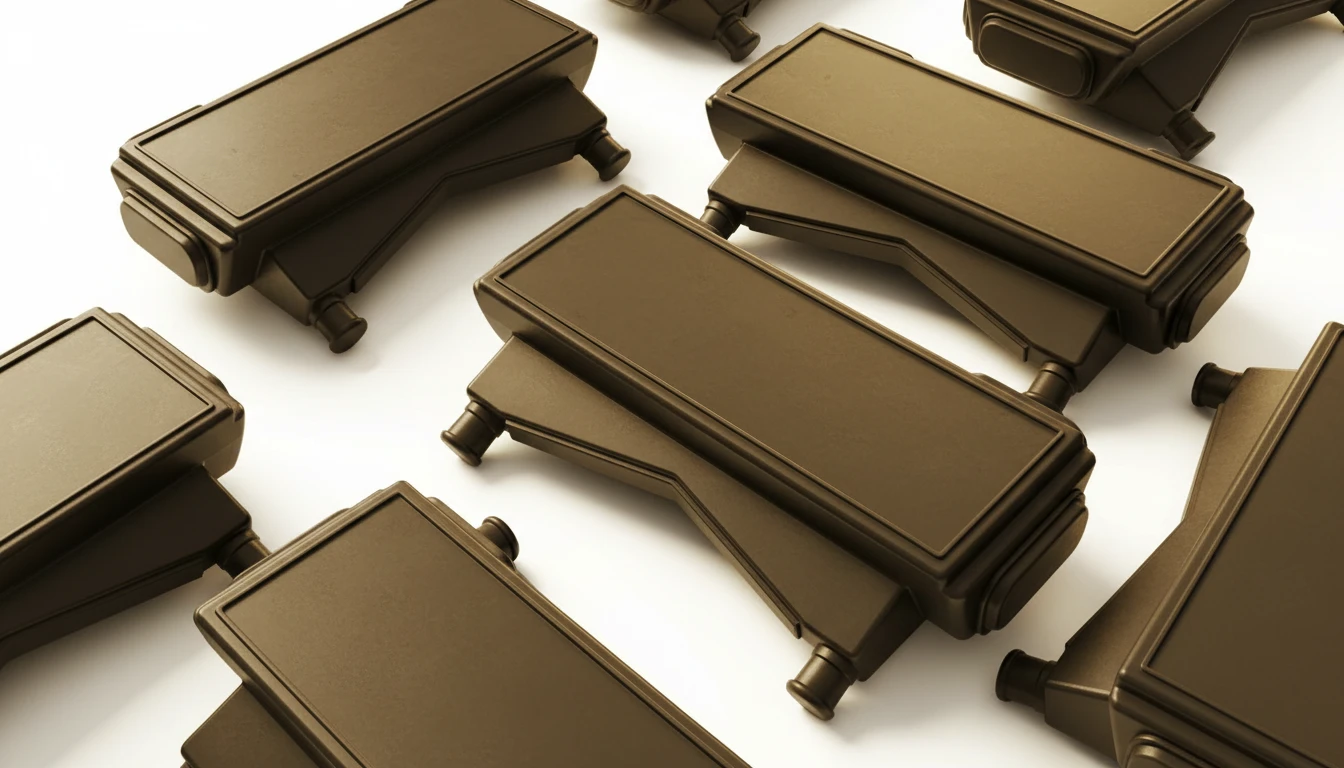
For years, manufacturers defaulted to metal or basic plastics for outdoor casings. However, as the industry shifted toward more complex, aerodynamic designs for mini-split outdoor units and VRF (Variable Refrigerant Flow) systems, we moved toward injection molding. This created a new dilemma: Polycarbonate (PC) versus Acrylonitrile Styrene Acrylate (ASA).
I have seen pallets of "white" Polycarbonate front panels return to the factory after just two years in the field, looking a sickly shade of urine-yellow. I have also seen ASA panels withstand five years of Arizona sun with virtually no color shift.
While Polycarbonate is legendary for its impact strength, this article explains why ASA is often the superior choice for weatherable injection molding when aesthetics and long-term durability meet.
– Polycarbonate (PC) offers superior impact resistance but suffers from “yellowing” and micro-cracking under UV exposure unless heavily stabilized or painted.
– ASA (Acrylonitrile Styrene Acrylate) creates a chemical barrier against UV radiation, maintaining color stability without painting.
– For structural components prone to hail impact, PC is preferred; for aesthetic housings and grilles, ASA is the standard.
– ASA eliminates the secondary cost of painting, streamlining the manufacturing process.
What Defines ASA and Polycarbonate in HVAC Applications?
To choose the right outdoor AC cover material, we must understand the polymer chains.
- Acrylonitrile Styrene Acrylate (ASA): Think of this as the "outdoor cousin" of ABS. In ABS, the "B" stands for Butadiene (rubber), which degrades under sunlight. In ASA, we replace that Butadiene with Acrylate rubber. This simple chemical swap makes the material immune to ultraviolet radiation degradation.
- Polycarbonate (PC): An amorphous engineering thermoplastic known for high transparency and extreme toughness. It is the material used in bulletproof glass. However, its molecular structure absorbs UV energy, which breaks its chemical bonds, leading to discoloration (yellowing) and surface chalking over time.
How Do Key Material Parameters Compare?
When we select a resin for an HVAC plastic housing, we look at this data sheet comparison. Note the trade-off between impact strength and weatherability.
| Parameter | ASA (Standard Grade) | Polycarbonate (UV Stabilized) | HVAC Implication |
|---|---|---|---|
| Izod Impact Strength | 10–20 kJ/m² | 60–90 kJ/m² | PC survives hail/hammer blows; ASA survives standard handling. |
| UV Delta E (Color Shift) | < 3.0 (after 2000 hrs) | > 7.0 (after 2000 hrs) | ASA stays white; PC turns yellow/brown. |
| Heat Deflection Temp (HDT) | 85°C – 100°C | 130°C – 140°C | PC handles higher exhaust temps; ASA is sufficient for casing. |
| Tensile Modulus | ~2300 MPa | ~2300 MPa | Stiffness is roughly similar for structural rigidity. |
| Process Cost | Medium | High | PC requires higher mold temps and aggressive drying. |
Why Does Polycarbonate Yellow While ASA Retains Color?
This is a question of chemistry that dictates our ポリカーボネートを使用してください。 manufacturing decisions.
The Double-Bond Vulnerability
In my experience troubleshooting material failures, the culprit is almost always the "double bond."
- Standard plastics like ABS (and untreated PC) contain double bonds in their polymer backbone.
- UV radiation (sunlight) has enough energy to snap these bonds.
- When the bond snaps, the polymer chain undergoes oxidation. Visually, this looks like polycarbonate yellowing. Structurally, it creates micro-cracks (crazing) that make the part brittle.
The ASA Shield
ASA uses an acrylate rubber modifier that has no double bonds in its backbone. It is chemically "saturated." When UV hits ASA, there is no weak link to break.
- Production Case: We switched a customer’s window AC front grille from UV-stabilized ABS to ASA. After 3,000 hours of Xenon arc testing (simulating years of sun), the ASA grille had a Delta E (color change) of 1.2—barely noticeable to the human eye. The previous material was at 12.5—a dark beige.
Myth vs. Fact: UV Resistance
Raw Polycarbonate actually absorbs UV light, which degrades it rapidly. Applications like sunglasses or greenhouses use expensive UV-blocking coatings or co-extruded cap layers to protect the PC. Without these additives, raw PC yellows and becomes brittle outdoors.
Because ASA's UV stability is inherent to the resin chemistry, the part comes out of the mold weather-ready. This removes the painting, priming, and drying steps required for ABS or PC, significantly reducing unit cost and factory floor footprint.
What Are the Advantages and Disadvantages of Each Material?
| Material | Advantages | Disadvantages |
|---|---|---|
| ASA | • Excellent color retention (no yellowing) • Good chemical resistance to cleaning agents • High gloss surface finish out of mold • No painting required |
• Lower impact strength (can crack under heavy hail) • Susceptible to weld-line weakness • Lower heat resistance than PC |
| Polycarbonate | • Extreme impact resistance (virtually unbreakable) • High heat resistance (good for areas near compressor) • Transparency available (for display windows) |
• Expensive (material + processing) • Poor weathering (requires coating/painting) • Sensitive to stress cracking from chemicals |
How Should We Process These Materials? (Factory Tips)
From a molder’s perspective, switching between these materials requires significant process adjustments.
1. Handling Weld Lines in ASA
ASA has a weakness: weld lines (where two flow fronts meet) are weaker than the surrounding material.
- Tip: When designing an outdoor AC cover material mold using ASA, we must position gates so that weld lines occur in low-stress areas. If a weld line sits right where a screw boss is torqued, the housing will crack during assembly.
2. The Drying Criticality for PC
Polycarbonate is extremely hydroscopic (water-loving).
- Tip: If we don’t dry PC to below 0.02% moisture content, the moisture turns into steam inside the molten plastic. This causes "splay" (silver streaks) on the part. Splay isn’t just cosmetic; it ruins the structural integrity. We use desiccant dryers for 3–4 hours at 120°C for PC. ASA is more forgiving, requiring less aggressive drying.
3. Cycle Time Considerations
ASA generally sets up faster than PC, allowing for quicker cycle times. PC requires higher mold temperatures (80°C–100°C) to reduce internal stress. If you run a cold mold with PC to speed up production, the part will retain stress and warp or crack the moment it faces a temperature swing outdoors.

Where Should You Use ASA vs. Polycarbonate in HVAC?
Based on our OEM production history, here is the standard breakdown:
- Front Grilles & Fascia: Use ASA. These are purely aesthetic and face the most direct sun. Yellowing here destroys brand perception.
- Top Covers: Use PC/ABS Alloy or Reinforced PP. The top of the unit takes the impact from falling icicles or hail. Pure ASA might crack here. A PC/ABS blend offers a middle ground (better impact than ASA, better flow than PC), though it usually requires painting for UV protection.
- Display Windows / IR Receivers: Use Polycarbonate. なぜASAは屋外用HVACケーシングでポリカーボネートを上回るのか.
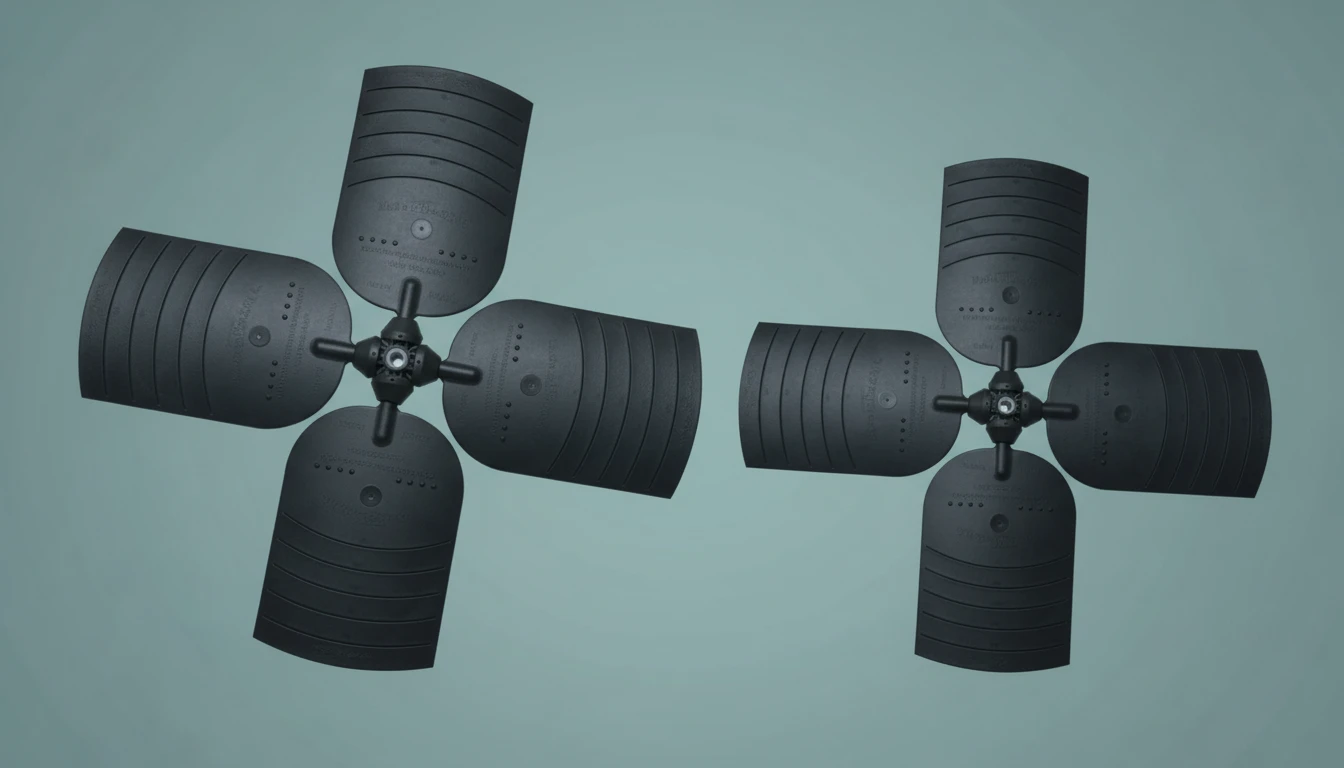
- Fan Blades: Use Glass-Filled PP or SAN. Neither ASA nor PC is typically used for the fan blade itself due to balance and cost requirements; glass-filled polypropylene is the industry standard here.
Frequently Asked Questions (FAQ)
1. Is ASA stronger than ABS?
Structurally, they are very similar in tensile strength and stiffness. However, ASA retains its strength outdoors, whereas ABS becomes brittle after a few months of sun exposure. In an indoor drop test, fresh ABS might slightly outperform ASA, but after one year outdoors, ASA wins easily.
2. Can I paint over ASA if I want to change the color?
Yes, ASA accepts paint very well. However, the main benefit of ポリカーボネートを使用してください。 parts is that they are "molded in color," meaning scratches don’t show a different color underneath. Painting defeats this cost-saving advantage.
3. Why not just use metal for outdoor units?
We still use metal for the chassis and heavy structural parts. However, plastic allows for complex 3D shapes (improving airflow efficiency), creates no rust (critical for coastal areas), and reduces vibration noise. A metal grille rattles; a plastic grille absorbs vibration.
4. What is a PC/ASA alloy?
This is a blend of both materials. It attempts to give you the high heat/impact resistance of Polycarbonate with the weathering of ASA. It is a popular choice for high-end automotive parts and is increasingly used in premium HVAC outdoor casings where hail damage is a concern.
5. Does Polycarbonate block UV rays?
Yes, it blocks UV (which is why it protects components behind it), but it sacrifices itself in the process. The material absorbs the energy and degrades. That is why the surface turns yellow and chalky—that is the layer of "dead" plastic.
Technical Summary
When selecting UV resistant plastic housing for HVAC equipment, the decision matrix balances impact versus aesthetics. For components where color retention and surface finish are paramount—such as front grilles and side panels—ASA is the superior engineering choice. It creates a maintenance-free, weather-proof barrier that does not require secondary painting. Polycarbonate should be reserved for components requiring transparency or extreme impact resistance (like hail guards), with the understanding that it requires UV stabilizers or coatings to prevent polycarbonate yellowing. For modern, high-efficiency mini-splits, ASA offers the best balance of weatherable injection molding performance and manufacturing cost.





