In the HVAC assembly hall, the sound of pneumatic screwdrivers is the sound of money being spent. Every screw represents a part cost, a labor second, a torque specification check, and a potential failure point (stripping or rusting).
As a manufacturing engineer who has watched production lines stall because a worker dropped a tiny M3 screw into a compressor housing, I am a massive advocate for tool-less assembly. By moving from screws to snap-fits, we embrace DFMA injection molding (Design for Manufacturing and Assembly).
However, designing snap-fits for HVAC is not like designing for a TV remote. Our units vibrate, endure thermal expansion cycles, and must survive rough handling by installers. A poorly designed snap-fit isn’t just an annoyance; it’s a rattling noise complaint that results in a warranty call.
This guide outlines how to engineer robust, vibration-resistant snap-fits specifically for plastic enclosure design in HVAC applications.
Key Takeaways
- Snap-fits reduce Takt time (cycle time) on the assembly line by eliminating screwing operations.
- Geometry is critical: Tapered beams distribute stress, while sharp corners at the root are guaranteed failure points.
- Material selection dictates the design; high-modulus materials (PC) allow less strain than flexible ones (PP).
- For HVAC, you must design "over-travel stops" to prevent technicians from snapping the beam during service.

Definition: The HVAC Cantilever Snap-Fit
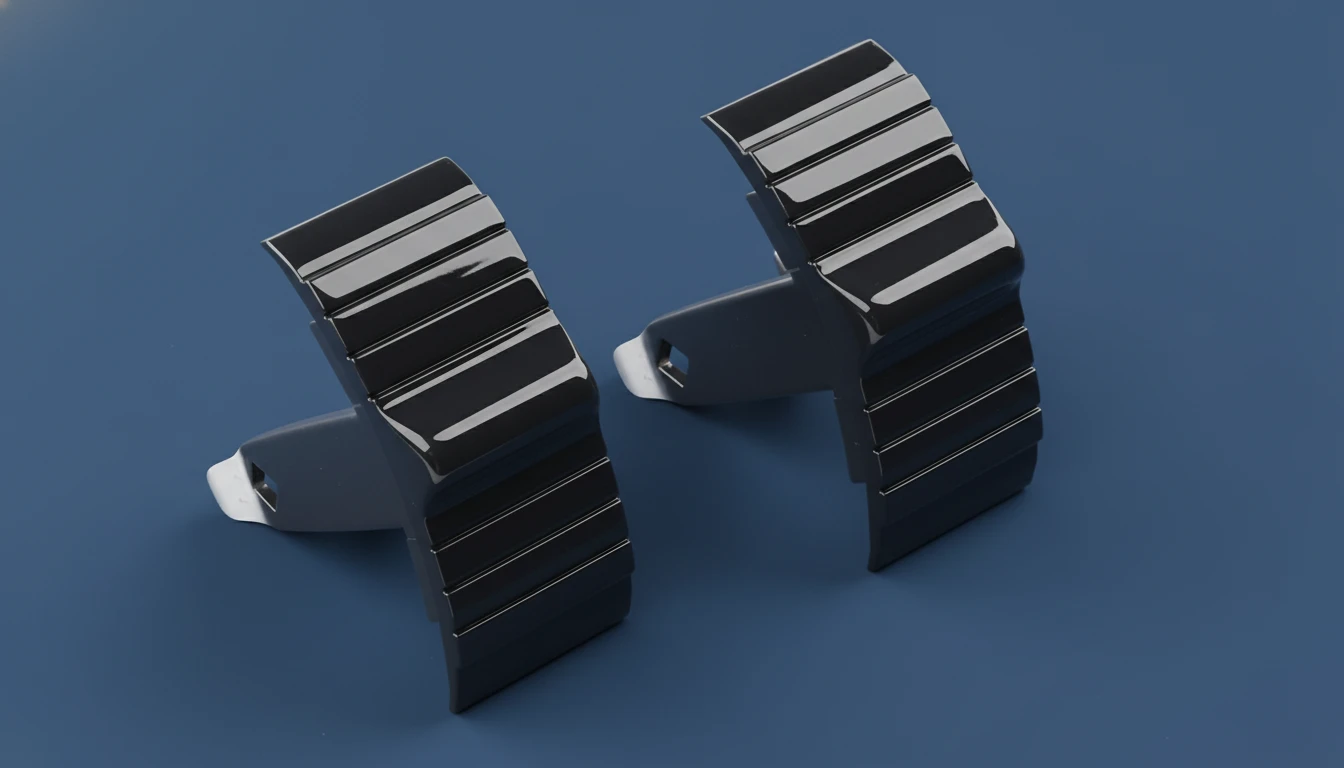
A Cantilever Snap-Fit is a beam-based protrusion molded directly into the part that deflects during assembly and snaps into an undercut in the mating part.
In HVAC assembly reduction, we generally classify them into two types:
- Permanent: 90° undercut face. Once clicked, it cannot be removed without breaking (used for PCB housings or internal chassis components).
- Releasable: Angled undercut face. Can be pulled apart with specific force (used for air filter doors and service panels).
Key Parameters for Snap-Fit Calculation
Designing a snap-fit isn’t guesswork; it is pure beam physics. These are the parameters we calculate before cutting the mold.
| Parameter | Symbol | HVAC Context |
|---|---|---|
| Allowable Strain | $ | The % the material can stretch before yielding. (ABS: ~1.5% – 2.0%; PP: ~5.0%). |
| Deflection Amount | $ | How far the beam bends during insertion (the undercut depth). |
| Beam Length | $ | Longer beams allow for more deflection but are floppier. |
| 緩んでいる場合は「締める」ことは不可能(ネジとは異なる)。 | $ | The thickness at the base. The critical point for stress. |
| Friction Coefficient | $ | Determines insertion force. Lubricated plastics ease assembly. |
Step-by-Step Engineering: The Snap-Fit Design Guide
1. Calculating the Strain (The Safety Limit)
The most common failure I see is exceeding the material’s strain limit. The standard cantilever beam formula for a uniform beam is:
- Factory Reality: If you need a deep undercut $ for a strong hold, you must either increase the length $or decrease the thickness $. If you make $ too short and $ too thick, the snap will shear off on the first try.
2. Tapering the Beam (Stress Distribution)
Never design a beam with uniform thickness.
- The Problem: In a uniform beam, all the stress concentrates at the very bottom (the root).
- The Solution: Taper the beam from the root to the tip. A linear taper ensures strain is distributed along the entire length of the beam, significantly increasing cycle life.
3. The Root Radius (preventing the "Zipper" effect)
In plastic enclosure design, sharp corners are stress concentrators.
- Design Rule: The radius at the base of the snap-fit must be at least 50% of the wall thickness ($0.5 \times T$).
- Consequence: Without this radius, the snap-fit will fail cleanly at the base after a few vibrations.
4. Designing the "Preload"
An HVAC unit vibrates. If the snap-fit sits "neutral" after assembly, the parts will rattle.
- Technique: We design an interference of 0.05mm–0.10mm. The beam never fully relaxes; it remains under slight tension, pulling the mating parts tightly together to dampen vibration. Warning: Do not exceed the creep limit of the material, or the tension will disappear over time.
Real Factory Case: The "Exploding" Thermostat Housing
We were manufacturing a remote controller housing using Polycarbonate (PC). The designers used a standard snap-fit geometry intended for ABS.
- The Issue: Polycarbonate is stiff. During assembly, the insertion force was so high that operators were using rubber mallets to bang the cases shut. This caused micro-cracks. Weeks later, in the field, the snaps sheared off, and the controllers fell apart.
- The Fix:
- We increased the beam length ($L$) by 4mm to increase flexibility.
- We added a 15° "lead-in" angle to the mating part to smooth the engagement.
- We switched the material to a PC/ABS alloy, which offers better ductility than pure PC.
- Result: Assembly force dropped by 60%, and field failures dropped to zero.
Myth vs. Fact: Tool-less Assembly
Actually, you want minimum deflection. You only want the beam to bend just enough to clear the undercut. Designing excessive deflection increases the risk of exceeding the yield point and creates a 'floppy' feeling for the user.
Advantages and Disadvantages of Snap-Fits in HVAC
| Feature | Advantages | Disadvantages |
|---|---|---|
| Cost | Zero hardware cost; zero driver bits; reduced labor. | High initial mold investment (sliders/lifters). |
| Assembly Speed | Instantaneous. One "click" replaces 15 seconds of screwing. | Impossible to "tighten" if loose (unlike a screw). |
| 原理を理解すれば、メーカーはハードウェアを削減し、生産を加速し、HVACエンクロージャーの美的品質を向上させることができます。ただし、設計においてクリープと振動を考慮することが条件です。 | Consistent clamping force (if designed right). | Susceptible to "Creep" (plastic relaxation) over years. |
| Aesthetics | Clean surfaces; no screw heads visible. | Sink marks can appear on the cosmetic side opposite the snap. |
Practical Tips for the Shop Floor
- The Over-Travel Stop: Technicians are heavy-handed. When opening a service door, they will pull the snap beam back too far. You must mold a physical wall or "stop" behind the beam that limits its movement to exactly the release point and no further. This prevents the beam from snapping off during service.
- Draft Angles: Ensure the snap-fit faces have proper draft (slope) so the part ejects from the mold. A stuck snap-fit in the mold usually breaks during ejection, leading to high scrap rates.
- The "Click" Sound: Believe it or not, the sound matters. A "mushy" connection feels cheap. A sharp, audible "click" confirms to the assembly worker that the part is fully seated. This is achieved by having a sharp drop-off on the undercut face (approx 90°) rather than a rounded one.
HVAC Application Scenarios
- Filter Access Doors: Use Polypropylene (PP) hinge-snaps. PP is the "living hinge" king and can withstand thousands of open/close cycles without fatigue.
- PCB Control Boxes: Use Permanent Cantilever Snaps. These are assembled once and never opened. We use stiff materials like Flame Retardant ABS (ABS-FR).
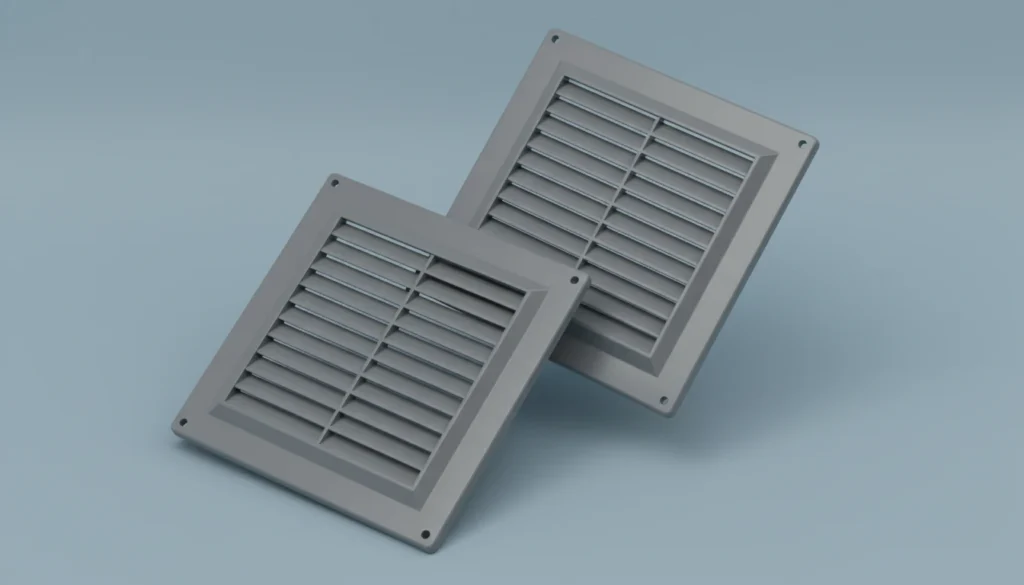
- Air Deflector Vanes: Use Annular Snaps (ball-and-socket style) to allow rotation while holding position.
Frequently Asked Questions (FAQ)
1. Can snap-fits handle the vibration of a compressor?
Yes, but only if "pre-loaded." If the snap-fit is loose, it will vibrate and wear down the plastic (fretting), eventually failing. We often use a hybrid approach: 4 snap-fits for positioning and 1 screw for absolute security on high-vibration parts.
2. What is "Creep" and why does it kill snap-fits?
Creep is the tendency of plastic to permanently deform under constant stress. If a snap-fit is designed to be under high tension constantly, the plastic molecules will slowly rearrange, and the tension will vanish. The part will become loose after a year. Design tip: Ensure the snap is in a relaxed state when fully engaged.
3. How do I prevent sink marks on the outside surface?
Snap-fits usually require a thick base. If this base is on the backside of a glossy front panel, it will pull a sink mark.
- Solution: Core out the base of the snap or attach the snap to a rib rather than the main wall.
4. Which material is best for snap-fits: ABS or Nylon (PA)?
Nylon (PA6 or PA66) is far superior for snap-fits because of its high toughness and fatigue resistance. However, Nylon absorbs moisture and changes dimensions. For stable, indoor housings, ABS is easier to mold, provided you stay within the strain limits.
5. What is a "lifter" in the mold?
A lifter is a moving steel component inside the injection mold. Because a snap-fit has an undercut (it hooks inward), the part cannot simply be pushed out. The lifter moves up and diagonally to release the hook before the part ejects. This adds cost to the mold base.
Technical Summary
Implementing tool-less assembly in HVAC manufacturing is a powerful method for reducing costs, but it demands rigorous engineering. A successful snap fit design guide centers on three pillars: selecting a material with appropriate modulus and strain limits (like ABS or PC/ABS), calculating tapered beam geometry to distribute stress, and designing features like over-travel stops to ensure serviceability. By adhering to DFMA injection molding principles, manufacturers can eliminate hardware, speed up production, and improve the aesthetic quality of HVAC enclosures, provided the design accounts for creep and vibration.