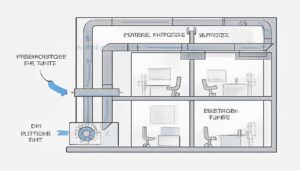
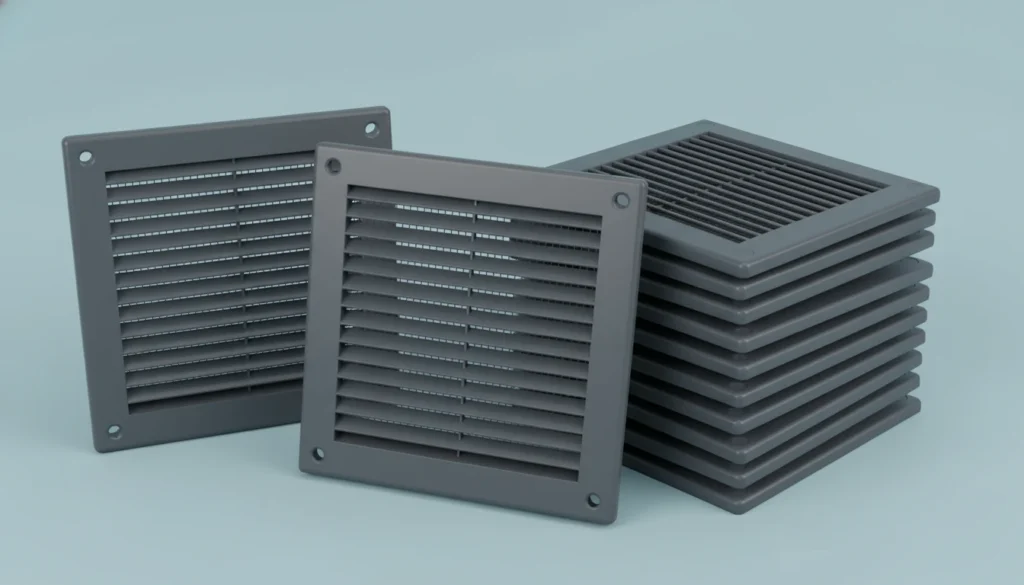
In the Heating, Ventilation, and Air Conditioning (HVAC) industry, the shift from metal to plastic requires materials that can withstand aggressive thermal cycling, exposure to refrigerants, and continuous mechanical stress. This article provides a technical comparative analysis of three dominant high-performance thermoplastics: Polyetheretherketone (PEEK), Polyphenylene Sulfide (PPS), and Polyamide (PA/Nylon), specifically focusing on their viability for high heat plastic injection molding.
– PEEK offers the highest thermal and chemical resistance but comes at the highest raw material cost.
– PPS provides an optimal balance of cost and performance for hot, humid HVAC environments due to low moisture absorption.
– Glass-filled Nylon (PA66) is a cost-effective solution for structural parts but suffers from property degradation due to moisture absorption.
– Precise mold temperature control is mandatory to achieve full crystallinity and dimensional stability in these semi-crystalline materials.
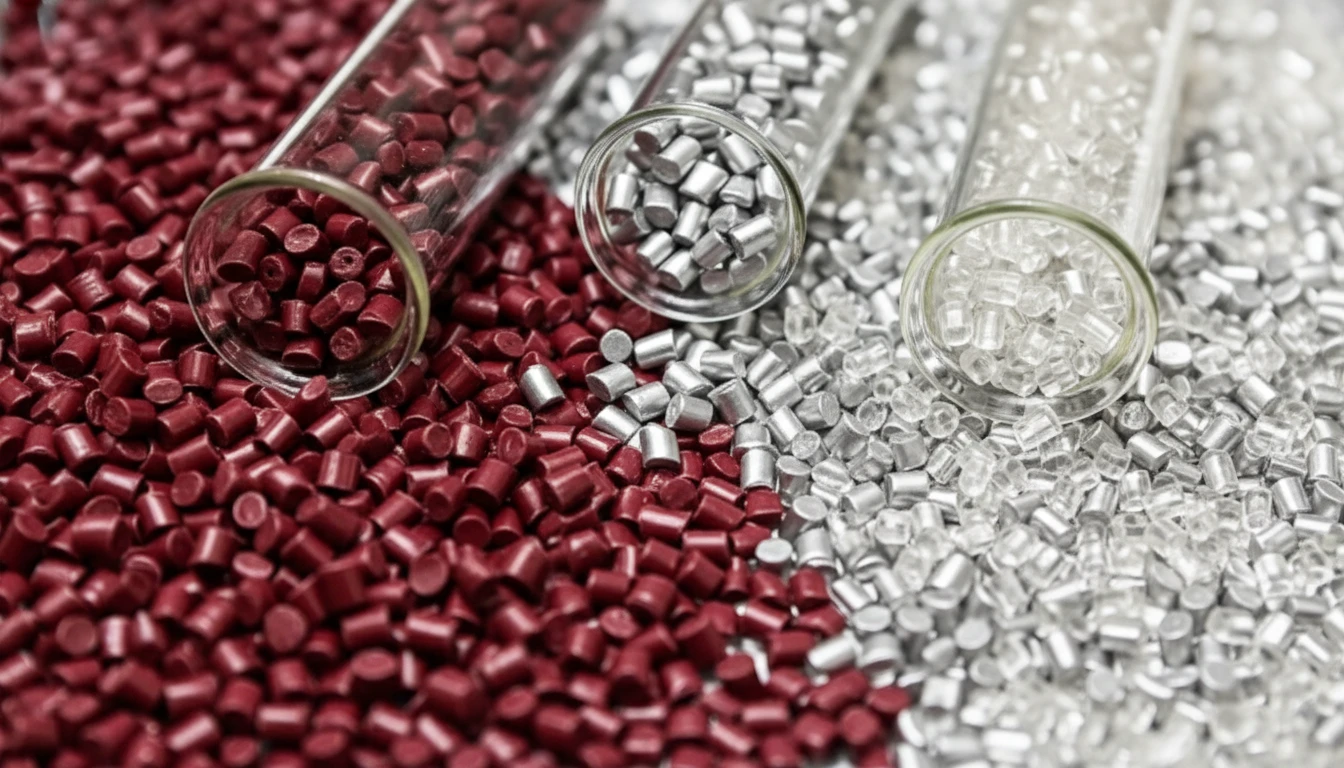
What Defines High-Temperature Plastics in HVAC Contexts?
In the context of HVAC systems, "high temperature" refers to materials capable of sustaining structural integrity at service temperatures exceeding 100°C (212°F), often reaching up to 260°C (500°F) for internal furnace or heat exchanger components.
To be considered viable HVAC plastic materials, thermoplastics must meet specific criteria defined by standards such as UL 746B (Relative Thermal Index – RTI) and ASTM D648 (Heat Deflection Temperature).
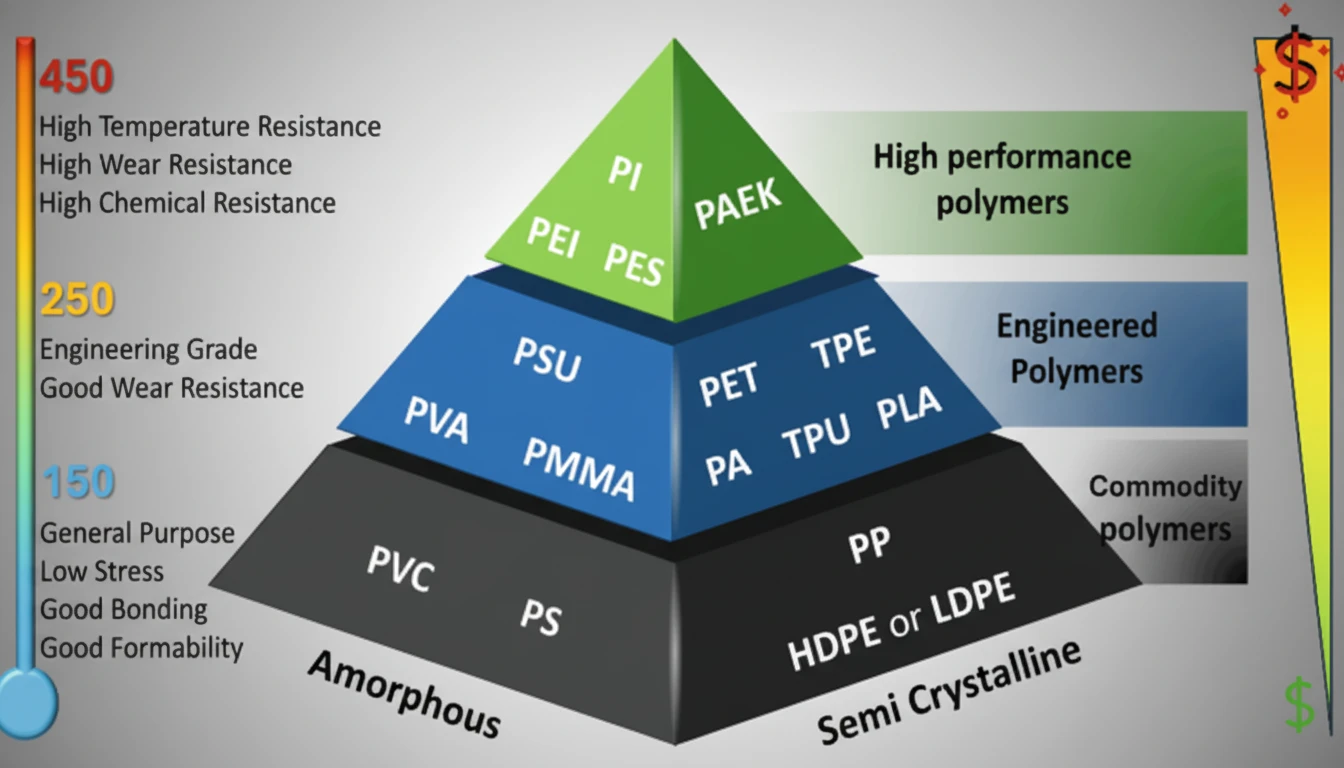
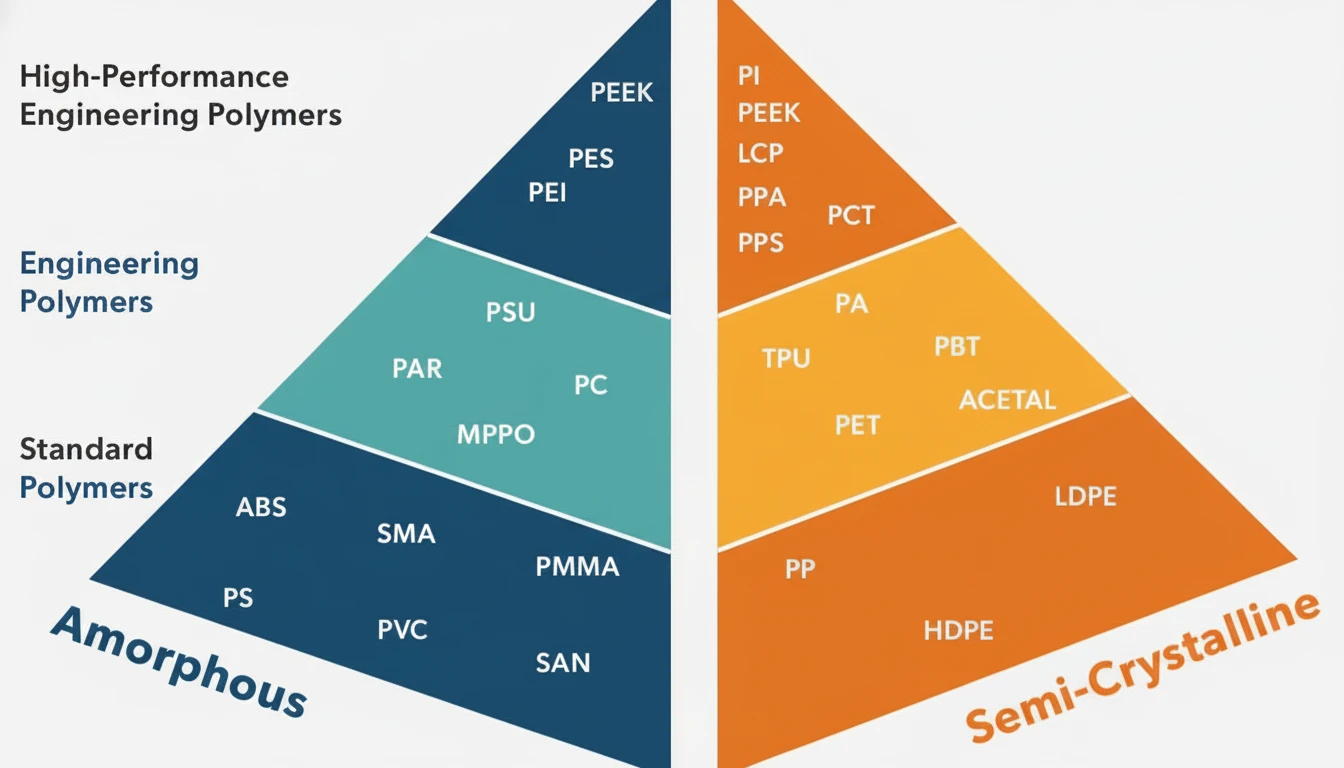
- Polyetheretherketone (PEEK)1: An organic thermoplastic polymer in the polyaryletherketone (PAEK) family with semi-crystalline properties. It is the gold standard for extreme thermal and chemical environments.
- Polyphenylene Sulfide (PPS)2: A semi-crystalline engineering thermoplastic known for its exceptional chemical resistance and dimensional stability, often referred to as "the metal replacer."
- Polyamide 66 (PA66/Nylon): A widely used engineering thermoplastic. For high-heat applications, it is almost exclusively used with glass fiber reinforcement (e.g., PA66 GF30) to boost heat deflection limits.
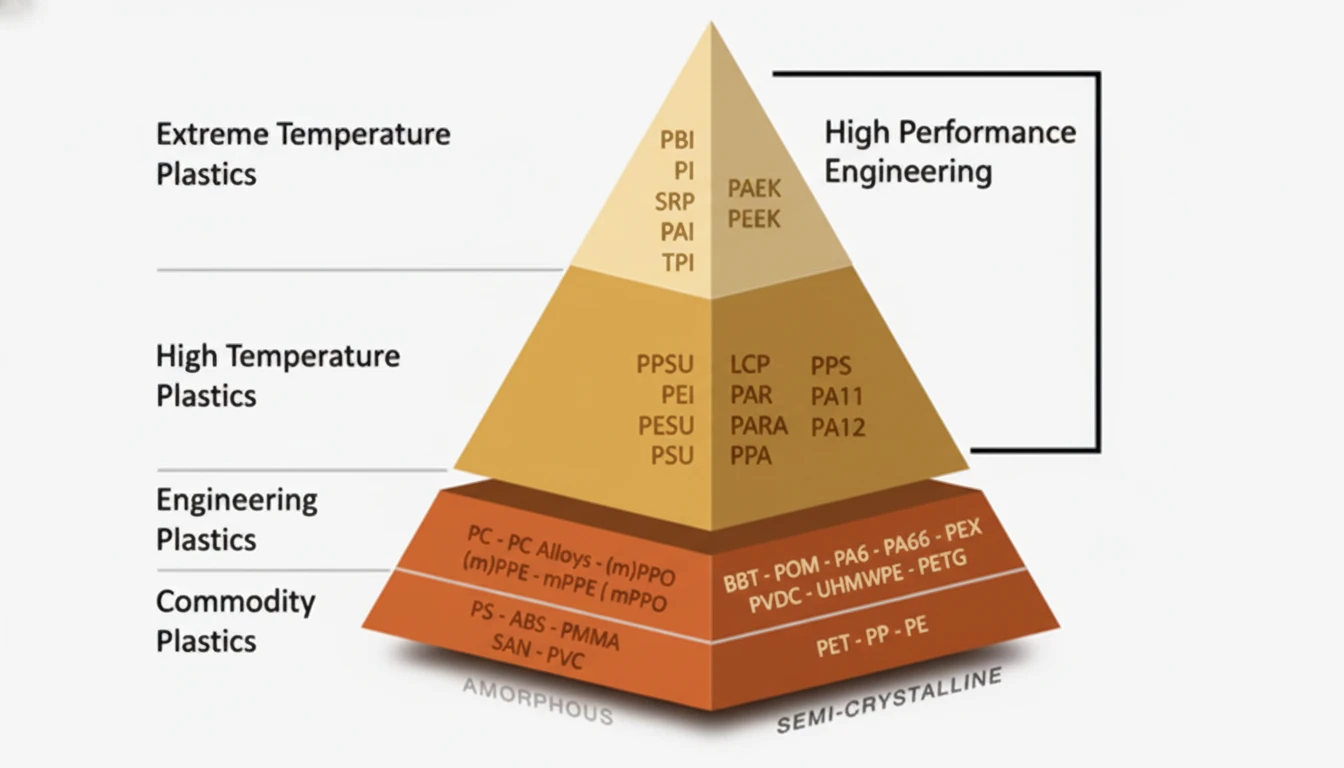
How Do PEEK, PPS, and Nylon Compare for High Heat Injection Molding?
The following table compares standard grades used in high heat plastic injection molding3. Note that values rely on standard glass-fiber (GF) reinforced grades, as unfilled resins rarely meet HVAC structural requirements.
| Parameter | Unit | PEEK (30% GF) | PPS (40% GF) | Nylon (PA66 30% GF) | Importance in HVAC |
|---|---|---|---|---|---|
| Melting Point | °C | 343 | 280 | 260 | Determines max processing window. |
| HDT @ 1.8 MPa | °C | 315 | 260 | 250 | Resistance to deformation under load/heat. |
| Cont. Use Temp (UL RTI) | °C | 260 | 200–220 | 105–120 | Long-term thermal durability rating. |
| Moisture Absorption | 熱抵抗プラスチック | < 0.1 | 0.02 | 1.5–2.8 | Critical for dimensional stability in humid air streams. |
| Mold Shrinkage | % | 0.2–0.5 | 0.2–0.4 | 0.3–0.7 | Affects tooling tolerances and warpage. |
| Flammability4 | UL 94 | V-0 | V-0 | V-2 (V-0 with additives) | Safety compliance for heating units. |
| Chemical Resistance5 | – | Excellent | Excellent | Good (Poor vs. Acids) | Resistance to condensate and refrigerants. |
Note: Data sources include general resin datasheets (e.g., Solvay, Celanese, BASF). Specific values vary by proprietary compound formulations.
PPS offers thermal resistance close to PEEK at a fraction of the cost, and its moisture absorption is negligible compared to Nylon, making it the 'value champion' for HVAC environments.
While PA66 has high heat resistance, it is hygroscopic; absorbing moisture significantly lowers its mechanical strength and glass transition temperature, causing failure in steam environments where PPS succeeds.
What Are the Advantages and Disadvantages of These HVAC Plastic Materials?
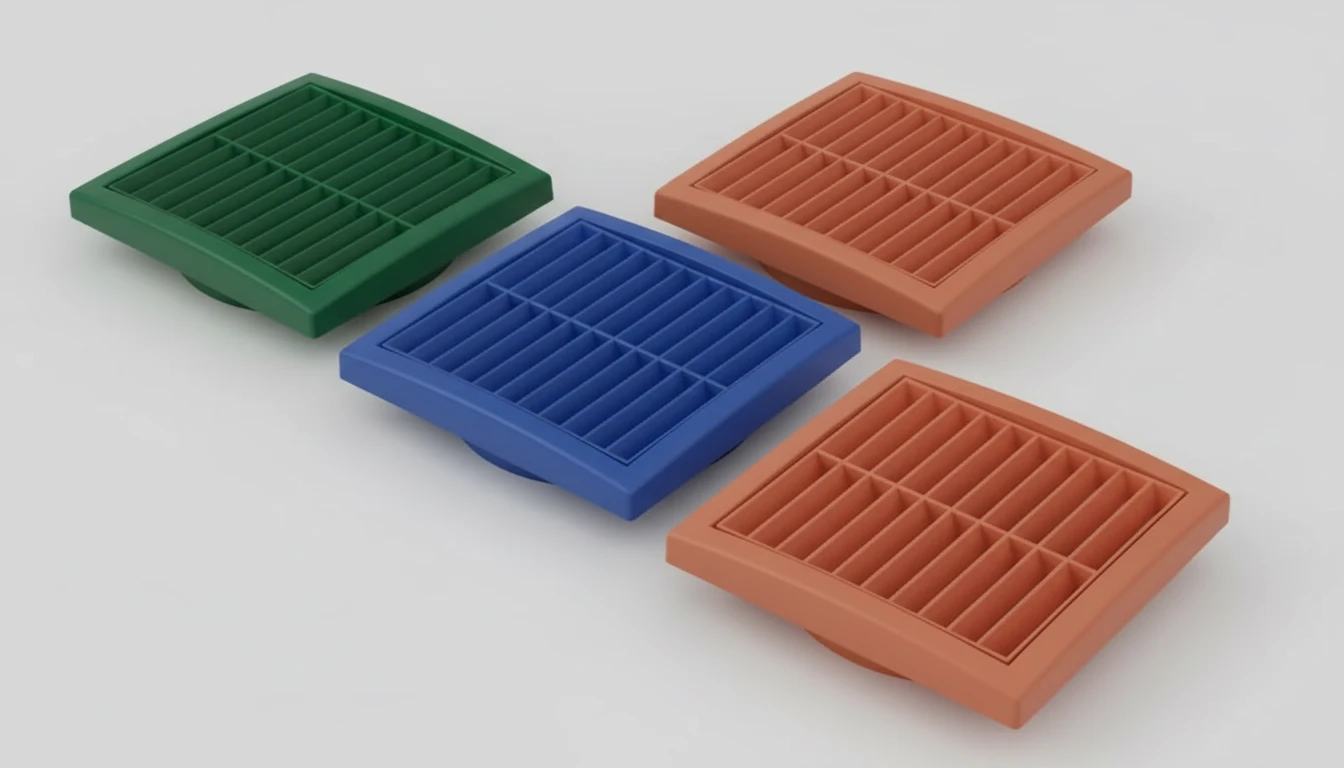
Selecting between PEEK vs Nylon or PPS requires analyzing the trade-offs between thermal performance, environmental resilience, and manufacturing cost.
| Material | Advantages | Disadvantages |
|---|---|---|
| PEEK (Polyetheretherketone) | • Highest thermal resistance (up to 260°C continuous). • Inherently flame retardant (UL 94 V-0). • Excellent hydrolysis resistance (steam proof). • Extremely low smoke/toxic gas emission. |
• Extremely high raw material cost (approx. 10x of Nylon). • High processing temperatures require specialized mold heating (oil/cartridge). • limited color options. |
| PPS (Polyphenylene Sulfide) | • Best price-to-performance ratio for high heat. • Near-zero moisture absorption (dimensional stability). • Inherently flame retardant. • Excellent flow allows thin-wall molding. |
• Brittle; prone to flash due to low viscosity. • Sensitive to notch impact (requires radiused corners). • Requires very high mold temperatures (135°C+) for crystallinity. |
| Nylon (PA66 GF) | • High toughness and impact resistance. • Easy to process and widely available. • Cost-effective for "under-the-hood" equivalent parts. • Good surface finish. |
• Hygroscopic: Dimensions and properties change with humidity. • Lower continuous use temperature than PPS/PEEK. • Vulnerable to strong acids found in some condensates. |
What Are Common Application Scenarios for These Materials?
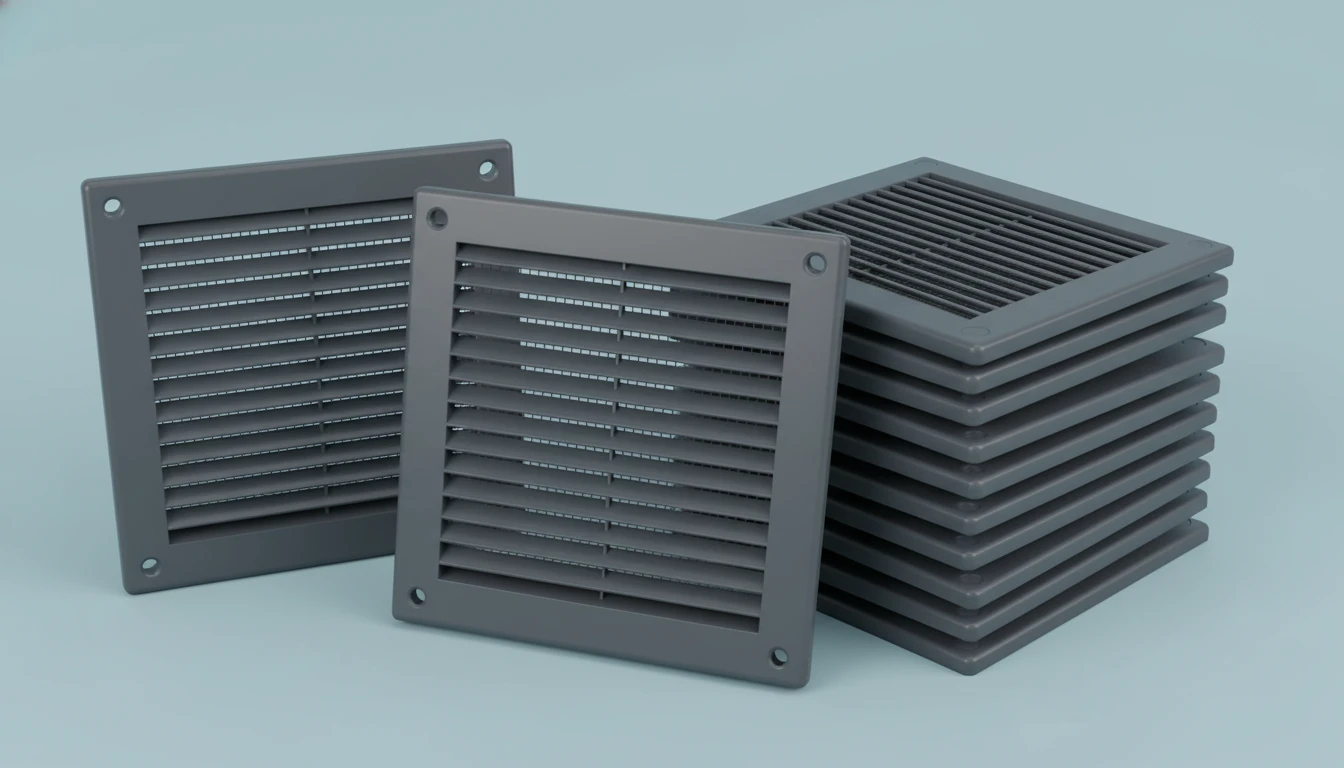
Different zones within an HVAC system present varying stresses. Here is how thermal resistance plastics 最大寸法安定性と応力緩和が求められるPEEKおよびPPS部品に推奨されます。通常、200°Cで1〜2時間処理を行います。
- Furnace Flue Collectors (PPS): Exposed to acidic exhaust gases and high heat. PPS is chosen for its chemical resistance and stability.
- Heat Exchanger Components (PEEK/PPS): Where efficiency demands thin walls and high thermal transfer without corrosion.
- Impellers and Blowers (PA66 GF / PPS): Nylon is often used for residential blowers due to toughness. PPS is used in industrial blowers where low warpage and high heat are critical.
- Compressor Internals (PEEK): Valve plates and seals that require tribological (wear) resistance at extreme friction temperatures.
- Control Valves & Actuators (PPS): Requires tight tolerances that Nylon cannot maintain due to moisture swelling.
How Can One Troubleshoot High Heat Plastic Injection Molding?
Processing UL rated plastics like PEEK and PPS differs significantly from commodity plastics. Common issues include warpage, poor surface finish, and brittleness.
- Issue: Low Crystallinity (Soft/Sticky parts)
- Cause: Mold temperature is too low.
- Solution: Ensure mold surface temperature is >140°C for PPS and >170°C for PEEK. Use oil heaters or high-wattage cartridges, not water.
- Issue: Flash (Burrs)
- Cause: PPS has extremely low viscosity (water-like flow) at melt temp.
- Solution: Precision tooling is required. Clamp tonnage must be adequate (3–5 tons/in²). Check parting line shut-off integrity.
- Issue: Voiding in Thick Sections
- Cause: Material shrinkage and gas entrapment.
- Solution: Increase packing pressure and time. Ensure vents are clear (0.01–0.02 mm depth for PPS).
- Issue: Silver Streaks (Splay)
- Cause: Moisture in the resin.
- Solution: Desiccant drying is non-negotiable. PPS requires 3–4 hours at 150°C; PEEK requires 3–4 hours at 150°C–160°C.
Running a cold mold with semi-crystalline high-temp resins results in amorphous parts with poor chemical resistance, lower HDT, and dimensional instability.
Standard water chillers cannot reach the required 135°C+ range for PPS crystallization; attempting this creates 'amorphous skins' that ruin the part's thermal and mechanical properties.
What Steps Ensure Success in Processing High-Temperature Thermoplastics?
To achieve optimal results with high heat plastic injection molding3, follow this stepwise process recommendation:
- Material Preparation:
- Verify moisture content is below 0.02%. Use a dew-point dryer (-40°C dew point).
- Machine Selection:
- Use a barrel constructed of bimetallic alloys resistant to abrasion (glass fibers) and corrosion (PPS off-gassing).
- Ensure the heater bands can reach 400°C (for PEEK).
- Mold Design:
- Use hardened steel (H13 or equivalent) to resist abrasion.
- Incorporate insulation plates between the mold and the platen to prevent heat loss to the machine.
- Design generous draft angles (1°–2°) to ease ejection, as these materials are rigid.
- Process Control:
- Injection Speed: Moderate to fast for PPS (to fill before freezing); slower for PEEK to prevent shear degradation.
- Back Pressure: Low to moderate (50–100 bar specific) to minimize fiber breakage.
- Post-Molding:
- Annealing: Recommended for PEEK and PPS parts requiring maximum dimensional stability and stress relief. Typically done at 200°C for 1–2 hours.
Frequently Asked Questions (FAQ)
HVAC射出成形に最適な高耐熱プラスチック
PEEK outperforms Nylon in continuous use temperature (260°C vs 120°C) and hydrolysis resistance. Unlike Nylon, PEEK does not absorb moisture, maintaining its mechanical strength in steam or humid environments where Nylon would degrade or swell.
Q2: Can PPS be used as a direct replacement for metal in HVAC?
Yes, PPS is frequently used to replace brass and aluminum in HVAC valves and housings. It offers weight reduction, corrosion immunity, and reduced secondary finishing (machining), though the mold design must account for its specific shrinkage and brittleness.
Q3: What is the biggest risk when molding PPS?
The biggest processing risk is "cold molding." If the mold temperature is below 135°C, the part will not crystallize fully. This results in a part that looks okay initially but will warp and fail structurally once exposed to heat in the field.
Q4: How does glass fiber loading affect these materials?
Adding glass fiber (typically 30–40%) significantly increases the Heat Deflection Temperature (HDT) and stiffness (modulus). However, it reduces elongation at break (toughness) and can cause abrasive wear on the mold tooling.
Q5: Are these materials compliant with flame retardancy standards?
Yes. PEEK and PPS are inherently V-0 rated according to UL 94 without the need for additives. Nylon typically requires flame-retardant additives to achieve V-0, which can sometimes impact mechanical properties.
Summary
In the competitive landscape of HVAC plastic materials, the choice between PEEK, PPS, and Nylon dictates the longevity and efficiency of the system. Nylon (PA66 GF) remains the cost-effective workhorse for structural, lower-temperature components protected from moisture. PPS serves as the industry standard for high-heat, corrosive environments due to its exceptional value and dimensional stability6. PEEK is reserved for the most demanding applications where failure is not an option, offering unrivaled thermal and hydrolytic resistance. Manufacturers must adhere to strict high heat plastic injection molding guidelines—specifically regarding drying and mold temperature—to fully realize the potential of these advanced thermoplastics.
-
Explore the unique properties of PEEK that make it ideal for extreme thermal and chemical environments in HVAC. ↩
-
Learn why PPS is often referred to as ‘the metal replacer’ and its advantages in HVAC systems. ↩
-
Find out how to optimize the injection molding process for high-temperature thermoplastics. ↩ ↩
-
Understand the safety standards for flammability in HVAC applications and material selection. ↩
-
Learn why chemical resistance is crucial for the longevity of HVAC components. ↩
-
Understand the importance of maintaining dimensional stability in humid HVAC conditions. ↩