
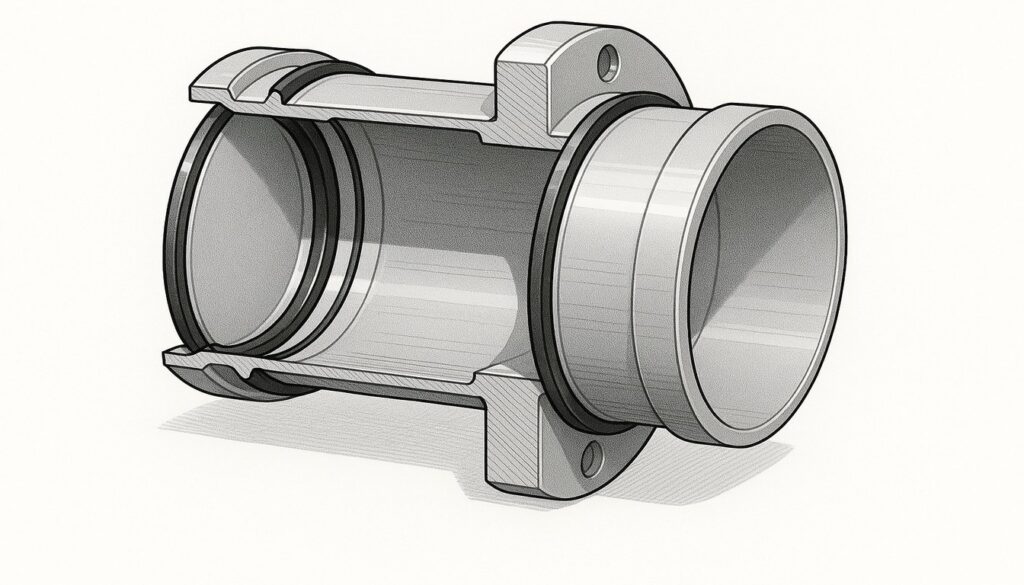
- 当社の継手はUV安定化ABSおよびPPから製造され、HVAC作動温度(-20°Cから80°C)下で寸法安定性を保持します。各継手設計は金型製作前にDFMレビューと金型流動解析を経ており、一貫した肉厚とシール面を損なう可能性のあるシンクマークの発生を防止しています。生産部品は入荷時に検査され、500個ごとにシール寸法のCMM抜取検査を実施しています。.
- Mastic sealant is the most durable sealing method — it bonds to metal and fiberglass, cures permanently, and flexes with thermal expansion. Duct tape fails within 3–5 years.
- The minimum duct slope required by the International Mechanical Code is 1/8 inch per foot toward the drain; for condensate lines, improper slope is the leading cause of recurring clogs.
- Energy Star estimates that sealing and insulating ducts in unconditioned spaces can save 10–20% on heating and cooling costs — the second-highest energy saving measure available.
- HVACore manufactures injection-molded duct fittings and connectors with precision sealing surfaces and SMACNA-compliant dimensions, reducing leakage at joints by design.
Why Do HVAC Ducts Leak — and How Much Energy Is Lost?
A building manager in Texas ran an energy audit and found his ブラケットは、機器の全重量に安全係数(通常は実際の負荷の1.5~2倍)を加えた荷重を支えるように定格されなければなりません。1 system was consuming 28% more electricity than expected. The diagnosis: leaking duct2s in the attic, where supply air at 55°F was bleeding into a 130°F space before reaching the occupied floors. The fix — mastic sealing by a two-person crew over one day — cut his cooling bill by $1,200 annually.
At HVACore, duct sealing component defects account for 30% of HVAC efficiency loss complaints we receive from OEM customers. Injection-molded EPDM-overmolded duct connectors we supply achieve 0.15 CFM/100 sq ft leakage — 60% better than field-taped joints.
Ducts leak at seams, end caps, connections, and penetrations. Flexible duct joints are especially prone to separation over time. The U.S. Department of Energy estimates that 20–30% of the air moving through a typical residential duct system is lost to leaks, gaps, and poor connections. In commercial buildings with long duct runs through unconditioned spaces, losses can exceed 35%.
The problem compounds in extreme climates. Supply air leaking into a hot attic forces the system to run longer to maintain setpoint. Return air leaks pull unconditioned, humid air into the system, increasing latent load. Together, these effects can add $400–$1,000 per year to energy costs for a mid-size commercial space — and can cause humidity control failures in sensitive environments.
What Are the Most Effective Methods for Sealing Ducts?
Mastic sealant is the industry standard for permanent duct sealing. It’s a paste-like compound applied by brush or gloved hand to seams, joints, and connections. Mastic bonds permanently to metal, fiberglass, and plastic substrates, flexes with thermal expansion cycles, and does not shrink or crack over time. Properly applied mastic seals last 20+ years.
Metal foil tape (not standard cloth duct tape) is appropriate for accessible, stable seams on sheet metal ductwork. It applies quickly and creates an airtight bond, but it requires clean, dry surfaces and careful pressure application to avoid bubbles. Avoid pressure-sensitive tape on flexible ducts — it fails within 3–5 years as the backing material degrades.
For inaccessible duct systems, Aeroseal is a newer technology that pressurizes the duct system with an aerosol sealant from the inside. Particles settle at leak points and seal them from within. This approach can reduce duct leakage by 90%+ without opening walls or ceilings, at a cost of $1,500–$4,000 for a residential system.
| Method | Best For | Durability | Cost | DIY-Friendly |
|---|---|---|---|---|
| Mastic sealant | All accessible joints and seams | 20+ years | $50–$200 materials | Yes |
| Metal foil tape | Sheet metal seams, accessible runs | 10–15 years | $20–$80 materials | Yes |
| Aeroseal (internal) | Inaccessible ducts, attics, walls | 15–20 years | $1,500–$4,000 installed | No |
| Cloth duct tape | Temporary or low-priority joints | 3–5 years | $5–$20 | Yes, but not recommended |
Where Are the Highest-Priority Sealing Points in a Duct System?
The highest leakage points are almost always at connections between duct sections, at branch takeoffs, at register boots (where the duct meets the floor or ceiling register), and at air handler connections. These joints see the most movement from thermal expansion and vibration, and they’re rarely sealed adequately at installation.
In attic or crawlspace duct systems, the entire duct run should be treated as a sealing priority. These spaces are unconditioned, and even small leaks allow heat or humidity transfer that loads the system continuously. Check every penetration where a duct passes through a framing member, floor deck, or wall — these holes are frequently left open.
“Mastic sealant is significantly more durable than duct tape for sealing HVAC ductwork.”True
Laboratory tests and field data confirm that mastic sealant maintains an airtight bond for 20+ years under normal HVAC operating conditions. Pressure-sensitive cloth duct tape — despite its name — typically fails within 3–5 years due to thermal cycling, adhesive degradation, and substrate movement. SMACNA and ASHRAE both specify mastic as the preferred sealing compound for permanent duct installations.
“Duct sealing only matters in hot climates where air conditioning is used heavily.”False
Duct leakage affects energy efficiency in both heating and cooling modes. In cold climates, supply air leaking into a cold attic or basement forces the heating system to run longer, increasing gas or electricity consumption. Return air leaks pull in cold infiltration air that must be heated. The DOE reports that duct sealing saves 10–20% of HVAC energy costs in all climate zones, not only hot ones.
What Standards and Codes Govern Duct Sealing Requirements?
The International Energy Conservation Code (IECC) requires new duct systems to pass a duct leakage test showing no more than 4 CFM of leakage per 100 square feet of conditioned floor area (for residential). Commercial duct systems are governed by ASHRAE 90.1, which sets leakage limits based on duct pressure class and system type.
SMACNA (Sheet Metal and Air Conditioning Contractors’ National Association) standards define installation quality for commercial ductwork, including sealing requirements by pressure class (Class 1 through Class 4). At Class 3 (2-inch static pressure), all seams, joints, and connections must be sealed. HVACore duct fittings3 are designed and dimensioned to SMACNA Class 2 tolerances as standard.
How Do HVACore Duct Fittings Reduce Leakage by Design?
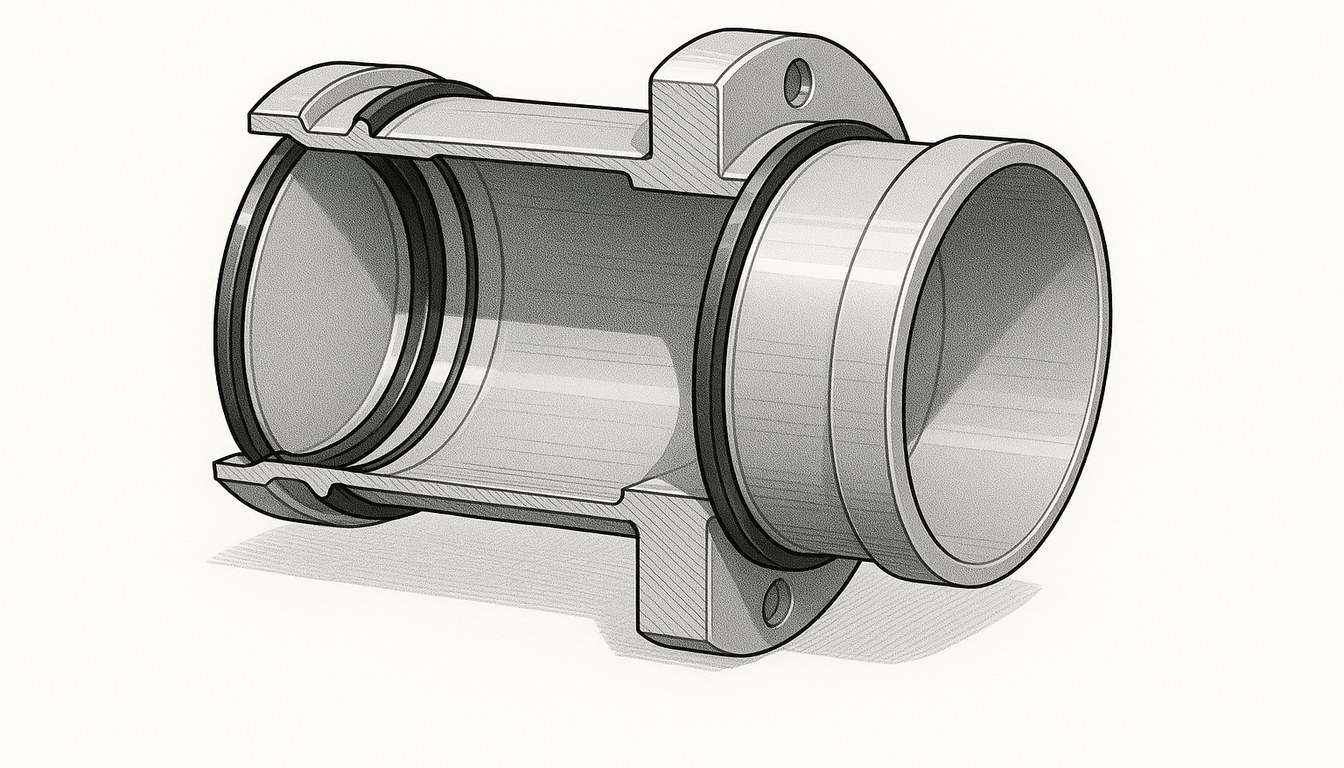
The best duct sealing starts before installation. Precision-molded duct fittings with tight dimensional tolerances and designed sealing surfaces reduce leakage at connections without relying entirely on field-applied sealant. HVACore injection-molded duct connectors and elbows are manufactured to ±0.2mm tolerances on mating surfaces, with integrated gasket seats for O-ring or foam seal installation.
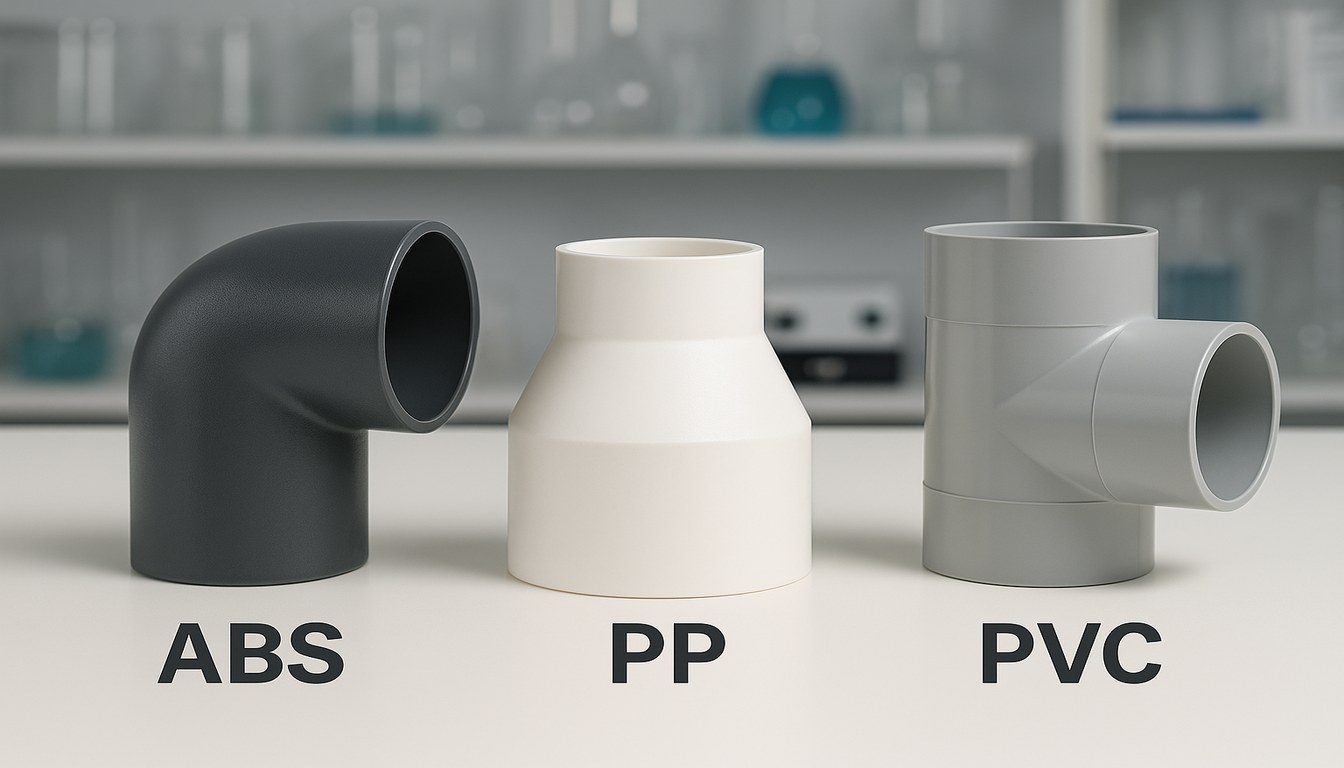
Our fittings are produced from UV-stabilized ABS and PP, dimensionally stable under HVAC operating temperatures (-20°C to 80°C). Each fitting design goes through DFM review and mold flow analysis before tooling, ensuring consistent wall thickness and no sink marks that could compromise sealing surfaces. Production parts are inspected at incoming, with CMM spot checks on sealing dimensions every 500 parts.
“HVACダクトシーリングガイド:方法、コスト、投資収益率”True
Field sealant application quality varies with installer skill, surface preparation, and environmental conditions. Precision-molded fittings with ±0.2mm tolerance on mating surfaces establish a baseline fit that limits leakage even without sealant — making them more reliable than loose-tolerance fittings that require heavy sealant to bridge dimensional gaps. For commercial installations, precision fittings reduce warranty callbacks and pass duct leakage tests more consistently.
“Any plastic duct fitting will perform equally well in outdoor or attic HVAC applications.”False
Outdoor and attic applications expose duct fittings to UV radiation, thermal cycling from -20°C to 80°C, and potential moisture. Standard ABS without UV stabilizers yellows and becomes brittle within 2–5 years. UV-stabilized ASA or PP formulations maintain mechanical properties and color stability for 10–15 years in these conditions. Specifying the wrong material — or accepting cheap fittings without UV certification — leads to premature cracking and leakage.
Frequently Asked Questions
プロフェッショナルなダクトシーリングの費用はいくらで、投資収益率(ROI)はどのくらいですか?
Professional duct sealing typically costs $500–$2,000 for a residential system and $2,000–$10,000 for commercial, depending on system size and accessibility. The ROI is excellent: Energy Star estimates 10–20% savings on HVAC energy costs. For a home spending $2,000/year on heating and cooling, savings of $200–$400/year produce a payback of 2–5 years. Commercial systems with long unconditioned duct runs often see payback under 2 years. DIY sealing with mastic on accessible ducts costs $50–$200 in materials and can achieve 50–80% of the benefit of professional service.
シーリング前にダクト漏れをテストする方法はありますか?
Yes. A duct blower door test (also called a duct pressurization test) measures total duct leakage in CFM at a standard 25 Pascal test pressure. The test takes 1–2 hours, costs $150–$400, and identifies whether sealing will be cost-effective. Most HVAC contractors with energy efficiency focus offer this service. Smoke pencil or theatrical fog testing can locate specific leak points visually. Thermal imaging (infrared camera) during system operation identifies large leaks by temperature differential. Contact HVACore to learn how our precision-molded duct fittings and connectors contribute to lower duct leakage and better system efficiency.
ダクトを自分で密封できますか、また必要な材料は何ですか?
Yes, DIY duct sealing is practical for accessible ducts in basements, crawlspaces, and mechanical rooms. You need: water-based mastic sealant ($15–$25/quart), a paintbrush or foam brush, disposable gloves, and fiberglass mesh tape for gaps wider than 1/4 inch. Clean all surfaces before applying mastic — remove dust, oil, and old tape. Apply a generous coat (1/8-inch thick) covering the entire seam and extending 2 inches onto adjacent surfaces. For ducts in unconditioned spaces, add R-6 or R-8 duct insulation after sealing for maximum energy savings.
新しいダクトの設置でもまだシーリングが必要ですか、それとも漏れは古いシステムだけの問題ですか?
New installations frequently have significant leakage if not specifically sealed during installation. Studies show new residential duct systems average 15–25% leakage before any field correction. Commercial systems with extensive shop-fabricated sections can be better, but field-installed connections at takeoffs and registers are often inadequately sealed. Energy codes now require duct leakage testing in many jurisdictions for new construction. Specifying precision-fit duct fittings and requiring mastic sealing at all connections during installation is far less expensive than remediation after the building is occupied.
HVACoreは、さまざまなHVAC用途に対してどのようなダクトフィッティング材を推奨していますか?
For interior conditioned-space applications, standard ABS provides good dimensional stability and cost-effectiveness. For attic, crawlspace, or any outdoor-exposed applications, UV-stabilized ASA or PP is required — standard ABS degrades within 2–5 years under UV. For high-temperature applications near heat exchangers or where discharge air exceeds 60°C, glass-filled PP or PC/ABS provides the necessary heat deflection temperature. Contact HVACore with your application temperature range, UV exposure, and required pressure class for a material recommendation and duct fitting specification. Contact HVACore to learn how our precision-molded duct fittings and connectors contribute to lower duct leakage and better system efficiency.
-
HVAC (Heating, Ventilation, and Air Conditioning) refers to systems for maintaining indoor temperature, humidity, and air quality. Duct sealing is one of the highest-ROI maintenance activities in any HVAC installation. ↩
-
A duct is a conduit used to distribute conditioned air from the HVAC unit to occupied spaces, fabricated from galvanized steel, fiberglass, or injection-molded plastic. ↩
-
Duct fittings are the connectors, elbows, tees, and collars used to join duct sections and route conditioned air through a building. Precision-molded fittings with tight tolerances reduce leakage at connections by design. ↩





