– Standard ABS and unstabilized Polypropylene will chalk, yellow, and become brittle within 12–24 months of outdoor exposure.
– ASA (Acrylonitrile Styrene Acrylate) is the industry “gold standard” for opaque, aesthetic outdoor HVAC housings.
– For black functional parts, Carbon Black is the most effective and cost-efficient UV stabilizer available.
– Material selection must align with UL 746C “f1” ratings, certifying the resin retains mechanical properties after UV and water immersion.

What is Weatherability in Outdoor HVAC Components?
In the context of outdoor HVAC components—like rooftop units (RTUs), mini-split condensers, and exhaust cowls—weatherability is not just about color retention. It is a structural requirement.
When standard plastics are exposed to solar radiation, the UV energy excites the molecular bonds. If the bond energy is lower than the UV energy, the polymer chains break (scission). This process, known as polymer degradation, manifests initially as "chalking" (a white powdery surface) and yellowing. However, the real danger is the loss of impact strength. A degraded fan shroud might shatter when a technician simply leans on it or when hail hits it.
Material Analysis: The Best Candidates for Exterior Applications
In my years managing HVAC supply chains and molding floors, we categorize outdoor materials into three tiers based on cost and performance.
| Material | UV Stability | Impact Strength | Cost | Typical HVAC Application |
|---|---|---|---|---|
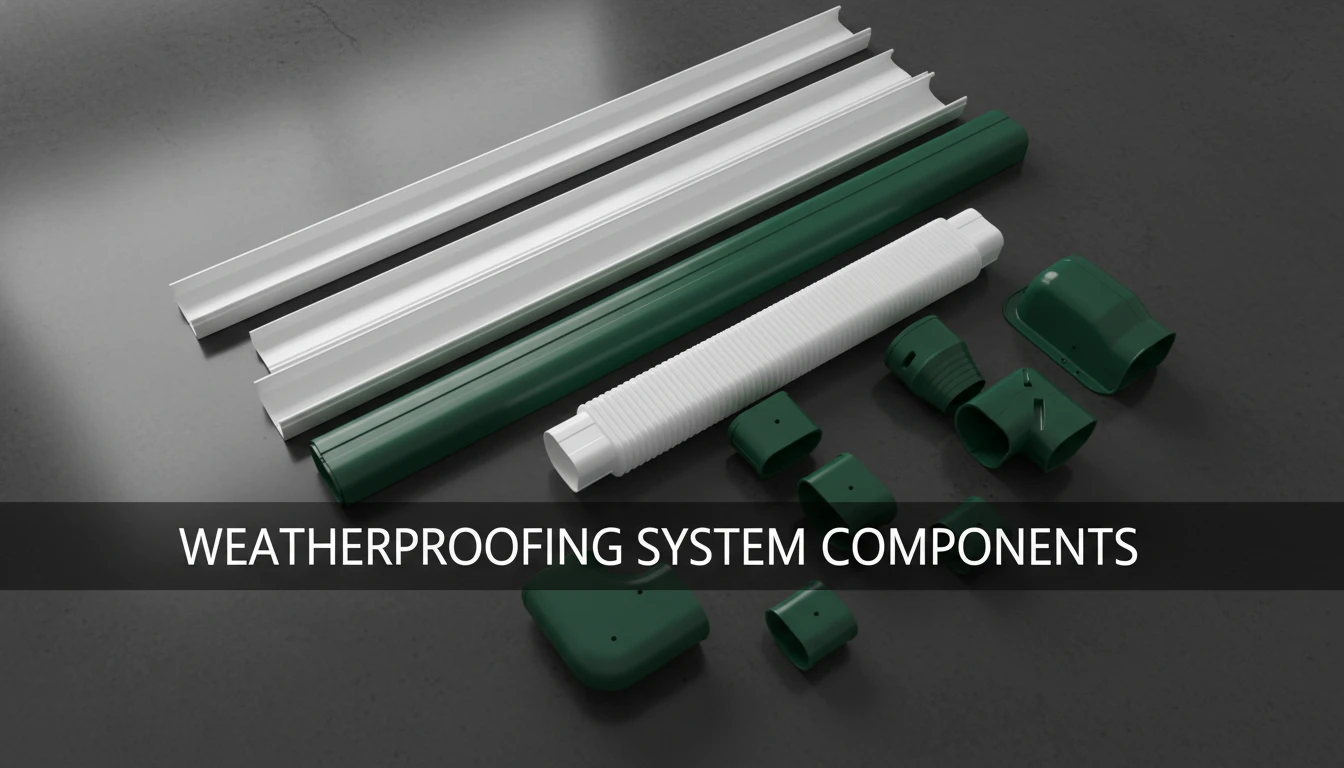
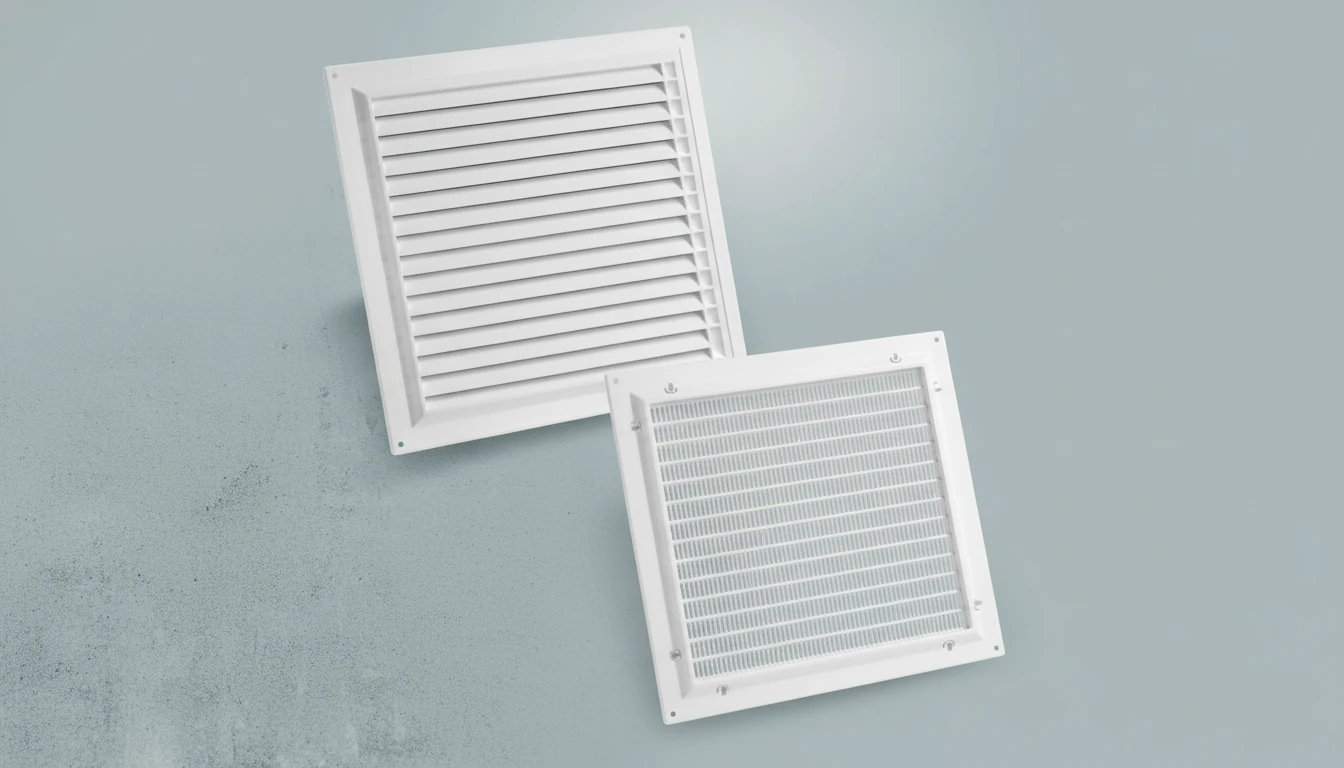
| ASA (Acrylonitrile Styrene Acrylate) | Excellent (Native) | High | High | Exterior aesthetic covers, display housings, white/beige grilles. |
| PC (Polycarbonate) UV-Stabilized | Very Good (Additives) | Very High | High | Transparent valve covers, rugged control boxes, structural clips. |
| PP (Polypropylene) + UV Package | Good (Additives) | Medium | Low | Condenser fan blades, internal rain shields, base pans (Black). |
| PVC (Polyvinyl Chloride) | Good (Titanium Dioxide) | Medium | Low | Line set covers, drainage pipes. |
| Standard ABS | Poor | High (initially) | Medium | DO NOT USE for outdoor exposure. |
Deep Dive: The ASA vs. Polycarbonate Debate
One of the most common questions I get from design engineers is: "Should we use ASA or UV-stabilized PC for the control panel cover?"
Here is the factory floor reality of ASA vs Polycarbonate:
1. ASA (The Weather Expert):
ASA is chemically similar to ABS, but the butadiene rubber (which is prone to UV attack) is replaced with acrylate rubber.
- Pros: It doesn’t just resist fading; it resists becoming brittle. It molds easily with a finish that looks premium (high gloss or nice matte). It is inherently UV stable, meaning the stability is in the polymer backbone, not just an additive.
- Cons: It is softer than PC. It doesn’t have the "bulletproof" impact resistance of PC.
2. Polycarbonate (The Tough Guy):
Standard PC turns yellow and crazes (micro-cracks) quickly in the sun. You must HALS(ヒンダードアミン光安定剤)は、自己再生によって機能します。 — 真.
- Pros: Incredible impact resistance. If you live in hail-prone regions (like Texas), PC is safer.
- Cons: Even with stabilizers, clear PC will eventually haze. It is harder to mold (high stress) and more expensive than ASA.
Verdict: For opaque housings (white/grey/beige), I always recommend ASA. It holds color for 10+ years. For transparent windows or parts taking heavy abuse, use UV-stabilized PC.
Simply dyeing plastic black does not make it UV resistant. It must contain specific Carbon Black particle sizes (typically 2–2.5%) which act as effective UV absorbers to protect the polymer matrix.
ASA is designed to be molded-in-color. Unlike ABS, which requires expensive automotive-grade painting to survive outside, ASA provides a finished, weatherable surface directly from the mold, saving significant manufacturing costs.
Process Insight: UV Resistant Injection Molding Challenges
Molding weatherable plastics introduces specific challenges on the factory floor.
1. Masterbatch vs. Pre-Compounded Resin
For components like Polypropylene fan guards, we often use a "Salt and Pepper" mix—natural resin pellets mixed with a UV masterbatch (concentrated pellets) at the hopper.
- The Risk: If the screw back pressure isn’t high enough, the UV stabilizer doesn’t disperse evenly. You get "zebra stripes" of unprotected material.
- The Fix: For critical parts like fan blades, I mandate pre-compounded resin. The supplier mixes the UV stabilizer into the pellet. It costs more, but it guarantees every cubic millimeter of the part is protected.
2. The "f1" Rating Constraint
When selecting materials for UL-listed HVAC equipment, the datasheet must carry a UL 746C "f1" rating. This means the material has passed:
- UV exposure tests (720 hours Xenon Arc or similar).
- Water immersion tests (7 days at 70°C).
- After exposure, the material must retain at least 50% of its tensile and impact strength.
- Factory Tip: Never substitute a non-f1 material without recertifying the unit. It is a major compliance violation.
Advantages and Disadvantages of Weatherable Engineering Plastics
| Feature | Advantages | Disadvantages |
|---|---|---|
| Aesthetics | Maintained brand image (no "yellowed junk" on roofs). | High-performance UV resins (like ASA) cost 20–30% more than standard ABS/PP. |
| Durability | Prevents catastrophic brittle failure during service/hail. | Some UV additives (like certain HALS) can interfere with other additives (like flame retardants). |
| Maintenance | Surfaces resist chalking, making them easier to clean. | Limited vibrant color availability for pre-compounded UL-rated grades. |
Practical Tips for HVAC Designers
- Avoid Sharp Corners: UV degradation starts at the surface and works its way down. If you have a sharp corner, it acts as a stress concentrator. As the surface becomes micro-brittle, a crack will initiate at the corner and propagate through the healthy material underneath. Always use generous radii.
- Texture Hides Sins: A high-gloss finish shows chalking and hazing immediately. A heavy EDM texture (MT-11020 or similar) hides the initial signs of weathering and diffuses reflections.
- Wall Thickness: In weatherable plastics, the outer 0.5mm is the "sacrificial layer." I recommend increasing wall thickness by 10–15% for outdoor parts compared to indoor parts. This ensures that even after years of surface degradation, there is enough "virgin" core material to hold the structural load.
Lab tests are comparative, not absolute. 1,000 hours in a chamber does not mathematically equal 'X' years in Arizona. Real-world factors like acid rain, thermal shock, and pollution also accelerate degradation.
現代のAHUにおける高度なプラスチック部品の重要な役割を発見し、金属のような従来の材料よりも効率と耐久性を向上させます。.

FAQ: Weatherable Plastics in HVAC
Why did my PVC line set cover turn pink?
This is a classic issue known as "pinking." It usually happens when the Titanium Dioxide ($TiO_2$) used as a white pigment reacts with certain antioxidants or HALS in the formulation under wet/humid conditions. It requires adjusting the stabilizer package.
Can I paint ABS to make it UV resistant?
Yes, this is how the automotive industry does it. However, in HVAC manufacturing, painting adds a massive cost (primer + paint + drying oven + VOC controls). Switching to ASA is almost always cheaper than molding ABS and painting it.
Is Carbon Black the best UV protection?
For black parts, yes. Carbon black absorbs UV radiation and converts it to minute amounts of heat, preventing it from attacking the polymer. A 2.5% loading of fine-particle carbon black is the most effective protection known for Polyethylene and Polypropylene.
Does flame retardancy affect UV stability?
Yes. Many flame retardants (especially brominated ones) have poor UV stability and will cause the plastic to yellow rapidly, even if UV stabilizers are added. You must select a "UV stable FR" grade, which limits your material choices significantly.
What is the difference between "UV Stabilized" and "UV Resistant"?
"UV Resistant" usually implies the polymer is naturally stable (like Acrylic or Fluoropolymers). "UV Stabilized" means the base polymer (like PP or PC) would naturally degrade, but additives have been put in to slow that process down.
Technical Summary
For outdoor HVAC components, material selection is the first line of defense against premature failure. While standard ABS and PP are cost-effective for indoor parts, they fail rapidly under solar radiation due to polymer degradation. For aesthetic housings, ASA offers the best balance of toughness and color retention without painting. For structural, impact-prone parts, UV-stabilized Polycarbonate is required. For black functional components, carbon-black-filled Polypropylene provides excellent protection at a low cost. Always verify the UL 746C "f1" rating to ensure the material is certified for wet, outdoor environments.