
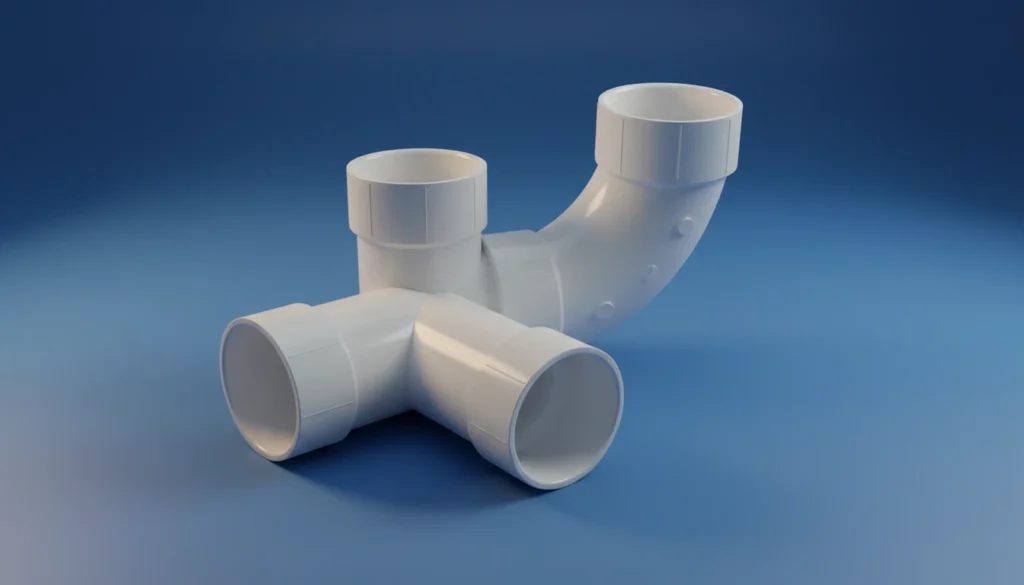
I have stood in mechanical rooms with frustrated technicians staring at a brand-new high-efficiency furnace that refuses to stay lit. The pressure switch keeps tripping. The inducer motor is screaming. They check the intake, the exhaust, the drain trap—everything looks clear.
Then I look up at the PVC venting. It’s a snake of tight, sharp corners.
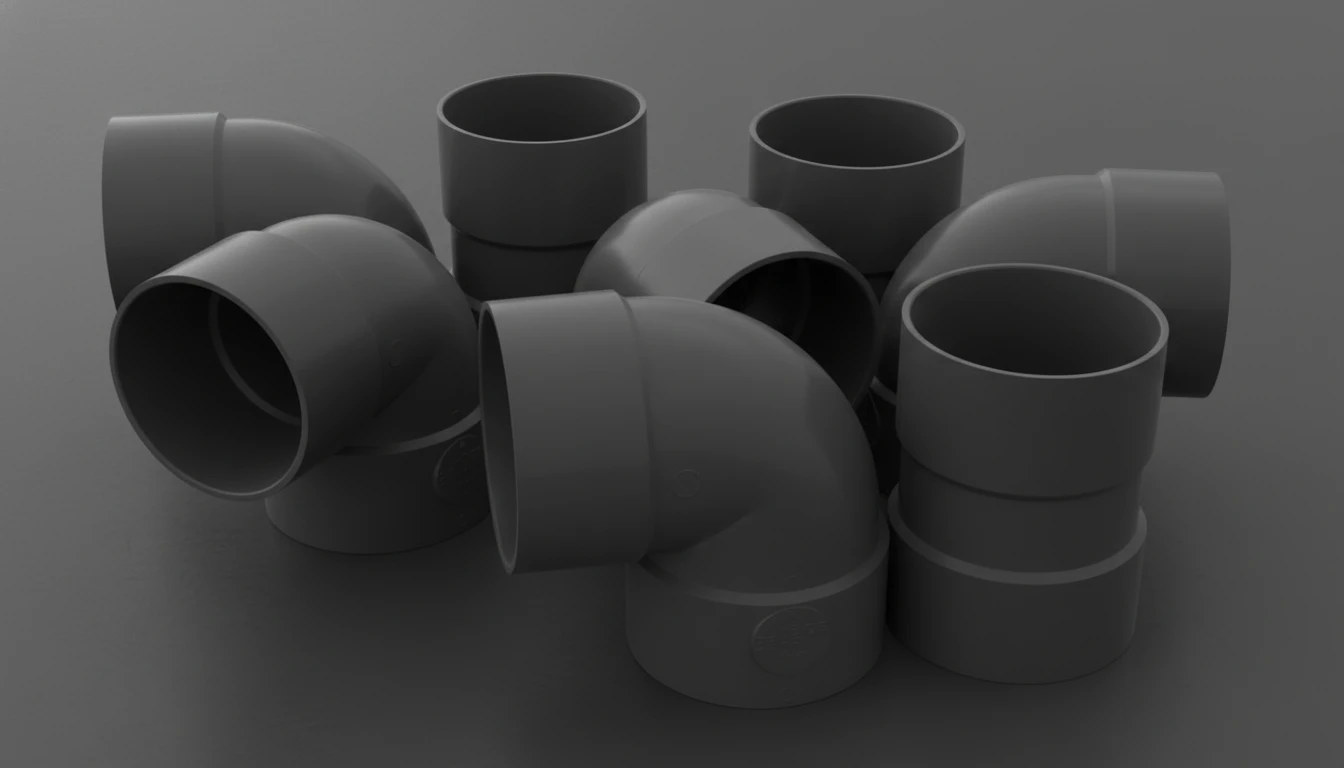
In HVAC plastic component manufacturing, we mold fittings for different fluid dynamics. A "Short Turn" or "Vent Elbow" is designed to fit in a tight wall cavity for plumbing drains. A "Long Sweep," however, is designed for flow. When you use the wrong venting elbow types on a combustion exhaust line, you aren’t just changing the look; you are suffocating the furnace.
This article breaks down the engineering reality of long sweep vs short turn 90 fittings, explaining friction loss calculations and why proper PVC fitting selection is critical for maintaining correct furnace static pressure.
Key Takeaways
- "Equivalent Length" is the standard metric: a single fitting adds as much friction as several feet of straight pipe.
- Short Turn elbows create high turbulence, drastically increasing backpressure on the inducer motor.
- Long Sweep elbows reduce friction loss by nearly 40% compared to standard elbows.
- Improper fitting selection is a leading cause of nuisance pressure switch trips on long vent runs.
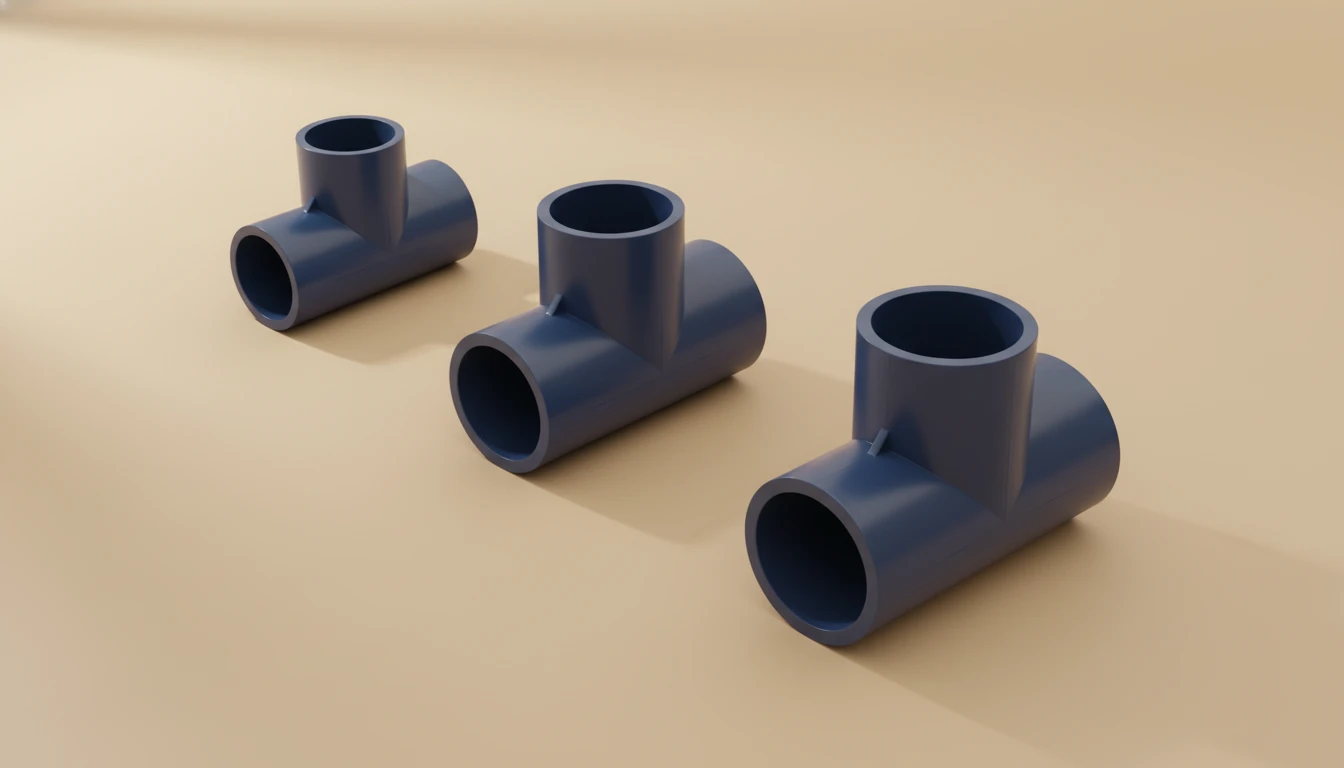
Definition: What is "Equivalent Length"?
In HVAC and fluid mechanics, we don’t just measure the physical length of the pipe. We measure the resistance to airflow.
Every time air hits a corner, it tumbles, compresses, and creates eddy currents (turbulence). This resistance is quantified as Equivalent Length.
- Physical: The elbow is 4 inches wide.
- Equivalent: The elbow creates as much resistance as 5 feet of straight pipe.
Key Parameters: Long Sweep vs. Short Turn
The difference isn’t just aesthetic; it’s geometric. As manufacturers, we use different mold cores for these. The "sweep" refers to the radius of the curve relative to the pipe diameter.
| Parameter | Short Turn / Vent 90 | Standard Pressure 90 | Long Sweep 90 |
|---|---|---|---|
| Radius | Tight (Sharp corner) | Medium | Wide/Gradual |
| Typical Eq. Length (3" Pipe) | 8–12 feet | 5 feet | 2.5–3 feet |
| Primary Design Use | Tight plumbing stacks | Water pressure lines | High-velocity airflow / Solids |
| 可用性 | High (Vena contracta effect) | Moderate | Low (Laminar flow) |
| HVAC Suitability | Avoid | Acceptable | Preferred |
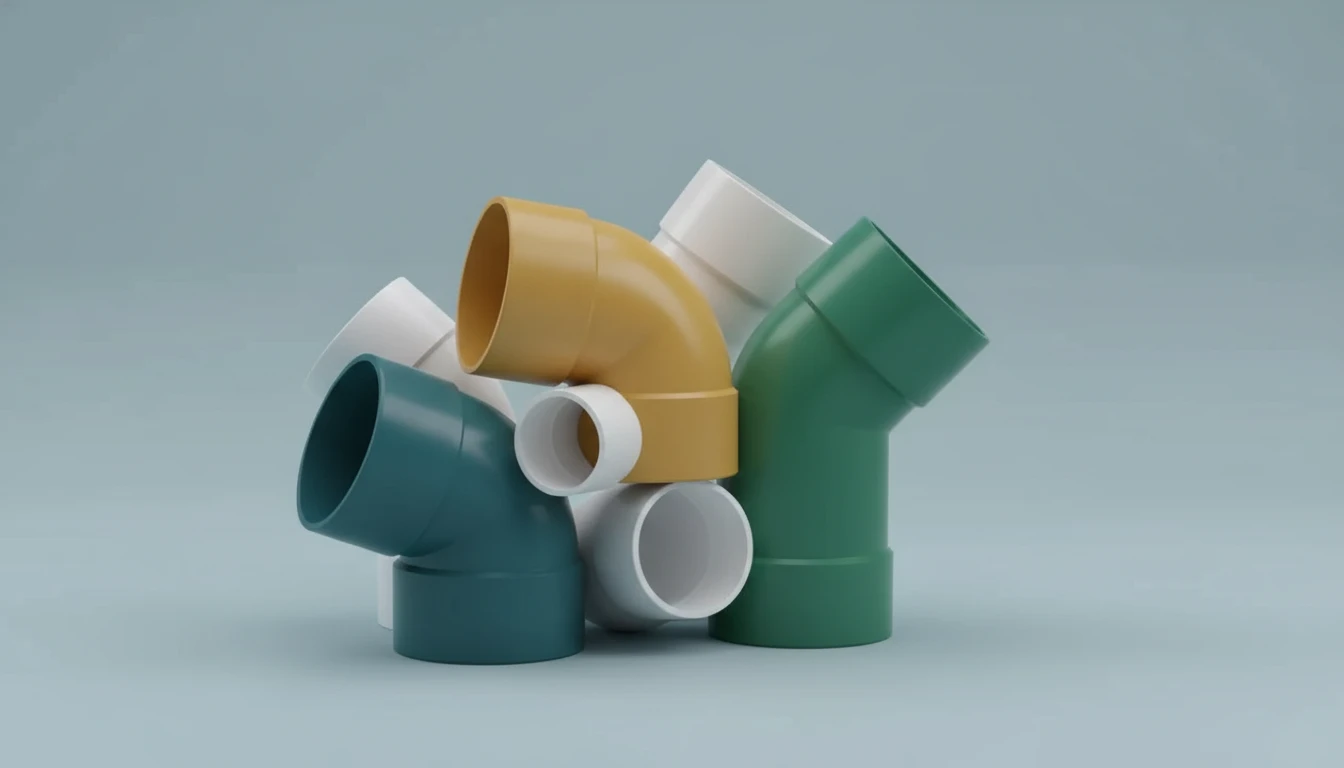
Engineering Analysis: The Physics of Airflow Friction
When we design molds for these parts, we simulate flow.
The Short Turn Problem
In a short turn elbow (often called a "hard 90"), the air slams into the back wall of the fitting. It bounces off, creating a high-pressure zone at the impact point and a vacuum (low pressure) zone on the inside radius. This effectively narrows the pipe diameter.
- Result: The inducer motor has to work harder to push the exhaust gases past this "air dam."
The Long Sweep Advantage
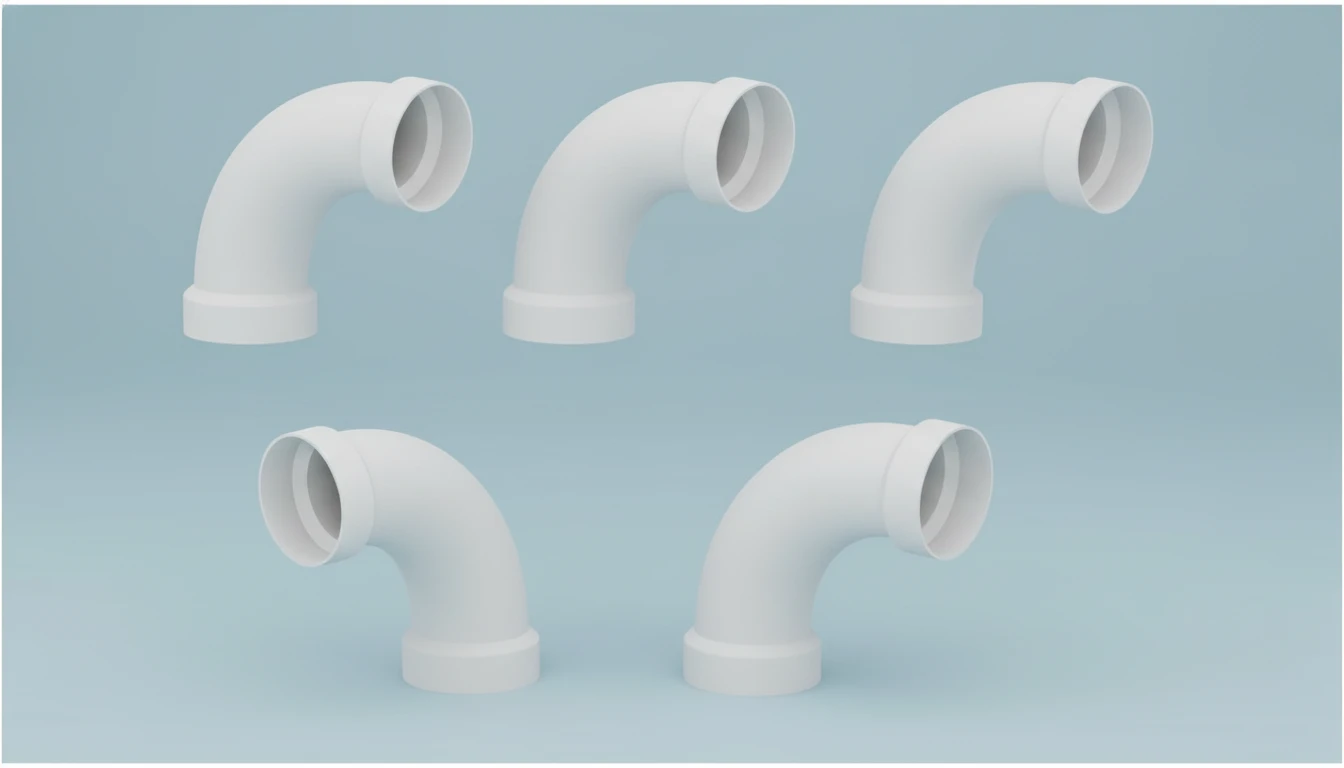
A long sweep elbow gently guides the air. The radius is usually 1.5x to 2x the pipe diameter. This maintains near-laminar flow, meaning the air layers slide past each other smoothly rather than crashing into each other.
- Result: significantly reduced HVAC airflow friction.
Myth vs. Fact: Fitting Selection
This is a dangerous generalization. While many manuals use 5 feet as a 'standard' placeholder, a sharp 'vent 90' can actually equal 10+ feet of resistance, while a long sweep might only be 2.5 feet. Always verify the specific equivalent length table in the manufacturer's installation manual.
Street elbows are notoriously restrictive. Because the male end must fit *inside* another fitting, the internal diameter is often reduced or the turn is extremely tight. They add massive friction and should be avoided in max-length vent runs.
Real Production Scenario: Calculated Failure
I recall a troubleshooting case involving a 100,000 BTU furnace.
- Max Vent Length Allowed: 70 equivalent feet (3" PVC).
- Physical Run: 50 feet of straight pipe.
- Fittings: The installer used 6 elbows to route around a complex joist system.
Scenario A: Installer used Short Turn / "Vent" Elbows
- Pipe: 50 ft
- Fittings: 6 elbows × 10 ft (approx. for short turn) = 60 ft
- Total: 110 equivalent feet.
- Result: The system is 40 feet over the limit. The pressure switch fails to close. Furnace locks out.
Scenario B: Installer used Long Sweep Elbows
- Pipe: 50 ft
- Fittings: 6 elbows × 3 ft = 18 ft
- Total: 68 equivalent feet.
- Result: The system is under the limit. The furnace runs perfectly.
Advantages and Disadvantages
| Feature | Long Sweep Elbows | Short Turn / Standard 90s |
|---|---|---|
| Efficiency | Excellent. Minimal friction loss. | Poor. High friction/turbulence. |
| Space Required | High. Requires a larger turning radius (harder to hide in joists). | Low. Fits in tight corners. |
| Cost | Slightly higher (more material, larger mold). | Commodity pricing (very cheap). |
| Availability | 促進する. | Available everywhere. |
Practical Tips for Installers
- Read the Hub: Look at the molding marks. "DWV" (Drain Waste Vent) fittings often have longer sweeps than "Pressure" fittings, but not always. Visually inspect the curve. If it looks like a hard corner, don’t use it for long runs.
- Two 45s > One 90: If you can’t find a long sweep 90, use two 45-degree elbows separated by a short nipple. Two 45s generally create less friction/turbulence than a single standard 90.
- The Intake Matters Too: Mechanics often prioritize the exhaust pipe because of safety, but the combustion air intake is also subject to friction limits. If the intake is choked by short turn elbows, the burner will starve for oxygen, leading to poor combustion or soothing.
Common HVAC Application Scenarios
1. Long Horizontal Runs
When venting out the side of a large commercial building or a sprawling ranch home, you are fighting every foot of resistance. Long sweeps are mandatory here to stay within the blower’s capability.
2. Tight Mechanical Closets
Ironically, where you need short turns the most (for space) is often where you can’t afford them. If the furnace is in a central closet, the vent run is likely long (to get to the roof or sidewall). You must plan the framing to accommodate the larger radius of long sweeps.
3. concentric Vent Kits
Many manufacturers supply a "concentric vent" (a pipe within a pipe). These kits act as the termination. Note that the resistance of this kit is often already calculated as a fixed number (e.g., "deduct 10 feet from total length"). Do not double count the elbows inside the kit.

Stepwise Recommendations for Vent Design
- Consult the Manual: Open the "Vent Sizing" section of the specific furnace manual. Locate the "Equivalent Length" table.
- Map the Route: Count the physical feet of pipe and the number of required turns.
- Do the Math First: Calculate the total equivalent length using standard elbows.
- Upgrade if Needed: If you are within 15% of the maximum allowable length, switch all 90s to long sweep elbows. This provides a safety margin for the inducer motor as it ages and bearings wear.
- Assembly: When cementing long sweeps, ensure the pipe is fully bottomed out. The deeper sockets on some pressure fittings can deceive you into thinking they are seated when they aren’t, creating an internal ridge that disturbs airflow.
Frequently Asked Questions (FAQ)
1. Can I mix long sweep and short turn elbows in the same run?
Yes. You just need to calculate the math correctly. You might use short turns near the furnace where space is tight, and long sweeps in the attic where space is open, to save on total friction.
2. Is a "Sanitary Tee" okay for venting?
Generally, no. Sanitary Tees are for liquid drainage. For airflow, they create massive turbulence if used as a corner. Use directional fittings like Y-fittings or elbows.
3. Does pipe diameter affect the choice of elbow?
Yes. The larger the pipe (e.g., 3" vs 2"), the larger the physical radius of the sweep. However, the ratio of friction stays similar. A 3" long sweep is still more efficient than a 3" short turn.
4. How do I identify a "Long Sweep" in the store?
Look for ASTM D2665 (DWV) markings, but rely on your eyes. A long sweep has a curvature that looks like a gentle slide. A short turn looks like a hard corner. If you can put your fist inside the curve and it feels sharp, it’s a short turn.
5. Why don’t manufacturers just include long sweeps with the furnace?
Cost and logistics. Every installation is different. Also, manufacturers don’t make the pipe; they just certify the appliance. It is up to the installer to select the correct PVC fitting selection based on the specific site conditions.
Technical Summary
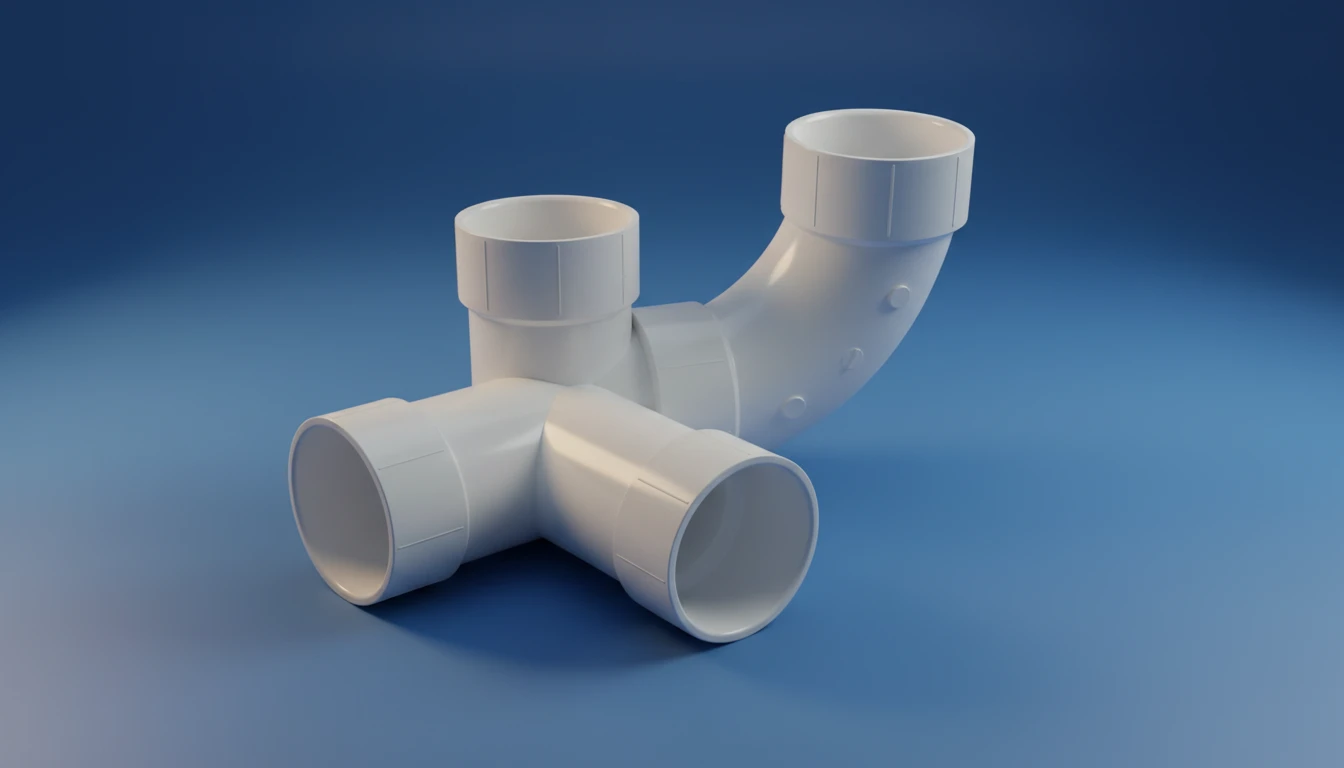
In high-efficiency HVAC venting, furnace static pressure is a finite resource provided by the inducer motor. Every fitting consumes a portion of this pressure. While short turn elbows are space-efficient, they generate significant turbulence, carrying a high "equivalent length" penalty (often 8–10 feet). Long sweep elbows facilitate laminar flow, 当社の技術革新でHVAC効率を革新.





