
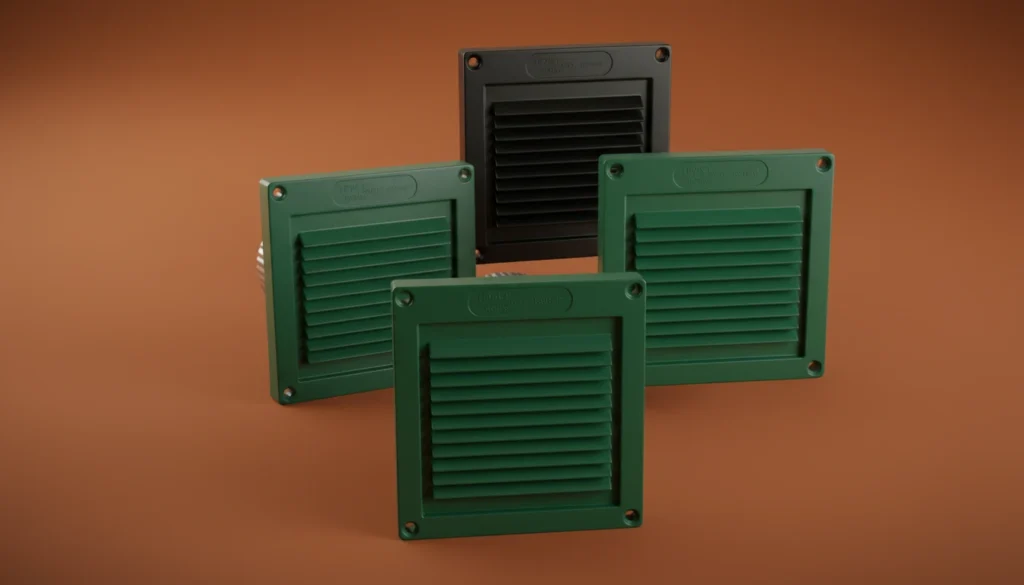
In the HVAC industry, material failure doesn’t just mean a broken part; it can mean a fire hazard propagating through a building’s air distribution system. As a technical lead who has sat through grueling UL audits and managed the production of safety-critical components, I know that UL 94 plastic ratings are not just administrative checkboxes—they are the baseline for liability and safety.
Designing and molding for HVAC flammability standards introduces significant manufacturing headaches. Flame retardant (FR) additives change the rheology of the plastic, corrode molds, and narrow the processing window.
Below is a practitioner’s guide to understanding and manufacturing with UL 94 compliant plastics, specifically tailored for the HVAC environment.
– UL 94 V-0 is the industry standard for HVAC control boxes and electrical enclosures; it requires the flame to self-extinguish within 10 seconds.
– Flame retardant additives (halogens or phosphorus) make plastics more brittle and abrasive to mold tooling.
– Using a UL-rated resin does not automatically guarantee the *part* is compliant; processing conditions and wall thickness affect the final rating.
– UL 5VA is stricter than V-0 and is often required for large plastic housings containing high-voltage components.
What Is UL 94 in the Context of HVAC?
UL 94 is the Standard for Safety of Flammability of Plastic Materials for Parts in Devices and Appliances. It tests how a plastic specimen responds to a small open flame.
In HVAC, we are primarily concerned with preventing a small electrical fire (like a shorted capacitor on a control board or an overheated fan motor) from igniting the plastic housing and spreading into the ductwork.
There are two main orientations we test:
- Horizontal Burn (HB): The lowest rating. The fire burns slowly but may not extinguish itself. Used for cosmetic covers away from heat sources.
- Vertical Burn (V-2, V-1, V-0, 5VA): The standard for internal HVAC parts. The plastic must self-extinguish against gravity.
Key Parameters: Understanding the Ratings Hierarchy
When selecting materials for HVAC safety compliance, you will encounter these ratings. Here is how they compare in a practical setting.
| Rating | Burning Orientation | Self-Extinguish Time | Drips Allowed? | HVAC Application Example |
|---|---|---|---|---|
| HB | Horizontal | Slow burn rate | Yes | External decorative covers, non-electric parts. |
| V-2 | Vertical | < 30 seconds | Yes (Flaming) | Cable ties, small clips (rarely used in critical areas). |
| V-1 | Vertical | < 30 seconds | No Flaming Drips | Some internal mounting brackets. |
| V-0 | Vertical | < 10 seconds | No Flaming Drips | Control boards, terminal blocks, fan housings. |
| 5VA | Vertical | < 60 sec (aggressive) | No | Large polymer enclosures, furnace surroundings. |
Myth vs. Fact: Flammability
V-0 only means the material will self-extinguish within a specific time after the ignition source is removed. If exposed to a continuous large fire, it will eventually burn and melt.
The final blend must be certified. Mixing additives on the factory floor creates an 'unrecognized' material unless you perform full UL testing on the final compound.
What Are the Real Manufacturing Challenges with FR Plastics?
Switching from standard ABS or PP to ブロワホイール: grades (like FR-ABS or FR-PC/ABS) drastically changes the production reality. Here are the issues I encounter on the factory floor:
1. The "Gas Trap" & Corrosion Issue
Flame retardants (especially brominated ones) release corrosive gases when heated.
- The Problem: These gases get trapped in the mold vents. Over time, they combine with moisture to form acids that eat away at the mold steel. I have seen polished mold cavities turn hazy and pitted in less than a week of production.
- The Fix: We must use corrosion-resistant steels (like Stavax or 420 Stainless) and plate the mold with chrome or nickel. We also have to clean the vents every single shift.
2. Processing Sensitivity
FR additives are thermally sensitive. If you overheat the material in the barrel, the additives degrade.
- The Result: "Splay" marks (silver streaks) on the part surface or a significant drop in impact strength.
- Experience: On a project for an HVAC drain pan using FR-PP (Polypropylene), we found that running the screw speed too high generated too much shear heat, degrading the FR package. The parts looked fine but failed the flammability lab test. We had to slow the cycle time down to preserve the chemistry.
3. Wall Thickness Dependency
A material is rated V-0 at a specific thickness.
- The Trap: A resin might be V-0 at 3.0mm but only V-2 at 1.5mm.
- Design Note: If you thin out a wall to save weight, you might lose the safety rating. I always check the "Yellow Card" (UL datasheets) to verify the minimum thickness rating before cutting steel.
What Are the Advantages and Disadvantages of V-0 Rated Plastics?
| Feature | Advantages | Disadvantages |
|---|---|---|
| Safety | Prevents fire propagation; mandatory for electrical proximity. | Brittleness: FR additives often reduce impact strength and elongation. |
| Compliance | Essential for passing UL 1995 (Heating & Cooling Equipment) safety standards. | Density: FR plastics are heavier (higher specific gravity), increasing part weight. |
| Market Access | Required for selling into commercial buildings and high-rise residential. | Cost: FR resins can cost 20-50% more than general-purpose grades. |
| Stability | Some FR mineral fillers increase dimensional stability (less warpage). | Recyclability: FR additives complicate recycling; regrind usage is strictly limited by UL. |
Myth vs. Fact: UL Ratings
Plenum spaces usually require compliance with UL 2043 (smoke and heat release), which is a much stricter standard than UL 94. A V-0 rating alone is often insufficient for plenum use.
UL generally permits up to 25% regrind by weight, provided the regrind is from the exact same molding process and material grade, without losing the flammability rating.
Practical Tips for Factory Implementation
- Dedicated Barrels: If possible, do not run clear Polycarbonate (PC) in the same machine used for FR-ABS without a massive purge. The FR residue will cause black specks and hazing in the clear parts for days.
- Vent Like Crazy: In mold design, increase venting depth to the maximum allowable (without flashing) to let the corrosive gas escape. If the gas stays in the tool, it burns the plastic (dieseling).
- Check the Yellow Card: Always request the official UL Yellow Card from your supplier. Verify the RTI (Relative Thermal Index). Just because it is V-0 doesn’t mean it can handle the continuous heat of a furnace environment.
Common HVAC Application Scenarios
- Electronic Control Enclosures: almost exclusively V0 rated plastics (FR-ABS or FR-PC).
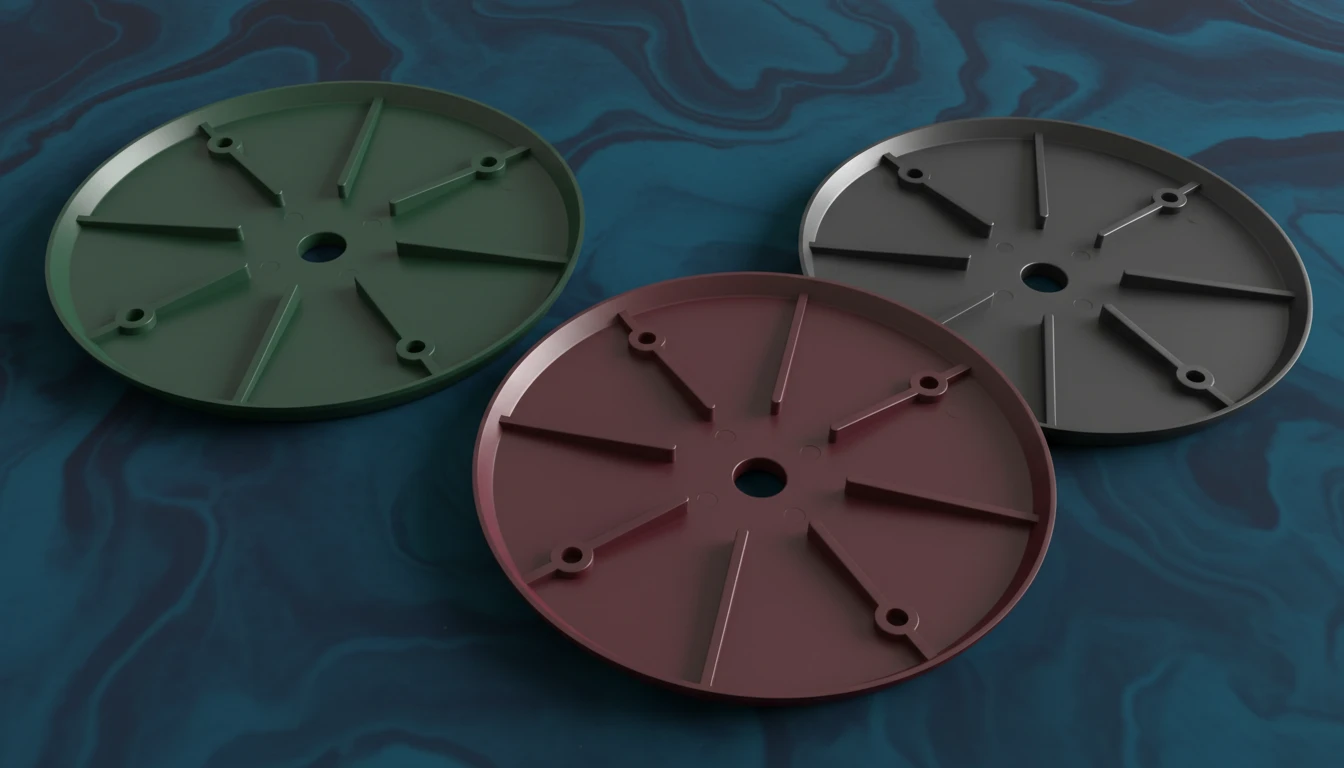
- Condensate Pans: Often require 5VA if they are in close proximity to electric heating elements.
- Blower Wheels: 2023年のトップHVAC革新:あなたの快適さを変える.
- Wire Harness Connectors: Must be V-0 or V-2 (Polyamide 66).
Stepwise Manufacturing Recommendations
To ensure HVAC safety compliance in production:
- Material Selection: Match the UL 94 rating to the wall thickness of your design.
- Tooling Review: Ensure the mold steel is stainless (H13 is risky for long-term FR production). Review cooling lines—FR plastics need uniform cooling to prevent internal stress.
- Process Setup: Set barrel temperatures at the lower end of the supplier’s recommendation to prevent additive degradation.
- QC Testing: Perform periodic "flame bar" tests in-house. Mold a standard test bar every shift and subject it to a simple burn test to ensure the FR additive hasn’t been compromised by processing heat.
Frequently Asked Questions (FAQ)
1. What is the difference between V-0 and V-2?
Both self-extinguish within typically 30 seconds (V-0 is actually 10s). The main difference is dripping. V-2 allows flaming particles to drip off (which could ignite cotton below), whereas V-0 does not allow flaming drips. V-0 is safer and preferred for electronics.
2. Does UL 94 cover smoke generation?
No. UL 94 only covers flammability (how it burns). For smoke generation and flame spread in air ducts/plenums, you need UL 2043 or ASTM E84. Do not confuse these; a V-0 plastic can still produce massive amounts of toxic smoke.
3. Why is my FR plastic part brittle?
Flame retardants are essentially contaminants in the polymer matrix. High loadings of minerals or halogenated compounds interrupt the polymer chains, significantly reducing impact resistance. You may need an impact-modified FR grade.
4. What is a "Yellow Card"?
The Yellow Card is a proprietary datasheet issued by UL (Underwriters Laboratories) that certifies a specific plastic resin has passed testing for flammability, thermal indexing, and electrical properties.
5. Can I color a UL-rated plastic?
Be careful. Adding a masterbatch colorant can alter the flammability chemistry. You generally need to use a colorant that is also recognized or test the final colored part to ensure it still meets V-0 requirements.
Technical Summary
Achieving UL 94 compliance in HVAC manufacturing is a balancing act between safety, cost, and processability. While V-0 and 5VA ratings are non-negotiable for components near ignition sources, they impose strict constraints on molding parameters and tool maintenance. By utilizing corrosion-resistant tooling, managing shear heat, and respecting the limitations of V0 rated plastics, manufacturers can produce safe, compliant components that withstand the rigorous scrutiny of industry audits.





