
Continue productiecapaciteit
High-performance sealing solutions and flexible hoses engineered for HVAC systems with superior durability and precision manufacturing
Table of Contents
What are HVAC Seals & Flexible Hoses?
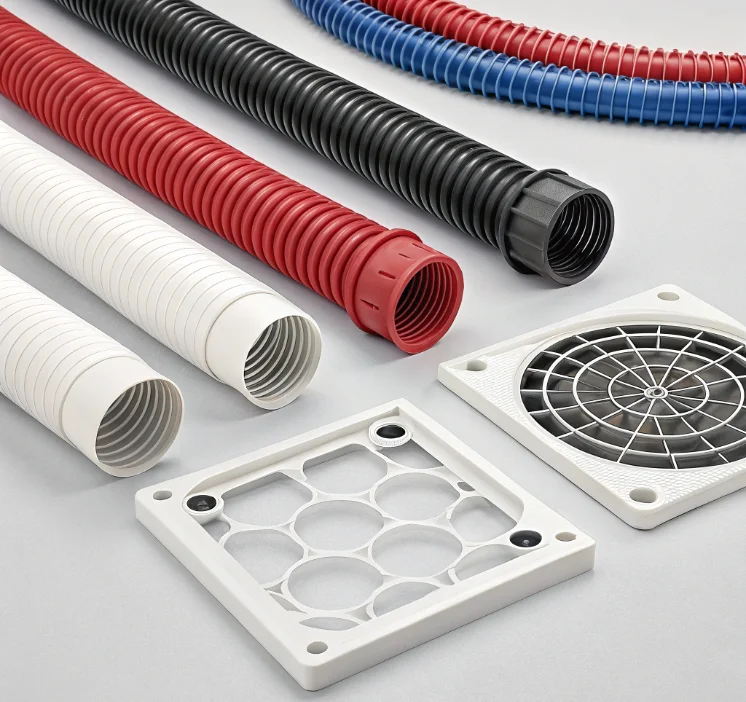
HVAC seals and flexible hoses are critical components that ensure the integrity and functionality of heating, ventilation, and air conditioning systems. Seals prevent air and refrigerant leaks at connection points, maintaining system efficiency and preventing energy loss. Flexible hoses provide essential connections between system components, accommodating thermal expansion, vibration, and misalignment while allowing for easier installation and maintenance. These components must withstand temperature extremes, pressure variations, and exposure to various chemicals, making material selection and manufacturing quality crucial for long-term reliability and performance.
Key Function: Leak Prevention → Flexible Connection → System Integrity → Longevity
Types & Functions
O-Rings and Gaskets
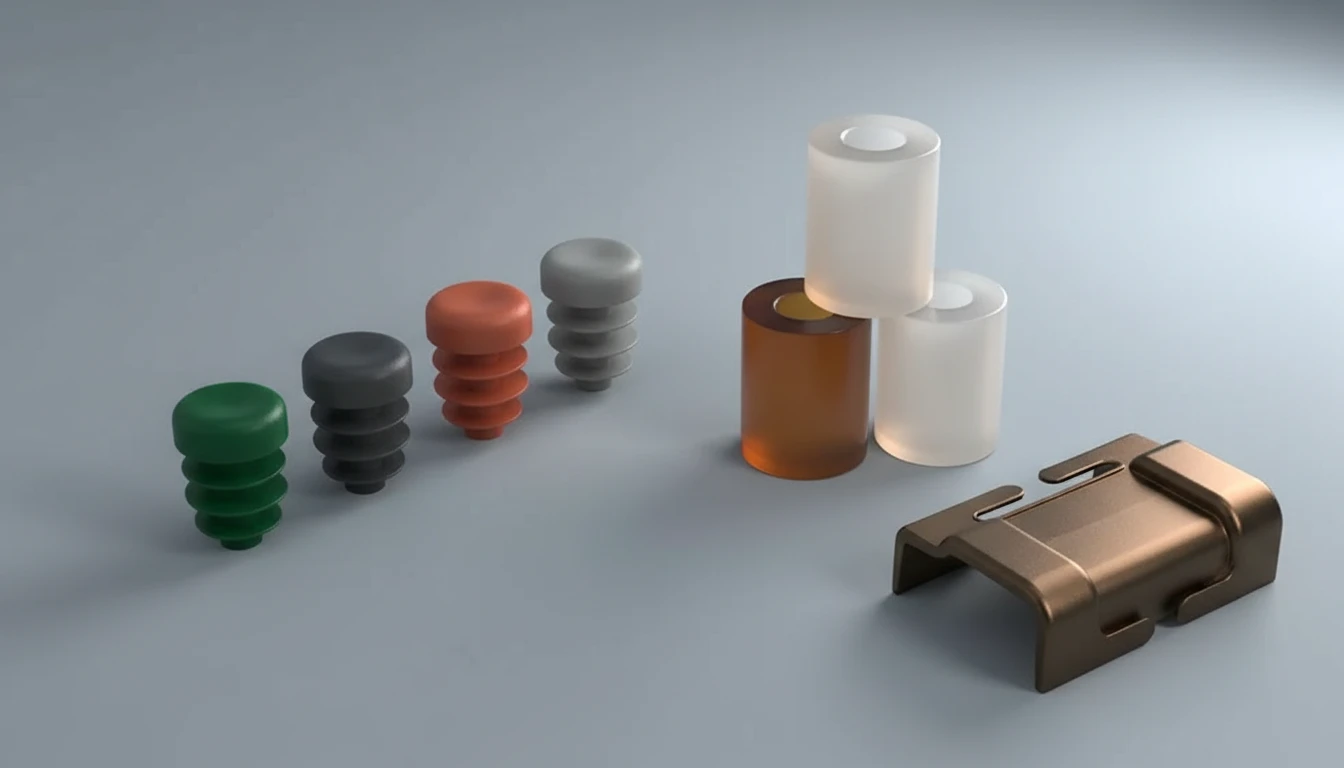
Circular seals that prevent leakage between mating surfaces, available in various materials and cross-sections to suit different pressure and temperature requirements.
Why it's crucial for HVAC: Prevents refrigerant and air leaks, maintaining system efficiency and reducing environmental impact.
Dynamic Seals
Seals designed for components with relative motion, such as rotary shafts and reciprocating pistons, requiring materials with excellent wear resistance.
Why it's important for HVAC: Enables moving components to operate efficiently while maintaining system integrity and preventing contamination.
Static Seals
Seals used between non-moving components, designed to maintain compression and prevent leakage over extended periods without maintenance.
Why it's important for HVAC: Provides long-term reliability for fixed connections, reducing maintenance requirements and system downtime.
Design & Materials
Flexible Hoses
Flexible conduits that connect HVAC components, accommodating movement, vibration, and thermal expansion while maintaining sealed pathways for air or refrigerant.
Why it's crucial for HVAC: Allows for easier installation, reduces stress on rigid components, and accommodates system movement without failure.
Material Selection
Materials include EPDM, silicone, neoprene, nitrile, and fluorocarbon rubbers, each offering specific advantages in temperature resistance, chemical compatibility, and durability.
Why it's crucial for HVAC: Proper material selection ensures longevity and performance under specific operating conditions and environments.
Reinforcement Techniques
Hoses often incorporate fabric, wire, or spiral reinforcements to enhance pressure resistance while maintaining flexibility and preventing expansion under load.
Why it's crucial for HVAC: Reinforcement ensures hoses can withstand system pressures without failure, extending service life and preventing leaks.
What is the Difference Between Seals and Flexible Hoses?
While both seals and flexible hoses are essential for HVAC system integrity, they serve fundamentally different purposes. Seals are components designed to prevent the passage of fluids or gases between mating surfaces, creating a barrier against leaks at connection points. They are typically static or dynamic elements that maintain compression between components. Flexible hoses, on the other hand, are conduits that transport air, refrigerant, or other fluids between system components while accommodating movement, vibration, and thermal expansion. Understanding these differences is crucial for proper HVAC system design, maintenance, and troubleshooting, as each component type addresses specific challenges in system operation and longevity.
Core Difference: Seals prevent leakage at connection points, while flexible hoses transport fluids between components.
| Feature | Seals | Flexible Hoses |
|---|---|---|
| Primary Function | Prevent leakage between mating surfaces by creating a barrier. | Transport fluids or gases between system components while accommodating movement. |
| De kwaliteit en duurzaamheid van afdichtingsmaterialen die worden gebruikt om luchtomleiding rond het filtermateriaal te voorkomen. | Compression, material compatibility, and surface finish to ensure tight contact. | Flexibility, pressure resistance, and flow characteristics while maintaining integrity. |
| Movement Capability | Limited movement; designed to maintain position under compression. | High flexibility; designed to bend, flex, and accommodate thermal expansion. |
| Common Applications | Connection points between components, housing enclosures, valve stems, and rotating shafts. | Connections between compressors and condensers, air handlers, and vibration-prone components. |
| Failure Modes | Compression set, extrusion, chemical degradation, and hardening over time. | Cracking, kinking, delamination, and connection point failures. |
Which Plastic Molding Processes are Suitable for Seals and Hoses?
Manufacturing HVAC seals and flexible hoses requires specialized molding processes that can accommodate the unique properties of elastomeric materials and the specific performance requirements of these components. The selection of the appropriate molding process depends on factors such as material type, product geometry, precision requirements, and production volume. This analysis evaluates five common molding processes—Injection Molding, Extrusion, Compression Molding, Transfer Molding, and Dip Molding—to determine their suitability for different types of seals and hoses, helping manufacturers make informed decisions based on their specific application needs.
Key Processes: Injection Molding • Extrusion • Compression Molding • Transfer Molding • Dip Molding
Injection Molding
The most suitable process for manufacturing precision seals with complex geometries and tight tolerances.
High precision (±0.05mm tolerance)
Complex geometry capabilities
Excellent surface finish
Wide material compatibility including silicone and fluorocarbons
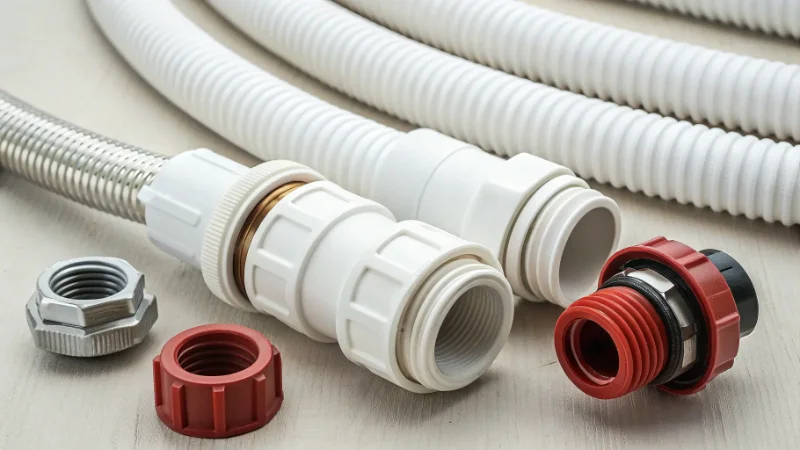
Extrusion Molding
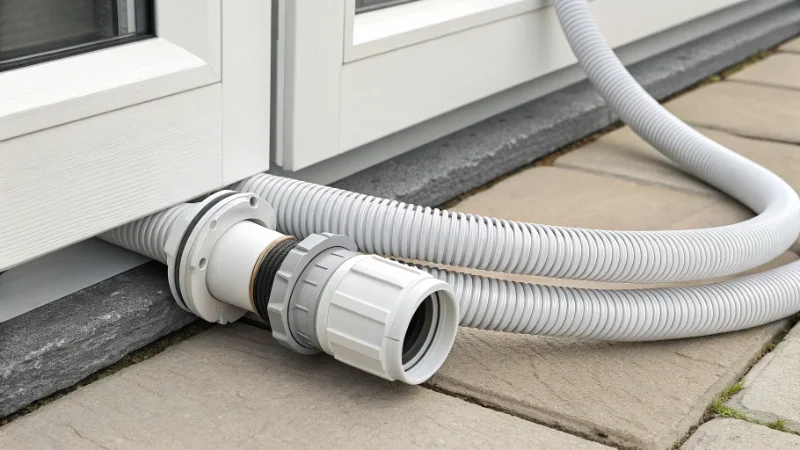
The ideal process for manufacturing flexible hoses and continuous seal profiles with consistent cross-sections.
Continuous production capability
Essentieel voor componenten die aan zonlicht worden blootgesteld om scheuren, verkleuring en verlies van mechanische eigenschappen te voorkomen.
Low material waste
Cost-effective for high volumes
Compression Molding
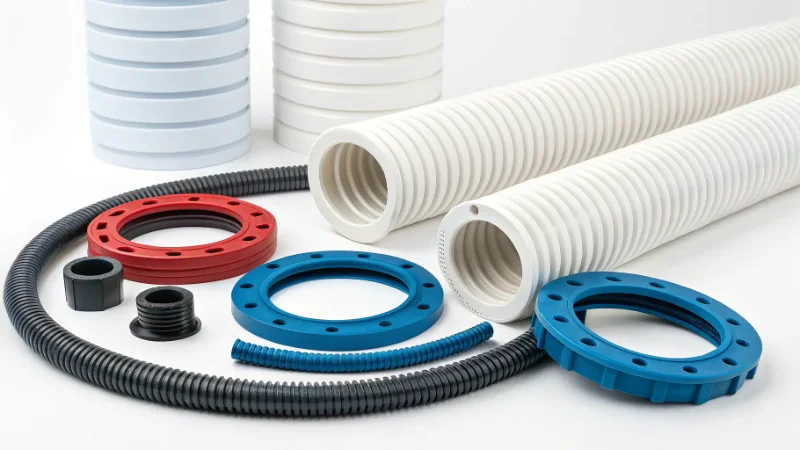
Suitable for large, simple seals and gaskets, particularly those made from filled compounds.
Low tooling costs
Excellent for filled compounds
Low material waste
Suitable for large parts
What are the Key Performance Metrics for Seals and Hoses?
Evaluating HVAC seals and flexible hoses requires a comprehensive assessment of multiple performance characteristics. Mechanical properties ensure durability and resistance to deformation under pressure, while thermal performance determines suitability for temperature extremes. Chemical resistance guarantees compatibility with refrigerants, oils, and cleaning agents. Dynamic performance metrics assess behavior under movement and vibration, while aging resistance predicts long-term reliability. Together, these metrics determine whether a seal or hose will maintain system integrity, prevent leaks, and provide reliable service throughout its expected lifespan.
Key Dimensions: Mechanical Properties • Thermal Performance • Chemical Resistance • Dynamic Performance • Aging Resistance
| Key Metric | What It Is | Why It Matters |
|---|---|---|
| ⚙️ Mechanical Properties | ||
| Tensile Strength | The maximum stress a material can withstand while being stretched or pulled before breaking. | Determines resistance to stretching and deformation under pressure, critical for maintaining seal integrity and preventing hose rupture. |
| Elongation at Break | The measure of ductility, expressed as the percentage increase in length before fracture. | Indicates flexibility and ability to accommodate movement without failure, especially important for hoses and dynamic seals. |
| Compression Set | The permanent deformation remaining after compressive forces are removed, expressed as a percentage. | Critical for seals - a low compression set (<25%) ensures the seal will recover and maintain sealing pressure after compression cycles. |
| Hardness (Shore A) | A measure of resistance to indentation, typically measured on the Shore A scale for elastomers. | Balances flexibility and wear resistance - too soft leads to extrusion, too hard prevents proper sealing and reduces flexibility. |
| 🌡️ Thermal Performance | ||
| Operating Temperature Range | The minimum and maximum temperatures at which the material maintains its properties. | Ensures component functionality throughout HVAC system temperature extremes, from cold start to high-load operation. |
| Thermal Expansion Coefficient | The measure of how much a material expands or contracts with temperature changes. | Affects dimensional stability and sealing pressure - must be compatible with connected materials to maintain seal integrity. |
| 🧪 Chemical Resistance | ||
| Refrigerant Compatibility | Resistance to degradation when exposed to various refrigerants (R-410A, R-32, R-134a, etc.). | Prevents swelling, hardening, or cracking that could lead to refrigerant leaks and system failure. |
| Oil Compatibility | Resistance to degradation when exposed to compressor oils (POE, mineral, synthetic). | Essential for components in contact with lubricating oils to prevent material breakdown and maintain sealing properties. |
| Cleaning Agent Resistance | Resistance to damage from cleaning chemicals used during maintenance. | Ensures components won't degrade during routine maintenance procedures, extending service life. |
| 🔄 Dynamic Performance | ||
| Flex Fatigue Resistance | Ability to withstand repeated flexing without developing cracks or losing properties. | Critical for hoses and dynamic seals that experience movement, vibration, or thermal cycling during operation. |
| Abrasion Resistance | Ability to withstand mechanical wear from rubbing against other surfaces. | Extends service life of components in contact with other parts, especially important for hoses and external seals. |
| ⏳ Aging Resistance | ||
| Ozone Resistance | Resistance to cracking and degradation when exposed to ozone. | Prevents premature failure of components exposed to outdoor environments or ozone generated by electrical equipment. |
| UV Resistance | Ability to withstand degradation from ultraviolet radiation. | Essential for components exposed to sunlight to prevent cracking, discoloration, and loss of mechanical properties. |
| Uitstekende vlamvertraging: Zelfdovende eigenschappen verhogen de veiligheid. | Estimated operational lifespan under specified conditions based on accelerated aging tests. | Helps plan maintenance schedules and replacement intervals, preventing unexpected failures and system downtime. |
What are the Common Materials for HVAC Seals & Flexible Hoses?
When selecting materials for HVAC seals and flexible hoses, you have several excellent options to consider. EPDM offers exceptional weather resistance and temperature stability for most outdoor applications. Silicone provides superior heat resistance for high-temperature environments. For chemical resistance and flexibility, Nitrile (NBR) stands out with its oil and fuel resistance. When durability and tear strength are your primary concerns, Neoprene delivers excellent mechanical properties. Your choice ultimately depends on your specific needs: temperature range, chemical exposure, flexibility requirements, and environmental conditions.
Key Materials: EPDM • Silicone • NBR • Neoprene

EPDM (Ethylene Propylene Diene Monomer)
EPDM is the workhorse material for HVAC seals and hoses, especially for outdoor applications where weather resistance is critical.
Key Properties:
- Excellent weather resistance: Resists UV radiation, ozone, and extreme weather conditions.
- Wide temperature range: Remains flexible from -50°C to 150°C (-58°F to 302°F).
- Superior water and steam resistance: Ideal for applications involving moisture or steam.
- Good electrical insulation properties: Suitable for applications requiring electrical isolation.
- Cost-effective: Offers excellent performance at a reasonable price point.
Common Applications:
- Outdoor unit seals and gaskets
- Weatherproofing components for HVAC systems
- Flexible hoses for condensate drainage
- Door and panel seals for outdoor units
Limitation: Poor resistance to petroleum-based oils and fuels. Not recommended for applications with exposure to hydrocarbons.
Silicone
Silicone is a high-performance elastomer chosen for applications requiring extreme temperature resistance and excellent flexibility.
Key Properties:
- Exceptional temperature range: Remains flexible from -60°C to 230°C (-76°F to 446°F).
- Excellent compression set resistance: Maintains its shape after prolonged compression.
- Superior aging resistance: Resists degradation from heat, ozone, and UV radiation.
- Good electrical insulation: Maintains dielectric properties across temperature range.
- Biocompatible: Safe for use in medical and food-grade applications.
Common Applications:
- High-temperature seals for heating systems
- Flexible hoses for hot air or steam transfer
- Vibration dampening components
- Seals for applications requiring food-grade materials
Limitation: More expensive than other elastomers and has lower tear strength. Can be susceptible to damage from sharp objects.
NBR (Nitrile Butadiene Rubber)
Nitrile rubber is a versatile elastomer known for its excellent resistance to oils, fuels, and chemicals.
Key Properties:
- Excellent oil and fuel resistance: Ideal for applications with exposure to petroleum products.
- Good abrasion resistance: Withstands wear from friction and contact.
- High tensile strength: Provides durability in demanding applications.
- Good compression set resistance: Maintains sealing properties over time.
- Temperature range: Effective from -30°C to 100°C (-22°F to 212°F).
Common Applications:
- Seals for refrigeration systems
- Hoses for oil-lubricated components
- Gaskets for compressors and pumps
- Seals for applications with chemical exposure
Limitation: Poor resistance to ozone, weathering, and sunlight. Not recommended for outdoor applications without protection.
Neoprene (Polychloroprene)
Neoprene is a versatile synthetic rubber offering a balanced combination of properties for various HVAC applications.
Key Properties:
- Good weather resistance: Better than NBR for outdoor applications.
- Moderate oil resistance: Handles exposure to oils better than natural rubber.
- Excellent flame resistance: Self-extinguishing properties enhance safety.
- Versterkingsstrategie.
- Temperature range: Effective from -40°C to 120°C (-40°F to 248°F).
Common Applications:
- Seals for indoor and outdoor HVAC units
- Vibration isolation components
- Flexible connectors for ductwork
- Seals for applications requiring flame resistance
Limitation: More expensive than NBR and has slightly lower oil resistance. Can be affected by prolonged exposure to certain chemicals.
Comparison at a Glance
| Material | Key Strengths | Best For |
|---|---|---|
| EPDM | Weather resistance, temperature stability, water resistance | Outdoor applications and moisture-exposed components |
| Silicone | Extreme temperature range, compression set resistance | High-temperature applications and food-grade requirements |
| NBR | Oil and fuel resistance, abrasion resistance | Applications with exposure to petroleum products |
| Neoprene | Balanced properties, flame resistance | General-purpose applications requiring flame resistance |
Special Additives and Compounds
To enhance these base materials, manufacturers often use special formulations:
- Reinforced Grades: Adding fabric or fiber reinforcement significantly increases strength and pressure resistance for hoses.
- Flame-Retardant Compounds: Additives improve flame resistance to meet stringent fire safety standards.
- Conductive Compounds: Adding carbon black or other conductive materials creates static-dissipative properties.
- Antimicrobial Additives: Silver ion or other antimicrobial agents inhibit the growth of bacteria and mold.
What are Design Considerations for HVAC Seals & Flexible Hoses?
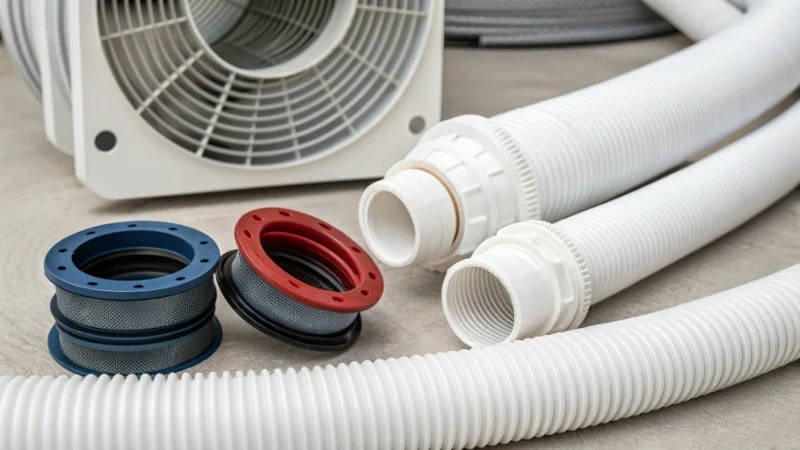
Effective design of HVAC seals and flexible hoses is critical for system performance, longevity, and energy efficiency. The design process must balance functional requirements with material properties, considering factors such as pressure ratings, temperature ranges, chemical compatibility, and mechanical stress. Advanced design techniques enable the creation of components that maintain sealing integrity under varying conditions while accommodating movement and vibration. Understanding these considerations is essential for optimizing system reliability, preventing leaks, and ensuring long-term performance in demanding HVAC applications.
Key Focus: Sealing Integrity • Flexibility • Pressure Resistance • Chemical Compatibility
Seal Design Considerations
Compression Set Resistance
Designing seals with appropriate cross-section and material selection to maintain sealing force after prolonged compression.
Why it's crucial: Prevents leakage over time and maintains system efficiency by ensuring consistent sealing performance.
Chemical Compatibility
Selecting materials that resist degradation from refrigerants, oils, cleaning agents, and other chemicals in the system.
Why it's crucial: Prevents material breakdown that could lead to system contamination or seal failure.
Temperature Range
Designing seals that maintain flexibility and sealing properties across the full temperature range of the application.
Why it's crucial: Ensures reliable performance in both heating and cooling modes without cracking or hardening.
Surface Finish
Optimizing surface texture and finish to enhance sealing effectiveness while accommodating manufacturing tolerances.
Why it's crucial: Proper surface finish ensures maximum contact area and sealing effectiveness with mating surfaces.
Flexible Hose Design
Pressure Rating
Designing hose construction with appropriate reinforcement layers to withstand system pressure without bursting or leaking.
Why it's crucial: Prevents catastrophic failures that could damage equipment or create safety hazards.
Flexibility vs. Durability
Balancing hose flexibility for installation with durability to withstand repeated bending and movement without failure.
Why it's crucial: Ensures ease of installation while maintaining long-term reliability under dynamic conditions.
Connection Design
Creating secure, leak-free connections that accommodate thermal expansion and vibration while maintaining system integrity.
Why it's crucial: Proper connection design prevents leaks at connection points, which are common failure locations.
Reinforcement Strategy
Verificatie omvat:.
Why it's crucial: Proper reinforcement is essential for pressure resistance and kink prevention in flexible hoses.
Manufacturing Techniques
1
Extrusion Molding
Continuous process for creating seals and hoses with consistent cross-sections, ideal for high-volume production of standard profiles.
2
Injection Molding
Precision process for complex seal shapes and integrated components, allowing for tight tolerances and intricate geometries.
3
Compression Molding
Suitable for large, flat seals and gaskets, providing excellent material density and consistent properties across the part.
How to Control Quality and Prevent Defects in HVAC Seals & Hoses?
Quality control in HVAC seals and flexible hoses is critical for system reliability and performance. A comprehensive quality management system addresses potential defects from material selection through final testing, ensuring every component meets stringent specifications. This approach prevents issues like leaks, material degradation, and premature failure that could compromise system efficiency and lead to costly repairs. By implementing rigorous inspection protocols and testing procedures, you receive components that maintain sealing integrity, pressure resistance, and flexibility throughout their service life. This proactive quality management protects your projects from warranty claims and ensures reliable long-term performance of HVAC systems.
Quality Focus: Leak Prevention • Material Integrity • Performance Testing
Common Defect Analysis & Solutions
Understanding potential defects helps you evaluate suppliers more effectively. Here's how we prevent the most common issues that can compromise your product quality.
Leakage
Failure of seals or hoses to maintain containment of fluids or gases, leading to system inefficiency and potential damage.
Common Causes:
- Improper material selection for application
- Inadequate compression or sealing force
- Surface defects or contamination
- Dimensional inaccuracies in mating parts
Solutions:
- Material compatibility testing for specific applications
- Optimized seal design for proper compression
- Strict surface finish and cleanliness control
- Precise dimensional control and tolerance management
Material Degradation
Breakdown of material properties due to environmental factors, leading to loss of elasticity, cracking, or hardening.
Common Causes:
- Exposure to incompatible chemicals
- Temperature extremes beyond material limits
- UV radiation and ozone exposure
- Prolonged compression or stress
Solutions:
- Proper material selection for chemical compatibility
- Use of stabilizers and additives for UV/ozone resistance
- Design for appropriate compression levels
- Accelerated aging testing for material validation
Dimensional Instability
Changes in dimensions or shape over time, affecting fit, function, and sealing performance of components.
Common Causes:
- High compression set in material
- Thermal expansion/contraction
- Inadequate curing or processing
- Stress relaxation over time
Solutions:
- Use of low compression set materials
- Design accounting for thermal expansion
- Optimized curing and processing parameters
- Stress-relief design features
Pressure Failure
Inability of hoses or seals to withstand system pressure, resulting in bursting, ballooning, or permanent deformation.
Common Causes:
- Inadequate reinforcement in hose construction
- Material weakness or defects
- Pressure spikes beyond design limits
- Improper assembly or installation
Solutions:
- Appropriate reinforcement design and materials
- Material testing and quality control
- Design with safety factors for pressure spikes
- Clear installation guidelines and training
Quality Assurance Process
Material Verification
Verification Includes:
- Flexibele slangen vereenvoudigen de installatie door uitlijningstoleranties tussen componenten te accommoderen en eenvoudigere positionering in krappe ruimtes mogelijk te maken. Modulaire afdichtingssystemen maken vervanging van componenten mogelijk zonder hele systeemsecties te verstoren. Deze flexibiliteit vermindert de installatietijd en vergemakkelijkt onderhoudsprocedures.
- Physical property testing (hardness, tensile strength)
- Chemical resistance testing
- Compression set measurement
- Aging resistance evaluation
Verification Benefits:
- Ensures material meets specifications
- Prevents material-related failures
- Validates supplier quality
- Establishes baseline for performance
- Reduces warranty claims
Performance Testing
Test Methods:
- Pressure testing for hoses and seals
- Leak testing using pressure decay or helium detection
- Flex fatigue testing for repeated movement
- Temperature cycling for thermal stability
- Burst testing for safety factor verification
Test Benefits:
- Validates design performance
- Identifies potential failure modes
- Ensures safety margins
- Simulates real-world conditions
- Provides confidence in product reliability
Advanced Testing Equipment
Dimensional Testing:
- Coordinate Measuring Machines (CMM): Precise 3D measurements with accuracy up to ±0.001mm
- Optical Inspection Systems: Non-contact measurement for delicate components
- Laser Scanners: Complete surface profiling for complex geometries
- Digital Calipers & Micrometers: Routine dimensional verification
Performance Testing:
- Pressure Test Benches: Hydraulic and pneumatic testing up to 500 bar
- Leak Detection Systems: Helium mass spectrometry for sensitive leak detection
- Environmental Chambers: Temperature and humidity cycling from -60°C to 200°C
- Fatigue Testing Machines: Simulated life testing for repeated movement
What are the Advantages and Disadvantages of Seals and Hoses?
HVAC seals and flexible hoses offer significant advantages including leak prevention, vibration absorption, and system flexibility, which are essential for maintaining system integrity and efficiency. However, they present notable challenges such as material degradation over time, temperature limitations, and potential compatibility issues with refrigerants and oils. While these components enable proper system operation by preventing leaks and accommodating movement, their finite lifespan and susceptibility to environmental factors make regular inspection and replacement critical for long-term system reliability.
Key Balance: System Integrity & Flexibility vs. Material Degradation & Maintenance Requirements


Advantages
Essential Leak Prevention & System Integrity
Seals create barriers that prevent refrigerant, air, and oil leaks at connection points, maintaining system efficiency and reducing environmental impact. Flexible hoses provide sealed pathways for fluid transport while accommodating movement. This leak prevention capability is critical for maintaining proper pressure levels and preventing costly refrigerant loss.
Why it's crucial for HVAC: Even minor leaks can significantly reduce system efficiency, increase energy consumption, and lead to premature compressor failure. Seals and hoses are the first line of defense against these issues.
Vibration Absorption & Movement Accommodation
Flexible hoses absorb vibrations from compressors and fans, preventing stress transmission to rigid components and connection points. Seals with appropriate elasticity accommodate thermal expansion and contraction of system components. This vibration damping reduces noise and prevents mechanical fatigue at connection points.
Why it's important for HVAC: HVAC systems generate significant vibration during operation. Without proper absorption, this vibration leads to connection failures, noise complaints, and reduced component lifespan.
Installation Flexibility & Maintenance Accessibility
Flexible hoses simplify installation by accommodating misalignment between components and allowing for easier positioning in tight spaces. Modular sealing systems enable component replacement without disturbing entire system sections. This flexibility reduces installation time and facilitates maintenance procedures.
Standaard Druk.
Disadvantages
Material Degradation & Finite Lifespan
Elastomeric materials naturally degrade over time due to heat, ozone, UV exposure, and chemical contact. Seals experience compression set, losing their ability to maintain proper sealing pressure. Hoses can develop cracks, blisters, or delamination, especially at stress points. This degradation occurs even under normal operating conditions.
Why it's crucial for HVAC: Material degradation leads to sudden leaks and system failures. The finite lifespan of these components necessitates regular inspection and preventive replacement schedules.
Temperature & Chemical Compatibility Limitations
Seals and hoses have specific operating temperature ranges beyond which they lose elasticity or become brittle. Certain materials are incompatible with specific refrigerants or oils, causing swelling, hardening, or chemical breakdown. Material selection must carefully match the specific chemical environment of the HVAC system.
Why it's crucial for HVAC: Incompatible materials can fail prematurely, causing system contamination and expensive component damage. Temperature limitations restrict application possibilities in extreme environments.
Maintenance Requirements & Failure Consequences
Seals and hoses require regular inspection for signs of wear, cracking, or deformation. Replacement often requires system evacuation, refrigerant recovery, and specialized tools. Failure of these components typically results in complete system shutdown until repairs are completed, leading to significant downtime.
Why it's crucial for HVAC: The maintenance requirements add to the total cost of ownership, while failure consequences can be severe, especially in critical applications like commercial refrigeration or climate control systems.
HVAC Seals & Flexible Hoses FAQ
Find answers to your key concerns in HVAC seals and flexible hoses FAQ. Get expert guidance on selecting the right materials—EPDM, Silicone, NBR, or Neoprene—for your specific application requirements. Explore precision design techniques for optimal sealing performance and pressure resistance, ensuring leak-free operation across temperature ranges from -60°C to 230°C. Discover comprehensive solutions that meet both your functional performance and durability needs, with various reinforcement options and connection types to perfectly match your HVAC system requirements.
Key Services: Material Selection • Seal Design • Hose Construction • Pressure Testing • Quality Assurance
Which Material is Best for High-Temperature HVAC Applications?
Customer concern: Material selection for extreme temperature environments.
+
Which Material is Best for High-Temperature HVAC Applications?
Customer concern: Material selection for extreme temperature environments.
Our Solutions:
Material Recommendations for High Temperatures:
For high-temperature applications, we recommend:
| Material | Max Temperature | Best Applications |
|---|---|---|
| Silicone | 230°C (446°F) | High-temperature seals, steam applications |
| EPDM | 150°C (302°F) | Hot water systems, outdoor applications |
| Neoprene | 120°C (248°F) | General high-temperature applications |
| NBR | 100°C (212°F) | Moderate temperature oil-resistant applications |
How Do You Ensure Leak-Free Performance in Seals and Hoses?
Customer concern: Leak prevention and sealing effectiveness.
+
How Do You Ensure Leak-Free Performance in Seals and Hoses?
Customer concern: Leak prevention and sealing effectiveness.
Our Solutions:
Comprehensive Leak Prevention Approach:
We ensure leak-free performance through:
HVAC-Luifel
Our seals are designed with optimal compression ratios and surface finishes to maximize sealing effectiveness. Hoses feature reinforced construction and secure connection designs to prevent leaks at joints.
Rigorous Testing:
Every component undergoes pressure testing and leak detection using sensitive methods like helium mass spectrometry to verify leak-free performance before shipment.
Quality Materials:
We use only high-quality materials with proven resistance to compression set and environmental degradation to maintain sealing integrity over the product's service life.
Can You Produce Custom-Shaped Seals for Unique Applications?
Customer concern: Customization capabilities for specialized requirements.
+
Can You Produce Custom-Shaped Seals for Unique Applications?
Customer concern: Customization capabilities for specialized requirements.
Our Solutions:
Custom Manufacturing Capabilities:
We specialize in producing custom-shaped seals through various manufacturing methods:
Design Process:
Our engineering team works with you to understand your application requirements and develop optimal seal designs. We can work from your specifications, existing parts, or reverse engineer worn components.
Manufacturing Methods:
We offer injection molding for complex shapes, extrusion for continuous profiles, compression molding for large flat gaskets, and die cutting for simple shapes from sheet material.
Prototyping:
We can produce rapid prototypes for design validation before committing to full production tooling, ensuring the final product meets your exact requirements.
What Pressure Ratings Can Your Flexible Hoses Withstand?
Customer concern: Pressure resistance and safety factors.
+
What Pressure Ratings Can Your Flexible Hoses Withstand?
Customer concern: Pressure resistance and safety factors.
Our Solutions:
Pressure Range Options:
Our flexible hoses are available in various pressure ratings to suit different applications:
| Hose Type | Standard Pressure | Aangepaste Certificeringsondersteuning: | Typical Applications |
|---|---|---|---|
| Low Pressure | Up to 5 bar (75 psi) | 15 bar (225 psi) | Condensate drainage, ventilation |
| Medium Pressure | 5-20 bar (75-300 psi) | 60 bar (900 psi) | Refrigerant lines, water circulation |
| High Pressure | 20-50 bar (300-750 psi) | 150 bar (2250 psi) | Compressed air, high-pressure refrigerant |
Custom Pressure Solutions:
For specialized applications, we can design custom hoses with specific pressure ratings, reinforcement materials, and safety factors to meet your exact requirements.
How Do You Ensure Long-Term Durability of Seals and Hoses?
Customer concern: Product lifespan and reliability over time.
+
How Do You Ensure Long-Term Durability of Seals and Hoses?
Customer concern: Product lifespan and reliability over time.
Our Solutions:
Durability Enhancement Strategies:
We ensure long-term durability through multiple approaches:
Material Selection:
We select materials with proven resistance to environmental factors, compression set, and aging specific to your application conditions.
Additives and Stabilizers:
Our compounds include UV stabilizers, antioxidants, and other additives to enhance resistance to environmental degradation and extend service life.
Accelerated Aging Testing:
We subject our products to accelerated aging tests that simulate years of service in compressed timeframes, validating long-term performance before products reach the market.
Design for Durability:
Our designs minimize stress concentrations, account for thermal expansion, and incorporate features that reduce wear and extend service life.
Can You Produce Seals and Hoses with Custom Colors?
Customer concern: Color customization for branding or identification.
+
Can You Produce Seals and Hoses with Custom Colors?
Customer concern: Color customization for branding or identification.
Our Solutions:
Color Customization Options:
We offer comprehensive color customization for both seals and hoses:
Color Matching:
We can match colors to Pantone, RAL, or customer-provided samples to ensure perfect color coordination with your brand or system requirements.
Color Stability:
Our color compounds include UV stabilizers to prevent fading and maintain color consistency throughout the product's service life.
Multi-Color Options:
For certain applications, we can produce multi-color components or color-coded products for easy identification of different systems or functions.
What Quality Certifications Do Your Products Have?
Customer concern: Quality standards and compliance with industry requirements.
+
What Quality Certifications Do Your Products Have?
Customer concern: Quality standards and compliance with industry requirements.
Our Solutions:
Quality Certifications:
Our products meet various industry standards and certifications:
System Certifications:
- ISO 9001:2015 Quality Management
- IATF 16949:2016 Automotive Quality
- ISO 14001:2015 Environmental Management
- OHSAS 18001 Occupational Health & Safety
Product Certifications:
- UL 94 Flame Resistance Ratings
- NSF/ANSI 51 Food Equipment Materials
- ASTM D2000 Material Specifications
- REACH and RoHS Compliance
Custom Certification Support:
HVAC Afdichtingen & Flexibele Slangen | Precisietechniek | HVACore.
What is Your Typical Lead Time for Custom Seals and Hoses?
Customer concern: Production timelines and delivery schedules.
+
What is Your Typical Lead Time for Custom Seals and Hoses?
Customer concern: Production timelines and delivery schedules.
Our Solutions:
Lead Time Ranges:
Our lead times vary based on product complexity and customization requirements:
| Product Type | Standard Lead Time | Expedited Options |
|---|---|---|
| Standard Seals | 2-3 weeks | 1 week (20% premium) |
| Custom Seals | 4-6 weeks | 2-3 weeks (25% premium) |
| Flexible Hoses | 3-5 weeks | 2 weeks (20% premium) |
Rapid Prototyping:
For new designs, we offer rapid prototyping services with lead times as short as 5-7 business days for design validation before committing to full production.
Volume Production:
For high-volume requirements, we can establish scheduled deliveries to ensure consistent supply while optimizing production efficiency.