
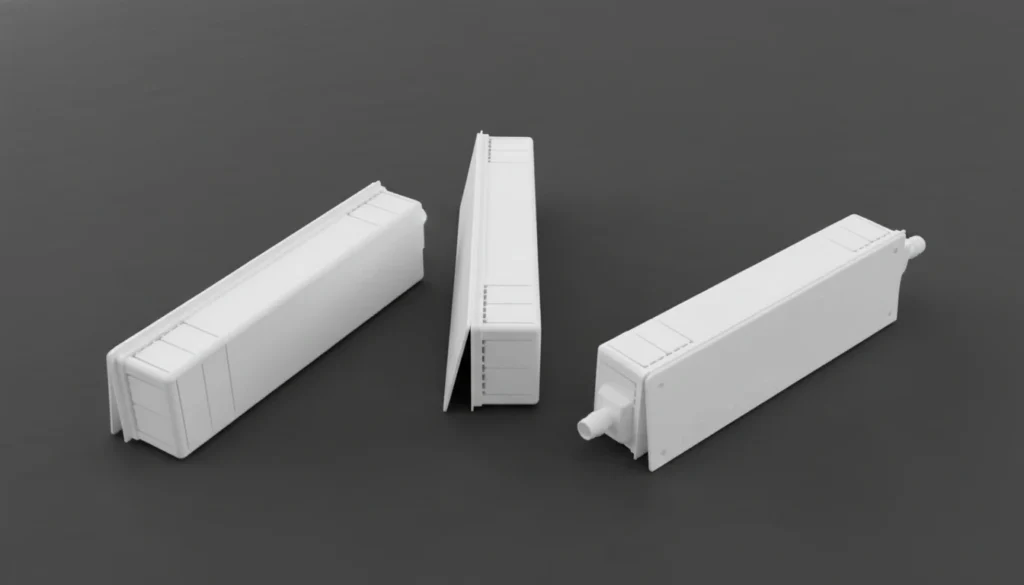
In the HVAC industry, noise is often the primary customer complaint. We spend countless hours engineering airflow to be silent, only to have a loose tolerance or a vibrating bracket create a persistent rattle.
For years, the standard factory solution was manual labor: workers applying foam tape, gluing rubber gaskets, or inserting grommets by hand. This is inconsistent and prone to failure over time.
As a manufacturing engineer who has overseen the transition from manual assembly to automated multi-shot molding, I can tell you that overmolding (specifically bonding soft Thermoplastic Elastomers (TPE) to rigid substrates) is the most effective method for built-in HVAC noise reduction. It integrates the solution directly into the part geometry, eliminating the variables of human assembly.
Here is a technical look at how we use vibration dampening plastics to solve NVH (Noise, Vibration, and Harshness) challenges.
– Overmolding combines a rigid structural plastic (substrate) with a soft elastomer (overmold) in a single process.
– It eliminates secondary assembly steps like gluing gaskets or installing rubber grommets.
– Chemical compatibility is the critical success factor; the TPE must bond molecularly to the rigid plastic to prevent delamination.
– The soft layer acts as a mechanical decoupler, absorbing vibrational energy before it becomes audible structure-borne noise.
What is Overmolding in an HVAC Context?
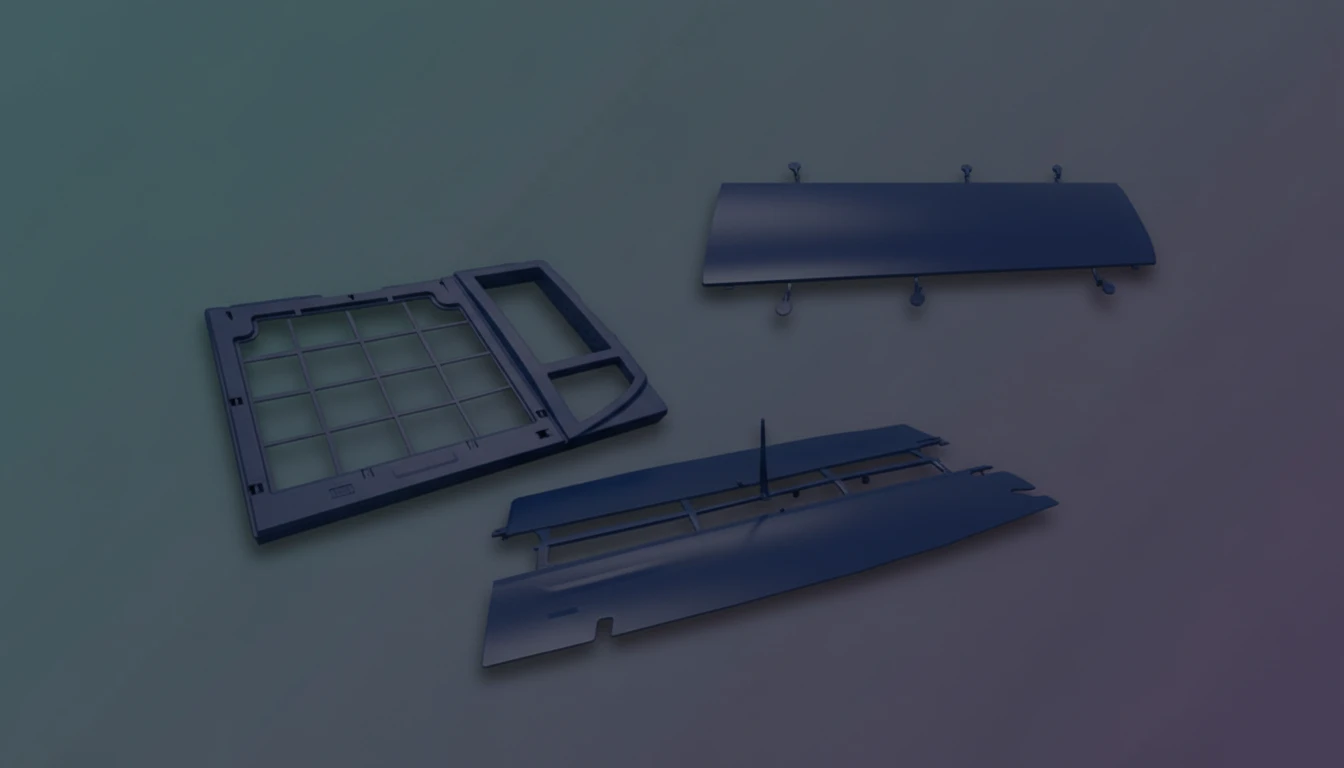
In our specific field, overmolding (often called 2K or Two-Shot molding) involves injecting a rigid material—usually Polypropylene (PP), Acrylonitrile Butadiene Styrene (ABS), or Polyamide (PA)—to form the structural component (like a fan housing or a duct connector). Immediately after, a soft material—typically Thermoplastic Elastomer (TPE) or Thermoplastic Vulcanizate (TPV)—is injected into the same mold or a second station to bond onto specific areas.
This creates a single, unified component where the soft material serves as a built-in vibration isolator or air seal.
Key Parameters: Rigid vs. Soft Interaction
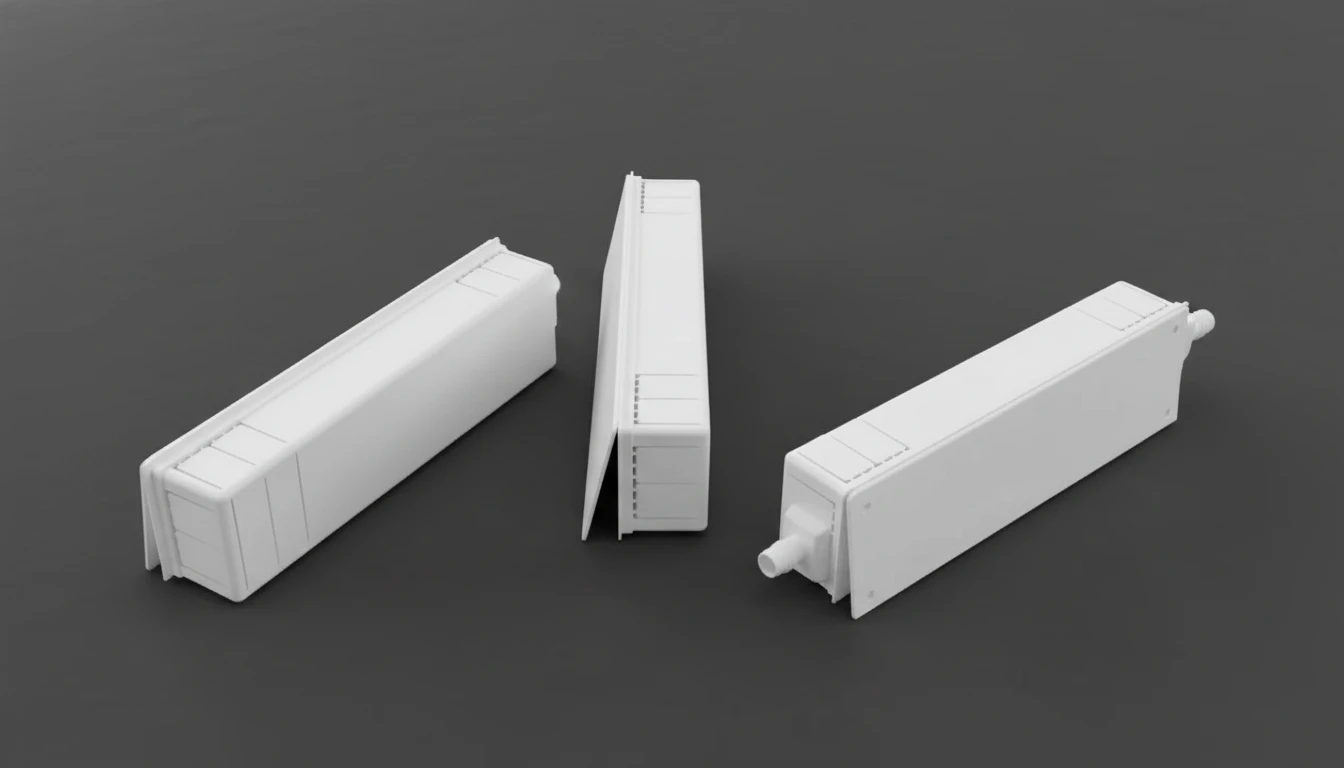
Success in overmolding applications depends entirely on the interaction between the two materials. If they don’t stick, the vibration damper falls off.
| Parameter | Rigid Substrate (e.g., PP, PA66) | Soft Overmold (e.g., TPE, TPV) | Function in NVH |
|---|---|---|---|
| Role | Structural integrity, mounting points | Damping, sealing, isolation | Rigid holds the load; Soft breaks the vibration path. |
| Hardness | Rockwell R scale (Rigid) | Shore A 30–70 (Soft) | Lower Shore A allows more deflection and better damping. |
| Melt Temp | 200°C – 280°C | 180°C – 220°C | Substrate must withstand the heat of the second shot. |
| Bond Type | N/A | Chemical & Mechanical | Crucial: Must achieve "cohesive failure" (material tears before bond breaks). |
Myth vs. Fact: Material Bonding
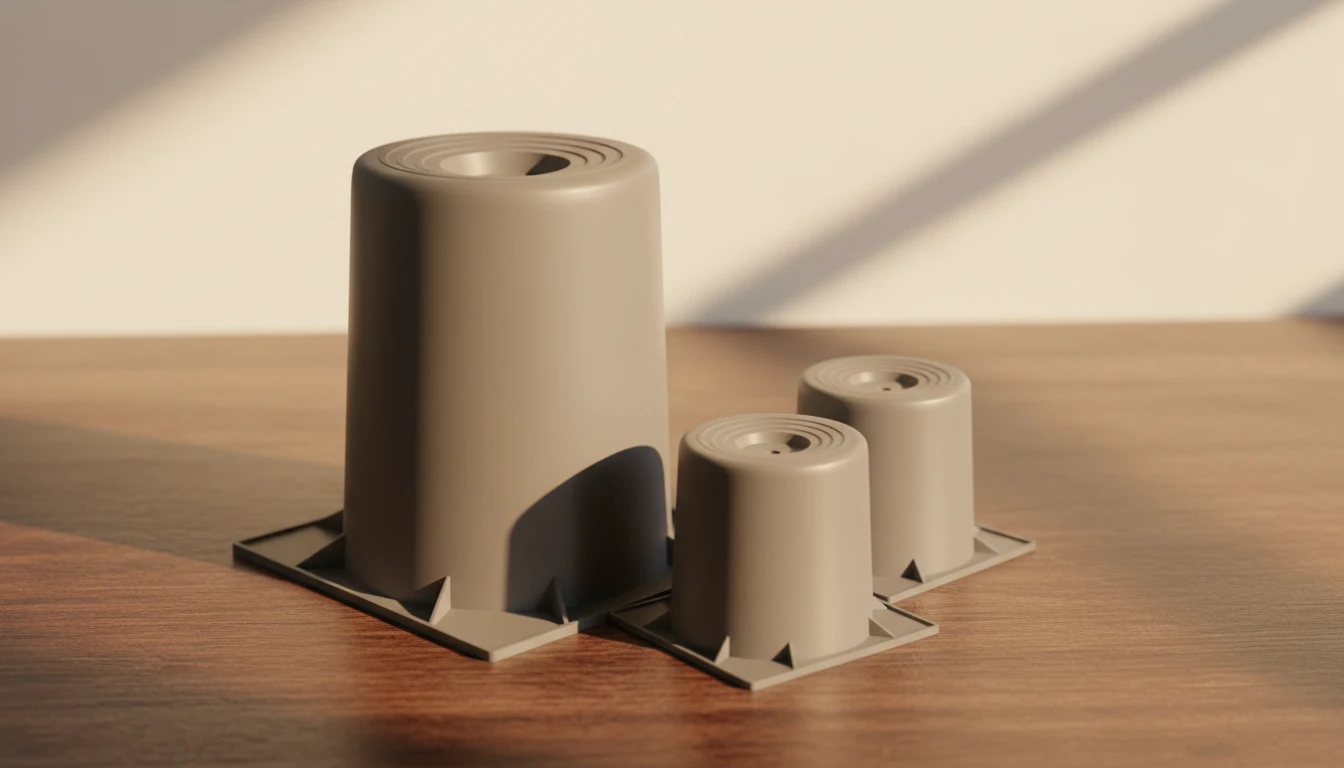
Chemical compatibility is strict. For example, a standard TPE will bond well to Polypropylene (PP) but will peel instantly off Nylon (PA) unless a chemically modified 'bondable' grade is used.
Overmolding creates a seamless, void-free interface that prevents air leakage (whistling) and does not degrade or peel over time like adhesive-backed foam.
Real Production Examples: Solving the "Rattle"
I have implemented quiet HVAC design principles in several mass-production scenarios. Here is how we tackled them:
Case 1: The Blower Motor Mount
- The Problem: A centrifugal fan assembly was transmitting motor vibration into the sheet metal chassis, causing a low-frequency hum (60Hz resonance).
- The Old Way: Operators manually inserted four rubber grommets into the plastic housing holes. This was slow, and if an operator missed one, the unit failed QC.
- The Overmolded Solution: We designed a 2-shot mold.
- Shot 1 (Rigid): 30% Glass-Filled Polypropylene for the housing strength.
- Shot 2 (Soft): Shore A 50 TPE injected directly around the mounting holes.
- Result: The "grommet" is now chemically fused to the housing. It cannot be forgotten or fall out. The vibration transmission dropped by 40%, and assembly time was cut by 20 seconds per unit.
Case 2: Diverter Valve Sealing (Air Door)
- The Problem: In automotive HVAC and residential zoning systems, hard plastic doors flap against hard plastic stops. This creates a "clack" sound every time the zone changes, and air leaks cause a high-pitched whistle.
- The Solution: We overmolded a TPV lip (Shore A 40) onto the edge of the ABS damper blade.
- Factory Challenge: ABS and TPV don’t always bond naturally. We had to use a specific TPE grade modified for polar adhesion to ABS. We also added mechanical interlocks (small through-holes in the ABS) so the TPE would flow through and lock itself in physically.
What Are the Advantages and Disadvantages?
| Feature | Advantages | Disadvantages |
|---|---|---|
| NVH Performance | Superior damping; eliminates "rattle" points between mating parts. | Limited to the thickness of the moldable layer (usually <3mm). |
| Assembly | Zero assembly required for the seal/damper. Reduced BOM (Bill of Materials). | High initial tooling cost (rotary molds are expensive). |
| Quality | Perfect consistency; position of the dampener is fixed by the steel tool. | If the bond fails, the whole part is scrap (cannot replace just the rubber). |
| Sealing | Airtight interface reduces airborne noise (whistling). | Process window is tight; slight parameter shifts cause delamination. |
Myth vs. Fact: Cost Implications
While the mold costs more, the elimination of manual labor, adhesive costs, and separate inventory for rubber grommets results in lower per-part costs over high volumes.
2-Shot (multi-shot) molding usually yields better bonding because the substrate is still hot when the soft material is injected, facilitating molecular fusion. In insert molding, the substrate is cold.
Practical Tips for Factory Implementation
From my time troubleshooting TPE overmolding on the floor, here are the non-negotiables:
- Mechanical Interlocks are Safety Nets: Never rely 100% on chemical bonding if you can avoid it. Design undercuts, through-holes, or dovetails in the rigid part. The TPE flows into these and locks mechanically. If the chemical bond weakens due to humidity or heat aging, the mechanical lock keeps the damper in place.
- The "Shut-Off" is Critical: In the mold design, the steel must press tightly against the rigid part to prevent the TPE from "flashing" (leaking) over areas where it shouldn’t be. A crushed substrate leads to scrap. We usually design a "crush rib" on the rigid part to ensure a tight seal against the steel.
- Shore Hardness Matters: For vibration damping, softer is usually better, but harder to mold (it sticks to the tool). I find Shore A 40-55 is the sweet spot for HVAC mounts. Anything softer than A 30 is a nightmare to eject from the mold.
Common HVAC Application Scenarios
- Reduza o Ruído do HVAC com Soluções Inovadoras de Sobremoldagem Overmolded edges to decouple the shroud from the metal cabinet.
- Filter Tracks: Soft TPE rails molded into the housing to grip the filter tightly, preventing bypass air and rattle.
- Compressor Grommets: Integrated directly into the base pan feet.
- Condensate Pans: Soft corners to prevent creaking due to thermal expansion/contraction.
Stepwise Manufacturing Recommendations
If you are planning a project involving vibration dampening plastics, follow this process:
- Material Pairing: Consult with your resin supplier (e.g., Kraiburg, RTP, Teknor Apex) to select a TPE that is chemically compatible with your base structural plastic.
- FEA Analysis: Run a Moldflow simulation to ensure the TPE can fill the thin damping areas without cooling off prematurely (hesitation effects).
- Tooling Strategy: Decide between "Pick and Place" (Insert Molding) vs. "Rotary Platen" (2-Shot).
- Volume < 10k/year: Insert Molding (cheaper tool, higher labor).
- Volume > 100k/year: 2-Shot Rotary (expensive tool, lowest piece price).
- Adhesion Testing: Before mass production, perform a "Peel Test" (ISO 813). If the TPE peels off cleanly, the process failed. You want the TPE to tear before it releases from the rigid plastic.
Frequently Asked Questions (FAQ)
1. Does overmolding completely eliminate HVAC vibration?
No. It isolates the vibration. The source (motor/compressor) will still vibrate, but the overmolded TPE layer breaks the path, preventing that energy from transferring to the chassis and becoming audible noise.
2. Can I overmold silicone instead of TPE?
Yes, this is called LSR (Liquid Silicone Rubber) overmolding. It offers better heat resistance than TPE but requires significantly more expensive tooling and heated mold halves. It is generally reserved for high-heat areas near furnace exchangers.
3. What is the minimum thickness for a TPE vibration damper?
I recommend a minimum of 1.0mm to 1.5mm. Anything thinner freezes too quickly during injection and doesn’t provide enough "cushion" to effectively dampen vibrations.
4. Why is my TPE peeling off the substrate?
Common factory causes:
- Substrate was too cold (insert molding).
- Incompatible chemistry (e.g., trying to bond TPE to Acetals/POM).
- Contamination (mold release agents on the substrate surface).
5. Is TPE overmolding suitable for outdoor HVAC units?
Yes, but you must specify a UV-stabilized TPE. Standard TPEs will crack and chalk after a few years of sun exposure. Look for EPDM-based TPVs for outdoor durability.
Technical Summary
Overmolding is the modern standard for reducing NVH in HVAC manufacturing. By chemically and mechanically bonding soft TPEs to rigid housings, we create integrated vibration isolators that are more reliable and cost-effective than traditional assembly methods. While the tooling requires higher upfront investment and the material science requires strict compatibility checks, the result is a superior, quieter product that stands up to the rigors of airflow and motor vibration.





