
Vacuum Forming Processos-Chave: Termoformação a Vácuo • Moldagem por Injeção • Extrusão • Moldagem por Sopro
Precision thermoforming solutions for HVAC plastic components with 20+ years expertise. Custom housings, ducts, and enclosures engineered for thermal durability and dimensional accuracy.
Table of Contents
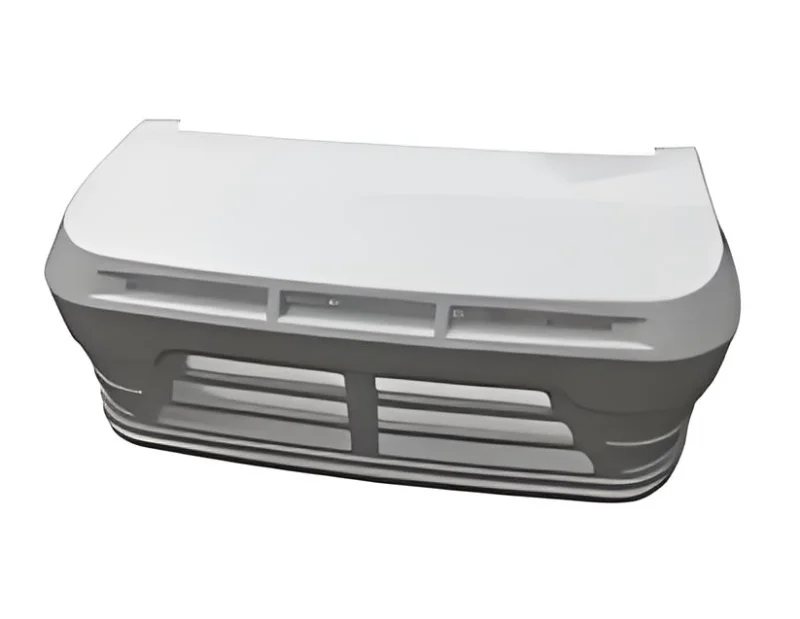
What are the Steps and Processes of HVAC Vacuum Forming?
HVAC vacuum forming transforms thermoplastic sheets (HIPS, ABS, PVC, EPS) into precision components through a seven-step process. The method begins with material preparation and sheet clamping, followed by controlled heating to specific temperatures (120°C–150°C for HIPS). The softened sheet is then formed over molds using vacuum pressure, creating precise shapes for air conditioning housings and ventilation components. After rapid cooling to prevent deformation, parts are demolded, trimmed, and undergo strict quality inspection. Key parameters include temperature control, vacuum level, and cooling time, with three main forming types: concave mold, convex mold, and pressure-assisted forming for complex components.
Key Steps: Material Prep • Clamping • Heating • Vacuum Forming • Cooling • Demolding • Inspection
Professional Vacuum Forming Technology
The highly versatile vacuum forming process efficiently transforms a range of thermoplastic sheets, including HIPS, ABS, PVC, and EPS, into precision, custom-designed HVAC components. This is achieved through carefully controlled heating, advanced vacuum forming, and rigorous, systematic quality control at every critical stage. Each and every step is meticulously optimized for truly exceptional dimensional accuracy and durable structural integrity that meets all industry standards..
From the initial material preparation all the way to the final inspection, our streamlined and meticulously managed process efficiently ensures consistently high quality for air conditioning housings, ventilation components, and custom HVAC enclosures. This is achieved through precisely controlled temperature and thoroughly monitored vacuum parameters, guaranteeing superior product performance and exceptional long-term durability.
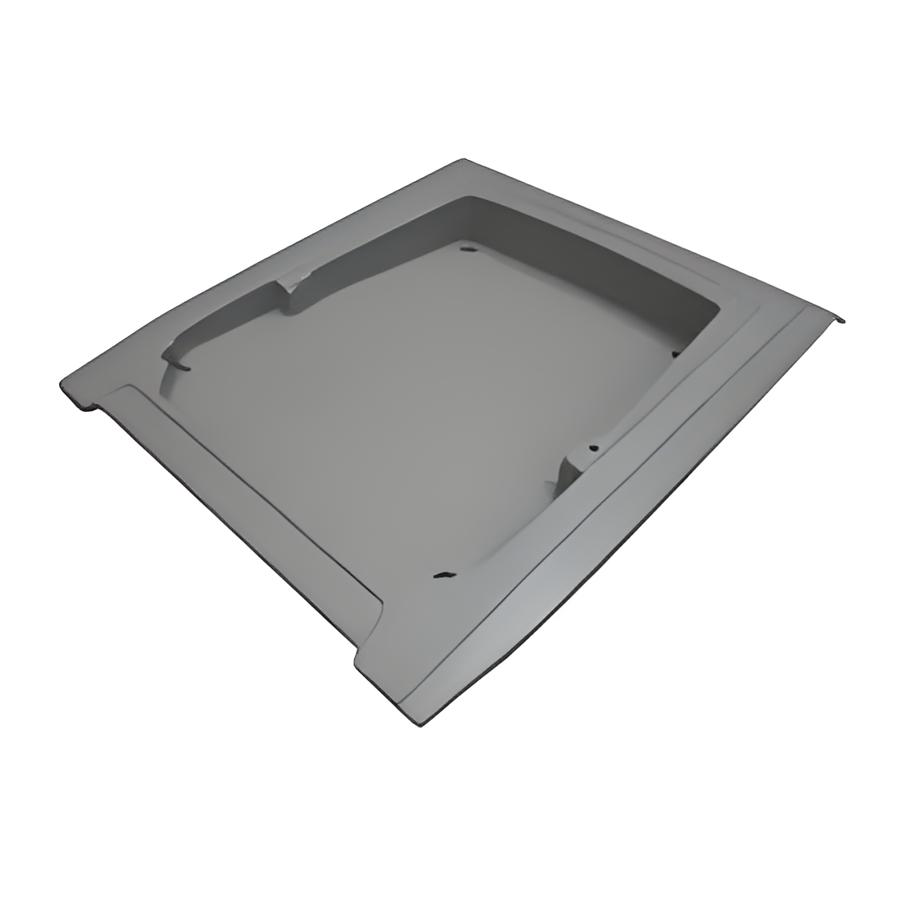
HVAC Vacuum Forming Process Steps
| Step | Title | Description |
|---|---|---|
|
1
|
Material Preparation
|
Select appropriate thermoplastic sheets (HIPS, ABS, PVC, or EPS) and carefully cut to proper dimensions based on product requirements.
|
|
2
|
Sheet Clamping
|
Properly Secure sheet material firmly on vacuum forming machine bracket, carefully ensuring flat and wrinkle-free positioning for optimal forming results.
|
|
3
|
Heating to Softening
|
Use heaters to uniformly heat sheet to appropriate temperature. Control heating to avoid overheating or insufficient softening.
|
|
4
|
Vacuum Forming
|
Quickly move softened sheet over mold. Activate vacuum pump to completely remove air between sheet and mold, ensuring tight and perfect conformity to mold contours.
|
|
5
|
Cooling & Setting
|
Rapidly cool formed part through air or water cooling systems to ensure shape stability. Uniform cooling prevents shrinkage.
|
|
6
|
Demolding & Trimming
|
Use demolding equipment to separate finished product from mold. Trim excess material to obtain final product dimensions andedges.
|
|
7
|
Quality Inspection
|
Inspect dimensional accuracy, structural integrity, and surface defects to ensure product meets specifications and quality standards.
|
Key Process Parameters & Considerations
| Parameter | Description |
|---|---|
| Heating Temperature | Depends on material type (e.g., HIPS typically heated to 120°C–150°C) |
| Vacuum Level | Requires sufficient negative pressure to ensure complete sheet conformity to mold |
| Cooling Time | Affects production efficiency; must be optimized to avoid deformation |
| Mold Design | Commonly uses aluminum or epoxy resin molds; requires consideration of draft angles and vent holes |
Common Vacuum Forming Types
Concave Mold Vacuum Forming
Suitable for shallow draw parts with high inner surface quality.
Convex Mold Vacuum Forming
Used for deep draw parts with high outer surface quality.
Pressure-Assisted Forming
Combines air pressure with vacuum to improve detail replication capability.
What are the Differences between Vacuum Forming and Other Forming Processes?
Vacuum forming transforms flat plastic sheets into precise components by heating them to a softened state and using vacuum pressure to conform the material to a mold. This process differs significantly from other plastic forming methods like injection molding, extrusion, and blow molding, each with unique principles, applications, and advantages. Understanding these differences is crucial for selecting the most appropriate manufacturing method for specific product requirements.The key words for injection molding are Granules, Melting, High-pressure injection, Double-sided closed mold.For extrusion molding are Melting, Continuous extrusion, Constant cross-section, Unlimited length.For blow molding are Parison, Hollow, Air expansion, Similar to blowing a balloon.
Key Processes: Vacuum Forming • Injection Molding • Extrusion • Blow Molding
Melhores Aplicações para Cada Processo
| Process | Principle & Keywords |
|---|---|
|
Vacuum Forming
|
Principle: Heat flat plastic sheets to a softened state, then use a vacuum pump to remove air between the sheet and mold, utilizing atmospheric pressure to make the softened sheet tightly conform to the mold surface, forming after cooling.
Keywords: Sheet material, Heating, Vacuum adsorption, Single-sided mold. |
|
Injection Molding
|
Principle: Melt plastic granules into fluid, then inject the molten plastic into a completely closed metal mold cavity using a high-pressure injection machine, cool and solidify, then open the mold to remove the finished product.
Keywords: Granules, Melting, High-pressure injection, Double-sided closed mold. |
|
Extrusion Molding
|
Principle: Melt plastic granules, then continuously extrude through a specially shaped mold (die) to form long products with constant cross-sectional shapes, such as pipes, rods, profiles, etc.
Keywords: Melting, Continuous extrusion, Constant cross-section, Unlimited length. |
|
Blow Molding
|
Principle: First make molten plastic into a tubular "parison," then place the parison in a mold, blow high-pressure air into it, causing the parison to expand and tightly adhere to the inner wall of the mold, obtaining hollow products after cooling.
Keywords: Parison, Hollow, Air expansion, Similar to blowing a balloon. |
Process Comparison
| Comparison Dimension | Vacuum Forming | Injection Molding | Extrusion Molding | Blow Molding |
|---|---|---|---|---|
|
Mold Cost
|
Low. Usually single-sided molds, materials can be aluminum, wood, resin, with low cost and short production cycles.
|
Very high. Requires high-strength steel double-sided molds with complex structures, huge processing costs and time investment.
|
Relatively low. Mold structure is relatively simple but needs to withstand high temperatures and pressures.
|
Medium. Requires double-sided molds, but structure is usually simpler than injection molds.
|
|
Production Speed
|
Medium. Cycle ranges from tens of seconds to several minutes, depending on product size and thickness.
|
Extremely fast. Cycle usually ranges from a few seconds to tens of seconds, suitable for large-scale, automated production.
|
Continuous production. Theoretically can produce infinitely long, speed calculated in meters/minute.
|
Medium. Cycle similar to vacuum forming but typically slightly slower.
|
|
Product Size
|
Very suitable for large sizes. Theoretically only limited by heating furnace and vacuum chamber size, low cost to produce parts several meters long.
|
Limited. Restricted by injection machine clamping force and mold size, cost sharply increases for large parts.
|
Unlimited length, fixed cross-section. Suitable for producing long parts like pipes, profiles.
|
Suitable for large hollow products. Such as large liquid storage tanks, water tanks, automotive fuel tanks, etc.
|
|
Product Complexity
|
Low. Can only form single-sided details, back is flat. Cannot achieve internal structures or complex side concavities/convexities (requires other processes).
|
Very high. Can manufacture extremely complex internal and external structures, fine textures, thin-walled and high-precision products.
|
Low. Limited to two-dimensional constant cross-section shapes, cannot form three-dimensional structures.
|
Medium. Can manufacture complex hollow shapes, but wall thickness control is difficult, precision not as good as injection molding.
|
|
Wall Thickness Control
|
Poor. Sheet wall thickness becomes thinner and uneven during stretching, thinnest at corners.
|
Excellent. Wall thickness is uniform, high precision, can design different wall thickness areas.
|
Uniform. Wall thickness is consistent across the entire cross-section.
|
Fair. Different parts of the parison have different expansion rates, leading to uneven wall thickness, can be improved through technical optimization.
|
|
Material Utilization
|
Low. Need to cut the formed product from the entire sheet, generating scrap (recyclable).
|
High. Almost no waste, runner system materials can also be recycled.
|
High. Continuous production with almost no waste.
|
Relatively high. Only small amounts of edge material and waste parison.
|
|
Suitable Materials
|
Wide range. ABS, HIPS, PC, PMMA, PE, PP and other thermoplastic sheets.
|
Very wide. Almost all thermoplastic plastics and some thermosetting plastics.
|
Wide range. PE, PP, PVC, PC and other materials suitable for extrusion.
|
PE, PP, PET, PC and other materials suitable for blow molding hollow products.
|
Best Applications for Each Process
Vacuum Forming
Excelente. O plástico é um bom isolante elétrico, garantindo segurança no uso.
Injection Molding
Perfect for high-volume production of complex, precise parts like electronic components, medical devices, automotive parts, and consumer goods.
Extrusion Molding
Best suited for continuous production of profiles, pipes, window frames, and other products with consistent cross-sections along their length.
Blow Molding
Optimal for creating hollow containers and products such as bottles, fuel tanks, containers, and toys that require uniform hollow structures.
Vacuum Forming vs. Sheet Metal Forming for HVAC Applications
This content compares vacuum forming and sheet metal forming for HVAC applications. Vacuum forming offers significant advantages, including lower tooling costs, lighter weight, superior corrosion resistance, and greater design freedom. It also provides better thermal insulation, soundproofing, and electrical insulation. While sheet metal forming is suitable for applications requiring extreme structural rigidity, it suffers from high tooling costs, susceptibility to corrosion, and limited design flexibility. Therefore, vacuum forming is often the more versatile, efficient, and cost-effective solution for many modern HVAC components.
Key Comparison: Mold Cost • Design Freedom • Weight • Corrosion Resistance • Production Efficiency
Process Principles & Workflow
| Process | Principle | Workflow |
|---|---|---|
|
Sheet Metal Forming
|
A series of cold-working operations performed on metal sheets (such as steel, aluminum, stainless steel).
|
Cutting → Punching → Bending → Welding/Riveting → Grinding → Surface Treatment (spraying, powder coating, plating). This is a multi-step, discrete manufacturing process that often requires various different equipment and molds.
|
|
Vacuum Forming
|
An entire sheet of thermoplastic material is heated and softened, then vacuum negative pressure is used to adsorb it onto the mold surface, forming it in one step after cooling.
|
Sheet Loading → Heating → Vacuum Adsorption → Cooling → Demolding → Trimming. This is a highly integrated, continuous forming process.
|
Multi-Dimensional Analysis for HVAC Products
| Dimension | Vacuum Forming (Plastic) | Sheet Metal (Metal) | Impact on HVAC Products |
|---|---|---|---|
|
1. Mold Cost & Cycle
|
Extremely low. Usually single-sided aluminum or resin molds, costing only 10%-30% of sheet metal stamping molds, with a development cycle as short as 1-2 weeks.
|
Extremely high. Requires expensive steel stamping molds, bending molds, etc., with high costs and development cycles lasting several months.
|
Vacuum forming greatly reduces the development risk and investment for new products, especially suitable for small-batch, multi-model, or rapidly iterating HVAC products.
|
|
2. Design Freedom & Integration
|
Extremely high. Can easily achieve complex 3D surfaces, integrated structures (like snaps, ribs), built-in vents and logos.
|
Limited. Mainly consists of flat surfaces and simple bends. Complex surfaces require multiple pieces, splicing, and welding, with low structural integration.
|
Vacuum forming can create more aesthetically pleasing and streamlined air conditioner casings, integrating multiple functions (installation, heat dissipation, branding) at once, reducing part count and assembly steps.
|
|
3. Weight & Transport Cost
|
Lightweight. Plastic density is much lower than metal; finished product weight can be reduced by 30%-50%.
|
Heavy. Metal density is high, making the product cumbersome.
|
The lightweight nature of vacuum forming not only reduces transportation and installation costs but also makes the installation of wall-mounted or portable HVAC equipment more convenient and safe.
|
|
4. Corrosion & Weather Resistance
|
Excellent. Plastics inherently have great resistance to acid, alkali, salt spray, and UV (with UV-resistant materials), requiring no additional spraying.
|
Poor. Metals rust easily and must undergo strict surface treatment (e.g., powder coating, plating), but once the coating is scratched, corrosion will start from the inside.
|
For HVAC components exposed to harsh environments like outdoor units, cooling towers, and expansion tanks, vacuum forming provides a more durable, maintenance-free corrosion solution.
|
|
5. Production Efficiency & Cost
|
Clear cost advantage for medium to large batches. Fast forming speed, fewer subsequent steps, low overall cost. Extremely low cost for small batches.
|
Advantageous for ultra-large batches. Once molds are invested, stamping is extremely fast, and per-unit cost is low. However, for small batches, the amortized mold cost is extremely high.
|
For mainstream HVAC products with annual production in the thousands to tens of thousands, vacuum forming is more competitive in total cost.
|
|
6. Appearance & Branding
|
Rich and diverse. The material itself can come in various colors (e.g., off-white, dark gray) and textures (e.g., matte, brushed, wood grain), with color throughout, no risk of peeling.
|
Monotonous and relies on post-processing. Appearance is entirely dependent on spraying quality, with single colors, prone to color differences, orange peel, scratches, etc.
|
Vacuum forming allows HVAC products to move beyond the monotonous metallic gray, enhancing product grade through color and texture, and allows logos and model info to be directly formed on the surface, never cracking or peeling.
|
|
7. Thermal & Acoustic Performance
|
Excellent. Plastic is a poor conductor of heat, providing natural thermal insulation. Its damping properties also help absorb vibration and reduce noise.
|
Poor. Metal is a good conductor of heat, prone to condensation. It also transmits and amplifies vibration and noise from equipment operation.
|
Vacuum-formed AC casings can effectively prevent condensation dripping from the shell, while acting as a soundproof cover to significantly reduce noise transmission from core components like compressors, improving user experience.
|
|
8. Electrical Insulation
|
Excellent. Plastic is a good electrical insulator, ensuring safety in use.
|
Os equipamentos de HVAC, particularmente as unidades exteriores, estão constantemente expostos a ambientes severos, incluindo vento, sol, chuva e spray salino (em áreas costeiras). A conformação de paredes grossas permite a seleção de materiais altamente resistentes às intempéries, como ASA (Acrilato de Estireno Acrilonitrila), PC resistente aos UV (Policarbonato) ou PMMA (Acrílico). Estes materiais resistem eficazmente ao envelhecimento por UV, mantendo a cor e evitando a fragilidade ao longo do uso prolongado. Além disso, os plásticos não enferrujam e podem suportar a corrosão da chuva ácida e das emissões industriais, superando os componentes metálicos que requerem tratamentos de superfície complexos, mas ainda enfrentam riscos de corrosão.
|
In HVAC indoor units or control cabinets containing electrical components, using vacuum-formed casings provides higher electrical safety.
|
Summary of Advantages in HVAC
Vacuum Forming (Plastic)
The ideal choice for modern HVAC applications, offering lightweight, corrosion-resistant, and aesthetically versatile components. Its low tooling cost and design flexibility accelerate product development and allow for integrated, high-performance designs.
Sheet Metal Forming (Metal)
Best suited for applications requiring extreme structural rigidity and heat resistance. While cost-effective for mass production, it has limitations in design, weight, and corrosion resistance, making it less versatile for many modern HVAC needs.
HVAC thick-walled and thin-walled plastic molding
This article compares thick-walled and thin-walled vacuum forming for the HVAC industry. It highlights that thick-walled forming is the preferred method due to its superior structural strength, weather resistance, and sound insulation. This process uses plastic sheets over 3mm to create core components like casings, water tanks, and fan volutes. In contrast, thin-walled forming utilizes thinner, rolled materials for high-speed production of auxiliary items such as internal liners, protective films, and packaging, which have limited durability and structural integrity.
Key Focus: Thick-Walled vs. Thin-Walled • Structural Strength • Weather Resistance • HVAC Applications
Core Definitions & Distinctions
Thick-Walled Vacuum Forming
Definition: Uses thicker plastic sheets (typically >3mm, up to 12mm or more) for vacuum forming.
Material Form: Usually single sheets rather than rolls.
Product Characteristics: High mechanical strength, rigidity, impact resistance, with a substantial appearance.
Thin-Walled Vacuum Forming
Definition: Uses thinner plastic sheets (typically <3mm, commonly 0.2mm-2.5mm) for high-speed forming.
Material Form: Mostly rolled sheets for continuous automated production.
Product Characteristics: Lightweight, low cost, but limited strength and durability.
| Characteristic | Thick-Walled Forming | Thin-Walled Forming |
|---|---|---|
|
Wall Thickness Range
|
> 3mm (commonly 3mm-12mm)
|
< 3mm (commonly 0.2mm-2.5mm)
|
|
Material Form
|
Single sheets
|
Rolled sheets
|
|
Heating Method
|
Single/double-sided prolonged heating with precise temperature control
|
Single-sided rapid heating
|
|
Forming Cycle
|
Longer (several minutes per part)
|
Extremely fast (seconds per part)
|
|
Mold Cost
|
Higher, typically aluminum alloy or epoxy resin
|
Lower, commonly cast aluminum or resin
|
|
Post-Processing
|
Mainly CNC machining or robotic trimming
|
Mainly stamping dies for cutting
|
|
Product Strength
|
High, can serve as structural components
|
Low, mainly for packaging or liners
|
|
HVAC Applications
|
Casings, water tanks, fan volutes, and other core components
|
Internal liners, protective films, simple covers
|
Why HVAC Industry Prefers Thick-Walled Forming
1. Superior Structural Strength & Rigidity
HVAC equipment, especially outdoor units and large air handling units (AHUs), require casings that can support their own weight, withstand internal equipment vibrations, and resist external physical impacts. Wall thickness above 3mm provides rigidity and strength similar to thin metal sheets, effectively protecting internal components like compressors, fans, and heat exchangers from damage due to external forces. It can serve as an independent structural component, not just a covering.
2. Excellent Weather & Corrosion Resistance
HVAC equipment, particularly outdoor units, is constantly exposed to harsh environments including wind, sun, rain, and salt spray (in coastal areas). Thick-walled forming allows for the selection of highly weather-resistant materials such as ASA (Acrylonitrile Styrene Acrylate), UV-resistant PC (Polycarbonate), or PMMA (Acrylic). These materials effectively resist UV aging, maintaining color and preventing brittleness over long-term use. Additionally, plastics don't rust and can withstand corrosion from acid rain and industrial emissions, outperforming metal components that require complex surface treatments but still face corrosion risks.
Comparação do Processo de Termoformação
Energy efficiency and quiet operation are key selling points for modern HVAC products. As a poor heat conductor, thick plastic casings effectively block external high temperatures, reducing cooling losses. They also prevent internal cold from transferring to the exterior surface, preventing condensation and keeping equipment dry and aesthetically pleasing. Thick-walled materials have better sound-damping properties, effectively absorbing and isolating noise and vibrations from compressors and fans, significantly reducing overall operational noise and enhancing user experience.
4. High Design Integration & Functionality
Thick-walled vacuum forming allows multiple functions to be integrated into a single component, achieving "one part, multiple uses." It can easily form deeply drawn complex structures like integrated fan volutes and equipment casings with reinforcing ribs and mounting posts. Functional elements such as screw posts, clips, cable channels, and ventilation holes can be directly formed during the molding process, significantly reducing subsequent machining and assembly steps, lowering overall costs.
5. Professional Post-Processing Precision
Trimming and hole-making for thick-walled vacuum formed parts are typically completed using five-axis CNC machining centers. This enables extremely high dimensional accuracy and complex edge contours, ensuring components can be precisely assembled. This level of precision is difficult to achieve with the stamping process used for thin-walled forming, making it crucial for HVAC components that require precise fitting.
Typical Applications of Thick-Walled Forming in HVAC
AC Outdoor/Indoor Unit Casings
The most classic application, perfectly combining strength, weather resistance, aesthetics, and lightweight properties.
Fan Volutes & Duct Components
Leveraging advantages of integrated forming and aerodynamic surface design to optimize airflow, reduce wind resistance and noise.
Expansion & Buffer Tanks
Made from chemically resistant materials like HDPE, formed in one piece without weld seams, ensuring no leaks and providing good insulation.
Compressor Sound Enclosures
Utilizing excellent sound insulation and vibration damping properties to provide professional-grade noise reduction for the core noise source.
Supplementary Role of Thin-Walled Forming in HVAC
While thick-walled forming is the primary choice, thin-walled vacuum forming also has specific applications in the HVAC field, mainly serving auxiliary functions:
Internal Protective Liners
Protecting internal components (such as heat exchanger fins) from scratches during transportation and assembly.
Transparent Windows
Using transparent PET or PC sheets as protective covers for display screens or indicator lights on instrument panels or control panels.
Disposable Packaging
Used for factory packaging of HVAC components.
Why Choose Vacuum Forming for HVAC Components?
Thermoforming processes for HVAC components include vacuum forming (economical, using vacuum suction with single molds for simple shapes), pressure forming (using air pressure for precise details and uniform thickness), and twin sheet forming (creating hollow, sealed structures with two molds). Each method serves specific applications: vacuum forming for large parts with one-sided detail, pressure forming for components requiring tight tolerances and sharp corners, and twin sheet forming for ducts and tanks needing structural strength. Process selection depends on cost efficiency, detail requirements, structural needs, and whether hollow parts are necessary for the HVAC application.
Key Processes: Vacuum Forming • Pressure Forming • Twin Sheet Forming • Cost-Effective • Precision Detail • Structural Strength
Cost-Effective Production
Lower tooling costs for large parts and low to medium volume production runs.
Design Flexibility
Easy to modify designs without expensive tooling changes, allowing rapid prototyping.
Material Efficiency
Thinner walls with uniform thickness reduce material usage while maintaining integrity.
Large Part Capability
Produces large single-piece components up to 2000×1500mm, ideal for HVAC housings.
Vacuum Forming Advantages
Cost Effectiveness
Vacuum forming offers remarkable cost-effectiveness through low mold costs, high material utilization, and minimal energy consumption. This makes it an ideal manufacturing solution for HVAC components, especially for small to medium production runs where budget is a key concern.
Design Flexibility
Achieve superior design flexibility, making it simple to produce large, complex components and embed custom textures, logos, and colors. This allows for rapid prototyping and unique branding, ensuring your HVAC parts are both functional and visually distinct.
Component Performance
Lightweight, corrosion-resistant, thermal and acoustic insulation properties ensure long-lasting durability in harsh HVAC environments.
Sustainability
Recyclable materials, minimal production waste support eco-friendly manufacturing practices for environmentally conscious HVAC systems.
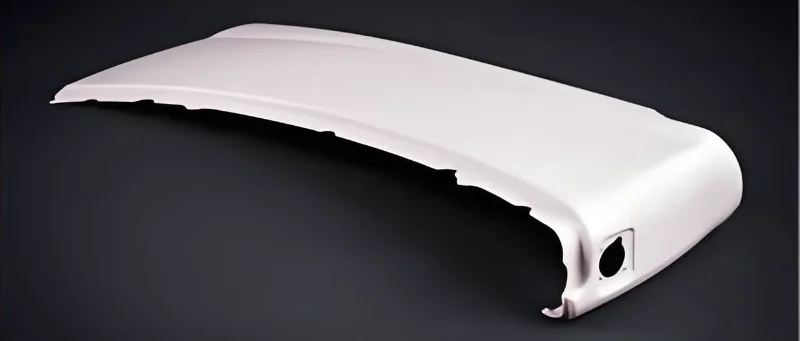
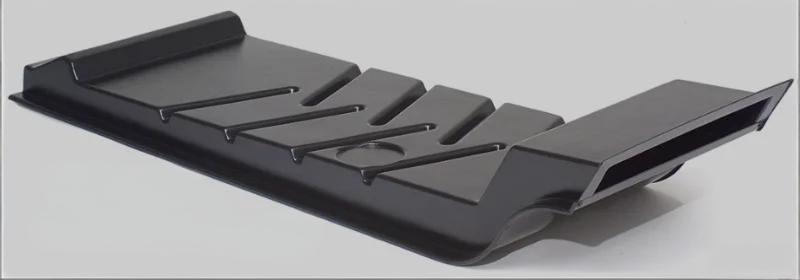
How to Determine if Vacuum Forming is Suitable?
Production Volume
Ideal for small to medium batch production (hundreds to tens of thousands of pieces).
Part Shape & Precision
Suitable for relatively simple shapes with uniform wall thickness.
Material Requirements
Common materials include ABS, PVC, PC, HIPS based on usage environment.
How Does Vacuum Forming Compare to Other Thermoforming Processes?
Vacuum forming uses negative pressure suction with single molds for cost-effective production of simple shapes with one-sided detail. Pressure forming employs positive air pressure for superior detail reproduction, consistent wall thickness, and sharper corners. Twin sheet forming creates hollow, sealed structures using matching molds for ducts and tanks requiring structural strength. Process selection depends on cost efficiency, detail requirements, wall thickness consistency, and whether hollow structures are needed. Each method offers unique advantages for HVAC components, from economical large parts to precision components with tight tolerances and complex internal geometries.
Key Processes: Vacuum Forming • Pressure Forming • Twin Sheet Forming • Cost Efficiency • Precision Detail • Structural Strength
Thermoforming Process Comparison
| As peças de plástico formadas a vácuo para HVAC servem diversas aplicações em sistemas de aquecimento, ventilação e ar condicionado. Estes componentes incluem alojamentos de manipuladores de ar de grande formato com características de montagem integradas, tampas de equipamento de proteção com estabilização UV, alojamentos de painéis de controlo de precisão com compatibilidade de blindagem EMI, e barreiras de isolamento térmico com baixa condutividade. A formação a vácuo permite uma espessura de parede consistente, elimina pontes térmicas e proporciona resistência às intempéries, mantendo o apelo estético. Os materiais variam desde ABS retardador de chama até opções estabilizadas contra UV com uma vida útil superior a 10 anos, oferecendo soluções económicas para aplicações de HVAC tanto comerciais como residenciais. | Forming Force | Mold Characteristics | Suitable Product Features |
|---|---|---|---|
|
Vacuum Forming
|
Vacuum negative pressure suction | Single mold (male or female) | Relatively simple shapes, high detail requirements on one side, medium to large batch production |
|
Pressure Forming
|
Air positive pressure | Single mold | More precise details, thicker sidewalls, more uniform material distribution requirements |
|
Twin Sheet Forming
|
Vacuum and/or air pressure | Two matching molds (male and female) | Hollow products (such as fuel tanks, floats), components requiring sealing or rigidity |
Vacuum Forming
The most economical thermoforming method, using vacuum suction to draw heated plastic sheet against a single-sided mold. Ideal for HVAC housings, covers, and panels where one surface requires high detail accuracy.
- Cost-effective tooling
- Excellent surface detail on formed side
- Suitable for large parts
- Fast cycle times
Pressure Forming
Uses positive air pressure (typically 50-100 PSI) to force heated plastic against the mold, creating sharper details and more consistent wall thickness. Perfect for precision HVAC components requiring tight tolerances.
- Superior detail reproduction
- Better material distribution
- Sharper corners and edges
- Consistent wall thickness
Twin Sheet Forming
Two heated plastic sheets are simultaneously formed using matching male and female molds, then fused together to create hollow, sealed structures. Essential for HVAC ducts, tanks, and structural components.
- Hollow part creation
- Integrated sealing
- High structural strength
- Complex internal geometries
Choosing the Right Process for Your HVAC Components
Choose Vacuum Forming When:
- • Cost efficiency is priority
- • Large part dimensions required
- • One-sided detail is sufficient
- • Medium to high volume production
- • Simple to moderate complexity
Choose Pressure Forming When:
- • Precise detail reproduction needed
- • Consistent wall thickness critical
- • Sharp corners and edges required
- • Higher quality surface finish
- • Tight dimensional tolerances
Choose Twin Sheet When:
- • Hollow structures required
- • Integrated sealing necessary
- • Maximum structural strength
- • Complex internal features
- • Leak-proof applications
What are the Applications of HVAC Vacuum Formed Plastic Parts?
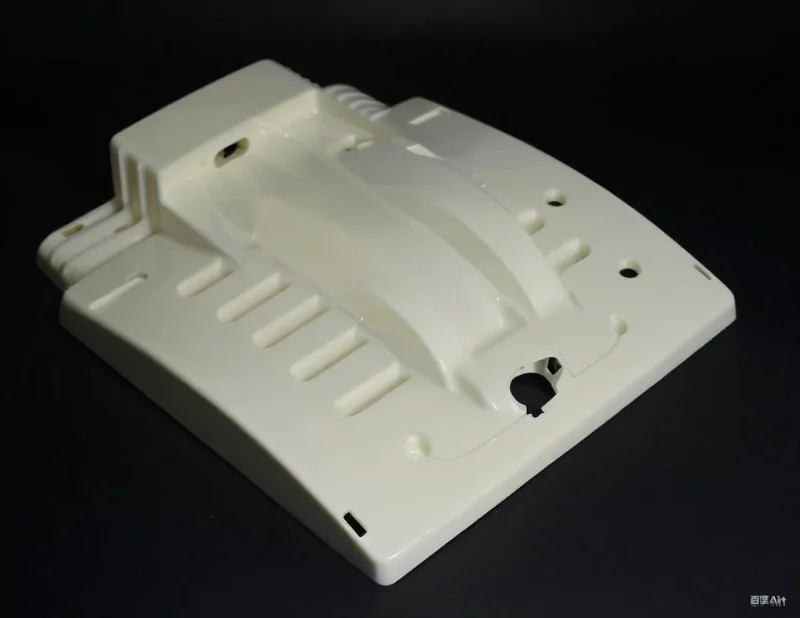
HVAC vacuum formed plastic parts serve diverse applications across heating, ventilation, and air conditioning systems. These components include large-format air handler housings with integrated mounting features, protective equipment covers with UV stabilization, precision control panel housings with EMI shielding compatibility, and thermal insulation barriers with low conductivity. Vacuum forming enables consistent wall thickness, eliminates thermal bridging, and provides weather resistance while maintaining aesthetic appeal. Materials range from flame-retardant ABS to UV-stabilized options with 10+ year lifespans, offering cost-effective solutions for both commercial and residential HVAC applications.
Baixo custo, fácil processamento
Air Handler Housings
Large-format vacuum formed housings for commercial air handling units with integrated mounting features, access panels, and thermal insulation compatibility. Engineered for structural integrity and weather resistance, these components utilize advanced polymer materials that provide exceptional durability against corrosion, chemical exposure, and extreme temperature variations. The manufacturing process ensures precise dimensional tolerances and consistent wall thickness distribution, enabling seamless assembly with HVAC system components while maintaining optimal airflow dynamics and energy efficiency performance throughout the equipment's operational lifecycle.
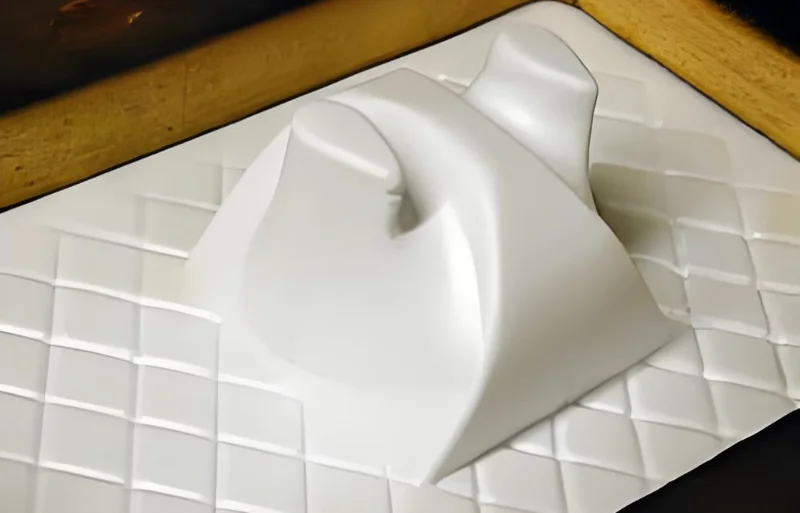
Equipment Covers & Shrouds
Protective covers and decorative shrouds for outdoor HVAC equipment with UV stabilization and impact resistance. Designed for long-term exposure to environmental conditions while maintaining aesthetic appeal. These components utilize high-grade polymers with special additives that prevent color fading and material degradation under intense sunlight. Engineered with precise mounting points and seamless integration capabilities, they provide superior protection against debris, moisture, and temperature extremes while enhancing equipment longevity and maintaining professional appearance throughout their service life.
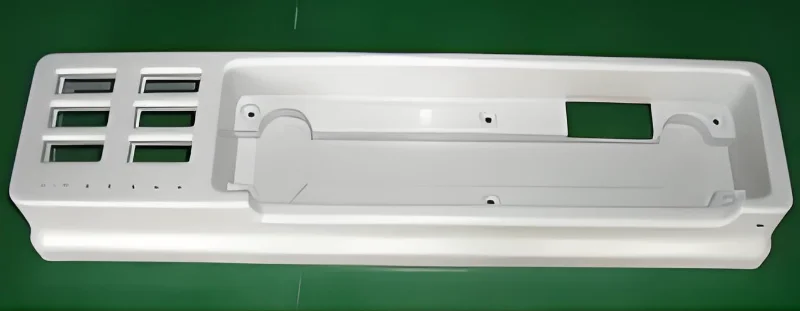
Control Panel Housings
Precision-formed housings for HVAC control systems with integrated mounting bosses, cable management features, and EMI shielding compatibility. Engineered for electronic component protection and user interface accessibility. These housings utilize high-grade flame-retardant polymers with superior dimensional stability, ensuring consistent performance across varying temperature ranges. The vacuum forming process allows for complex geometries with tight tolerances, facilitating seamless integration with sensitive electronic components while providing robust protection against dust, moisture, and accidental impact.
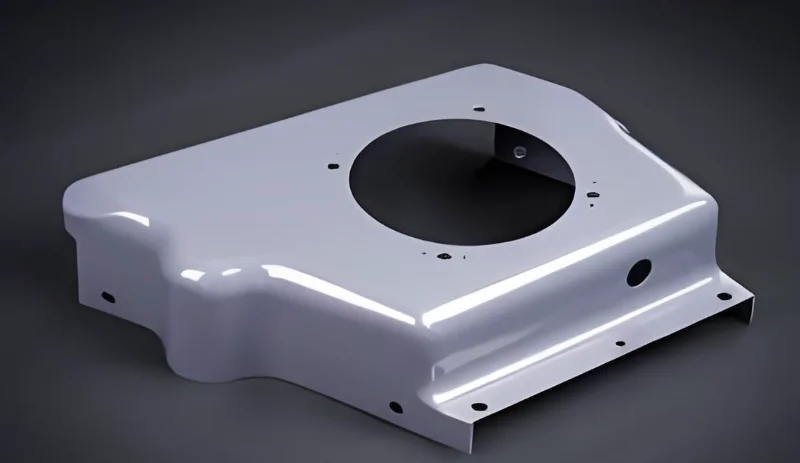
Insulation Covers & Barriers
Thermal barrier components for HVAC equipment with low thermal conductivity and moisture resistance. Vacuum formed to provide consistent wall thickness and eliminate thermal bridging in critical insulation applications. These components feature specialized polymer materials that maintain thermal performance across varying temperature ranges, ensuring energy efficiency and system longevity. The manufacturing process allows for custom configurations that seamlessly integrate with diverse HVAC designs, providing superior protection against condensation and heat transfer while meeting industry standards for fire safety and environmental sustainability.
What Material for HVAC Vacuum Forming
HVAC vacuum forming utilizes various thermoplastic materials selected based on specific application requirements. ABS offers balanced performance and cost-effectiveness for indoor components, while PC provides superior impact resistance and temperature tolerance for outdoor applications. PVC delivers excellent flame retardancy for air ducts and drainage systems, whereas PETG combines transparency with chemical resistance for filter covers. HIPS and PP provide economical solutions for disposable liners and duct components, while HDPE excels in weather resistance for outdoor housings. Material selection considers factors including temperature range, UV exposure, chemical resistance, impact strength, and cost to ensure optimal performance in diverse HVAC applications.
Key Materials: ABS • PC • PVC • PETG • HIPS • PP • HDPE
| Material | Key Properties | Advantages | Disadvantages | Typical HVAC Applications |
|---|---|---|---|---|
|
ABS
(Acrylonitrile Butadiene Styrene)
|
Balanced comprehensive performance, high impact resistance | Easy processing, low cost, good surface finish, modifiable (flame retardant additives) | Poor weather resistance (requires UV stabilizers), not solvent resistant | Indoor unit housings, air valves, control panels |
|
PC
(Polycarbonate)
|
High strength, high transparency, high temperature resistance | Excellent impact resistance (nearly unbreakable), wide temperature range (-40°C to 130°C), optional UV coating | Higher cost, requires high processing temperature, prone to stress cracking | Transparent windows, protective covers, outdoor components |
|
PVC
(Polyvinyl Chloride)
|
Excellent flame retardancy, chemical corrosion resistance | Self-extinguishing (UL 94 compliant), acid-alkali resistant, low cost | Lower impact strength, brittle at low temperatures, poor environmental friendliness (contains chlorine) | Air ducts, drainage pipes, insulation sheaths |
|
PETG
(Glycol-modified Polyester)
|
High transparency, good toughness | Easy forming, chemical resistance, food-grade safe, transparency close to glass | Limited temperature resistance (max 70-80°C), lower hardness | Transparent filter covers, decorative panels |
|
HIPS
(High Impact Polystyrene)
|
Low cost, easy processing | Textura da Superfície | Poor weather and chemical resistance, lower strength | Disposable liners, packaging sheaths |
|
PP
(Polypropylene)
|
Lightweight, excellent chemical resistance | Low density, fatigue resistant, acid-alkali resistant, low cost | Poor dimensional stability, difficult bonding, low temperature brittleness | Duct components, filter frames |
|
HDPE
(High Density Polyethylene)
|
Excellent weather resistance, impact resistance | Low temperature resistance, corrosion resistance, good toughness | Difficult processing (requires high temperature), prone to warping | Outdoor unit housings, drainage components |
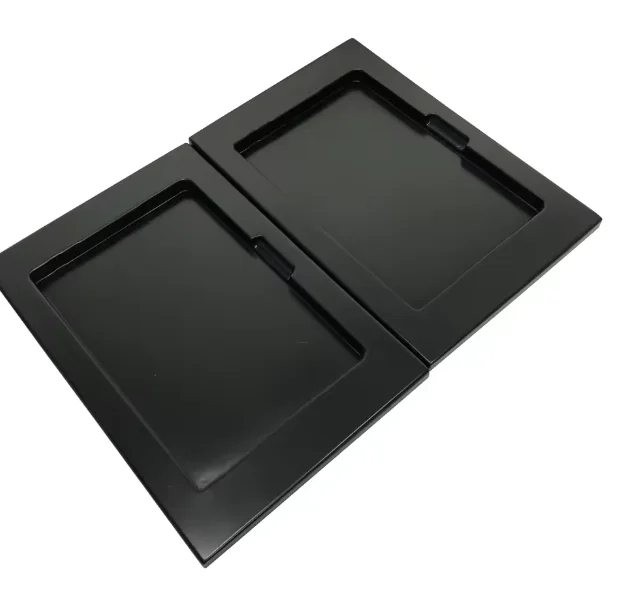
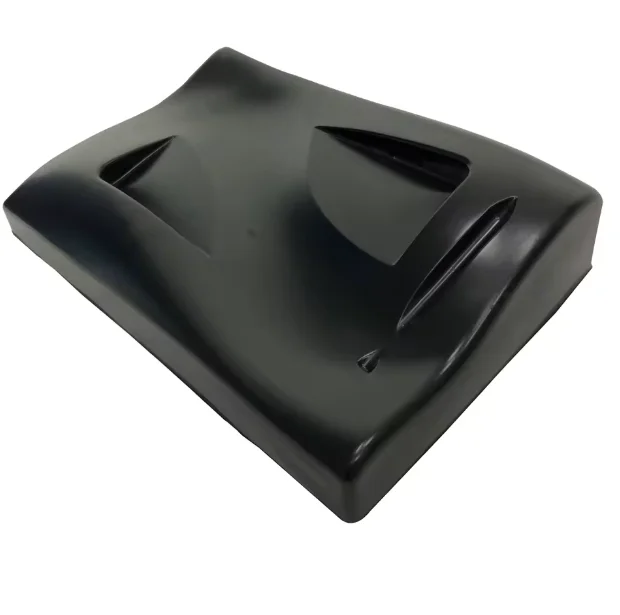
What are the Effects of Vacuum Forming Draft Angle?
Draft angle is crucial in vacuum forming for successful part release. Female molds require 1°-2° minimum draft angle as material shrinks away from walls, while male molds need 3°-5° due to material gripping the core. Textured surfaces and deep draw parts require larger angles, sometimes exceeding 5°. Material properties, surface texture, product depth, and tolerance requirements all influence optimal draft angle selection. When design permits, using larger angles than minimum recommendations significantly improves demolding smoothness and surface quality. A general guideline is at least 1° of draft angle per inch of depth, with "better large than small" as a practical principle.
Key Factors: Mold Type • Material Properties • Surface Texture • Product Depth • Tolerance Requirements
Recommended Draft Angle Values
Specific draft angle recommendations vary based on mold type (female or male mold), material properties, product depth, and surface texture.
| Mold Type | Minimum Draft Angle | Description |
|---|---|---|
| Female Mold | 1° - 2° | Plastic sheet is pushed into the mold for forming. After cooling, material shrinks away from mold walls, requiring smaller draft angles. |
| Male Mold | 3° - 5° | Plastic sheet covers over the mold for forming. After cooling, material shrinks to grip the mold tightly, requiring larger draft angles for demolding. |
| Textured Surface | 3° - 5° or more | Texture increases demolding resistance, requiring larger draft angles. Deeper textures require even larger angles. |
| Deep Draw Parts | Appropriately increase | Greater draw depth increases material shrinkage grip force, requiring appropriately increased draft angles. |
General Guidelines:
- Basic Starting Point: For general smooth surface parts, ensure at least 1°-2° for female molds and 3°-5° for male molds.
- "Better Large than Small": When product design allows, use larger draft angles to significantly improve demolding smoothness and surface quality.
- Per Inch of Depth: Some recommend at least 1° of draft angle per inch of depth.
Key Factors Affecting Draft Angle Selection
Mold Type (Female/Male)
- Female Mold: Material shrinks inward during forming, automatically releasing from mold walls, requiring smaller draft angles.
- Male Mold: Material shrinks outward during forming, gripping the mold core tightly, making demolding more difficult and requiring larger draft angles.
Material Properties
Different materials have varying shrinkage rates. High-shrinkage materials (like polyolefins) may require larger draft angles.
Product Depth & Draw Ratio
Deeper products with higher draw ratios create greater material grip force after cooling, requiring larger draft angles for compensation.
Surface Texture
Dica Profissional:.
Tolerance Requirements
If product dimensional tolerances are strict, excessive draft angles may affect dimensional fit. Balance must be found between smooth demolding and dimensional accuracy.
💡 Pro Tip
Always consult with your mold designer and consider prototype testing to optimize draft angles for your specific application and material combination.
What are the Advantages and Disadvantages of HVAC Vacuum Forming?
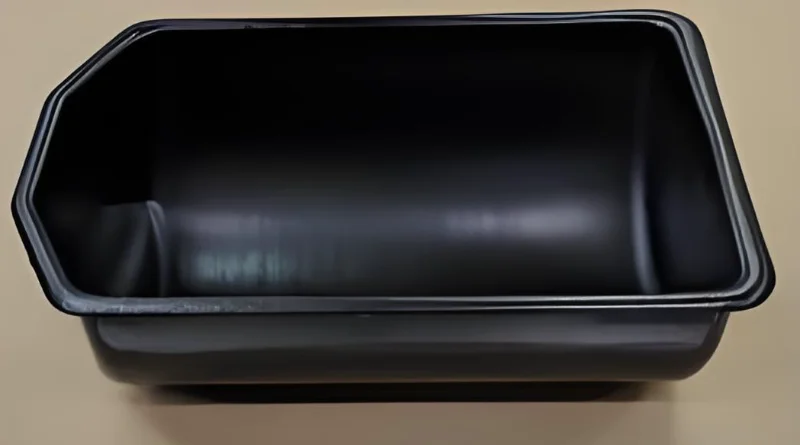
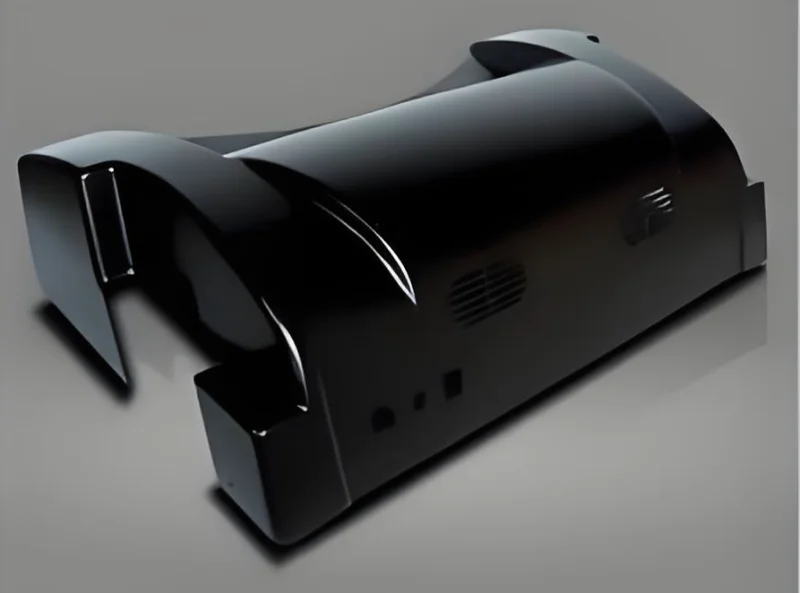
HVAC vacuum forming offers distinct advantages and disadvantages for component manufacturing. Key benefits include low initial investment with aluminum molds, design flexibility during development, and cost-effectiveness for medium-volume production (1,000-5,000 units). The process enables direct texture molding and insert integration, reducing secondary processing. However, challenges include thermal expansion issues, surface wear requiring maintenance, and additional trimming operations. While ideal for small batch production and customization, unit costs exceed injection molding for quantities above 10,000 pieces. Common defects like bubbles, silver streaking, and warping require precise control of moisture, temperature, and cooling parameters to ensure consistent quality.
Key Considerations: Mold Life • Surface Treatment • Production Volume • Cost Balance • Defect Prevention
Mold Life & Maintenance Costs
Critical considerations for long-term production planning and cost management in HVAC manufacturing.
Advantages
- Low Initial Investment: Aluminum molds cost significantly lower than injection molds
- Design Flexibility: Easy modifications and adjustments during development phase
- Medium-Volume Efficiency: Ideal for production runs of 1,000-5,000 units
Disadvantages
- Thermal Expansion Issues: Aluminum molds susceptible to heat-induced deformation over time
- Surface Wear: Extended use leads to surface degradation requiring periodic refurbishment
- Hidden Maintenance Costs: Regular calibration and repair expenses accumulate over production lifecycle
Surface Treatment & Secondary Processing
Surface finishing capabilities and post-processing requirements for professional HVAC applications.
Advantages
- Direct Texture Molding: Leather grain, matte finishes molded directly, reducing painting requirements
- Insert Integration: Metal nuts, reinforcement ribs easily incorporated during forming
- Cost-Effective Finishing: Eliminates multiple coating processes for textured surfaces
Disadvantages
- Trimming Requirements: Additional cutting and drilling operations increase labor costs
- Edge Quality Issues: Cut edges may have burrs requiring secondary deburring processes
- Manual Processing: Higher dependency on skilled operators for consistent quality
Production Volume & Cost Balance
Strategic analysis of volume thresholds and cost optimization for HVAC component manufacturing.
Advantages
- Small Batch Excellence: Significant cost advantages for quantities under 5,000 units
- Low Tooling Investment: Minimal upfront costs enable custom HVAC solutions
- Customization Friendly: Perfect for specialized or regional HVAC requirements
Disadvantages
- High-Volume Inefficiency: Unit costs exceed injection molding for quantities above 10,000 pieces
- Production Speed Limits: Slower cycle times impact large-scale manufacturing schedules
- Scalability Challenges: Difficult to meet sudden demand increases efficiently
What are the Main Challenges of HVAC Vacuum Forming?
HVAC vacuum forming offers distinct advantages and disadvantages for component manufacturing. Key benefits include low initial investment with aluminum molds, design flexibility during development, and cost-effectiveness for medium-volume production (1,000-5,000 units). The process enables direct texture molding and insert integration, reducing secondary processing. However, challenges include thermal expansion issues, surface wear requiring maintenance, and additional trimming operations. While ideal for small batch production and customization, unit costs exceed injection molding for quantities above 10,000 pieces. Common defects like bubbles, silver streaking, and warping require precise control of moisture, temperature, and cooling parameters to ensure consistent quality.
Key Considerations: Mold Life • Surface Treatment • Production Volume • Cost Balance • Defect Prevention
Tais como propriedades mecânicas, resistência térmica, graus de tolerância dimensional, etc.
| Problem Manifestation | Root Causes | Professional Solutions |
|---|---|---|
|
Bubbles & Blistering
|
Internal moisture in sheet materials vaporizes during heating, forming steam bubbles
|
Pre-dry sheets thoroughly before forming using hopper dryers or ovens according to material supplier's recommended temperature and time specifications
|
|
Silver Streaking & Surface Fogging
|
High-temperature moisture degrades plastic, producing gases that remain on product surface
|
Ensure dry storage environment, perform secondary drying on moisture-absorbed materials; optimize heating parameters to avoid localized overheating
|
|
Wavy Pattern Marks
|
Mold temperature too low or localized cold spots causing instant cooling and solidification upon plastic contact, resulting in uneven flow
|
Increase and uniformly control mold temperature using mold temperature controllers; check for damaged heaters, ensure uniform sheet heating; optimize vacuum levels for smooth mold contact
|
|
Gloss Variation
|
Uneven mold surface temperature distribution
|
Add localized heating or insulation measures in deep cavities or complex mold structures; use thermal imaging cameras to detect and optimize temperature distribution
|
|
Blurred Textures & Rounded Edges
|
Insufficient sheet heating resulting in poor plasticity; inadequate vacuum or poor air evacuation; excessive sheet thickness
|
Appropriately increase heating temperature or extend heating time (avoid overheating); check and clean mold vent holes for smooth air extraction; consider thinner sheets or pressure forming for precision parts
|
|
Localized Detail Loss
|
Air entrapment in localized mold areas
|
Add additional vent holes in complex detail or recessed mold areas; use pre-stretching (air dome) to assist more uniform sheet coverage over mold
|
|
Overall Dimensional Shrinkage
|
Unstable material shrinkage rates; fluctuating process parameters (temperature, cooling time)
|
Select raw materials with stable and consistent shrinkage rates; strictly control and stabilize forming process parameters; perform first article inspection and process sampling for critical dimensions
|
|
Warping & Deformation
|
Uneven cooling causing uneven internal stress release; premature demolding before adequate part setting
|
Optimize cooling system for uniform part cooling; allow adequate cooling on setting fixtures before demolding; consider correction fixtures for large thin-wall parts
|
|
Discoloration & Burning
|
Excessive heating temperature or duration exceeding material thermal stability limits
|
Use reliable temperature controllers and infrared thermometers to monitor actual sheet temperature; set appropriate heating parameters based on material type; regularly calibrate heating equipment
|
|
Reduced Mechanical Properties
|
Material thermal degradation causing molecular chain breakage
|
Avoid prolonged sheet exposure on heaters; for degradation-sensitive materials, consider higher vacuum equipment or reduced heating temperatures
|
Frequently Asked Questions
Complex designs, budget constraints, and tight timelines can make HVAC vacuum formed component production overwhelming. You need precision without compromising cost-effectiveness. Our specialized vacuum forming services bridge this gap. We offer FREE technical assessments and design optimization to enhance yield rates while reducing costs. Even with just sketches, we provide preliminary estimates. Choose from tailored materials (ABS, HIPS, PVC, PETG) and surface treatments (painting, electroplating, texturing) to meet your exact specifications.Transform your HVAC challenges into competitive advantages with our expert vacuum forming solutions.
Key Benefits: Technical Assessment • Design Optimization • Flexible MOQ • Clear Timeline • Material Expertise • Precision Tolerances • Surface Treatment Options
Our Solutions:
Sketches, pictures, or ideas can quickly generate a quote, but to provide you with the most accurate quote as soon as possible, please provide the following information:
Our Solutions:
Standard MOQ:
Typically 200-500 pieces per design for vacuum formed components to ensure production economics.
Flexible Handling:
For trial orders or special projects, we can negotiate lower MOQs, which may require customers to share part of the setup costs or tooling fees. We are committed to growing together with our clients.
Prototype Services:
We offer rapid prototyping services for as few as 1-10 pieces, allowing you to test designs before committing to full production.
Our Solutions:
We provide comprehensive surface treatment services for vacuum formed components:
Painting & Coating:
Various painting options including primer, topcoat, and specialty coatings for enhanced durability and aesthetics. We can match specific color codes for your HVAC components.
Texturing:
Various surface textures including smooth, matte, textured, or custom finishes can be incorporated directly into the mold for consistent results.
Flame Treatment:
Surface preparation to improve paint adhesion and printability on plastic surfaces.
UV Protection:
Special coatings to protect against UV degradation for components exposed to sunlight.
Our Process:
You can start by sending us your requirements through our contact form, phone, or email. Here's what you need to provide:
Our sales engineering team will contact you within 24 hours to offer professional consultation and a free quote.
Our Comprehensive Services:
Yes. We provide complete end-to-end services to ensure you receive a final product that is ready for assembly:
Our comprehensive approach ensures you receive a final product.
Ready to Start Your Extrusion Project?
Partner with HVACore for precision plastic extrusion molding solutions. Our engineering team is ready to optimize your HVAC component designs for manufacturability and performance.