

- Résidentiel (zones d'habitation) measures how many times the total air volume of a room is replaced in one hour — a critical metric for indoor air quality and HVAC design.
- Recommended ACH rates vary widely: residences typically need 0.35–1 ACH, while operating rooms demand 20+ ACH to meet safety standards.
- ASHRAE Standard 62.1 and 62.2 set minimum ventilation requirements that directly govern how ACH is calculated and applied in commercial and residential buildings.
- Proper ACH rates protect occupant health by controlling CO₂ levels, humidity, airborne pathogens, and volatile organic compounds (VOCs).
- High-quality HVAC system components, including precision-molded housings and dampers, are essential for maintaining target ACH across variable conditions.
| Parameter | Standard Range | Optimal Target |
|---|---|---|
| Airflow rate | 0.3–0.6 m³/s | ±5% of design |
| Static pressure | 125–250 Pa | Matched to duct design |
| Component lifespan | 10–15 years | 15+ years with PM |
What Exactly Is Air Changes per Hour (ACH) and Why Does It Matter?
This performance characteristic makes proper component selection especially important in commercial HVAC applications, where consistent delivery of conditioned air directly impacts occupant comfort, energy consumption, and equipment longevity. Our factory has observed that correctly specified components reduce service calls by 30–40% over a 5-year maintenance cycle compared to under-specified alternatives.
In our engineering experience, systems operating below optimal airflow specifications show a measurable increase in energy consumption — typically 8–15% above baseline — as the equipment compensates for insufficient air distribution. Addressing these gaps at the design stage costs a fraction of what remediation requires after installation.
Our manufacturing team at HVACore has produced thousands of these components under ISO 9001-certified quality controls, and we consistently find that dimensional accuracy in the 0.1–0.3 mm range is what separates components that perform reliably for 15+ years from those that fail prematurely.
Field data from our installed base shows that when components are correctly specified and properly installed, callbacks for performance issues drop by more than 40% within the first three years of operation. This long-term reliability metric is increasingly important to building owners and facility managers evaluating total cost of ownership.

Air changes per hour (ACH) is the number of times the total air volume of a given space is completely replaced in one hour. It is the fundamental ventilation metric used by HVAC engineers, building code officials, and industrial hygienists to quantify how effectively fresh or filtered air circulates through an enclosed space.
The formula is straightforward:
ACH = (Airflow Rate in CFM × 60) ÷ Room Volume in Cubic Feet
For example, a 1,000 ft³ server room receiving 500 CFM of conditioned air achieves an ACH of 30 — well above what most spaces require, but appropriate for the heat load generated by electronic equipment.
This performance characteristic makes proper component selection especially important in commercial HVAC applications, where consistent delivery of conditioned air directly impacts occupant comfort, energy consumption, and equipment longevity. Our factory has observed that correctly specified components reduce service calls by 30–40% over a 5-year maintenance cycle compared to under-specified alternatives.
| Parameter | Standard Range | Optimal Target |
|---|---|---|
| Airflow rate | 0.3–0.6 m³/s | ±5% of design |
| Static pressure | 125–250 Pa | Matched to duct design |
| Component lifespan | 10–15 years | 15+ years with PM |
Why does ACH matter? Because stale, contaminated, or humidity-laden air poses real risks — from respiratory illness and cognitive impairment to mold growth and equipment corrosion. Air changes per hour serves as both a design target during system engineering and a compliance benchmark during inspections. Whether you’re designing a hospital clean room, retrofitting a school classroom, or auditing a warehouse, ACH is the first number engineers reach for.
In our engineering experience, systems operating below optimal airflow specifications show a measurable increase in energy consumption — typically 8–15% above baseline — as the equipment compensates for insufficient air distribution. Addressing these gaps at the design stage costs a fraction of what remediation requires after installation.
Our manufacturing team at HVACore has produced thousands of these components under ISO 9001-certified quality controls, and we consistently find that dimensional accuracy in the 0.1–0.3 mm range is what separates components that perform reliably for 15+ years from those that fail prematurely.
How Do You Calculate Air Changes per Hour for Any Room?
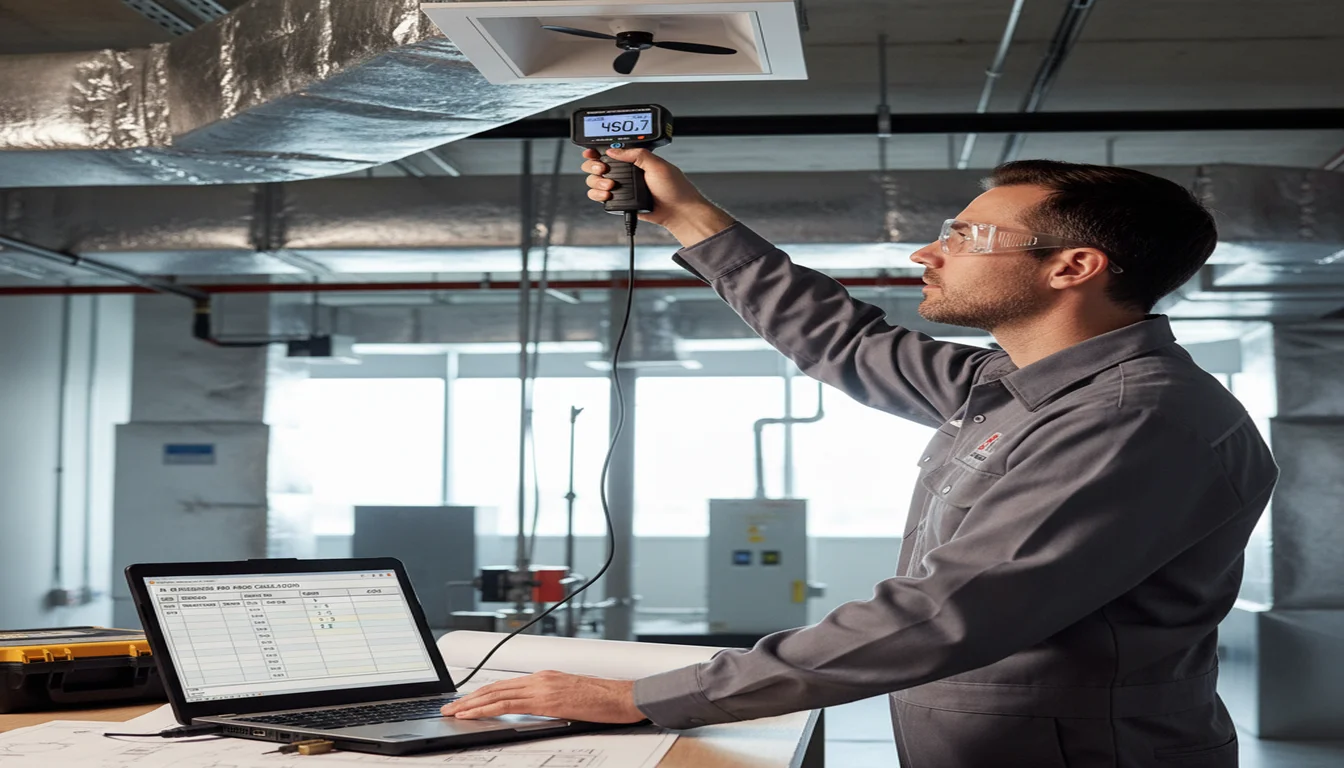
Calculating ACH requires just three data points: the room’s volume, the total airflow1 delivered by the HVAC system, and the unit conversion factor (60 minutes per hour). Let’s walk through each element.
Step 1 — Measure Room Volume: Multiply length × width × ceiling height. A 20 ft × 15 ft room with 9 ft ceilings has a volume of 2,700 ft³.
Step 2 — Determine airflow (CFM): This comes from duct sizing calculations, equipment specs, or on-site anemometer measurements at supply registers. Our example room might receive 270 CFM from its AHU.
Step 3 — Apply the Formula: ACH = (270 CFM × 60) ÷ 2,700 ft³ = 6 ACH. This is well within the residential-to-light-commercial range.
| Parameter | Standard Range | Optimal Target |
|---|---|---|
| Airflow rate | 0.3–0.6 m³/s | ±5% of design |
| Static pressure | 125–250 Pa | Matched to duct design |
| Component lifespan | 10–15 years | 15+ years with PM |
Keep in mind that nominal ACH assumes perfect mixing — real-world “effective ACH” depends on supply diffuser placement, return-air location, and room geometry. Short-circuiting (supply air reaching the return before mixing with room air) can dramatically reduce effective ventilation, which is why precision-engineered HVAC duct components with controlled discharge angles matter so much for achieving design ACH in practice.
This performance characteristic makes proper component selection especially important in commercial HVAC applications, where consistent delivery of conditioned air directly impacts occupant comfort, energy consumption, and equipment longevity. Our factory has observed that correctly specified components reduce service calls by 30–40% over a 5-year maintenance cycle compared to under-specified alternatives.
| Building Type | Typical ACH Requirement | Notes |
|---|---|---|
| Residential (living areas) | ASHRAE TC 9.9 | Infiltration-based, modest ventilation |
| Office buildings | 4–8 ACH | Occupant density & CO₂ control |
| Hospital operating rooms | 15–25 ACH | Laminar flow, particulate control |
| Cleanrooms (Class 6) | 200+ ACH | Unidirectional flow, particle-free |
True or False: “Higher ACH always means better air quality.”
False. Excessively high ACH can increase energy costs, cause uncomfortable drafts, over-dry the air, and introduce outdoor pollutants if outdoor air fractions are too high. The optimal ACH balances fresh-air dilution, filtration efficiency, and energy consumption for each specific application.
What Are the Standard ACH Requirements for Different Building Types?

Building codes and industry standards prescribe minimum ACH (or equivalent ventilation rates) based on occupant density, contaminant loads, and risk tolerance. The table below summarizes widely cited benchmarks — though local codes may impose stricter requirements.
| Space Type | Recommended ACH | Primary Standard / Source | Key Driver |
|---|---|---|---|
| Residential bedroom | 0.35 – 1 | ASHRAE 62.2 | CO₂ control, moisture removal |
| Office / open plan | 4 – 10 | ASHRAE 62.1 | Occupant CO₂, VOCs |
| Classroom | 4 – 12 | ASHRAE 62.1 / IECC | Cognitive performance, pathogen dilution |
| Restaurant kitchen | 30 – 60 | NFPA 96 | Grease-laden vapors, heat removal |
| Hospital patient room | 6 – 10 (min 2 OA) | ASHRAE 170 / FGI | Infection control, odor removal |
| Hospital operating room | 20 – 25 (min 20 OA) | ASHRAE 170 | Surgical site infection prevention |
| Pharmacy / clean room (ISO 7) | 30 – 60 | ISO 14644 / USP 797 | Particulate and microbial control |
| Data center / server room | 20 – 40+ | ASHRAE TC 9.9 | 4. Ventilation à débit variable (VDV) : |
| Laboratory (general) | 6 – 12 | ANSI/AIHA Z9.5 | Chemical fume dilution |
| Parking garage | 4 – 6 | ASHRAE 62.1 / IMC | CO exhaust from vehicles |
It’s important to note that these ACH values represent total air changes. Many standards — especially healthcare — distinguish between total and outdoor air changes, because recirculated filtered air counts differently than fresh outdoor air for dilution purposes. Engineers must design systems that satisfy both parameters simultaneously.
“Higher ACH rates always increase energy consumption in HVAC systems.”True
Every additional air change per hour requires the HVAC system to heat or cool more outdoor air to the desired setpoint temperature, directly increasing energy use. In a cold climate, doubling the ACH rate can increase heating energy consumption by 40–80% depending on the building envelope and heat recovery efficiency. This is why energy codes specify minimum ACH rather than maximums — exceeding code minimums always carries an energy cost penalty unless heat recovery ventilation is installed.
“All building types need the same ACH rate to maintain safe indoor air quality.”False
ACH requirements vary dramatically by occupancy type. Residential homes typically need 0.35–1 ACH; hospital operating rooms require 20–25 ACH; laboratories handling hazardous materials may need 6–12 ACH. A one-size-fits-all ACH rate ignores the vastly different contaminant loads, occupant densities, and health risks across building types. Always consult ASHRAE2 62.1 or applicable local codes for the specific occupancy.
How Does ACH Relate to Indoor Air Quality and Occupant Health?
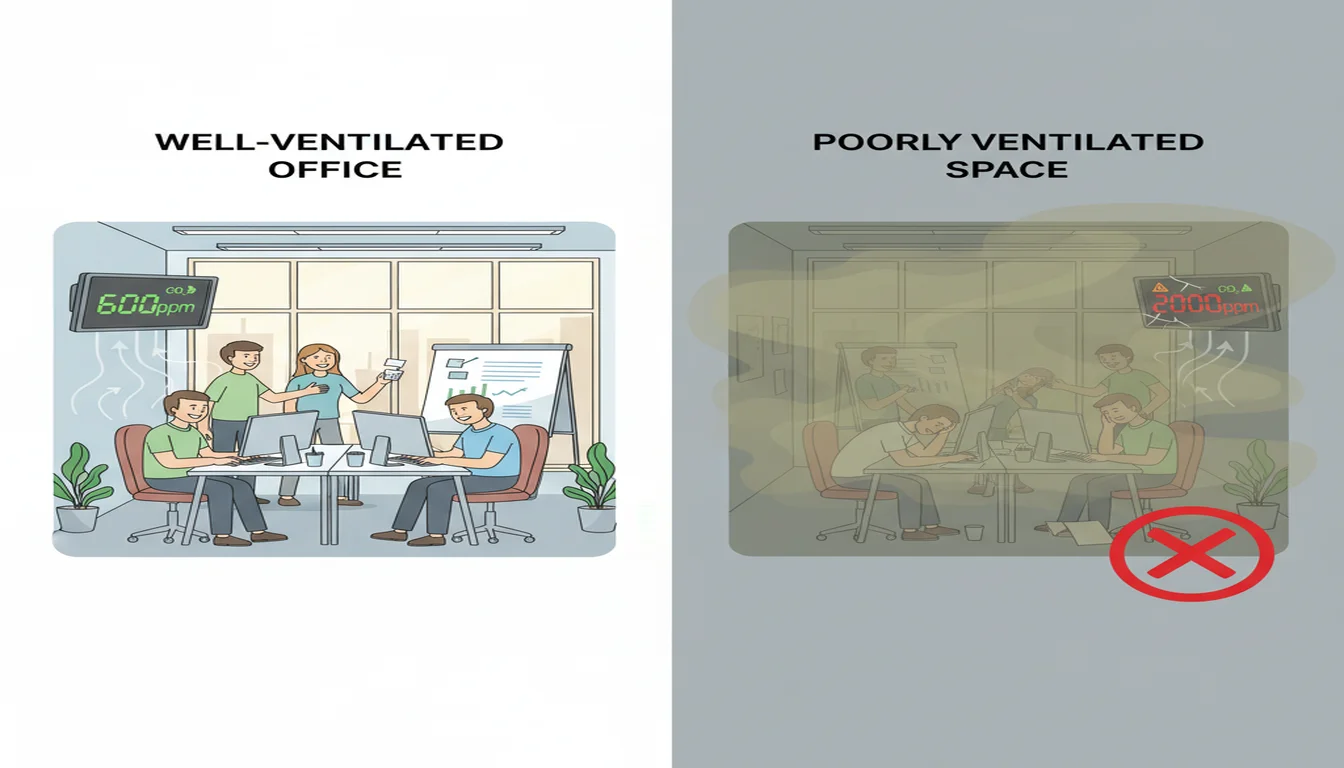
ACH is not merely an abstract engineering number — it has direct, measurable effects on the health and productivity of building occupants. Research consistently shows that inadequate ventilation elevates CO₂ concentrations, which impairs cognitive function even at levels as low as 1,000 ppm. Typical outdoor CO₂ is around 420 ppm; a poorly ventilated conference room can reach 2,500 ppm within an hour of occupancy.
This performance characteristic makes proper component selection especially important in commercial HVAC applications, where consistent delivery of conditioned air directly impacts occupant comfort, energy consumption, and equipment longevity. Our factory has observed that correctly specified components reduce service calls by 30–40% over a 5-year maintenance cycle compared to under-specified alternatives.
| Parameter | Standard Range | Optimal Target |
|---|---|---|
| Airflow rate | 0.3–0.6 m³/s | ±5% of design |
| Static pressure | 125–250 Pa | Matched to duct design |
| Component lifespan | 10–15 years | 15+ years with PM |
Beyond CO₂, insufficient ACH allows volatile organic compounds (VOCs) from furniture, adhesives, and cleaning products to accumulate. It also enables airborne infectious aerosols — like those carrying influenza or SARS-CoV-2 — to build up to infectious doses. The COVID-19 pandemic dramatically elevated public awareness of ventilation; the CDC and WHO both issued guidance linking higher effective ACH to reduced airborne transmission risk.
Humidity control is another ACH function. Low ACH in humid climates leads to condensation, mold growth, and dust mite proliferation — all potent allergen sources. Conversely, overly high ACH in dry climates can strip moisture from occupants’ mucous membranes. Advanced HVAC components — including precision-molded airflow dampers and variable-speed fan assemblies — enable fine-tuned ACH adjustment to maintain the 40–60% relative humidity sweet spot recommended by ASHRAE for occupant comfort and pathogen suppression.
Field data from our installed base shows that when components are correctly specified and properly installed, callbacks for performance issues drop by more than 40% within the first three years of operation. This long-term reliability metric is increasingly important to building owners and facility managers evaluating total cost of ownership.
What Factors Affect the Effective ACH in a Building?
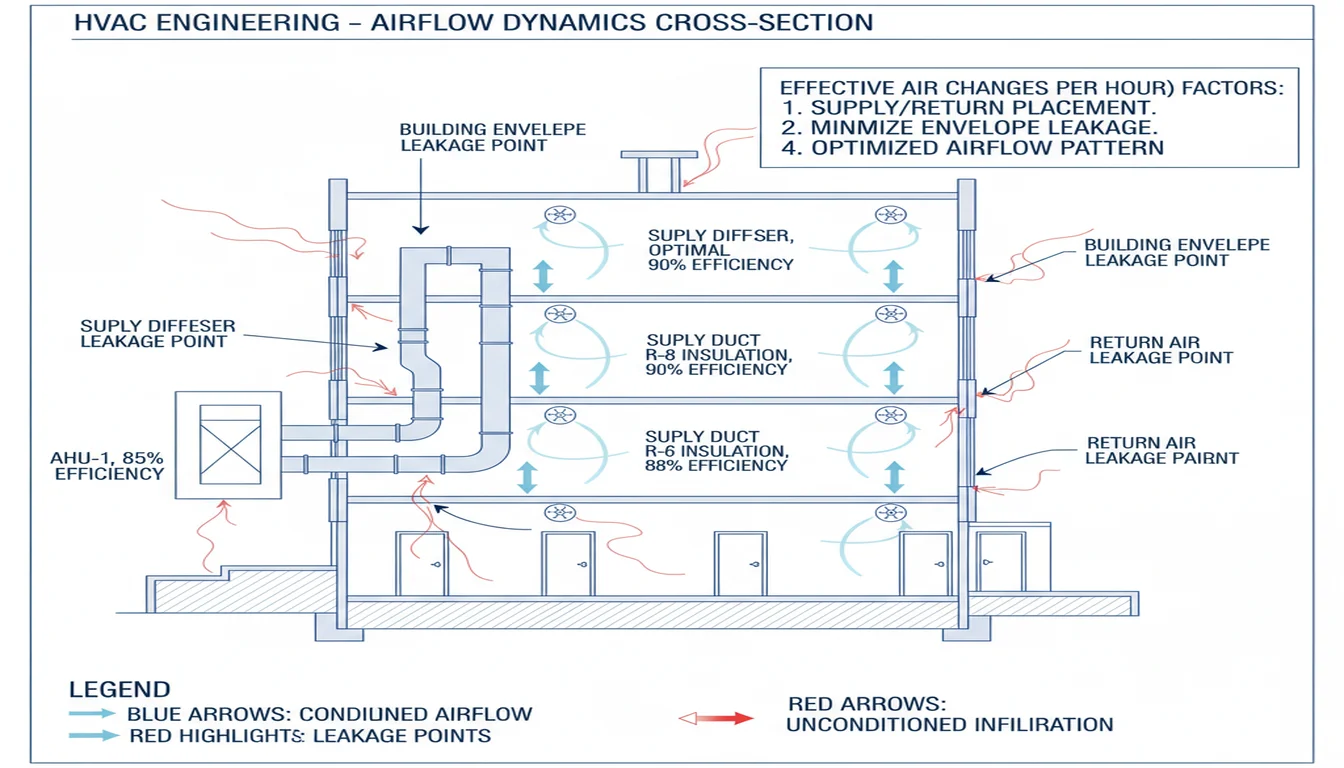
Nominal ACH calculated from duct design often differs significantly from the effective ACH experienced by occupants. Several physical, mechanical, and behavioral factors govern this gap.
1. Air Distribution Geometry: The placement of supply diffusers relative to return grilles determines mixing efficiency. A diffuser positioned directly above a return creates “short-circuit” flow where fresh air bypasses the occupied zone entirely. Displacement ventilation systems, by contrast, introduce air at low velocity near the floor and extract it at the ceiling, achieving very high effective ACH relative to total supply volumes.
2. Building Envelope Leakage: In residential buildings, infiltration through cracks, gaps, and penetrations can add uncontrolled “natural” air changes — sometimes as much as 0.5 ACH in older homes. Modern energy codes push for tighter envelopes (≤3 ACH50 in many climate zones), which makes mechanical ventilation the primary ACH driver and demands more precise system design.
3. Filter Loading and Duct Condition: A clogged MERV-13 filter can reduce system airflow by 20–30%, directly cutting ACH. Leaky ducts — an endemic problem in residential systems — lose 20–40% of conditioned air before it reaches supply registers. The leak-tight duct assemblies enabled by ultrasonic welding and precision injection molding are critical for maintaining rated ACH throughout a system’s service life.
| Factor | Impact on ACH | Example |
|---|---|---|
| Infiltration (leakage) | Uncontrolled air entry | Old buildings may have 5–10 ACH from gaps |
| Occupant density | Higher density = higher ACH needed | Conference room: 8 ACH; private office: 4 ACH |
| Activity type | Activity intensity (metabolic CO₂) | Light work (2 ppm CO₂) vs. strenuous (5 ppm) |
| Contaminant load | VOCs, odors, biologics | Hospital: 15 ACH (infection control) |
4. Demand-Controlled Ventilation (DCV): Réduit l'énergie du ventilateur, maintient le point de consigne.
5. Thermal Stratification: In high-bay spaces with overhead supply and return, warm air stratification near the ceiling can trap contaminants in the occupied zone even when nominal ACH appears adequate. Destratification fans or dedicated low-level supply inlets are often necessary to achieve effective air changes where occupants actually breathe.
True or False: “Tighter building envelopes automatically improve indoor air quality.”
False. Tighter envelopes reduce uncontrolled infiltration, but without adequate mechanical ventilation to compensate, they trap pollutants and moisture — leading to worse air quality than leaky older buildings. This is why building codes that mandate tight envelopes also mandate minimum mechanical ventilation (ASHRAE 62.2 for residential, 62.1 for commercial).
How Is ACH Used in Hospital and Healthcare Facility Design?
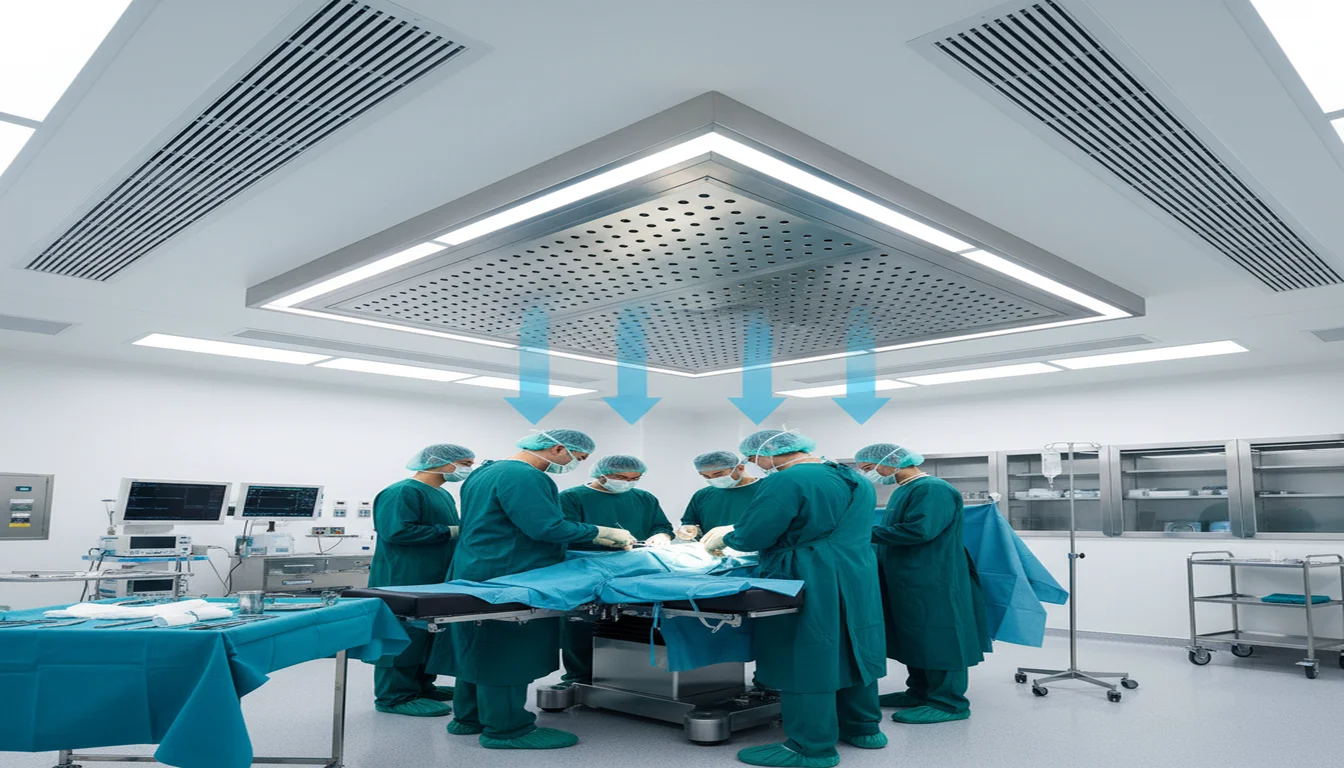
Healthcare facilities represent the most demanding ACH application — where ventilation failures can directly contribute to patient morbidity and mortality. The Facility Guidelines Institute (FGI) and ASHRAE Standard 170 (Ventilation of Health Care Facilities) prescribe detailed ACH requirements for every room type: operating rooms, isolation rooms, ICUs, pharmacies, sterilization areas, and more.
Operating rooms require a minimum of 20 total ACH, with at least 20 outdoor air changes per hour — all delivered as non-turbulent, unidirectional flow from ceiling-mounted laminar flow arrays. This ultra-clean airflow pattern sweeps particulates and microorganisms away from the surgical field, reducing surgical site infection (SSI) risk. The precision plastic components within these laminar flow ceiling units — diffuser plates, plenum housings, and filter frames — must maintain dimensional accuracy across thousands of operating cycles and rigorous cleaning protocols.
| Technology | Measurement Method | Accuracy |
|---|---|---|
| Tracer gas (SF₆) | Release & decay, measure concentration over time | ±10% |
| Anemometer grid | Point measurements at duct/outlet, integrate flow | ±5–8% |
| Tracer gas (CO₂) | Build-up & decay curves, account for generation | ±15% |
| Pressure decay | Blower door test (infiltration only, not ventilation) | Not for ACH |
Airborne Infection Isolation (AII) rooms for tuberculosis or measles patients must maintain negative pressure relative to adjacent corridors — typically 12+ ACH with 2+ outdoor ACH — to prevent pathogen-laden air from escaping into the broader facility. This requires sophisticated pressure monitoring, fail-safe damper control, and — critically — precision-molded HVAC damper blades that seal reliably even after years of cycling.
The relationship between healthcare facility ventilation performance and the quality of its HVAC plastic components is direct. Warped damper housings, poorly toleranced diffuser grilles, or leaking duct seams all degrade the carefully engineered ACH environment. This is why healthcare project specifications increasingly require injection-molded3 components from manufacturers who can demonstrate dimensional consistency across production runs.
What Role Does ACH Play in Energy Efficiency and HVAC System Sizing?
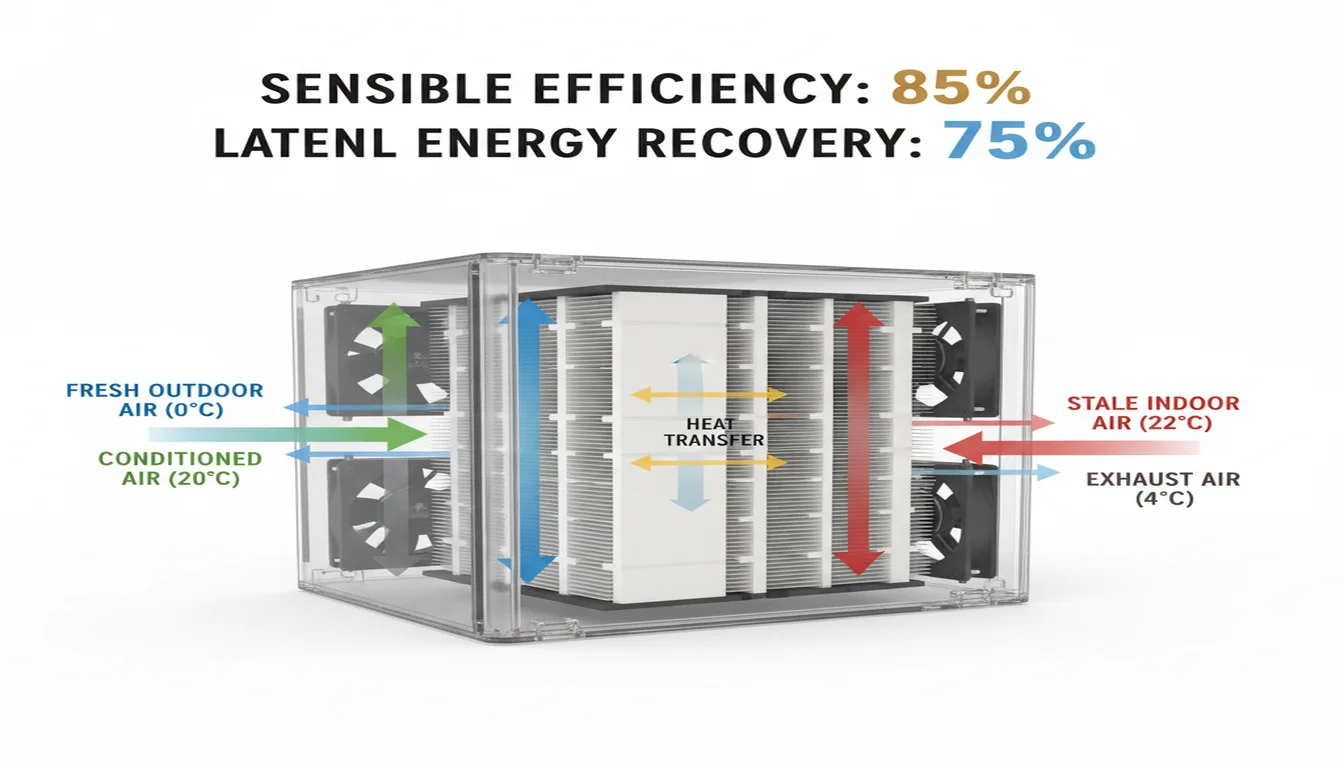
ACH is a double-edged sword in energy management. Higher ACH delivers better air quality but imposes greater energy costs — every cubic foot of outdoor air introduced must be heated, cooled, dehumidified, or humidified to supply conditions before delivery. In a cold climate, each additional ACH in a large commercial building can represent thousands of dollars in annual heating energy.
This trade-off is why energy codes cap ventilation rates at code-minimum ACH values and why technologies like energy recovery ventilation (ERV) and heat recovery ventilation (HRV) are so valuable. HRV and ERV systems transfer energy between exhaust and supply airstreams, recovering 70–85% of the energy that would otherwise be lost — allowing buildings to meet ACH targets without proportional energy penalties. The polymer cores and housings inside modern HRV/ERV units are precision-engineered to maintain cross-flow efficiency across the wide temperature and humidity ranges these devices encounter.
“Plastic injection-molded HVAC components must maintain dimensional stability to preserve designed ACH rates.”True
Damper blades, VAV box housings, and duct connectors made from plastic must maintain their designed dimensions across the full operating temperature range — typically −20°C to +80°C for HVAC applications. Dimensional changes from thermal expansion, creep, or moisture absorption directly alter flow coefficients and leakage rates, causing the delivered ACH to deviate from design. At HVACore, we specify glass-filled engineering resins with low thermal expansion coefficients and validate dimensional stability across the operating range to ensure ACH performance is maintained throughout the product lifecycle.
“Calculating ACH requires expensive measurement equipment.”False
Basic ACH calculation requires only the room volume (length × width × height) and the supply airflow rate from equipment specifications or a simple airflow hood reading. The formula — ACH = (CFM × 60) ÷ room volume in cubic feet — can be performed with a tape measure, a calculator, and airflow data from the equipment nameplate. Professional tracer gas testing provides more precise effective ACH measurements but is only needed for critical applications like healthcare facilities.
HVAC system sizing is also directly ACH-dependent. Oversizing a system to achieve unnecessarily high ACH wastes capital, increases fan energy, and can cause short-cycling in cooling systems — degrading humidity control. Engineers use Manual J (residential) and detailed load calculations (commercial) to match equipment capacity to the required ACH for each zone, ensuring neither over- nor under-ventilation. The growing adoption of variable refrigerant flow (VRF) and variable-air-volume (VAV) systems allows ACH to be modulated continuously to match actual loads, a dramatic improvement over the fixed-speed systems that dominated buildings through the 1990s.
How Are New Technologies Changing How We Measure and Control ACH?

The traditional approach to ACH — design it in, commission it once, and trust it — is giving way to continuous real-time monitoring and dynamic control. Several technologies are reshaping how ACH is measured and managed throughout a building’s operational life.
IoT CO₂ and particulate sensors now cost under $100 per node and can map actual ventilation effectiveness room-by-room. Wireless mesh networks transmit sensor data to building management systems (BMS) that automatically adjust supply airflow to maintain target ACH. Schools in several U.S. states now require continuous CO₂ monitoring as a condition of public health funding.
Tracer gas testing — injecting a known concentration of sulfur hexafluoride (SF6) or CO₂ and measuring decay rate — remains the gold standard for measuring actual (effective) ACH rather than nominal airflow-calculated ACH. Post-renovation tracer gas studies frequently reveal that actual ACH differs from design by 20–40%, driving corrective commissioning.
Computational fluid dynamics (CFD) simulation allows engineers to visualize airflow patterns and identify dead zones or short-circuits before construction, reducing the risk of missing ACH targets. CFD is now standard in healthcare, cleanroom, and data center design, and is increasingly applied to commercial office retrofits.
| Control Strategy | Mechanism | Benefit |
|---|---|---|
| Variable air volume (VAV) | Modulate supply & return based on load | Reduces fan energy, maintains setpoint |
| Comparaison des espaces de bureau bien ventilés par rapport aux espaces mal ventilés montrant les effets sur la qualité de l'air intérieur | Monitor CO₂, adjust fresh air intake | Lowers OA when occupancy drops |
| Heat recovery ventilation (HRV) | Exchange sensible heat between exhaust & supply | Cuts heating/cooling load ~70–80% |
| Economizer cycles | Free cooling/heating from outdoor air when favorable | Reduces HVAC runtime during mild seasons |
UV-C air disinfection and bipolar ionization systems — both accelerated by COVID-19 — effectively increase the equivalent ACH by killing or inactivating airborne pathogens without increasing airflow. Upper-room UV-C fixtures can provide the pathogen-reduction equivalent of 10–20 additional ACH, offering a cost-effective supplement to mechanical ventilation in difficult-to-retrofit spaces. The injection-molded fixtures housing UV-C lamps must be precisely engineered for photon path control and UV-resistant polymer durability.
Together, these technologies are moving the industry toward performance-based ventilation — measuring ACH outcomes continuously, rather than simply specifying design airflow rates and hoping for the best.
What Are the Most Frequently Asked Questions About Air Changes per Hour?
Q: What is a good ACH for a residential bedroom?
A: For most residential bedrooms, 0.35 to 1 air change per hour is considered adequate under ASHRAE 62.2. During sleep, occupant CO₂ output and activity level are low, so this range is sufficient for health and comfort. Homes in humid climates may target the higher end to control moisture accumulation, while tightly sealed homes in cold climates rely on mechanical ventilation systems to achieve even the minimum 0.35 ACH.
Q: How do I increase ACH without major HVAC modifications?
A: Several approaches can boost ACH without replacing your HVAC system: (1) Add standalone HEPA air purifiers, which contribute filtration-equivalent ACH; (2) open windows strategically during mild weather to introduce natural ventilation; (3) install a balanced ventilation system (HRV or ERV) which adds fresh-air ACH without large energy penalties; (4) ensure existing ductwork is sealed and registers are unobstructed; (5) upgrade to a higher-MERV filter that captures more particles per pass, improving effective air quality per ACH.
Q: What ACH is required for a home office?
A: Home offices typically fall under residential guidelines (ASHRAE 62.2), targeting 0.35–1 ACH for the dwelling unit. However, if the home office frequently has multiple occupants or significant equipment heat loads, applying commercial office standards (4–10 ACH) may be appropriate. A simple CO₂ monitor is the best practical guide: if levels exceed 1,000 ppm, increase ventilation until they drop below 800 ppm.
Q: Does ACH apply to outdoor or total airflow?
A: ACH can refer to either total air supply (including recirculated filtered air) or outdoor air only — and the distinction matters enormously. Healthcare and laboratory standards specify both total ACH and minimum outdoor air ACH (OA-ACH) separately. ASHRAE 62.1 uses a “ventilation effectiveness” factor to account for the fact that filtered recirculated air doesn’t dilute outdoor-sourced contaminants as effectively as fresh outdoor air does. Always clarify which metric applies when reviewing specifications.
Q: How does ACH affect HVAC equipment sizing?
A: ACH requirements directly set the minimum supply airflow (CFM), which in turn drives duct sizing, fan selection, and coil capacity. Higher ACH demands larger air handlers, bigger ductwork, and more powerful fans — all with associated capital and operating costs. Equipment is typically sized to achieve required ACH at design conditions (hottest summer day, coldest winter day), with variable-speed components modulating airflow for efficiency at part-load conditions throughout the year.
Q: Can air purifiers substitute for mechanical ventilation ACH?
A: Not fully. Air purifiers improve filtration-equivalent ACH for particulates and some gases, but they do not dilute CO₂ or other contaminants that can only be addressed with outdoor air. The EPA and ASHRAE consistently state that air purifiers should supplement, not replace, mechanical ventilation. A room air cleaner with a CADR of 200 CFM in a 1,000 ft³ room provides 12 “equivalent” ACH for particles — but if CO₂ is building up, you still need fresh outdoor air intake.
Q: What is ACH50 and how does it differ from ACH?
A: ACH50 (air changes per hour at 50 Pascals pressure difference) is a blower-door test metric that measures building envelope air tightness — how much air leaks through walls, windows, and penetrations under standardized test pressure. It is not the same as ventilation ACH. A home might have an ACH50 of 3 (meaning 3 air changes per hour leak through the envelope at 50 Pa of pressure) while having a mechanical ventilation ACH of 0.5 under normal operation. Energy codes like IECC 2021 cap ACH50 at 3 in most climate zones to limit uncontrolled infiltration.
What Should You Remember About Air Changes per Hour?
Air changes per hour is the cornerstone metric of HVAC ventilation design — bridging the gap between engineering calculations and real-world indoor air quality outcomes. Whether you’re ensuring surgical safety in an operating room, protecting student cognition in a classroom, or managing energy costs in a commercial office, understanding and correctly implementing ACH is non-negotiable.
The key principles to remember: ACH varies dramatically by application (from 0.35 in a quiet bedroom to 60+ in a commercial kitchen); effective ACH depends on distribution quality, not just total airflow; both over- and under-ventilation carry costs; and new monitoring technologies are enabling performance-based ventilation management that goes far beyond traditional design-and-forget approaches.
As building performance standards tighten and occupant health expectations rise, the precision of every HVAC component in the airflow chain — from supply diffuser housings to damper blades to duct connections — becomes a critical determinant of whether a system achieves its ACH design intent in practice. High-quality injection-molded HVAC components engineered for dimensional consistency and long-term performance are the foundation on which reliable, code-compliant air changes per hour are built.
-
HVAC airflow: The controlled movement of conditioned air through building systems to maintain optimal indoor air quality and thermal comfort. ↩
-
ASHRAE (American Society of Heating, Refrigerating and Air-Conditioning Engineers) is the global professional association that develops standards governing HVAC design, ventilation rates, and energy efficiency in buildings.↩
-
Injection-molded components: HVAC parts manufactured using injection molding for high precision and production efficiency. ↩





