
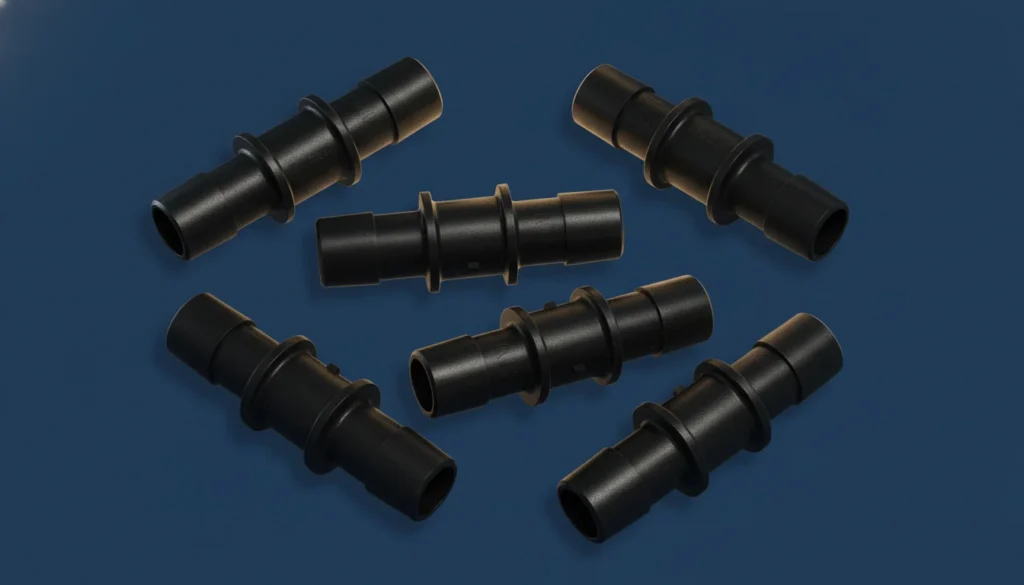
回転テーブル射出成形機を使用したインバータードライブカバー。.
Overmolding gaskets directly onto the rigid housing eliminates this human error entirely. By utilizing multi-shot molding HVAC technology, we fuse a soft Thermoplastic Elastomer (TPE) seal onto a rigid plastic chassis (usually ABS or Polycarbonate) inside the mold.
This is not just about aesthetics; it is about achieving a repeatable IP rated enclosure design (IP65/IP67) capable of surviving the thermal cycling of a rooftop unit in winter or the humidity of a tropical cooling tower.
Key Takeaways
- Overmolding (2K molding) injects the rigid housing and soft gasket in the same machine cycle.
- It creates a chemical bond between the housing and seal, eliminating leak paths caused by loose gaskets.
- Material compatibility is the #1 constraint; the TPE must be chemically compatible with the rigid substrate.
- Mechanical interlocks (undercuts) should be designed into the rigid part to anchor the seal mechanically.

Definition: HVAC Overmolded Seals (2K Molding)
TPE overmolding (often called 2-Shot or 2K molding) is a manufacturing process where two different materials are molded into a single part within one machine cycle.
In the context of a waterproof electronics housing:
- Shot 1 (The Substrate): We mold the rigid structural case, typically using Polycarbonate (PC), PC/ABS, or Polybutylene Terephthalate (PBT) for heat resistance.
- Shot 2 (The Overmold): The mold rotates or a core retracts, and we inject a soft TPE material into a channel running along the perimeter of the case.
The result is a singular component with a hard shell and a permanently attached soft sealing lip.
Key Parameters for Process Control
The success of an overmolded seal depends entirely on the adhesion between the rigid and soft materials.
| Parameter | Typical Value / Type | Why it Matters in HVAC |
|---|---|---|
| Material Pair | PC/ABS + TPE-S | The "hard" and "soft" plastics must belong to compatible chemical families to fuse at the molecular level. |
| TPE Hardness | 30 – 60 Shore A | If too hard, the case won’t seal when screwed shut. If too soft, the TPE may stick to the mold cavity (sticking). |
| Substrate Temp | Warm (60°C+) | When the TPE is injected, the rigid part must still be warm to facilitate chemical bonding. Cold substrates lead to delamination. |
| Compression Set | < 25% | The TPE’s ability to rebound after being compressed. Vital for service panels opened and closed by technicians. |
| Shot 2 Pressure | Lower than Shot 1 | We don’t want to crush or re-melt the rigid housing; we just want to fill the gasket channel. |
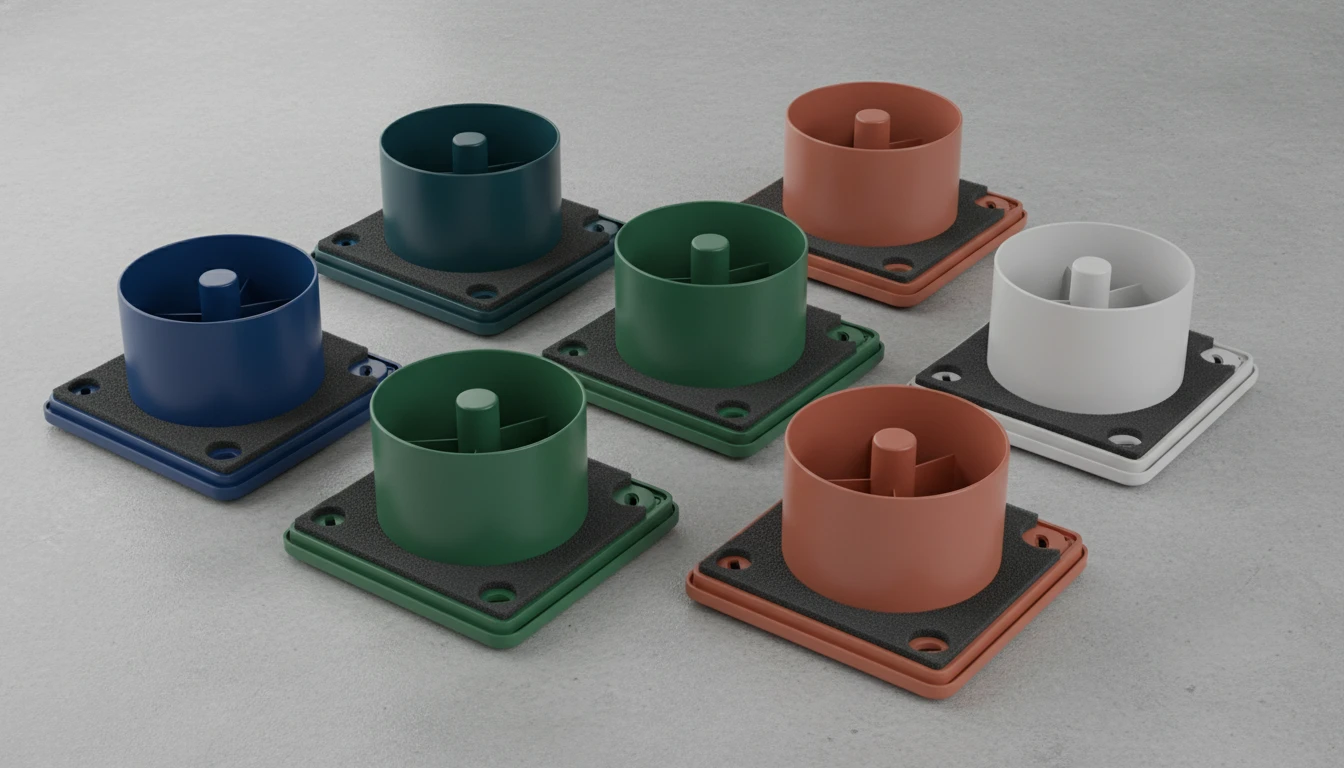
Step-by-Step: The Multi-Shot Production Cycle
Here is the workflow for manufacturing an IP67 inverter drive cover using a rotary table injection machine.
凝縮水ポンプ貯蔵槽:
The machine injects the structural housing (PC+GF20 – Glass Filled Polycarbonate) into the "A" side of the mold. This forms the box, the screw bosses, and the channel where the seal will eventually go.
- Factory Note: We design "mechanical interlocks" or small through-holes in the seal channel during this step. This allows the TPE to flow through the rigid plastic for a physical anchor.
2. Mold Rotation
The mold opens. The parts stick to the core side (moving side). The entire core plate rotates 180 degrees. The rigid parts—still hot—are now aligned with the "B" side cavities, which are cut for the gasket geometry.
3. Second Shot (The Soft Seal)
The mold closes. The second injection unit fires the TPE material. It flows into the gasket cavity and bonds to the hot PC+GF20 substrate.
- Critical Check: The melt temperature of the TPE must be high enough to "wet out" the surface of the rigid plastic but low enough not to distort the precision screw bosses.
4. Cooling and Ejection
Both materials cool together. The chemical bond solidifies. The mold opens, and the robot ejects a finished, ready-to-install waterproof cover.
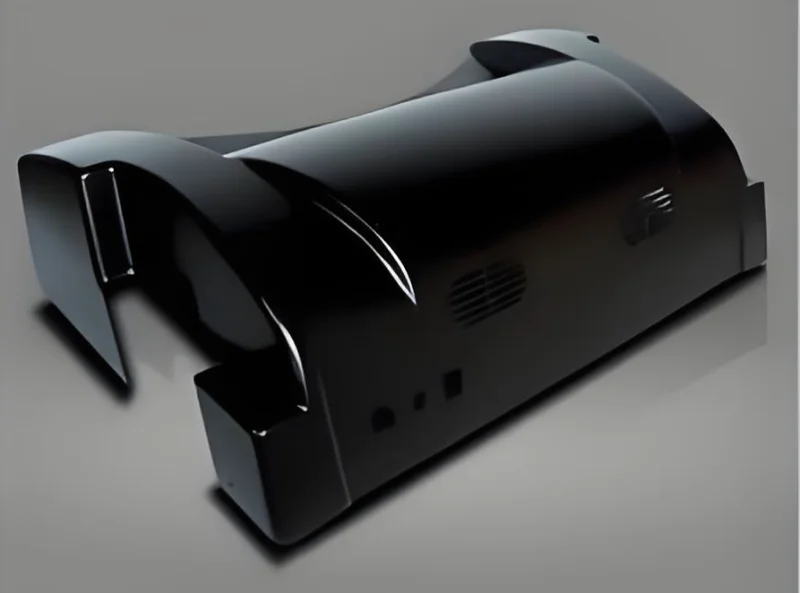
Real Factory Case: The "Peeling" Gasket
We were producing a control box cover for a mini-split heat pump. The specification called for a TPE gasket overmolded onto a Flame-Retardant ABS housing.
- The Problem: During QA "peel tests," the TPE gasket peeled off the ABS like a piece of tape. There was zero chemical bond.
- The Investigation: The chemical supplier claimed the materials were compatible. However, we found that the Flame Retardant additives in the ABS were migrating to the surface and creating a barrier layer that prevented the TPE from bonding.
- The Fix:
- We switched to a modified TPE grade specifically formulated to bond with FR-ABS.
- We increased the melt temperature of the TPE by 15°C to burn through the surface additives.
- We added 0.5mm deep "dovetail" undercuts in the ABS channel to mechanically lock the TPE in place.
Myth vs. Fact: Overmolding Sealing
While chemical bonding is the goal, real-world HVAC production relies on 'Belt and Suspenders.' We always recommend adding mechanical interlocks (holes or undercuts) to the rigid part design. If the chemical bond weakens due to humidity or heat aging, the mechanical lock prevents the seal from detaching.
True, provided the design includes proper 'crush ribs.' The molded TPE must stand slightly proud (usually 0.5mm – 1.0mm) of the housing surface so that when the technician screws the cover down, the TPE compresses to form the barrier.
Advantages and Disadvantages
| Feature | Advantages | Disadvantages |
|---|---|---|
| 原理を理解すれば、メーカーはハードウェアを削減し、生産を加速し、HVACエンクロージャーの美的品質を向上させることができます。ただし、設計においてクリープと振動を考慮することが条件です。 | Zero risk of "missing gasket" defects. The seal is part of the component. | High tooling cost. Requires a 2-shot mold (rotary or index plate) which is 50-80% more expensive than standard molds. |
| Performance | Superior waterproofing. No gaps at the corners where O-rings often bunch up. | Limited material choices. You cannot just pick any plastic; they must be chemically compatible pairs. |
| Assembly | Eliminates manual labor and adhesive application steps. | If the gasket is damaged (cut or torn), the entire expensive housing must be scrapped. You cannot replace just the seal. |
Practical Tips for Enclosure Design
1. Design a "Shut-off" Landing
You need a sharp steel edge to stop the TPE from flashing over the cosmetic side of the part.
- Tip: Design a 0.5mm x 0.5mm groove in the rigid part where the TPE edge will stop. This "burying the edge" technique ensures a clean visual line and prevents the TPE edge from rolling up.
2. The Geometry of the Bead
Don’t just mold a flat TPE strip. Mold a D-profile or a triangular rib.
- Reason: A flat gasket requires massive force to compress. A ribbed gasket deforms easily under screw torque, ensuring a tight seal even if the installer doesn’t tighten the screws perfectly.
3. Gate Location for TPE
Inject the TPE from a location that pushes air out of the cavity. TPE usually fills a long, thin channel. If you trap air at the end of the flow, the TPE will burn (diesel effect) or fail to bond.
- Factory solution: We often use multiple gates for large perimeter seals to reduce flow length.
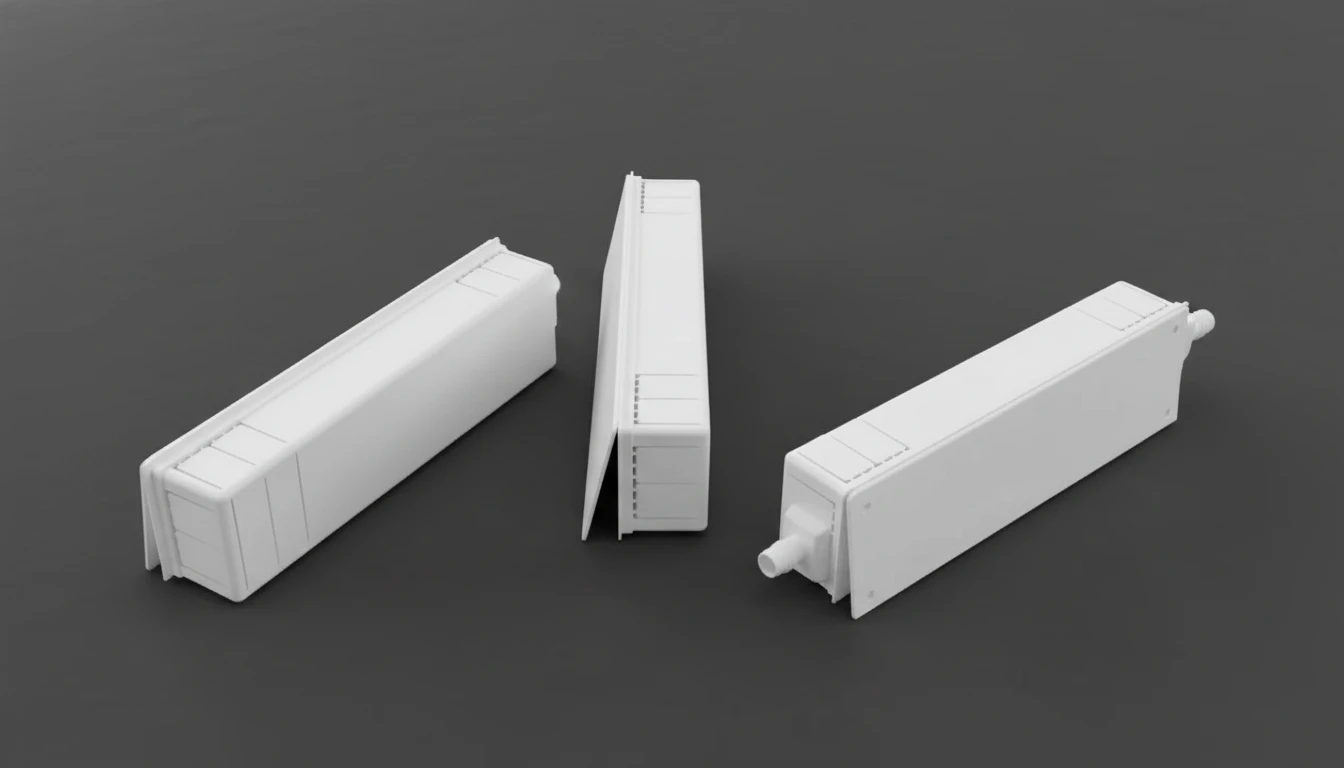
HVAC Application Scenarios
- Condensate Pump Reservoirs:
- TPEオーバーモールドでHVACシールの完全性を向上させる.
- Outdoor Inverter Controllers:
- High-voltage PCBs require IP67 protection. Overmolded gaskets prevent humidity ingress which causes short circuits in variable frequency drives (VFDs).
- Smart Thermostat Backplates:
- To prevent drafts from the wall cavity from affecting the temperature sensor, a small soft TPE seal is overmolded around the wire entry hole on the backplate.
Frequently Asked Questions (FAQ)
1. Is Overmolding more expensive than using O-rings?
Tooling cost: Yes, significantly higher.
Part cost: Generally lower for high volumes (>50k units/year) because you remove labor and glue costs. For low volumes, stick to manual O-rings.
2. Can I overmold TPE onto metal?
Yes, this is called Insert Molding. We load a metal chassis into the mold and inject TPE onto it. However, the bond is purely mechanical (the TPE wraps around metal features) rather than chemical.
3. What IP ratings can overmolding achieve?
With proper design (compression ribs, robust screwing force), we routinely achieve IP67 (dust tight + immersion up to 1m). Standard designs easily achieve IP54/IP65.
4. Why does my TPE overmold look sticky?
This is often due to plasticizer migration. If the TPE formulation is cheap or incorrect, oil bleeds out over time. It can also happen if the mold cooling time is too short.
5. Can we overmold a clear window and a gasket at the same time?
That would require a 3-Shot process (Rigid Housing + Clear Window + Soft Gasket). While possible, the tooling is extremely complex. Usually, we mold the clear window into the rigid housing first, then overmold the gasket.
Technical Summary
Overmolding gaskets represents the gold standard for waterproof electronics housing manufacturing in the HVAC industry. By utilizing multi-shot molding, manufacturers create a composite structure where a rigid substrate (ABS/PC) provides mechanical protection and a soft TPE overmold provides an inseparable, chemically bonded seal. This technology is critical for IP rated enclosure design, eliminating the assembly errors associated with manual gaskets. While the initial investment in 2K tooling is high, the result is a component that withstands vibration, thermal expansion, and moisture ingress far better than traditional assembly methods.





