
- 塗料は一時的に、下地のABS基材にUVが到達するのを遮断します。問題は、屋外空調設備用途における柔軟なポリマー基材上の塗料耐久性です。UVと熱サイクルにより、2〜3年で塗料の密着層が劣化し、チョーキング、剥離、最終的には基材の露出を引き起こします。ABS基材が一旦露出すると、UV劣化が加速します。適切に施工された2液型ポリウレタン塗料はABSの屋外寿命を延ばしますが、コストが追加され(スプレー塗装で部品あたり$1.50〜$4.00ドル)、サプライチェーン工程が一段階増えます。保証グレードの屋外空調部品においては、UVバリアとして塗料に依存するよりも、ASAを設計段階から採用する方が信頼性が高いです。.
- ABS delivers better impact resistance at low temperatures and costs 15–25% less per kilogram than ASA — advantages that matter for indoor components where UV exposure is zero.
- Both materials process well on standard injection molding equipment; no specialized tooling or press modifications are required to switch between them.
- ABS will chalk, yellow, and lose surface integrity within 12–18 months of outdoor exposure without UV stabilizers; ASA maintains color and gloss for 5+ years in the same conditions.
- The right choice depends on application location, service life requirements, and cost targets — most HVAC programs use both materials for different part families.
What Are ASA and ABS Plastics?
ABS2 (Acrylonitrile Butadiene Styrene) has been the workhorse of HVAC plastic components for four decades. It’s easy to process, takes paint well, offers solid impact resistance at room temperature, and costs less than most engineering alternatives. If you’ve ever snapped off a thermostat cover or handled an air handler panel, it was probably ABS.
ASA1 (Acrylonitrile Styrene Acrylate) is the outdoor-rated version. The chemistry difference is in the rubber phase: ABS uses polybutadiene rubber, which has double bonds that UV radiation attacks and breaks down over time. ASA replaces polybutadiene with an acrylate-based rubber that has no UV-vulnerable double bonds. The result is a material with nearly identical processing characteristics to ABS but dramatically better weathering performance.
From a manufacturing standpoint, both materials inject at similar melt temperatures (220–260°C), require similar mold temperatures, and produce comparable surface finishes. A molder who runs ABS can run ASA on the same press with minor parameter adjustments. This interchangeability matters operationally — you’re not redesigning your supply chain to switch between them. What you’re paying for in ASA is the UV stability, and whether that premium is justified depends entirely on where the part lives in the HVAC system.
UV and Weather Resistance: Where ASA Wins
Let me be direct: if your part lives outside, use ASA. No exceptions. ABS in outdoor HVAC applications chalks, yellows, and becomes brittle within 12–18 months in high-UV environments like the US Southwest or rooftop installations. I’ve seen black ABS condenser fan shrouds turn gray-white in a single Arizona summer. That’s not a cosmetic problem — it’s a material degradation signal that impacts mechanical performance.
ASA’s weathering advantage is quantified in accelerated testing. After 2,000 hours of Xenon arc exposure (simulating roughly 3–4 years of outdoor UV), ASA retains over 90% of its impact strength and shows minimal color shift (delta-E 8). For HVAC components that carry a 5- or 10-year warranty, this performance gap closes the conversation.
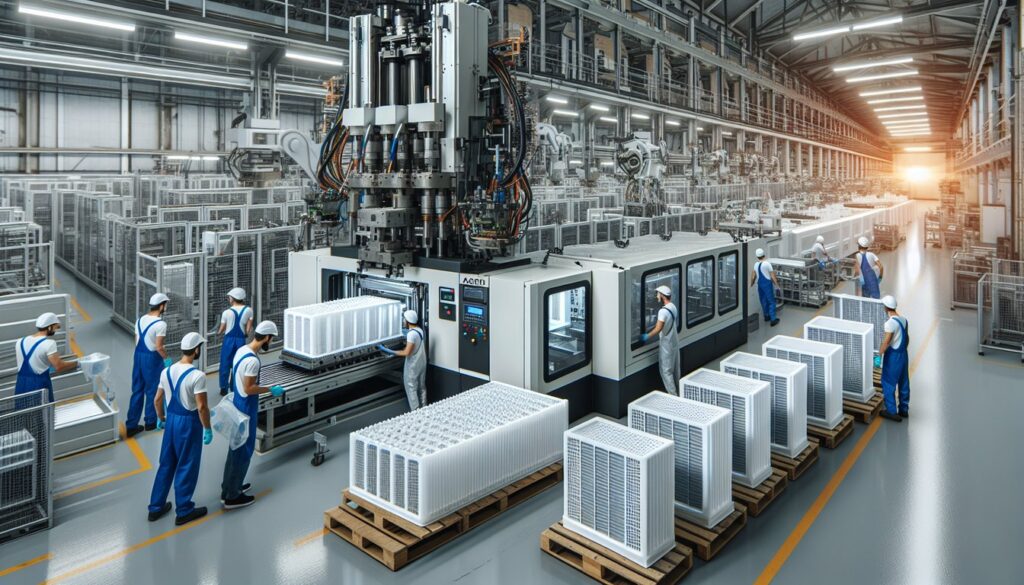
Outdoor HVAC applications where ASA is standard include condenser unit side panels, rooftop unit access covers, outdoor fan grilles, mini-split line set covers, and any housing exposed to direct precipitation. UV-stabilized ABS exists and improves outdoor performance, but even UV-stabilized ABS doesn’t match untreated ASA in long-term weathering tests. If a supplier is pitching UV-stabilized ABS as equivalent to ASA for a 10-year outdoor warranty application, push back with test data. For a direct comparison of ASA against another weather-resistant material, see our article on ASA vs. polycarbonate for HVAC.
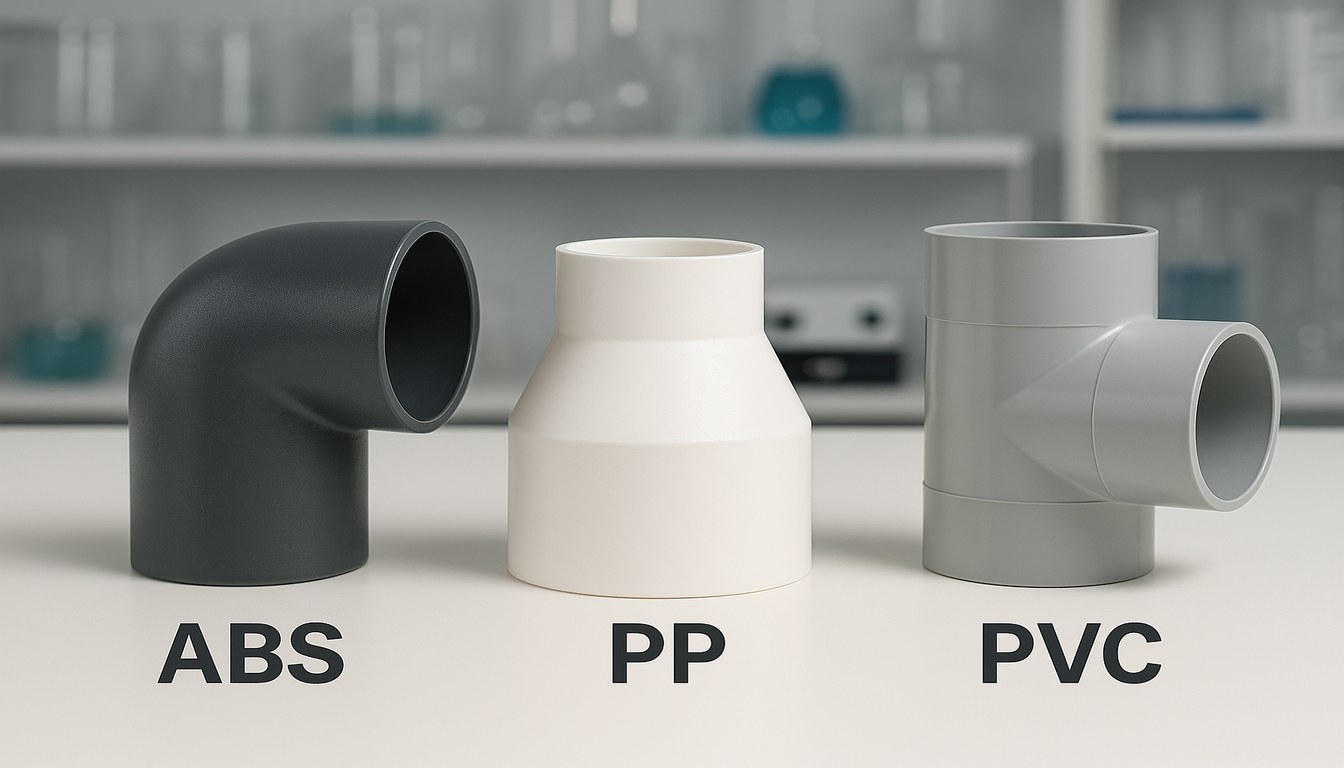
Beyond UV, ASA handles thermal cycling better than ABS in outdoor applications. Day-to-night temperature swings of 30–40°C are routine on rooftop equipment in continental climates. ASA maintains dimensional stability through these cycles without the micro-cracking that sometimes develops in ABS at stress concentrations (corners, mounting boss bases) after years of outdoor thermal fatigue. This is particularly relevant for snap-fit retention features on access panels that must remain functional after years of seasonal cycling.
Mechanical Properties: ABS vs. ASA Comparison
| Property | ABS (typical) | ASA (typical) | Winner |
|---|---|---|---|
| Tensile Strength (MPa) | 40–50 | 45–55 | ASA (slight edge) |
| Flexural Modulus (GPa) | 2.1–2.5 | 2.2–2.6 | Comparable |
| Izod Impact (J/m, notched) | 200–400 | 150–300 | ABS |
| HDT4 @ 0.45 MPa (°C) | 88–100 | 95–105 | ASA |
| UV Resistance (2000h Xenon) | Poor (delta-E >8) | Excellent (delta-E <2) | ASA |
| Cost per kg (relative) | Baseline | +15 to +25% | ABS |
| Surface Finish Quality | Excellent | Very Good | ABS (slight edge) |
| Processing Temperature (°C) | 220–250 | 230–260 | Comparable |
The table tells the honest story: ABS wins on low-temperature impact toughness and cost. If you drop an ABS damper blade at 0°C, it absorbs the impact better than ASA. For indoor HVAC parts — thermostats, fan coil unit covers, return air grilles, duct dampers inside conditioned space — that low-temperature impact advantage is irrelevant because the part never sees sub-zero conditions. But for outdoor parts in northern US or Canadian climates, ASA’s slightly lower notched impact strength is worth knowing.
Surface finish slightly favors ABS for Class A cosmetic applications. ABS is easier to achieve high gloss on (SPI A1-A2 finishes) and takes paint adhesion more readily. If you’re producing a premium thermostat front cover that needs a mirror-gloss painted finish, ABS is the traditional choice. ASA can achieve good surface quality, but achieving the same gloss level requires tighter mold polish and processing control. For painted HVAC panels where UV is not a factor, ABS remains the better base material.
“ASA and ABS can be co-extruded or laminated to combine their properties in a single HVAC panel.”True
ASA/ABS co-extrusion is a commercial product used extensively in outdoor signage and cladding. A thin ASA cap layer (0.3–0.8 mm) over an ABS substrate gives UV resistance on the exposed face while maintaining the cost and rigidity advantages of ABS in the bulk of the part. For HVAC applications, this is most relevant for large flat panels — outdoor unit side covers, rooftop equipment enclosures — where a monolithic ASA part would be significantly more expensive than the co-extruded sheet. Injection molded over-molding with ASA over ABS is less common but technically feasible for smaller parts.
“Painting an ABS outdoor HVAC part provides equivalent UV protection to using ASA.”False
Paint does block UV from reaching the underlying ABS substrate — temporarily. The problem is paint durability on flexible polymer substrates in outdoor HVAC applications. UV and thermal cycling degrade the paint adhesion layer over 2–3 years, leading to chalking, peeling, and eventual substrate exposure. Once the ABS substrate is exposed, UV degradation accelerates. Properly applied two-pack polyurethane paint extends ABS outdoor life but adds cost ($1.50–$4.00 per part for spray painting) and creates an additional supply chain step. For warranty-grade outdoor HVAC components, designing in ASA is more reliable than relying on paint as a UV barrier.
“ASA vs ABS for HVACコンポーネント:どちらのプラスチックが勝つ? | HVACore”True
This is one of ABS’s genuine performance advantages. At -20°C, ABS retains 60–70% of its room-temperature notched Izod impact strength3 due to the polybutadiene rubber phase, which stays flexible at sub-zero temperatures. ASA’s acrylate rubber phase is less effective at low-temperature impact absorption, dropping to 40–55% of room-temperature performance at -20°C. For HVAC components installed in Canadian or northern US climates — outdoor units, rooftop equipment — that may be struck by tools or hail at winter temperatures, this low-temperature impact difference is worth considering in material selection.
“ASA and ABS require different injection molding tooling and cannot run on the same press.”False
This is incorrect. ASA and ABS are processed on identical injection molding equipment. The primary differences are processing parameters: ASA typically runs at melt temperatures 10–15°C higher than ABS (230–260°C vs 220–250°C) and may benefit from slightly longer cooling time. No press modifications, special screw geometries, or specialized tooling are required. The mold itself — steel type, runner layout, gate geometry, cooling channels — is identical for both materials. A facility running ABS can switch to ASA with a material purge and parameter adjustment in under 30 minutes. This interchangeability is one of the practical reasons mixed ASA/ABS BOM strategies work well in HVAC production.
When to Choose ASA, When to Choose ABS
After 20 years of specifying plastic for HVAC parts, here’s my decision framework. It’s not complicated, but it requires being honest about the application environment.
Choose ASA when: the part is installed outdoors or in a location with direct sunlight; the product carries a warranty of 5 years or more; the color must remain stable over product life (dark colors — black, dark gray — show UV degradation most visibly); or your customer is in a high-UV geography (Southwest US, Florida, Middle East). Condenser panels, mini-split covers, rooftop unit housings, outdoor fan grilles — all ASA by default. For broader guidance on ABS component manufacturing for HVAC, see our article on ABS plastic HVAC component manufacturing.
Choose ABS when: the part lives entirely indoors; cost pressure is significant (15–25% material cost reduction is real money on high-volume parts); the application requires high surface gloss or complex cosmetic texture; or the part is secondary-processed (painted, plated, or laser-etched) where ABS’s superior surface adhesion matters. Indoor fan coil covers, ductwork damper blades, thermostat housings, plenum dividers — ABS is the right call. You’re not paying for UV protection you don’t need.
A mixed material strategy — ASA for outdoor-exposed components, ABS for indoor parts — is what most mature HVAC OEM programs settle on. The upfront engineering work to define the material break points in your BOM pays back in lower material cost on indoor parts and warranty performance on outdoor parts. If your current program runs ABS everywhere, it’s worth reviewing which components have outdoor exposure. You may be carrying warranty risk on parts that should be ASA. For a broader look at how material selection affects design and cost in HVAC, see our guide on designing HVAC plastic parts to reduce costs.

One more consideration that gets overlooked: recycled content and sustainability. ASA and ABS are both recyclable thermoplastics, but post-consumer recycled (PCR) content availability differs. PCR ABS is widely available from automotive recycling streams and costs roughly the same as virgin ABS in blends up to 30% PCR. PCR ASA is less available and less consistent in UV performance. For OEMs navigating sustainability requirements from customers or internal ESG targets, this asymmetry can influence material selection — particularly if outdoor UV performance requirements are moderate rather than extreme.
Frequently Asked Questions About ASA vs. ABS for HVAC?
ASA部品とABS部品の両方に同じ射出成形金型を使用できますか?
Yes, with minor processing adjustments. ASA runs at slightly higher melt temperatures (230–260°C vs. 220–250°C for ABS) and may require slightly adjusted cooling time due to different thermal conductivity. The mold itself — steel, runner system, gate geometry — does not need modification. The main practical consideration is thorough purging between materials if you’re running both on the same press, since ABS and ASA are not fully compatible and contamination can cause surface defects. For dedicated OEM programs running one material, this is not a concern. For facilities running both, define a purging procedure and train press operators accordingly.
ASAはHVAC射出成形においてABSよりも大幅にコストがかかりますか?
ASA resin costs roughly 15–25% more per kilogram than standard ABS at equivalent quality grades. On a typical HVAC plastic part weighing 100–400 grams, the material cost premium per part runs $0.02–$0.15. This is a real cost difference that adds up on high-volume programs — on 500,000 parts per year at $0.10 premium per part, you’re spending $50,000 more annually on material. Whether that cost is justified depends on warranty requirements, geography, and product life. For outdoor components carrying 5–10 year warranties, the warranty claim cost of ABS failure will exceed the ASA material premium on any volume above about 50,000 units.
HVACプラスチック部品のUV劣化をどのようにテストすればよいですか?
The simplest field test is the color shift check — compare a field-returned part to a new part under consistent lighting. Delta-E > 3 is visible to the human eye; delta-E > 5 indicates significant UV exposure. For mechanical performance, a notched Izod impact test on a field part versus a virgin specimen quantifies strength loss. In the lab, accelerated UV testing uses Xenon arc weatherometers (per ASTM G155) or QUV testers (per ASTM G154) to simulate outdoor exposure in compressed time. For qualification of new materials, run 2,000 hours Xenon arc before committing to production. A material that shows delta-E < 3 and retains 80% of virgin impact strength after 2,000 hours will perform acceptably in most US outdoor HVAC applications.
ASAはUL 94難燃性等級を必要とするHVAC部品に適していますか?
Standard ASA is typically rated UL 94 HB (horizontal burn) — the lowest flame rating category. This is adequate for many HVAC applications but not for components near ignition sources or in plenum air spaces where V-0 or V-2 ratings are required. Flame-retardant ASA grades are available and can achieve UL 94 V-0 at 1.5 mm wall thickness, but FR additives reduce impact strength by 20–30% and may affect UV stability. If your application requires both outdoor UV resistance and UL 94 V-0 flame rating, evaluate FR-ASA grades specifically and test UV performance after FR loading. Standard ABS FR grades are more widely available and better characterized for this combination of requirements.
屋外HVAC用途においてASAと互換性のある着色剤は何ですか?
ASA accepts both organic and inorganic colorants, but outdoor durability varies significantly by colorant class. Inorganic pigments — iron oxides, titanium dioxide, carbon black — offer excellent UV stability and are preferred for outdoor HVAC parts in standard colors (white, gray, black, brown). Organic pigments (phthalocyanines, quinacridones) can offer good UV stability but must be selected specifically for outdoor performance; not all organic pigments are weathering-rated. Optical brighteners — common in white ABS to achieve a bright white appearance — should be avoided in outdoor ASA, as they degrade rapidly under UV and cause yellowish discoloration. Specify outdoor-rated colorants and request weathering test data from your color masterbatch supplier.
-
ASA: ASA (Acrylonitrile Styrene Acrylate) is a thermoplastic terpolymer that is a UV-stabilized alternative to ABS, offering superior weathering resistance for outdoor and exposed HVAC applications. ↩
-
ABS: ABS (Acrylonitrile Butadiene Styrene) is a common engineering thermoplastic known for its good impact resistance, machinability, and surface finish quality, widely used in indoor HVAC plastic components. ↩
-
Izod impact strength: Izod impact strength is a measure of a material’s resistance to sudden fracture, measured in J/m (joules per meter), used to compare how well plastics withstand impact loads at different temperatures. ↩
-
HDT: HDT (Heat Deflection Temperature) is defined as the temperature at which a standard plastic specimen deforms by 0.25 mm under a specified load, used to determine the upper service temperature limit of engineering resins. ↩





