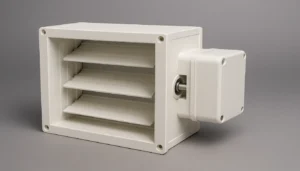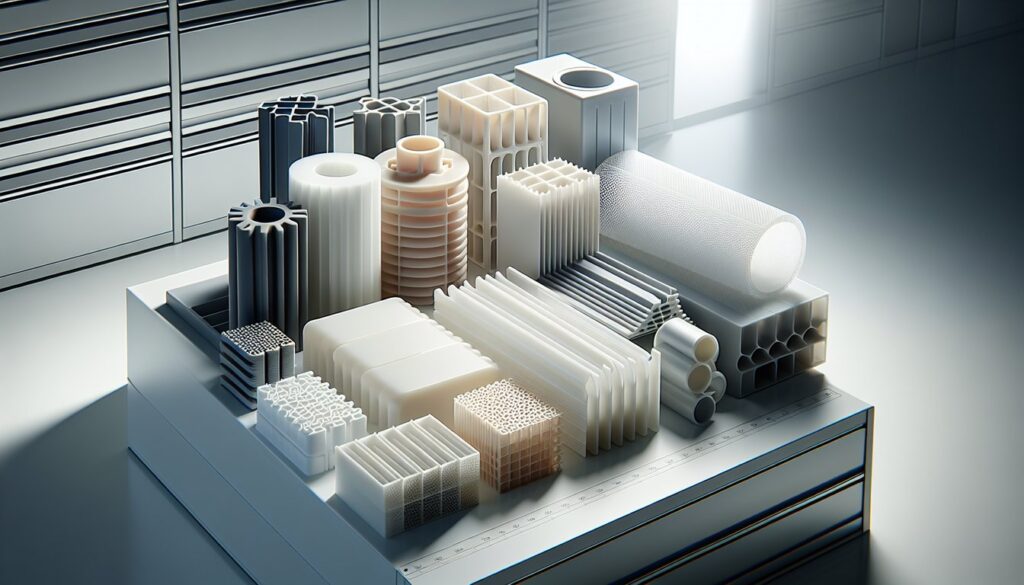
- Engineering plastics outperform commodity plastics in continuous-use temperatures above 100°C — critical for HVAC components near compressors and heat exchangers.
- Nylon (PA66) dominates structural HVAC brackets and fan blades due to its high strength-to-weight ratio and fatigue resistance under vibration.
- Polycarbonate and PC/ABS blends are the default for electrical enclosures and thermostat housings requiring UL 94 V-0 flame ratings.
- Material selection directly affects tooling cost and cycle time — PPS and PEEK add 20–35% to mold steel requirements due to processing temperatures above 300°C.
What Are Engineering Plastics and Why Do They Matter for HVAC?
Engineering plastics are a group of thermoplastic polymers that deliver superior mechanical and thermal performance compared to commodity resins like standard PP or PE. In HVAC manufacturing, the difference is measurable: commodity plastics start to soften or creep above 80°C, while engineering grades like POM, PA66, or PPS hold dimensional stability up to 180–260°C.
Why does that matter? Modern HVAC systems run condensing units, compressors, and heat exchangers at surface temperatures that would destroy a standard polypropylene bracket in a season. The components closest to heat sources — motor housings, compressor mounts, heat exchanger end caps — need materials that won’t warp, creep, or fail under sustained thermal load.
At HVACore, we process over 400 grades of plastic across 45 injection molding1 lines. The breakdown is roughly 30% commodity resins for non-critical covers and trim, and 70% engineering grades for anything load-bearing, thermal-critical, or electrically sensitive. That ratio reflects what the HVAC industry actually demands — not what’s cheapest to mold.
Which Engineering Plastics Are Used Most in HVAC Components?
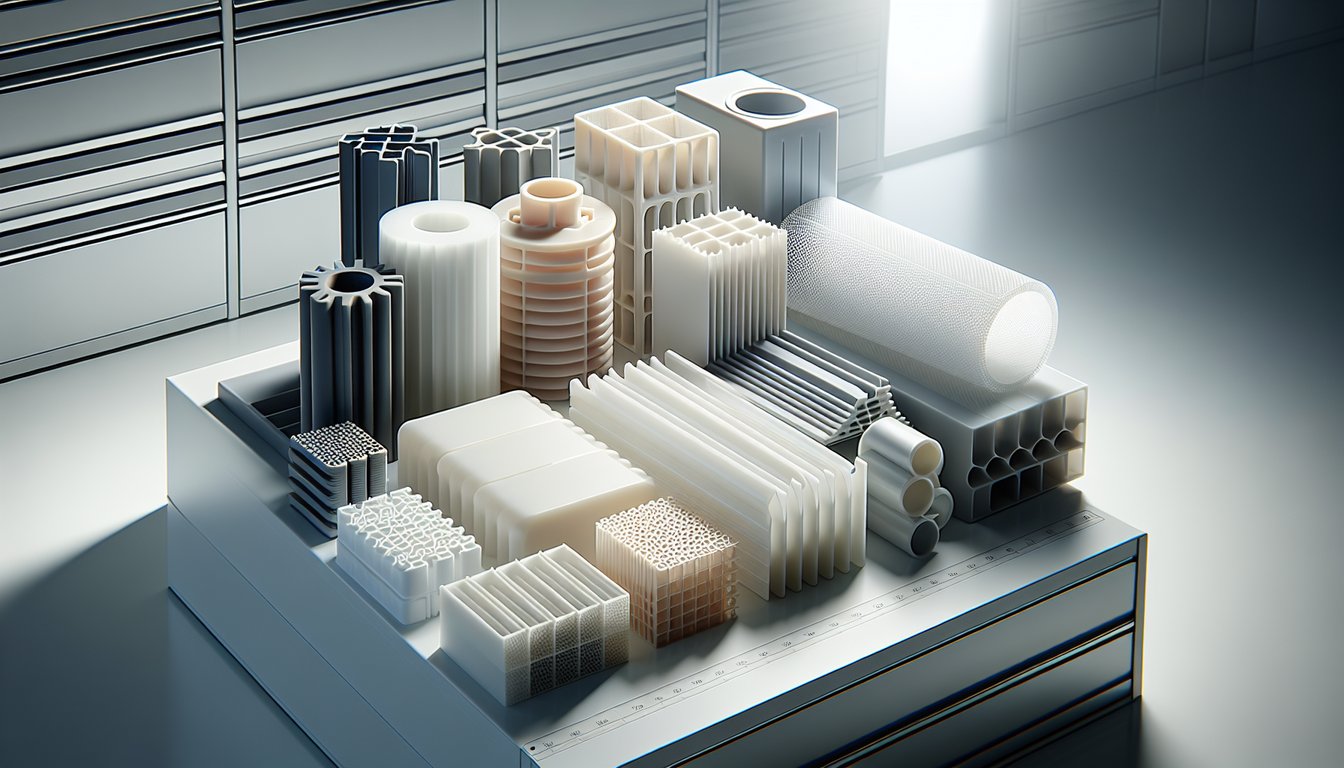
Five materials account for roughly 80% of engineering plastic volume in HVAC: PA66 (nylon), PC, POM, PBT, and ABS. Each has a defined role based on the application environment. PA66 dominates structural components — brackets, fan blades, motor mounts — where fatigue resistance and chemical compatibility with refrigerants matter. PC and PC/ABS blends handle electrical enclosures because they achieve UL 942 V-0 flame ratings without sacrificing impact strength. POM is the go-to for precision mechanical components like actuator gears and damper pivots that need consistent low-friction performance over millions of cycles. Selecting the wrong grade doesn’t just mean worse performance — it can mean premature failure, warranty returns, and safety incidents that trace directly back to material spec.
| Material | Continuous Use Temp | Key Property | Primary HVAC Use | UL 94 Rating |
|---|---|---|---|---|
| PA66 (Nylon) | 120–150°C | Fatigue + chemical resistance | Fan blades, brackets, housing | HB / V-2 (with FR additive: V-0) |
| PC (Polycarbonate) | 115–125°C | Impact strength + optical clarity | Thermostat covers, enclosures | V-0 / V-2 |
| PC/ABS Blend | 95–110°C | Balanced toughness + processability | Control panels, grille fronts | V-0 |
| POM (Acetal) | 100–120°C | Low friction + dimensional stability | Damper gears, actuator components | HB |
| PBT (Polyester) | 120–130°C | Electrical insulation + moisture resistance | Electrical connectors, sensor housings | V-0 (with FR) |
| PPS (Polyphenylene Sulfide) | 200–240°C | Extreme heat + chemical resistance | High-temp motor housings, exhaust parts | V-0 |
The table above is a starting point, not a complete spec. Real-world selection depends on whether the part runs continuously or intermittently, what chemicals it contacts (refrigerants, lubricants, condensate), and what certifications the end product needs. A fan blade for a residential split system has different demands than a motor bracket in a commercial rooftop unit running 12 hours a day. The operating profile — not just the temperature rating — drives the final material choice. We regularly see engineers over-spec materials for intermittent-duty indoor parts and under-spec for continuous-duty outdoor applications. Both mistakes cost money.
“PA66 with 30% glass fiber delivers 2–3× the tensile strength of unfilled nylon for structural HVAC components.”True
Glass fiber reinforcement transforms PA66 from a moderate-strength resin (tensile ~82 MPa) into a structural material (~165 MPa) capable of replacing aluminum brackets in many HVAC applications. The trade-off is increased brittleness and more complex tooling requirements.
“All engineering plastics are interchangeable if they meet the same temperature rating.”False
Temperature rating is one variable among many. POM and PA66 both handle 120°C, but POM’s low friction makes it ideal for gears and actuators while PA66 absorbs moisture and changes dimensions in humid environments — making POM the wrong choice for outdoor structural brackets. Always match the full property profile to the application.
How Do You Select the Right Engineering Plastic for HVAC Fan Blades and Brackets?
Fan blades and structural brackets are the two component categories where material choice carries the highest failure risk in HVAC systems. Both experience cyclic loading — every on/off cycle creates fatigue stress in the material. Over 10,000 cycles at typical HVAC duty cycles, a material with poor fatigue resistance develops micro-cracks before any visible damage appears on the surface. This is why selecting a material based only on tensile strength or temperature rating is insufficient — fatigue endurance limit matters just as much for components that cycle repeatedly in service.
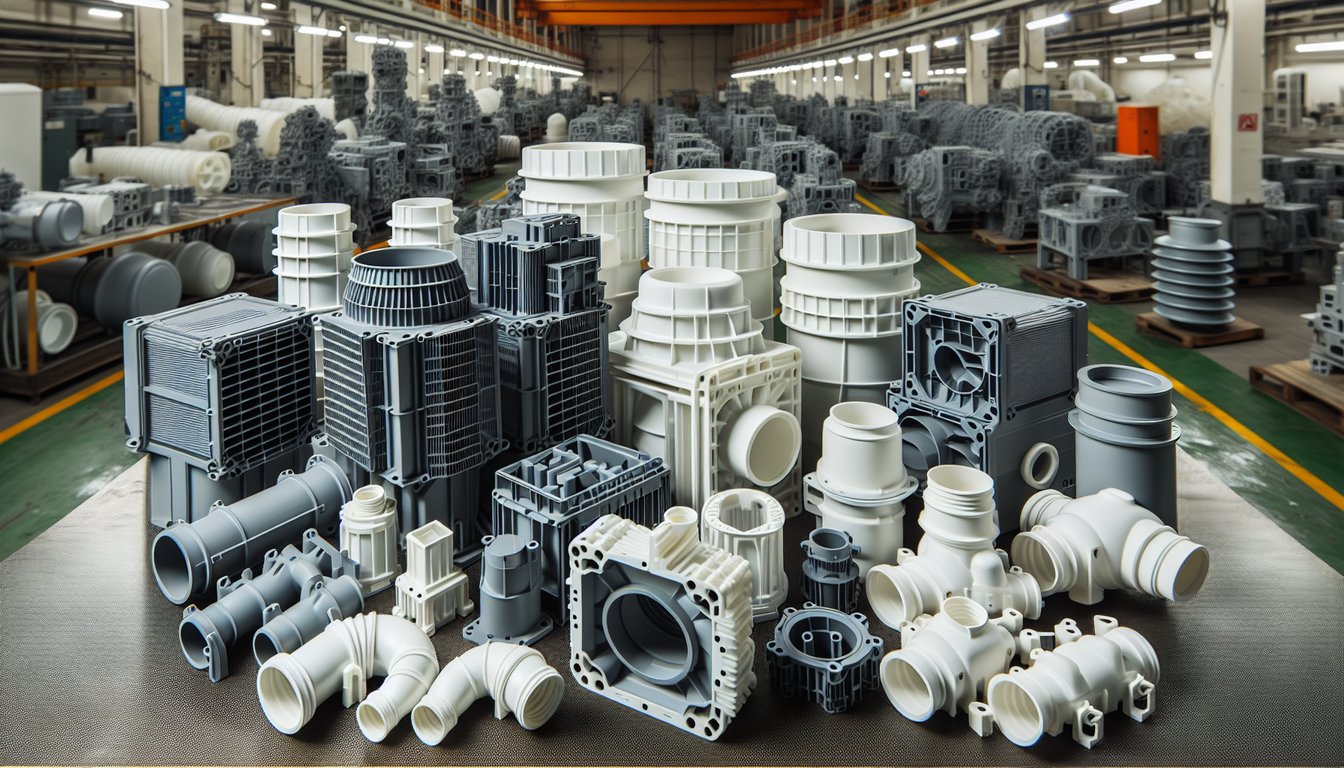
For fan blades, our default is PA66-GF30 (30% glass fiber). It handles the aerodynamic stress of high-RPM operation, resists the condensate and cleaning chemicals that accumulate on outdoor units, and maintains dimensional accuracy at temperatures up to 130°C near motor housings. Unfilled PA66 is an acceptable alternative for low-speed fans in indoor air handlers where temperatures stay below 80°C and blade deflection tolerances are generous — typically ±0.5mm versus the ±0.2mm required on higher-performance outdoor units. For applications requiring better outdoor UV resistance, PA66-GF30 with a carbon black UV package outperforms standard grades by 3–5× in accelerated weathering tests.
For structural mounting brackets, the material decision depends on where the bracket is mounted in the HVAC system and what temperature and chemical environment it will be exposed to throughout its service life. The decision tree below summarizes common scenarios. The key variables are continuous-use temperature at the bracket mounting point, chemical exposure (outdoor units get refrigerant oil and atmospheric moisture), and mechanical loading pattern (static vs cyclic vibration from the compressor or fan):
| Location | Temperature Exposure | Chemical Exposure | Recommended Material |
|---|---|---|---|
| Indoor air handler | < 80°C | Low (dust, cleaning agents) | PA6-GF15 or ABS |
| Outdoor condenser unit | −30 to +80°C ambient | UV, salt spray, refrigerant | PA66-GF30 + UV stabilizer |
| Compressor mount | Up to 140°C surface | Compressor oil, vibration | PA66-GF30 or PPS-GF40 |
| High-temp exhaust fan | Up to 200°C continuous | Hot air, thermal cycling | PPS-GF40 or PPA |
What Engineering Plastics Work Best for Electrical Enclosures and Thermostat Housings?
Electrical enclosures and thermostat housings need to pass UL 94 V-0 flame testing — that’s a non-negotiable requirement for anything touching line voltage in North America and most of Europe. The V-0 rating means the material self-extinguishes within 10 seconds of flame removal and doesn’t drip flaming particles. Of the standard engineering plastics, PC and PC/ABS blends are the default because they achieve V-0 without heavy halogenated flame retardant additives that compromise low-temperature impact properties.
Here’s why this matters practically: some cheaper V-0 formulations use brominated flame retardants that make the plastic brittle at low temperatures. An outdoor thermostat housing in Minnesota that’s rated V-0 but uses a brittle FR system will crack when a technician snaps the cover off at −15°C. We’ve seen this in field returns. PC/ABS with a non-halogenated FR system costs roughly 15% more per kilogram but eliminates the cold-brittleness problem entirely.
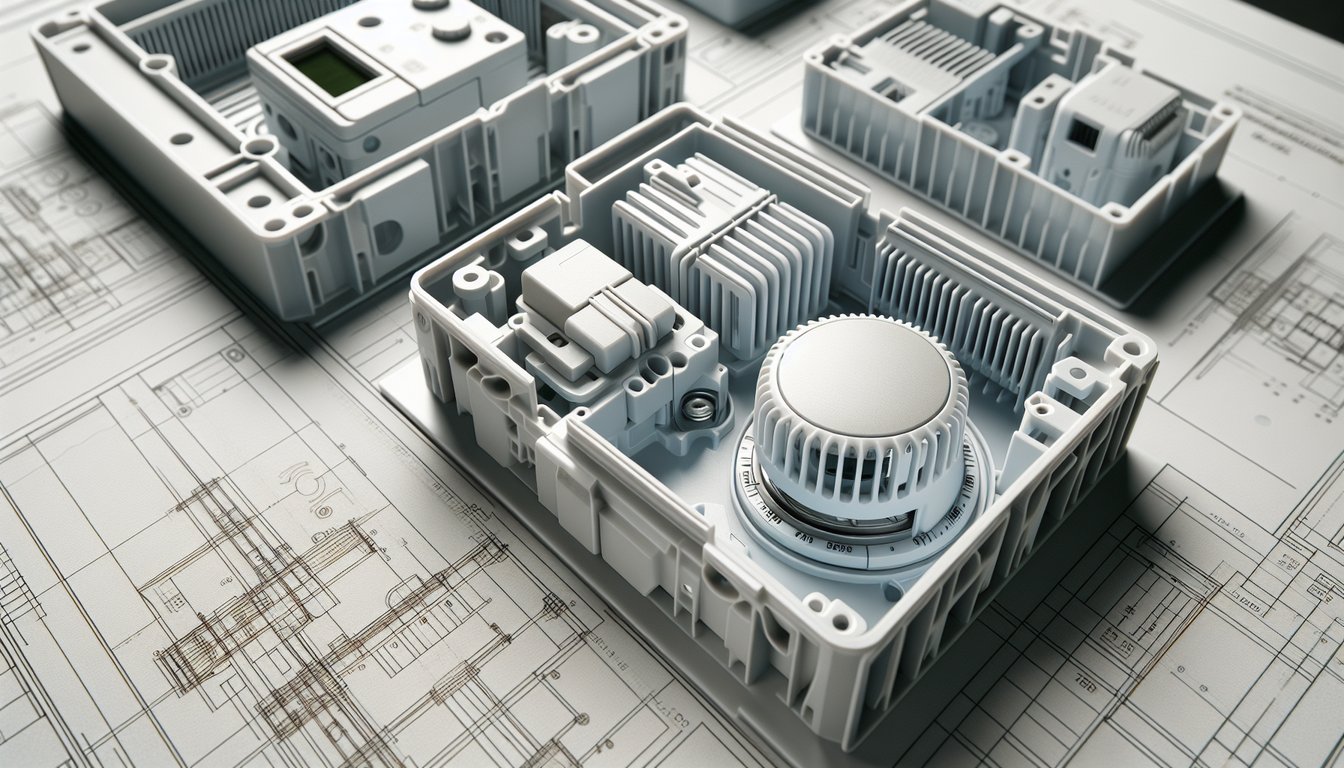
For sensor housings inside HVAC ductwork — temperature, humidity, CO₂ sensors — PBT is often the better choice than PC. PBT has lower moisture absorption (0.08% vs PC’s 0.35%), which matters when the housing is in a 90% RH airstream. Dimensional stability over time is better with PBT, which keeps connector interfaces aligned and prevents contact resistance creep in the sensor circuit.
| Component | Material | UL 94 | Key Reason |
|---|---|---|---|
| Thermostat housing (residential) | PC/ABS | V-0 | Impact toughness + processability |
| Thermostat housing (outdoor) | PC/ABS non-halogenated FR | V-0 | Cold toughness + flame rating |
| Control panel enclosure | PC | V-0 | Optical clarity if display window needed |
| Sensor housing (duct-mounted) | PBT-GF10 | V-0 with FR grade | Low moisture absorption |
| Electrical connector body | PBT or PA66 | V-0 (FR grade) | Heat resistance + dimensional stability |
One often-missed specification in this area: the connector interface tolerance. PBT and PA66 connector bodies both work well in sensor applications, but PA66 absorbs moisture and swells slightly — typically 0.2–0.4% dimensional change at 50% RH. For a 20mm connector body, that’s 0.04–0.08mm. On a low-tolerance mating interface, that amount of growth causes intermittent contact resistance. PBT, with moisture absorption below 0.1%, keeps the interface stable. This is the kind of detail that doesn’t show up in incoming inspection — it shows up six months later as a service call.
For control panel enclosures and thermostat housings that need a window or indicator lens, PC is the only practical choice — it’s the only engineering plastic with optical clarity at useful thicknesses. PC/ABS blends are opaque. If optical transparency is required anywhere in the enclosure, specify PC for that zone and design a two-component or insert assembly if the rest of the housing is better served by PC/ABS.
How Does Engineering Plastic Selection Affect Injection Molding Cost and Tooling?
Material choice affects more than material cost — it drives tooling decisions, cycle times, and process windows. Engineers often underestimate this when comparing material datasheets. A resin that costs $1.20/kg more than the alternative might save $8,000 in tooling and 20 seconds per cycle on a high-volume HVAC component. The interaction between material viscosity, processing temperature, and part geometry determines how complex the gating, cooling, and ejection systems need to be. Getting this right before tooling is cut saves significantly more than the cost of a proper material review upfront.
The main tooling impacts of engineering plastic selection:
| Material | Processing Temp | Mold Steel Requirement | Typical Cycle Time (3mm wall) | Shrinkage |
|---|---|---|---|---|
| ABS | 200–260°C | P20 (standard) | 20–35s | 0.4–0.7% |
| PA66 unfilled | 260–290°C | P20 (standard) | 25–40s | 1.0–1.5% |
| PA66-GF30 | 270–300°C | H13 (recommended) | 25–40s | 0.3–0.7% |
| PC | 280–320°C | P20 (standard) | 30–50s | 0.5–0.7% |
| POM | 190–220°C | P20 (standard) | 20–35s | 1.8–2.5% |
| PBT-GF30 | 240–270°C | P20 (standard) | 20–35s | 0.4–0.8% |
| PPS-GF40 | 300–340°C | H13 (hardened) | 30–50s | 0.2–0.5% |
PPS with glass fiber is the extreme case — 300–340°C melt temperature, highly abrasive filler, and aggressive shrinkage behavior. It demands H13 hardened steel in the mold (adding 20–30% to tooling cost), slower injection speeds to control fill, and very tight temperature control in the barrel and mold. The payoff is a part that will outlast a standard PA66 component by 3–5× in high-temperature environments. For a compressor motor bracket running 24/7 at 180°C, that payoff is real.
One thing we always run before committing to tooling for a new engineering plastic part: mold flow analysis3. Especially for PA66-GF30 and PPS, the fiber orientation patterns affect warpage in ways that aren’t intuitive from part geometry alone. We’ve caught weld line locations that would have caused structural failures in the same area engineers planned to put a mounting hole — caught in simulation, before any steel was touched.
What Are the Common Failure Modes of Engineering Plastics in HVAC Systems?
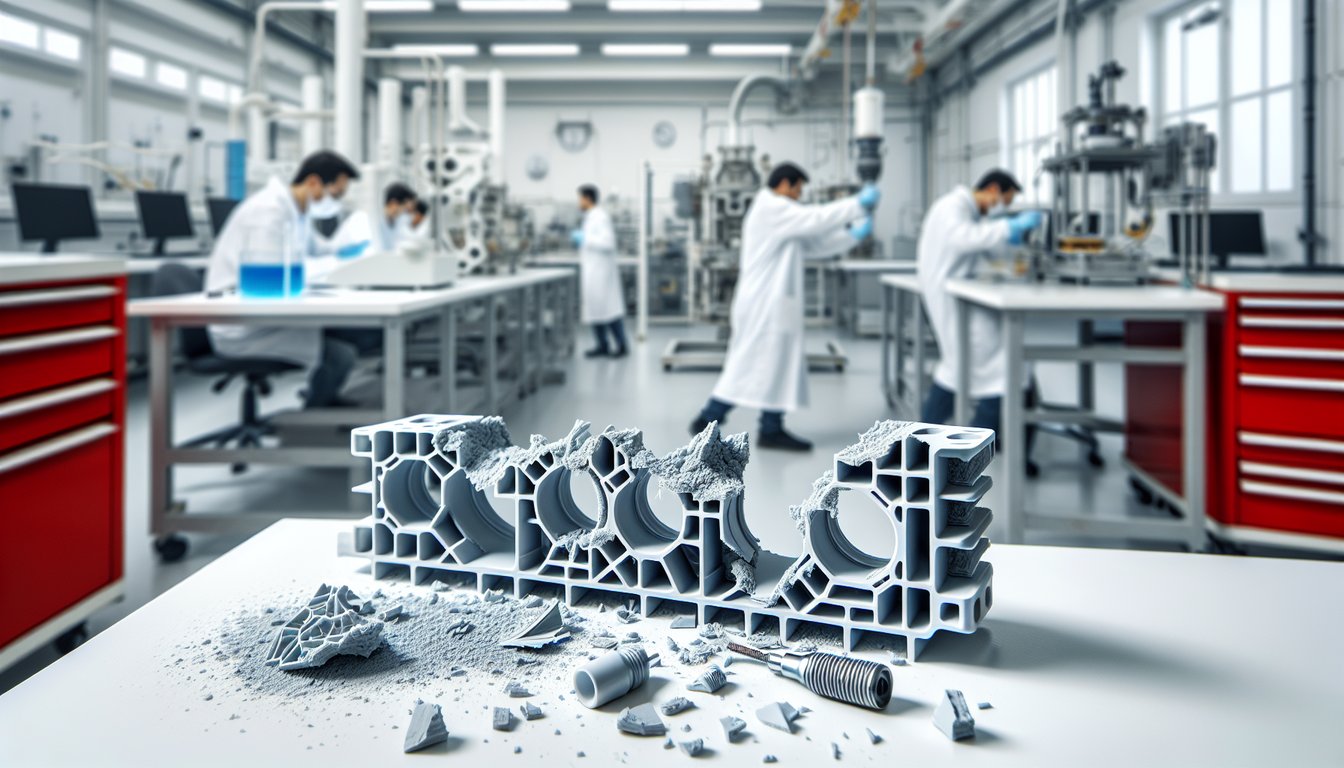
Understanding failure modes is as important as selecting the right material — arguably more so if you’re inheriting a design someone else specified. The most common engineering plastic failures we see in returned HVAC components fall into three distinct categories: thermal degradation from operating above rated temperatures, chemical attack from refrigerants and lubricants, and design-driven failures that no material upgrade can fix because the root cause is in the part geometry.
Thermal degradation is the most frequent. It doesn’t happen suddenly — it accumulates. PA66 that runs continuously at 140°C (above its rated continuous-use temperature of 130°C) will lose 30–40% of its tensile strength in 12–18 months. The part doesn’t fail on a Tuesday; it gets weaker over time until a routine thermal cycle pushes it over the edge. The fix is either moving to PPS or PPA, or redesigning the component to route heat away from the plastic. The fix is either upgrading to PPS or PPA for the thermal environment, or redesigning the component geometry to route heat away from the load-bearing plastic section.
Chemical attack is trickier because the chemicals involved are often overlooked in initial design. Refrigerants, particularly POE-based oils used with R-410A and R-32, are aggressive toward many standard grades of PA and POM. We had a customer come back with cracked POM actuator components — the crack pattern was classic stress cracking from chemical attack, not mechanical overload. The solution was switching to a POM grade with enhanced chemical resistance, not redesigning the actuator.
| Failure Mode | Affected Materials | Root Cause | Solution |
|---|---|---|---|
| Thermal creep / warpage | PA66, POM, ABS | Continuous use above rated temp | Upgrade to higher-temp grade or add GF filler |
| Chemical stress cracking | POM, PC | Refrigerant oil, cleaning agents | Switch to chemically resistant grade |
| UV degradation (outdoor) | PA66, ABS (unfilled) | UV exposure without stabilizer | Add UV stabilizer package |
| Hydrolysis | PBT, PET | High-humidity + elevated temp | Use hydrolysis-stabilized grade |
| Weld line fracture | PA66-GF30, PPS-GF | Fiber misalignment at knit line | Redesign gate location via mold flow analysis |
| Cold embrittlement | PC with halogenated FR | Low-temp impact failure | Switch to non-halogenated FR grade |
Design-driven failures are the hardest to fix because they require tooling changes. Sharp internal corners, wall thickness variations above 3:1 ratio, and inadequate draft angles all create stress concentrations that shorten part life regardless of material quality. If your engineering plastic part is failing in the same location repeatedly, and material testing shows the resin is in spec, look at the design — especially corner radii and wall transitions.
“PPS-GF40 requires hardened H13 mold steel due to its abrasive glass fiber content.”True
PPS with 40% glass fiber runs at 300–340°C melt temperature and generates significant abrasive wear on tool steel. Standard P20 mold steel wears noticeably after 50,000–100,000 shots with PPS-GF40. H13 hardened steel extends tool life to 500,000+ shots and is standard practice for any high-GF engineering plastic in production volumes above 100,000 parts.
“Engineering plastics with higher temperature ratings always cost more to process.”False
Processing cost depends on cycle time, not just temperature. POM processes at relatively low temperatures (190–220°C) but injects quickly and cools fast — cycle times of 20–30 seconds are typical. PPS runs at 320°C but also has fast crystallization kinetics and short cooling times. The real cost driver is part design complexity and wall thickness, not the material’s temperature rating.
How Does HVACore Qualify Engineering Plastics for HVAC Production?
Every engineering plastic grade we process at HVACore goes through a qualification protocol before production approval. This isn’t a formality — it’s how we avoid running 50,000 pieces of a slightly off-spec batch that causes field failures six months later. New material grades, new suppliers, and any reformulation from an existing supplier all trigger the full qualification sequence. A material that passes datasheet specs can still fail in production if the lot-to-lot consistency isn’t verified in our process window.
The qualification process for a new engineering plastic grade includes: incoming material testing (melt flow index, moisture content, color consistency against reference standard), first-article inspection with full dimensional report against drawing tolerances, mechanical testing on production-representative samples (tensile strength, impact resistance, heat deflection temperature), and a 500-piece production trial with documented process parameters locked into the production record. Any deviation from the qualified process window — barrel temperature ±5°C, injection speed ±10%, cooling time ±5s — triggers a re-qualification batch.
For moisture-sensitive materials — PA66, PA6, PBT, and PC — we require drying to spec before each production run. PA66 at 0.2% moisture instead of the spec 0.1% produces visibly degraded parts (surface splay, reduced impact strength). We’ve built drying time into our scheduling buffer because undried engineering plastic is a quality disaster waiting to happen — and it almost always happens when someone is in a hurry.
Quick rule for HVAC engineers sourcing injection molded engineering plastic components: ask your supplier for the material drying protocol and process window documentation. If they can’t produce it, the parts may be running undried or outside spec — and there’s no visual way to tell until the field failure report arrives. The same principle applies to dimensional records: if the supplier can’t show you process capability data for the critical dimensions, you’re trusting their judgment, not verified process control.
In our factory, we track incoming material drying compliance on every production run. Over 3 years and 2,000+ engineering plastic runs, we found that undried material was the root cause in 68% of surface defect complaints. We now require moisture meter readings logged before every PA66, PC, and PBT run — no reading, no run. Our current first-pass yield on engineering plastic parts is 96.2%, versus an industry average of around 88–90%.

Frequently Asked Questions About Engineering Plastics
What is engineering plastic?
Engineering plastics is a term that refers to high-performance thermoplastics — including polyamide (PA), polycarbonate (PC), polyoxymethylene (POM), polybutylene terephthalate (PBT), and polyphenylene sulfide (PPS) — that maintain mechanical and thermal properties under conditions that cause commodity plastics to fail. They are defined by continuous-use temperatures above 100°C, tensile strengths above 50 MPa, and resistance to chemicals, fatigue loading, and dimensional creep. In HVAC manufacturing, engineering plastics replace metal and commodity resins wherever heat, load, or electrical requirements demand superior performance.
What engineering plastic is best for outdoor HVAC units?
PA66-GF30 with a UV stabilizer package is the standard choice for structural outdoor HVAC components. It handles −30 to +80°C ambient cycling, resists refrigerant oils and atmospheric moisture, and maintains dimensional stability under continuous vibration from compressors and fans. Unfilled PA66 will degrade outdoors within 12–18 months without UV protection. For electrical enclosures and thermostat housings in outdoor units, PC/ABS with non-halogenated flame retardant is preferred — it achieves UL 94 V-0 rating while avoiding the cold brittleness problem found in some halogenated FR formulations.
How much does engineering plastic cost compared to commodity plastic?
Engineering plastics cost 3–8× more than commodity resins per kilogram. PA66 runs $3–5/kg compared to $1.20–1.80/kg for standard polypropylene. PC and PC/ABS blends range $3.50–5.50/kg. PPS and PPA for high-temperature HVAC applications reach $8–18/kg depending on glass fiber content and grade. The higher material cost is only part of the equation. Engineering plastic parts often allow thinner walls due to higher stiffness per gram, eliminating secondary metal reinforcement and reducing part weight. Longer service life reduces warranty claim rates by 30–60% for components in thermally demanding applications. Total system cost including field failures, returns, and remediation typically justifies the material premium for HVAC components running above 100°C or under cyclic structural load.
What is the maximum temperature for engineering plastics in HVAC?
Maximum continuous-use temperatures vary by grade: PA66 handles up to 130°C, polycarbonate up to 125°C, POM up to 120°C, PBT up to 130°C, and PPS up to 240°C continuously. Short-term heat deflection temperatures run 10–30°C higher. The critical distinction is continuous-use temperature versus peak temperature — a material rated to 130°C that actually runs at 132°C continuously will show thermal degradation within 6–18 months. Always match the material’s continuous-use rating to the steady-state operating temperature at the hottest point in the part.
Do engineering plastics need drying before injection molding?
Yes — moisture-sensitive engineering plastics including PA66, PA6, PC, PBT, and most polyester-based resins must be dried before molding to meet quality standards. PA66 requires drying at 80°C for 4–6 hours to below 0.2% moisture content. PC requires 120°C for 3–4 hours to below 0.02%. Running undried engineering plastic causes surface splay, silver streaks, and reduced impact strength of 20–40%. It also degrades the polymer’s molecular weight, producing parts that appear acceptable visually but fail under load or impact. Drying is not optional — it is a process prerequisite.
What is the difference between engineering plastics and commodity plastics?
Commodity plastics such as PP, PE, and standard PS are designed for cost-efficiency in non-critical, low-stress applications below 80°C. Engineering plastics including PA, PC, POM, PBT, and PPS are formulated specifically for structural and thermal performance under demanding conditions. The practical thresholds: continuous use above 100°C, structural loading with tensile stress above 30 MPa, fatigue from cyclic loading, or chemical exposure to refrigerants and compressor oils requires engineering grades. The cost premium is real, but so is the performance gap — a commodity plastic bracket in a 120°C compressor environment is a warranty claim waiting to happen.
Quick selection rule: if your HVAC component runs above 100°C continuously, bears structural load under vibration, or carries line voltage — it needs an engineering plastic. If it’s a cosmetic cover on an indoor unit that never sees temperatures above 60°C, commodity PP or ABS is fine and costs half the material price. The mistake is applying that logic in reverse.
Need engineering plastic HVAC components with validated material specs and process documentation? We process PA66, PC, POM, PBT, and PPS across 45 injection molding lines with documented material qualification protocols. All parts include material certifications, dimensional reports, and process window records. Request a DFM review and material recommendation for your application.
-
injection molding: Injection molding is a manufacturing process where molten plastic is injected into a mold cavity under high pressure, cooled, and ejected as a finished part. ↩
-
UL 94: UL 94 is a standard published by Underwriters Laboratories for the flammability of plastic materials used in devices and appliances, with ratings from HB (lowest) to V-0 (highest flame resistance). ↩
-
mold flow analysis: Mold flow analysis is a computer simulation technique that predicts how molten plastic fills a mold cavity, identifying potential defects such as weld lines, air traps, and sink marks before tooling is cut. ↩
-
thermoplastics: Thermoplastics is a category that refers to polymers that become pliable or moldable at elevated temperatures and solidify upon cooling, allowing them to be reprocessed multiple times without chemical degradation. ↩