
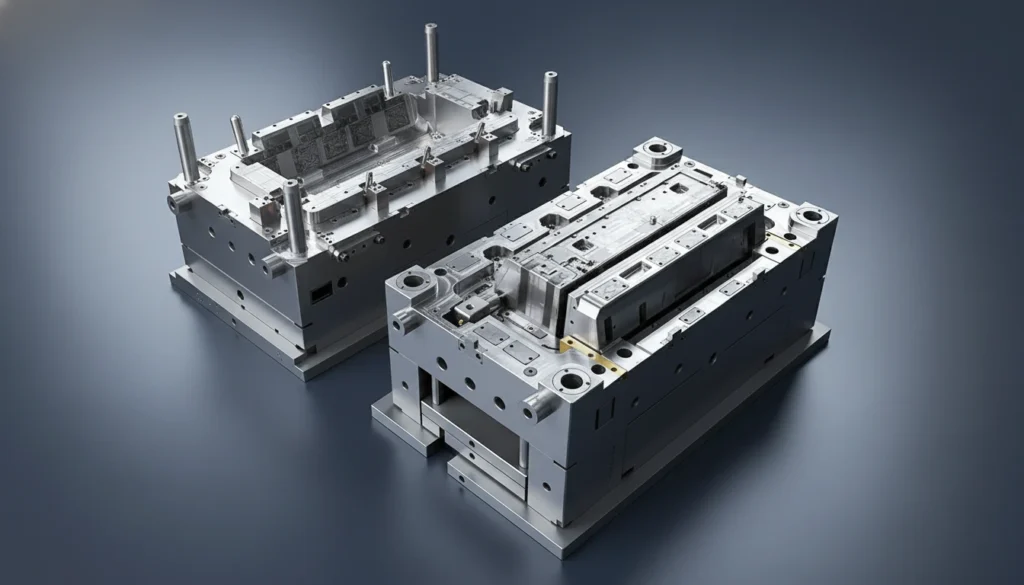
– The break-even point for transitioning from sheet metal fabrication to injection molding in HVAC typically lies between 3,000 and 5,000 units.
– While **tooling costs HVAC** projects can range from $15,000 to $100,000+, the unit cost reduction (often 70–80%) generates rapid ROI.
– **High volume molding** efficiency is dictated by [cycle time](https://zetarmold.com/optimize-cycle-time-injection-molding/); reducing wall thickness by 1mm can save seconds per part, translating to thousands of dollars annually.
– Part consolidation (combining brackets, fasteners, and housings into one mold) often yields greater savings than the material cost difference alone.
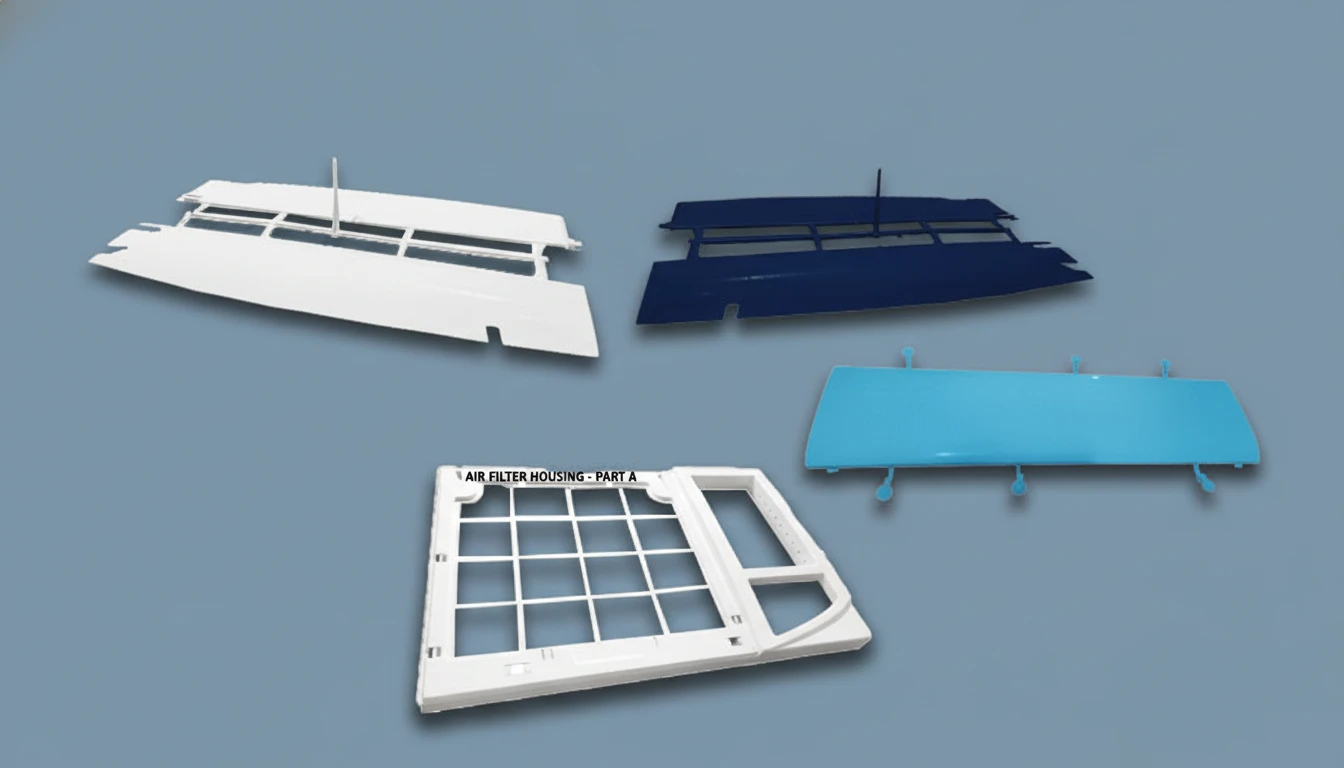
What is the "Tipping Point" for HVAC Plastic Production?
In my experience managing HVAC production lines, the most stressful conversation with procurement is always the initial quote for a steel mold. When a buyer sees a $60,000 line item for a "Condensate Pan Mold," they often balk, especially if they are used to paying $15 per unit for a fabricated stainless steel pan with zero setup cost.
However, the economics of injection molding cost analysis are about long-term volume. Metal fabrication (bending, welding, riveting) has a flat cost curve; whether you make 100 or 10,000, the labor and cycle time per part remain roughly the same. Injection molding is the opposite: it has a high entry barrier but an exponentially decaying unit price as volume increases.
For most HVAC components—air diffusers, drain pans, control boxes—the "tipping point" usually occurs around 3,000 to 5,000 units per year. If your production volume exceeds this, staying with metal fabrication is likely bleeding your profit margin.
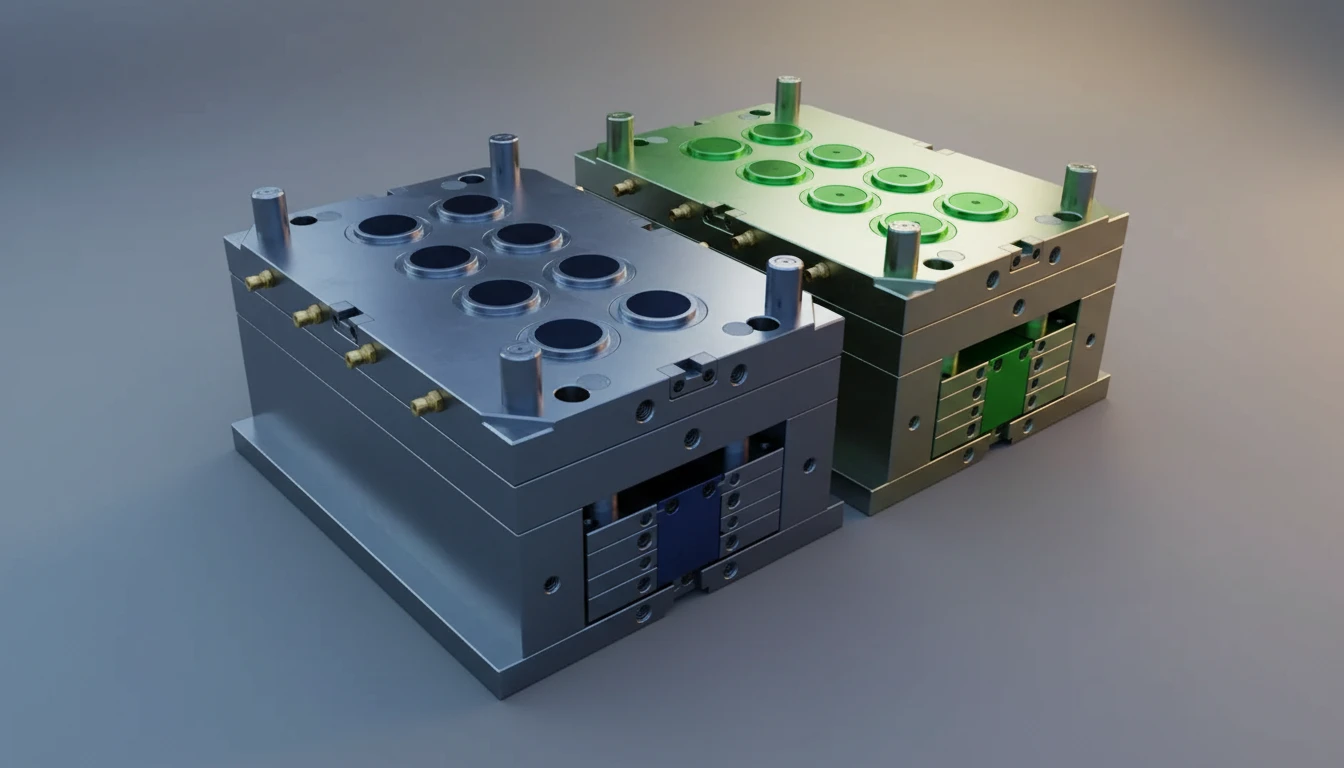
How Does Plastic Molding Compare to Metal Fabrication?
To understand the HVAC manufacturing ROI, we must compare the cost drivers of the two dominant manufacturing methods used in our industry.
| Cost Driver | Sheet Metal Fabrication | Plastic Injection Molding |
|---|---|---|
| Initial Investment | Low (Generic brakes/punches) | High (Custom CNC machined steel molds) |
| Cycle Time per Part | Slow (Minutes: cutting + bending + welding) | Fast (Seconds: 30s – 90s total cycle) |
| Labor Intensity | High (Requires welders/operators) | Low (Automated ejection and robotic handling) |
| Design Complexity | Limited (Linear bends, constant thickness) | High (3D curves, variable thickness, snap-fits) |
| Scrap Rate | Medium (Off-cuts, weld defects) | Low (Runners can often be reground and reused) |
| Weight (Shipping) | High (Steel/Aluminum density) | Low (Plastics are ~1/7th the weight of steel) |
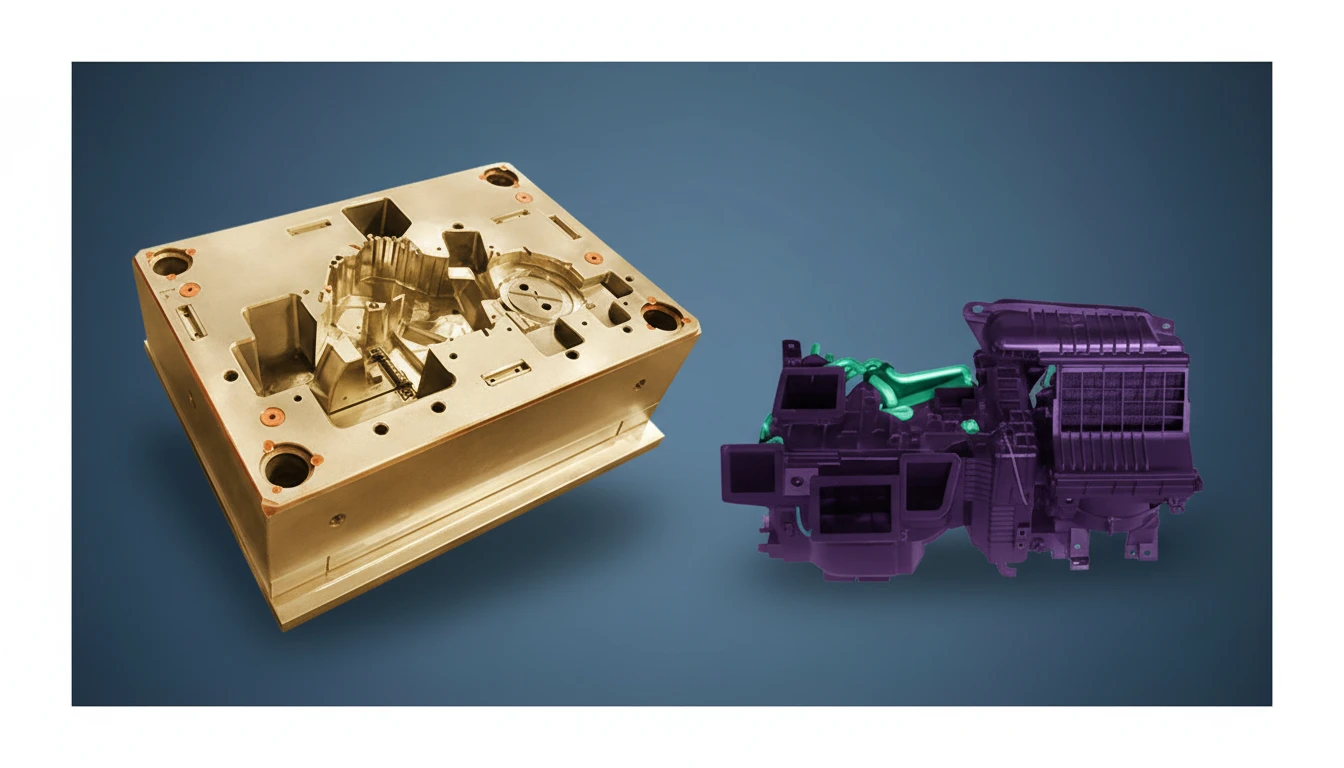
Real-World ROI Calculation: The Condensate Pan Case Study
Let’s look at a real project I managed for a split-system indoor unit. We were originally vacuum forming these pans (low tooling, medium piece price), but wanted to move to plastic molding vs fabrication (injection).
The Scenario:
- Part: 24" Condensate Drain Pan
- Annual Volume: 15,000 units
- Current Method (Vacuum Formed/Fab): $12.50 per unit
- Proposed Method (Injection Molding):
- Mold Cost (NRE): $45,000 (P20 Steel, single cavity)
- Piece Price (PP + 20% Talc): $3.10 per unit
The Math:
- Savings per unit: $12.50 – $3.10 = $9.40
- Break-Even Point: $45,000 / $9.40 = 4,787 units
The Conclusion:
At 15,000 units/year, we reached ROI in roughly 4 months of production. The remaining 8 months of the first year generated $95,880 in pure profit savings. This demonstrates why high CapEx is justifiable for high volume molding.
While a 4-cavity mold costs more upfront than a 1-cavity mold, it produces 4 parts per cycle. This slashes the machine time cost (which is charged by the hour) by nearly 75%, paying for the extra tooling cost rapidly in mass production.
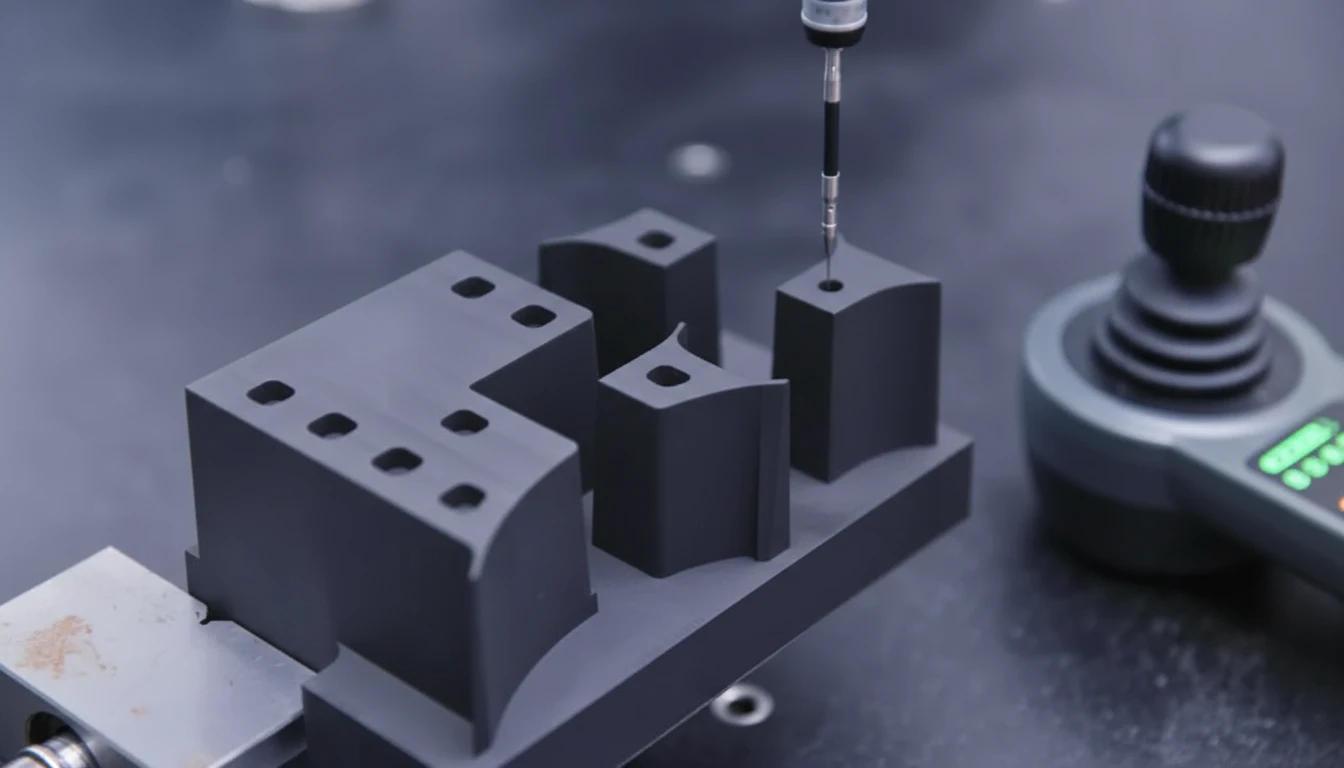
In HVAC, we frequently use glass-filled or mineral-filled plastics (like PP-T20 or PA6-GF30) for stiffness. These abrasive materials will scour and destroy soft aluminum molds in less than 5,000 shots, leading to flash issues and expensive repairs.
What Drivers Influence Tooling Costs in HVAC?
When you receive a quote for tooling costs HVAC components, the price tag reflects the complexity and durability of the steel. In my factory, we categorize molds by SPI (Society of the Plastics Industry) classifications:
-
Class 101 (High Production):
- Cycles: >1 Million
- Steel: H13 Hardened Steel (48-52 RCH)
- Cost Factor: High
- Use: Standard air vents, thermostat housings produced globally.
-
Class 103 (Mid-Range):
- Cycles: Under 500k
- Steel: P20 Pre-hardened
- Cost Factor: Medium
- Use: Specialized commercial unit parts.
Key Cost Adders:
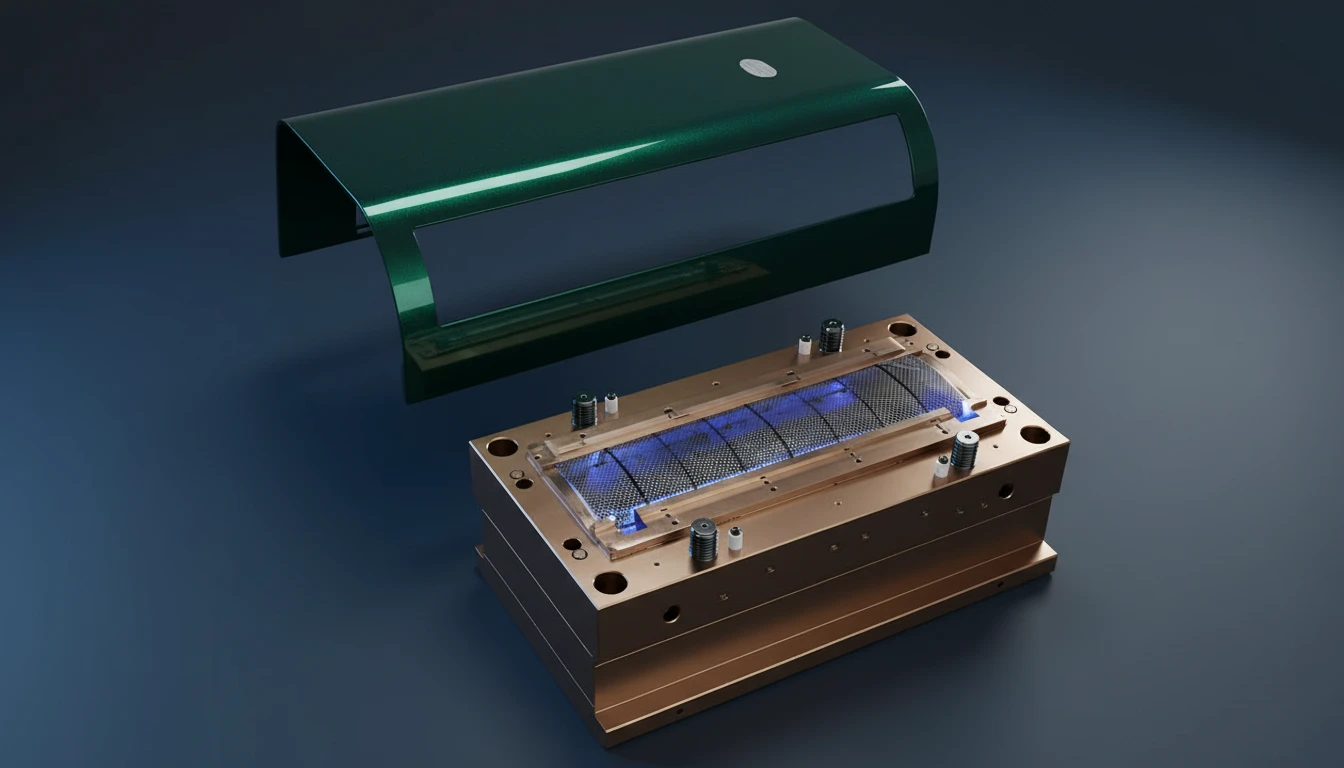
- Slides and Lifters: If your HVAC part has undercuts (like snap-fit clips for mounting without screws), the mold needs moving parts. Each "slide" or "lifter" adds $2,000–$5,000 to the tool cost.
- Hot Runner Systems: A "cold runner" solidifies plastic in the channel, which must be trimmed and recycled. A "hot runner" keeps the plastic molten up to the gate. Hot runners cost $3k–$10k more but eliminate waste and reduce cycle time.
How Does Cycle Time Impact Unit Cost?
In high volume molding, the machine rate (press time) is the biggest cost variable after material. Machine time is billed by the hour. If you run a 500-ton press at $80/hour:
- Cycle A (60 seconds): 60 parts/hour = $1.33 machine cost per part.
- Cycle B (45 seconds): 80 parts/hour = $1.00 machine cost per part.
Factory Reality:
To achieve Cycle B, we optimize the Cooling Time. The cooling time is driven by the square of the wall thickness.
- If a wall is 4mm thick, it might take 20s to cool.
- If we redesign it to 2mm with ribs for strength, it might take 5s to cool.
- Design Tip: Coring out thick sections doesn’t just save weight; it drastically improves ROI by speeding up the machine.
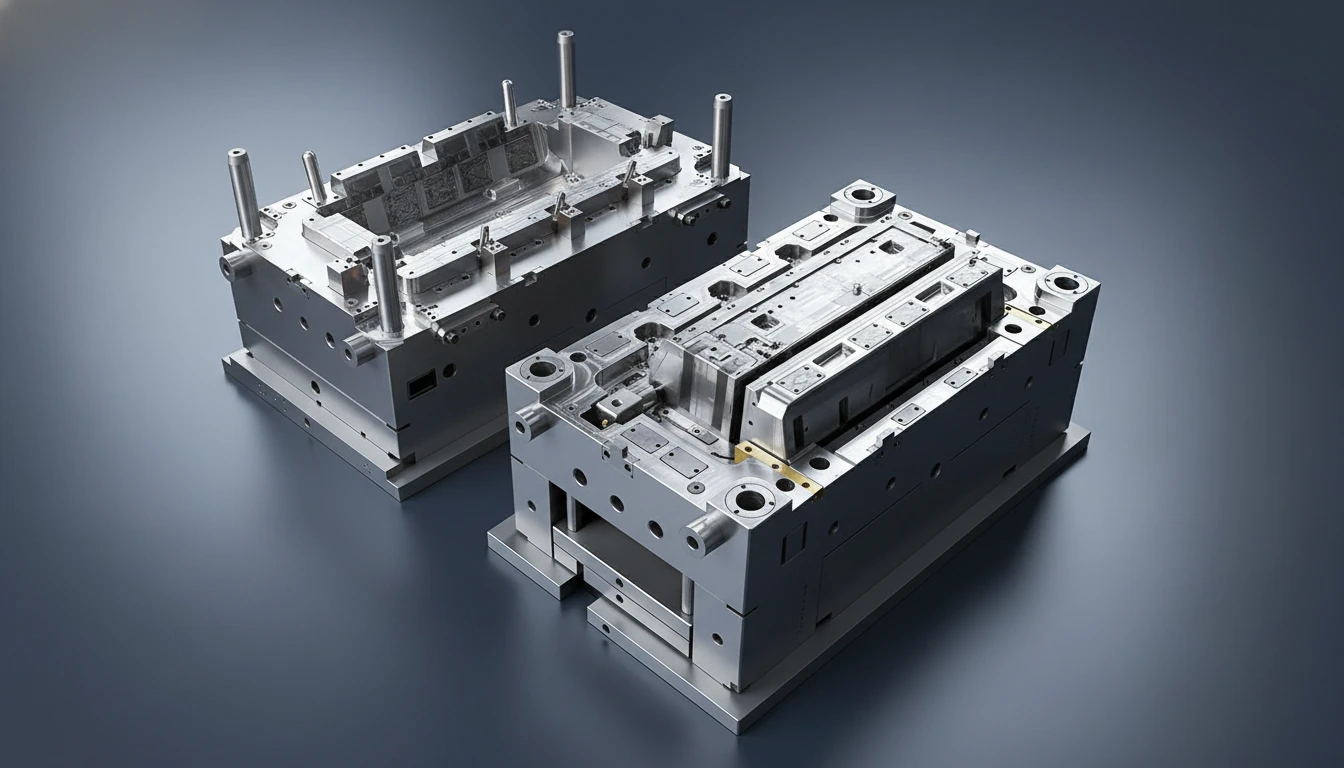
The most overlooked aspect of injection molding cost analysis is part consolidation.
In sheet metal, a damper assembly might require:
- Main blade (Stamping)
- Axle rod (Machined)
- Bushings (Purchased)
- Assembly labor (Riveting)
In injection molding, I can design a "living hinge" or snap-fit bearing directly into the blade. We mold one part that replaces four. The savings aren’t just in the manufacturing of the blade; they are in the elimination of the assembly line station.
Family molds are a production nightmare. If Part A (fan blade) has a higher scrap rate than Part B (housing), you are forced to mold good housings just to get more blades, wasting resin. Dedicated molds are safer for volume production.
Etching a logo or leather-grain texture into the steel mold cavity is a one-time tooling expense. It adds zero seconds to the cycle time and zero cents to the material cost, essentially providing 'free' branding on every unit produced.
FAQ: Economics of HVAC Injection Molding
What is the typical lead time for an HVAC injection mold?
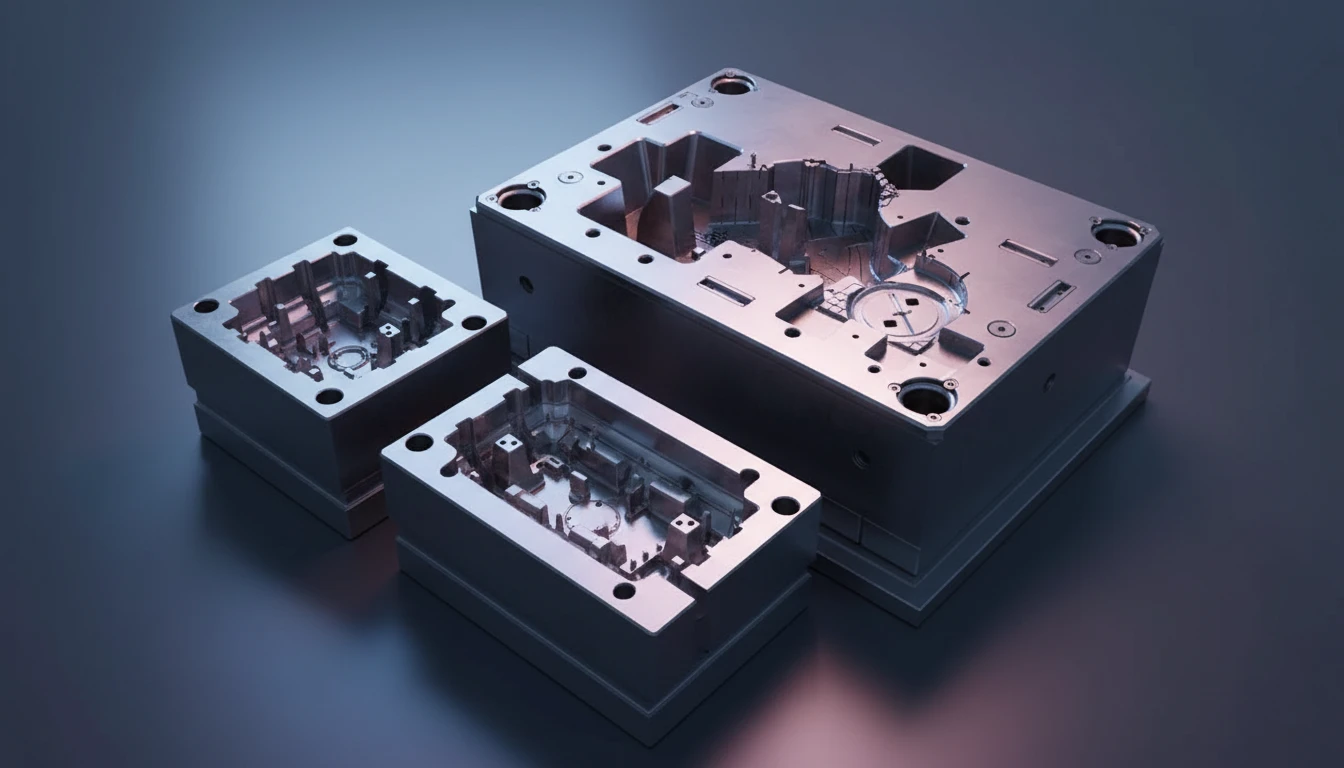
For a standard P20 steel mold (e.g., a 12" x 12" grille), expect 6–8 weeks for T1 (first trial samples). Complex tools with hot runners or large automotive-sized molds for base pans can take 10–12 weeks.
Can we modify the mold after it is made?
We follow the "Steel Safe" rule. It is easy to remove steel from the mold (adding plastic to the part). It is very expensive and risky to add steel back (welding). Always design critical features slightly smaller/tighter; we can machine them open later.
Does injection molding enable cheaper shipping?
Absolutely. Molded parts are designed to "nest" (stack inside each other). We can fit 2,000 nested plastic drain pans on a pallet, whereas fabricated metal pans might only stack 200 high before becoming unstable. This reduces freight costs by up to 90%.
How do we amortize the tooling cost?
If you cannot pay the $50k tooling upfront, many contract manufacturers (CMs) allow amortization. They might add $1.00 to the piece price for the first 50,000 units. Be careful—once the tool is paid off, ensure your contract states the piece price drops immediately.
Is it cheaper to mold in China or locally?
For the tool itself, China is typically 40–60% cheaper. For production, it depends on part size. Large HVAC parts (housings, pans) are "shipping air." The logistics cost of shipping bulky hollow parts from Asia usually outweighs the labor savings. The ideal hybrid strategy: Build the tool in Asia, ship the tool to the US/Europe, and mold locally.
Technical Summary
The shift from fabrication to injection molding for HVAC mass production is a financial calculation driven by volume. While the tooling costs ($20k–$80k) act as a barrier, the ROI is realized through drastic reductions in cycle time, elimination of secondary assembly steps, and reduced shipping weights. For annual volumes exceeding 5,000 units, injection molding offers the lowest Total Cost of Ownership (TCO), provided the part design is optimized for wall thickness and cooling efficiency.





