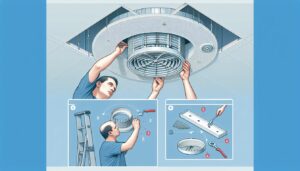
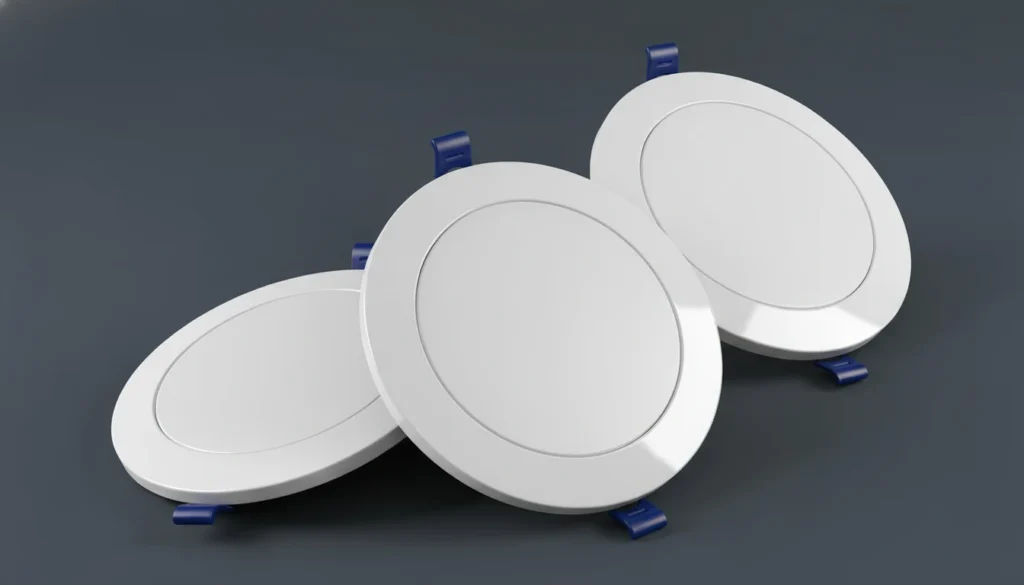
In the world of HVAC manufacturing, the "front fascia" of a wall-mounted split unit or a floor-standing tower is the most unforgiving component to mold. Marketing demands a high-gloss, piano-black or pure white "glass-like" surface. Engineering demands a perfectly flat fit against the chassis. Physics, unfortunately, wants that large, flat sheet of plastic to curl like a potato chip.
As a technical lead in HVAC OEM production, I have spent countless nights at the injection press, wrestling with HVAC panel flatness. When you are molding a component that is 1000mm long but only 2.5mm thick, internal stress is your enemy.
This article details the technical strategies—from mold flow analysis warpage prediction to post-process fixturing—that we use to ensure large AC panels come out straight and stay straight.
Key Takeaways
- Warpage is primarily caused by differential shrinkage: different areas of the part cooling at different rates.
- Gate location is critical; Sequential Valve Gating (SVG)helps reduce internal stress in large panels.
- Cooling channel design must be balanced; conformal cooling is often required for corners.
- Ribbing increases stiffness but introduces "sink marks" if the rib base exceeds 60% of the wall thickness.
Definition: Warpage in HVAC Plastics
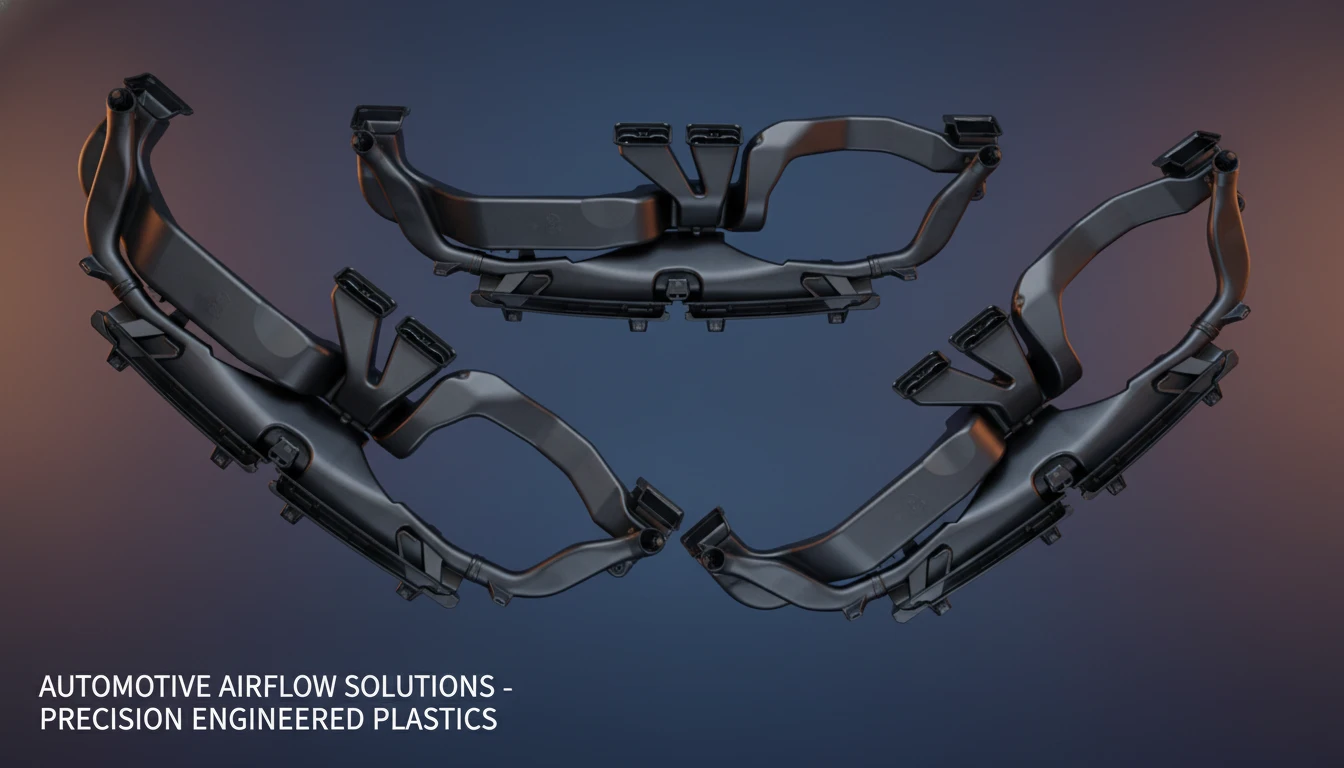
Warpage is a dimensional distortion where the molded part deviates from the intended design shape. In large plastic part defects, this usually manifests as bowing, twisting, or corner-lifting.
It occurs because plastic does not shrink uniformly. Anisotropic shrinkage (shrinking differently in the direction of flow vs. across the flow) and differential cooling (one side cooling faster than the other) create internal stresses. When the part ejects from the mold, these stresses release, pulling the part out of shape.
Key Parameters: The Process Window
Controlling warpage requires a tight balance of heat and pressure. Here are the baseline parameters we monitor for a standard ABS (Acrylonitrile Butadiene Styrene) front panel.
| Parameter | Typical Range (ABS) | Effect on Warpage |
|---|---|---|
| Melt Temperature | 220°C – 250°C | Higher temp reduces viscosity/stress but increases cooling time. |
| Mold Temperature | 40°C – 80°C | Uniformity is key. A 10°C delta between Cavity and Core causes bowing. |
| Holding Pressure | 50% – 70% of Injection | Too low = shrinkage (warp). Too high = over-packing (stress/warp). |
| Cooling Time | 30s – 60s | Premature ejection causes deformation; the part must be rigid before ejection. |
| Injection Speed | Multi-stage | Fast fill to prevent freezing, slow end to prevent flash/stress. |

Step-by-Step Technical Strategies for Flatness
1. The Design Phase: Mold Flow Analysis
Before cutting steel, we run mold flow analysis warpage simulations. We are looking for:
- Volumetric Shrinkage: Is the center shrinking 5% while the corners shrink 2%? That’s a guarantee of warpage.
- Gate Location: For a long panel, a single center gate causes molecules to align radially, creating stress. We often switch to a 3-drop or 5-drop hot runner system to fill the part evenly.
2. Advanced Gating: Sequential Valve Gating (SVG)
In one of our floor-standing unit projects, we used Sequential Valve Gating.
- The Process: We open the center gate first. As the flow front passes the side gates, they open automatically.
- The Result: This maintains continuous flow pressure without creating "weld lines" (weak points where flow meets) in the middle of the visual surface. It significantly reduces the clamp force required and lowers residual stress.
3. Cooling Channel Layout
Standard straight-line cooling isn’t enough for preventing warpage injection molding.
- The Issue: Corners of the mold hold heat longer than the center.
- The Fix: We use Beryllium Copper (BeCu) inserts in the corners (high thermal conductivity) and baffled cooling circuits to force water into deep pockets.
- Differential Cooling: If the panel bows inward (concave), it means the core side (back) is shrinking more than the cavity side (front). We might run the Core at 50°C and the Cavity at 60°C to balance the shrinkage rates.
4. Ribbing and Structural Support
We need ribs for stiffness, but ribs cause sink marks on the glossy front.
- The Rule: Rib thickness at the base should be <60% of the nominal wall thickness.
- Gas Assist: For handles or thick structural frames, we use gas assist molding HVAC techniques. We inject nitrogen gas into the melt stream, hollowing out thick sections. This packs the plastic from the inside out, eliminating sink marks and preventing the thick sections from warping the thin panel.
Real Factory Case: The "Smiling" Panel
I once worked on a 1.2-meter wall-mount AC cover that kept coming out with a "smile"—the ends were lifting 5mm off the inspection table.
- Diagnosis: Thermal imaging showed the center of the mold was 15°C hotter than the ends due to poor water flow. The center was cooling last, shrinking more, and pulling the ends up.
- Immediate Action: We cleaned the blocked cooling channels and increased water flow rate (Reynolds number > 4000 for turbulent flow).
- Process Adjustment: We increased the "Cooling Time" by 8 seconds.
- Result: The "smile" reduced to 0.5mm, which was within the snap-fit tolerance.
Myth vs. Fact: Warpage Control
In mass production, we often place hot parts immediately into a metal cooling fixture (jig) that holds the part in the correct shape while it reaches room temperature. This mechanically constrains the part during the final shrinking phase.
Advantages and Disadvantages of Warpage Control Methods
| Method | Advantages | Disadvantages |
|---|---|---|
| Cooling Fixtures (Jigs) | • Guarantees shape after ejection • Low cost implementation |
• Increases cycle time (labor) • Does not remove internal stress, just masks it |
| Gas Assist Molding | • Eliminates sink marks in thick ribs • Greatly increases stiffness |
• High tooling/equipment cost • Gas channels can be tricky to control |
| Fiber Reinforcement (GF) | • Drastically reduces shrinkage rate • High structural strength |
• Ruins surface finish (fiber read-through) • Increases machine wear |
| Sequential Valve Gates | • Low stress, no weld lines • Ideal for high-gloss aesthetic parts |
• Expensive hot runner system • Complex maintenance |
Practical Tips for the Shop Floor
- The "Water Battery" Check: Before blaming the plastic, check the water. Are the mold heaters actually delivering the set temperature? A blocked line on the Core side is the #1 cause of sudden warpage issues.
- Uniform Wall Thickness: As a designer, avoid transitioning from 2mm to 4mm abruptly. If you must thicken a wall, ramp it gradually. Sharp transitions create stress concentrators.
- Gate at the Thickest Section: Always gate into the thickest part of the design and flow toward the thinner areas. This ensures you can pack the part effectively.
- Check Residence Time: If the barrel is too big for the shot size, the plastic sits in the heat too long (degrading). Degraded polymer chains are weaker and warp unpredictably.
HVAC Application Scenarios
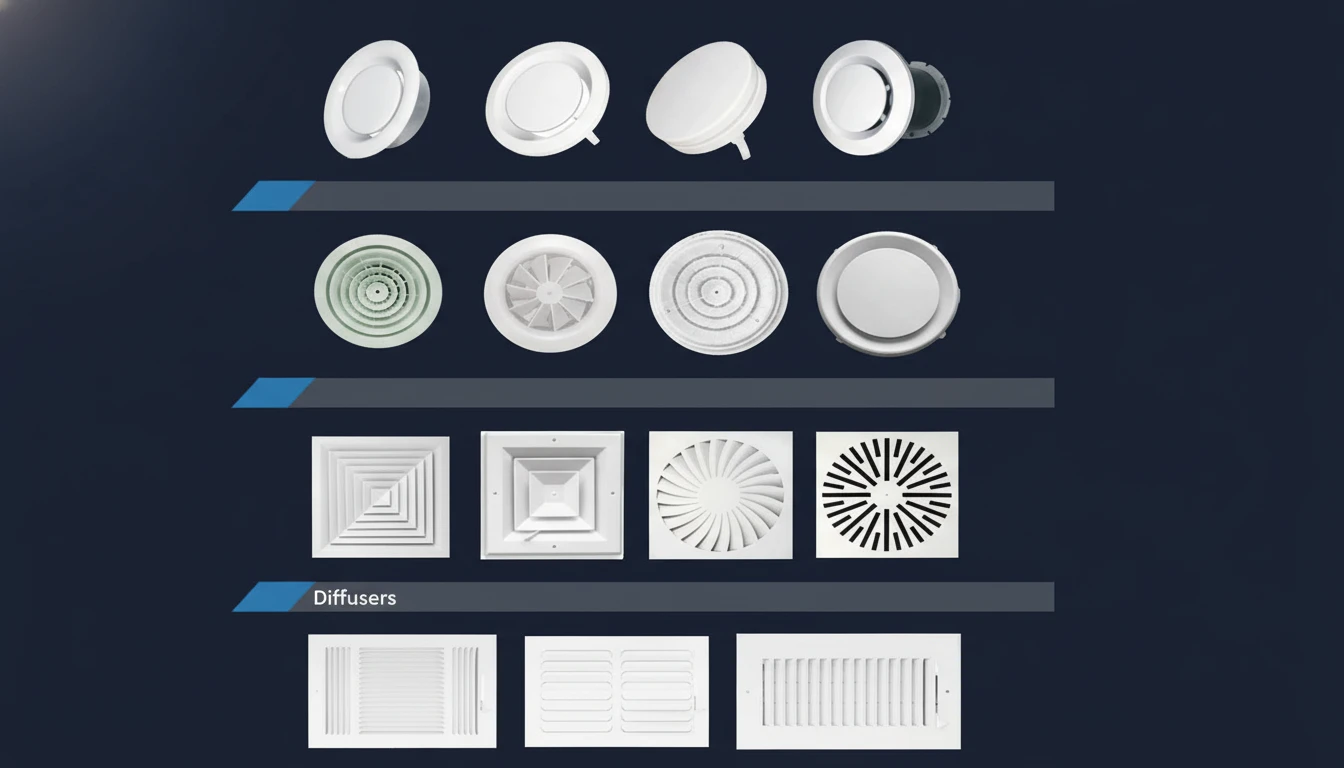
- Split System Front Panels: High aesthetic requirement. Use ABS, high mold temps for gloss, and cooling jigs to maintain flatness.
- Ceiling Cassette Grilles: Often square grids. Prone to "diamonding" (warping diagonally). Requires very balanced cooling and center gating.
- Air Deflectors (Louvers): Long and thin. often molded with gas assist molding HVAC or Glass-Filled PP for stiffness, as surface finish is less critical than straightness.
Frequently Asked Questions (FAQ)
1. Why does the panel warp 24 hours after molding?
Plastic continues to shrink for hours (and sometimes days) after molding as the polymer chains relax. We call this "post-mold shrinkage." If the part has high internal stress, it will warp as it relaxes.
2. Can I fix a warped panel with a heat gun?
In a factory setting? No. Re-heating creates memory in the plastic. It might look straight initially, but it will likely revert or warp differently once it cools again. It also ruins the surface finish.
3. How does glass fiber affect warpage?
Glass fibers reduce shrinkage significantly in the direction of flow but not as much across the flow (anisotropic). This can actually worsen warpage in flat panels if the fiber orientation isn’t random. Plus, it ruins the glossy finish required for AC fronts.
4. What is the best material for flat HVAC panels?
ABS (Acrylonitrile Butadiene Styrene) is the standard. It offers a good balance of impact strength, gloss, and reasonable shrinkage (0.4% – 0.7%). For lower cost, HIPS (High Impact Polystyrene) is used, but it is more brittle.
5. How does mold temperature affect flatness?
A hotter mold allows the plastic to flow easier (lower stress) but increases cycle time. A colder mold freezes stress into the part. The key is uniformity. If the top of the mold is 60°C and the bottom is 40°C, the part will bend.
Technical Summary
Controlling warpage in large flat HVAC panels is a battle against differential shrinkage. Success relies on minimizing internal stress through strategic preventing warpage injection molding techniques. This begins with mold flow analysis warpage simulation to optimize gate locations (often using Sequential Valve Gating). During production, maintaining a uniform thermal profile across the mold using precise cooling circuits is paramount. While post-molding fixtures can correct minor deviations, the ultimate solution lies in a process window that balances holding pressure and cooling time to ensure the part is stress-free before it ever leaves the mold.