– Material Compliance: Housings for electronics must strictly adhere to UL 94 V-0 or 5VA flammability standards to prevent fire propagation in high-voltage control zones.
– RF Transparency: “Smart” implies connectivity (Wi-Fi/Bluetooth); the plastic housing must be radio-frequency transparent, prohibiting conductive fillers like carbon black.
– Environmental Sealing: Overmolding Thermoplastic Elastomers (TPE) onto rigid housings provides IP-rated ingress protection against condensate and dust without manual gasket installation.
– Vibration Dampening: Snap-fit designs must account for the constant vibration of compressors and fans to prevent sensor drift or PCB rattling.
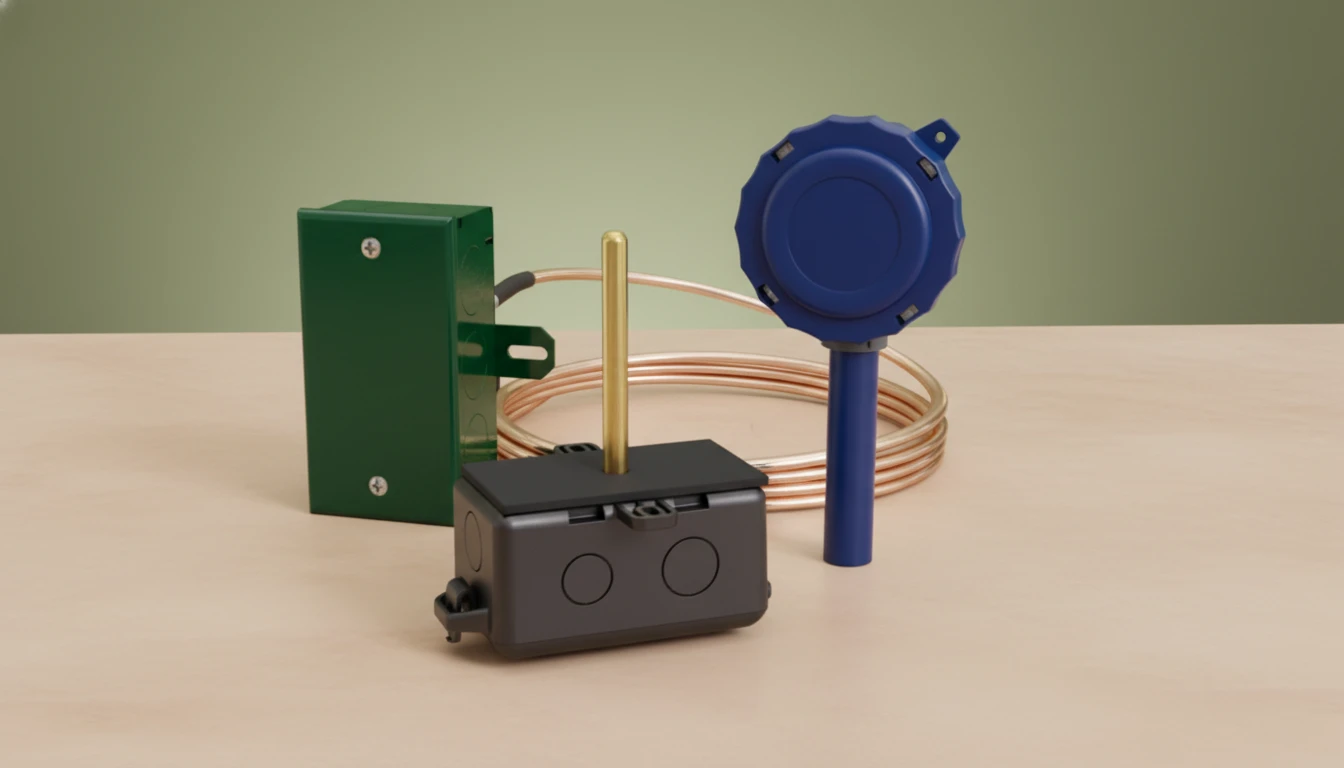
What Defines the "Smart" HVAC Housing?
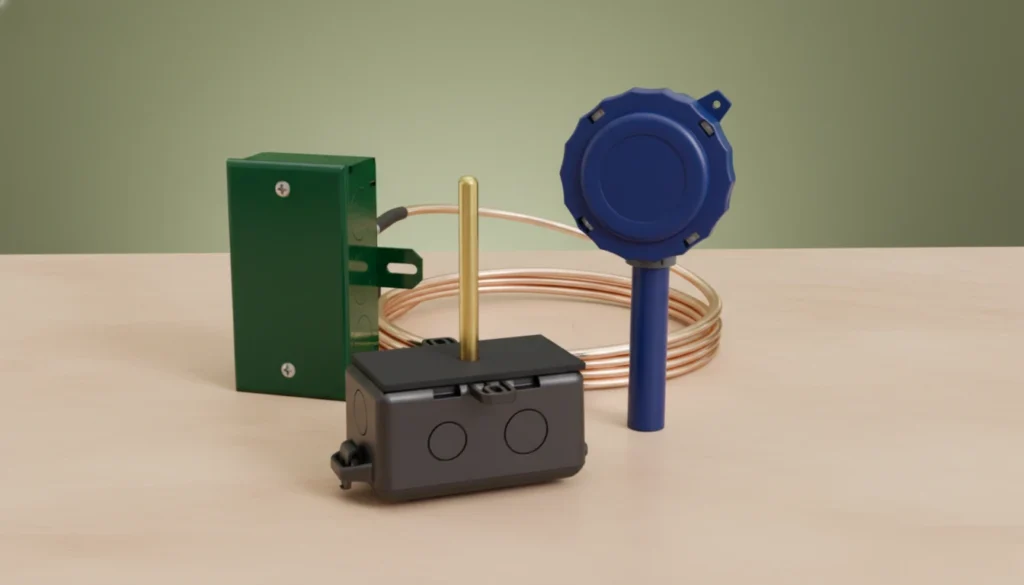
In traditional HVAC manufacturing, plastic parts were primarily for airflow (fans, volutes) or structure (drain pans). Today, the fastest-growing category on our production floor is smart HVAC components—specifically, the protective enclosures for PCBs, IoT gateways, and environmental sensors.
IoT housing injection molding is not just about making a box; it is about creating a micro-environment. These enclosures must shield sensitive electronics from the harsh reality of an HVAC unit—moisture, temperature extremes, and vibration—while simultaneously allowing sensors to "breathe" and antennas to transmit data.
Key Parameters: Standard vs. Electronic Enclosures
When designing plastic enclosures for controls, the priorities shift from mechanical strength to electrical and thermal properties.
| Parameter | Standard HVAC Part (e.g., Vent) | Smart Electronics Housing | Production Implication |
|---|---|---|---|
| Flammability (UL) | HB or V-2 (Slow burn allowed) | UL 94 V-0 / 5VA (Must self-extinguish) | Requires specialized Flame Retardant (FR) resins like FR-ABS or FR-PC/ABS. |
| RF Permeability | Irrelevant | High Transparency | Avoid carbon black pigments or metallic flakes; wall thickness must be uniform to prevent signal attenuation. |
| Ingress Protection | N/A | IP54 to IP67 | Requires tongue-and-groove mating geometry or TPE overmolding. |
| Dimensional Tolerance | ±0.50 mm | ±0.05 mm | PCBs have rigid mounting holes; if the plastic moves, the board stresses and solder joints crack. |

Process: Designing a Humidity Sensor Housing
In a recent project for a smart thermostat remote sensor, we faced a contradiction: the sensor needed to be exposed to air to read humidity, but protected from water droplets and user tampering. Here is how we solved it via sensor integration design:
1. Material Selection (The "RF" Factor)
We chose a Polycarbonate/ABS (PC/ABS) blend.
- Reasoning: PC provides impact resistance (drop testing), while ABS provides better processability. Crucially, we avoided standard black (which often uses conductive Carbon Black) and used an organic dye to ensure the Wi-Fi signal wasn’t blocked.
2. Thermal Management and Airflow
The PCB generated minor heat, which could skew the temperature reading.
- Design: We designed "chimney effect" vents at the bottom and top of the housing. This natural convection pulls ambient air over the sensor element while moving board heat away from the sensing zone.
3. Snap-Fit Engineering
Screws are expensive in mass production (labor + part cost). We designed cantilever snap-fits.
- Factory Challenge: Initially, the snaps were too stiff and cracked during assembly. We adjusted the mold to taper the snap beam, distributing stress and allowing for a "soft click" assembly that holds firm under vibration.
4. Light Pipe Integration
The unit needed an LED status light. Instead of exposing the LED (leak path), we molded a clear Polycarbonate (PC) "light pipe" into the opaque housing.
- Process: This required a "two-shot" or insert molding process, fusing the clear lens permanently into the housing for a watertight seal.
While metal offers durability, it blocks RF signals (Faraday cage effect), making it useless for Wi-Fi enabled smart units. Furthermore, conductive metal poses a short-circuit risk for exposed PCBs. FR-rated plastic provides necessary insulation and signal transparency.
By molding a soft TPE seal directly onto the rigid housing (2-shot molding), manufacturers eliminate the manual labor of peeling and sticking foam gaskets. It ensures perfect placement every time and improves the IP rating consistency.

Advantages and Disadvantages of Integrated Housings
| Feature | Advantages | Disadvantages |
|---|---|---|
| Snap-Fit Assembly | Speed: Zero-screw assembly reduces cycle time by 30-50%. Cost: Eliminates fastener inventory. | Tooling Risk: Complex undercuts require lifters/slides in the mold, increasing tooling cost and maintenance. |
| Flame Retardant Resins | Safety: Meets UL/IEC safety codes for unattended appliances. | Process Difficulty: FR additives are sensitive to heat shear; narrow processing window creates risk of splay or degradation. |
| Integrated Cable Management | Reliability: Molded-in strain relief prevents cables from pulling out of headers. | Complexity: Increases mold size and design time. |
Practical Tips for Electronics Protection
-
Watch Out for "Knit Lines" on Snaps:
In electronics protection HVAC design, if a knit line (where plastic flows meet) forms on a snap-fit arm, it will break during assembly. Use Mold Flow Analysis to position gates so the flow moves along the length of the snap, pushing the weld line to a non-structural area. -
The "Living Hinge" Warning:
Engineers love living hinges (a thin web of plastic connecting a door to a box) for service ports. In HVAC, use Polypropylene (PP) if you want a living hinge. If you use ABS or PC for flame ratings, the hinge will snap off after a few flexes. If you need FR and a hinge, you need a mechanical pin hinge, not a living hinge. -
Condensate Management:
Never seal a sensor housing 100% unless it is vacuum-potted. Temperature changes in the duct cause pressure differentials that suck water in past gaskets. It is better to design a "tortuous path" drain hole at the bottom (gravity drain) to let condensate escape.

HVAC Application Scenarios
- Duct Probes: Long, slender housings inserted into airstreams. These require high stiffness (Glass-Filled Nylon) to prevent fluttering in high-velocity airflow.
- Compressor Inverter Covers: Located on the outdoor condensing unit. These must be UV stable (ASA or UV-stabilized PC) and robust enough to survive hail impact while protecting high-voltage capacitors.
- Zone Damper Actuators: Gear housings that require internal lubricity (POM/Acetal) to ensure gears turn smoothly for years without grease drying out.
Standard ABS is flammable (UL 94 HB). For any enclosure housing high-voltage components (like a furnace control board), safety standards (UL 1995/UL 60335) mandate UL 94 V-0 or 5VA materials to prevent the enclosure from becoming fuel in an electrical fire.
Radio waves attenuate (weaken) as they pass through material. Reducing the wall thickness of the plastic housing—specifically in the area directly over the antenna—minimizes signal loss and improves the range of smart HVAC devices.

FAQ: Molding for Smart HVAC
What is the best material for outdoor HVAC sensor housings?
ASA (Acrylonitrile Styrene Acrylate) is the gold standard. It has the toughness of ABS but is chemically resistant to UV radiation. Standard ABS will yellow and become brittle after one summer in the sun.
How do we protect PCBs from static during molding/assembly?
We use "dissipative" plastic grades or anti-static additives for the housing. More commonly, we ensure the assembly line has strict ESD (Electrostatic Discharge) protocols, as adding conductive fillers to plastic can block RF signals.
Can we mold a watertight seal without expensive 2-shot machinery?
Yes. You can use a standard mold and manually install an O-ring. However, for high volume, you can design a "crush rib" geometry where the plastic deforms slightly against a mating part to create a tight—though not immersion-proof—seal.
Why are my Flame Retardant (FR) parts streaking?
FR additives are thermally sensitive. If your injection speed is too high (shear heat) or the barrel temperature is too high, the additive degrades, causing "splay" or silver streaks. Lower the temperature profile and reduce injection speed.
What is the "UL Yellow Card"?
It is the material’s safety passport. When sourcing smart HVAC components, you must verify the resin’s UL Yellow Card to ensure it is certified for the specific thickness you are molding. A material might be V-0 at 3.0mm but only V-2 at 1.5mm.
Technical Summary
The transition to IoT-enabled climate control requires a fundamental shift in HVAC plastic manufacturing. We are no longer just moving air; we are protecting intelligence. Successful IoT housing injection molding requires a holistic approach: selecting UL-compliant materials that balance fire safety with RF transparency, designing snap-fits that withstand compressor vibration, and utilizing advanced techniques like overmolding to guarantee long-term electronics reliability in harsh environments.