
寸法精度.
– Material selection is the single most critical factor in HVAC component longevity, with engineering-grade polymers like PA66-GF30, PPS, and PBT outperforming commodity plastics by 3–5× in service life.
– Injection molding achieves ±0.1 mm dimensional tolerances, making it the preferred manufacturing method for complex HVAC geometries that must seal, snap, or flow air reliably.
– Our factory’s 45 injection molding lines produce HVAC plastic parts that withstand thermal cycling from −40°C to +135°C without warpage or stress cracking.
– ISO 9001 and ISO 13485 certification, combined with RoHS & REACH compliance, ensures that every HVAC component we ship meets global regulatory requirements.
What Are HVAC System Components?
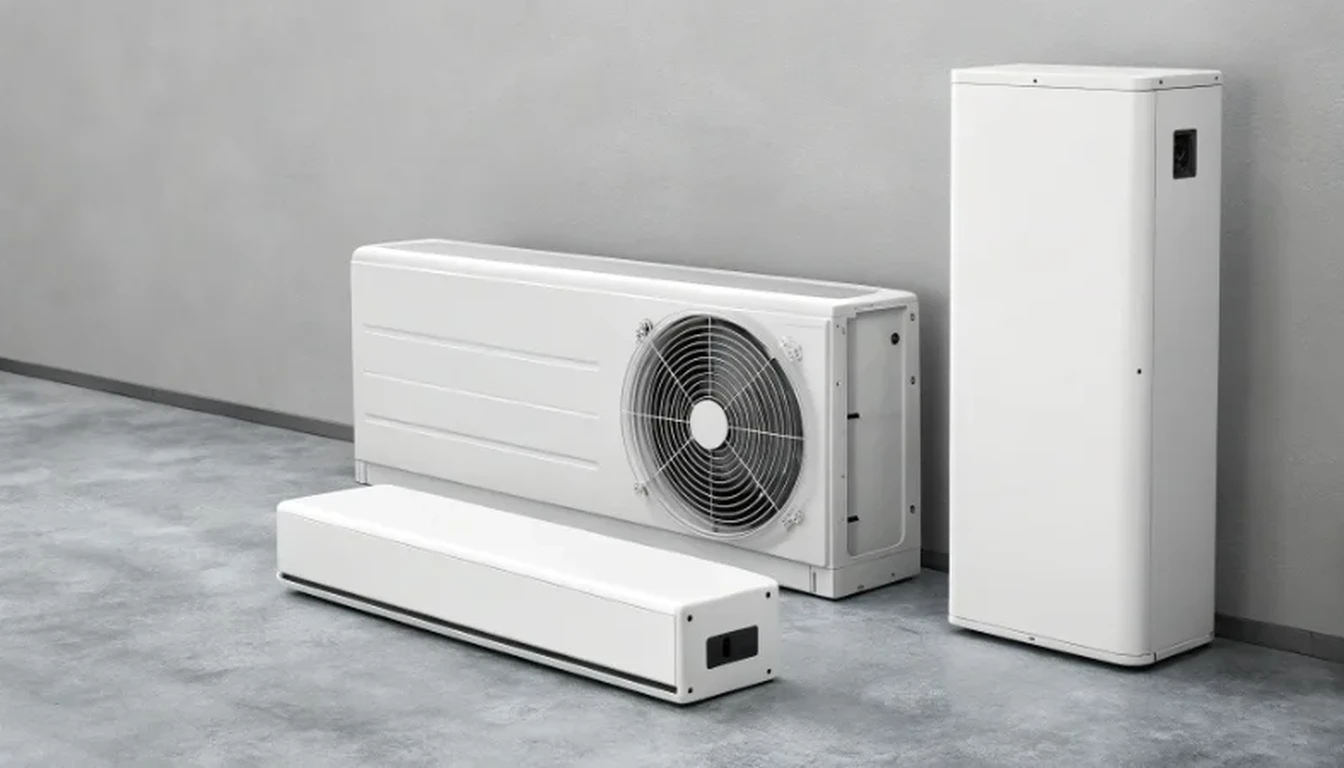
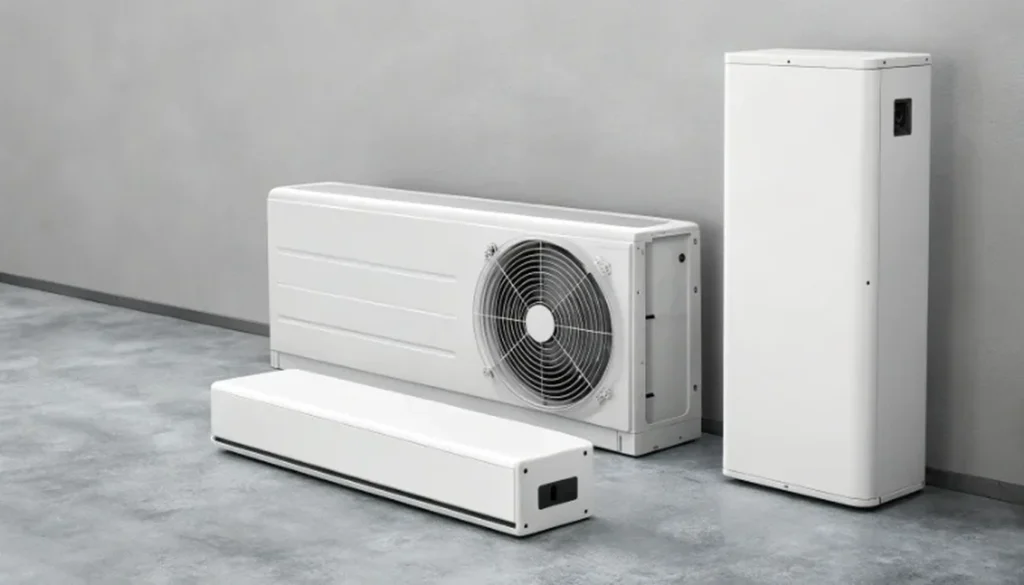
HVAC stands for Heating, Ventilation, and Air Conditioning. The term covers every device, fitting, housing, and control element that works together to regulate indoor climate. In our HVAC production facility, we break these components into six functional groups:
- Refrigerant-side components — compressors, condensers, evaporator coils, expansion valves, and refrigerant line fittings.
- Air-handling components — blower wheels, fan blades, volute housings, and air-handler cabinets.
- Ductwork and distribution components — duct connectors, elbows, reducers, damper blades, and diffusers.
- Drainage components — condensate drain pans, P-traps, condensate pumps, and overflow sensors.
- Control and sensing components — thermostat housings, sensor enclosures, relay mounts, and wiring harness brackets.
- Aesthetic and enclosure components — front bezels, grilles, vent covers, access panels, and display housings.
While historically metal-dominated, today more than 60% of individual HVAC component parts by count are manufactured from engineering plastics. The transition happened because injection-molded plastic delivers lighter weight, corrosion immunity, design freedom, and cost efficiency that sheet metal simply cannot match for complex geometries. We’ve seen this shift accelerate enormously over the 20+ years we’ve been supplying OEM and ODM partners worldwide.
Why Does Material Selection Define HVAC Component Longevity?
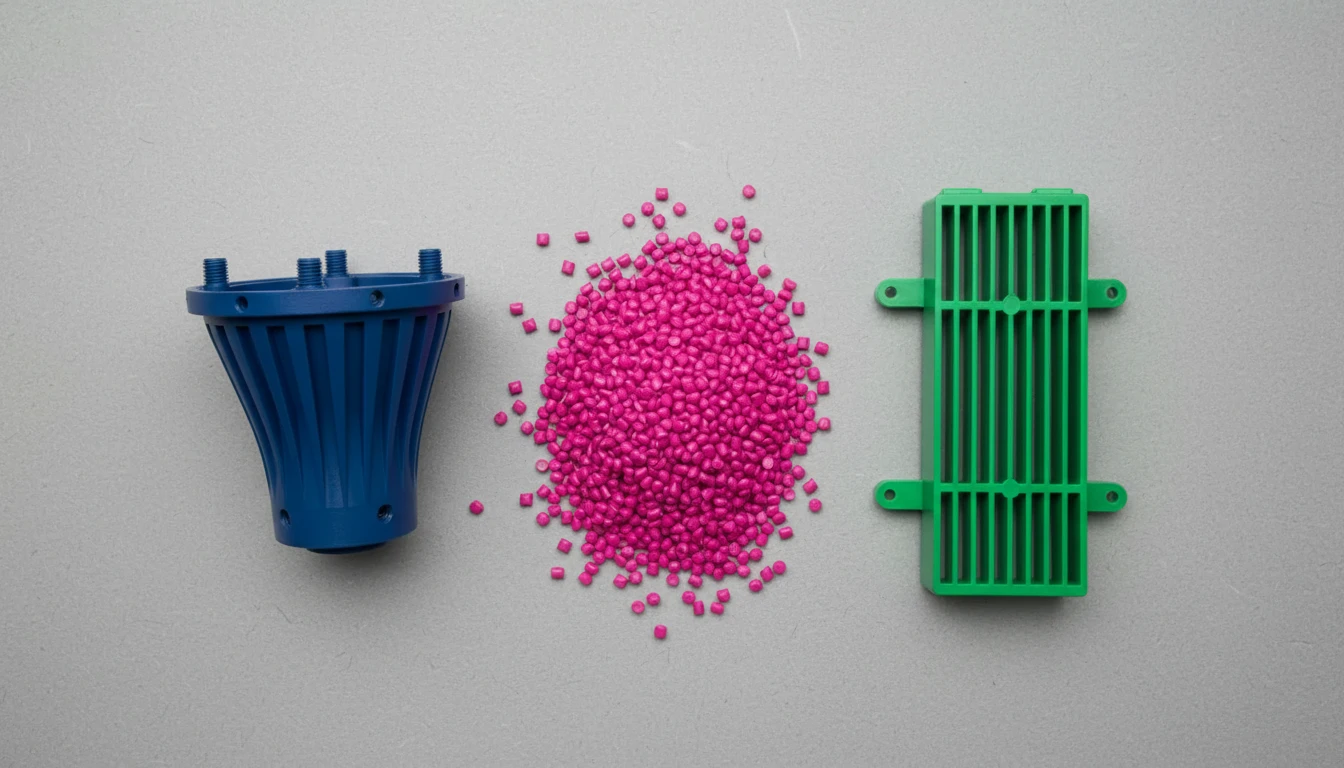
Material selection is not simply a procurement decision — it is an engineering commitment that determines whether a component survives one season or twenty years. We’ve found that HVAC plastic parts fail prematurely for one of three reasons: wrong polymer family, inadequate filler reinforcement, or incompatible additive package. Our engineers evaluate each application against four parameters before selecting a resin.
Thermal performance is the first gate. Air-handling housings near the compressor can see sustained temperatures of 100–120°C; drain pans in heat pump defrost cycles swing between −10°C and 80°C in minutes. Materials that are unsuitable for these conditions include standard polypropylene (PP), which softens above 120°C under load, and PVC, which becomes brittle below −15°C. Our go-to resins for thermal-critical HVAC parts are:
- PA66-GF30 (30% glass-fiber reinforced nylon): heat deflection temperature (HDT) up to 230°C, excellent dimensional stability.
- PPS (Polyphenylene Sulfide): continuous service to 220°C, inherent flame retardancy, near-zero moisture absorption.
- PBT-GF20: balanced electrical insulation, chemical resistance, and cost for sensor housings.
- ASA (Acrylonitrile Styrene Acrylate): outdoor UV resistance for rooftop units without painting.
Chemical resistance comes second. Condensate is mildly acidic, refrigerants attack certain polymers, and maintenance crews apply alkaline coil cleaners. We test every resin candidate against the actual chemicals it will encounter before specifying it for production.
Mechanical load requirements shape the filler strategy. Fan blades experience centrifugal stress; snap-fit enclosure latches experience repeated flexion; duct connectors bear compressive sealing forces. Glass-fiber reinforcement adds stiffness; rubber tougheners add impact resistance. We formulate from our library of 400+ plastic materials to balance these properties precisely.
Regulatory compliance closes the loop. Every resin we process must satisfy RoHS Directive 2011/65/EU (no restricted substances) and REACH SVHC requirements. For components in contact with potable water systems, we additionally specify NSF/ANSI 61 compliant grades.
How Does Injection Molding Enable Precise HVAC Component Manufacturing?

Injection molding1 works by melting polymer pellets, injecting the melt under high pressure into a precision steel mold, holding pressure until the part solidifies, then ejecting the finished piece. The process delivers several capabilities that are uniquely suited to HVAC components.
Dimensional precision PA66やPBTなどの吸湿性樹脂では、銀条、スプレー、表面膨れが発生することがあり、これらはしばしば汚染と誤解されます。当社の前処理乾燥プロトコルでは、各樹脂グレードの時間と温度の要件を規定しており、各生産ロットの前にオンライン水分計を使用して準備状態を確認しています。.
Complex geometry is achievable in a single shot. Undercuts, living hinges, integrated snap fits, ribbed structures, and bosses for self-tapping screws are all molded in rather than machined or assembled afterward. Our engineers routinely design HVAC housings that consolidate four or five separate sheet-metal parts into one injection-molded component, reducing assembly labor by 60–70%.
High-volume repeatability is another critical advantage. Our 45 injection molding lines can cycle thousands of identical parts per shift, maintaining the same dimensions from cavity 1 in hour 1 to cavity 8 in hour 2,000. For OEM customers who require interchangeable spare parts, this consistency is non-negotiable.
✗ “Any plastic can be injection molded into HVAC components without material-specific process adjustments”False
Every polymer family requires precise process parameters: melt temperature, injection speed, packing pressure, cooling time, and mold temperature. PA66-GF30, for example, must be dried to <0.2% moisture before molding to prevent hydrolytic degradation and surface splay. PPS requires mold temperatures of 130–150°C to achieve proper crystallization. Using incorrect settings — even with the right resin — produces parts with voids, sink marks, or residual stress that will cause premature failure in service. Our process engineers write material-specific setup sheets for every job.
✓ “Injection molding can achieve tighter tolerances than most sheet-metal fabrication for HVAC plastic parts”True
Sheet-metal stamping and bending typically holds ±0.5–1.0 mm tolerances on complex assemblies, while injection molding routinely achieves ±0.1–0.2 mm on plastic parts with proper mold design and process control. For HVAC applications where sealing interfaces, snap-fit engagement depths, and sensor mounting geometry are critical, this precision difference is the decisive factor in choosing injection molding over fabricated metal alternatives.
What Are the Critical Design Parameters for Long-Lasting HVAC Plastic Parts?
In our HVAC production facility, we evaluate every new part against a design parameter matrix before cutting steel. The table below summarizes the seven most critical parameters we review, along with our recommended targets and the failure modes associated with non-compliance.
| Design Parameter | Recommended Target | Failure Mode if Out of Range | Affected HVAC Parts |
|---|---|---|---|
| Wall thickness uniformity | ±15% variation max | Sink marks, warpage, internal voids | Fan housings, drain pans, bezels |
| Draft angle | 1.0°–2.0° per side minimum | Part sticking in mold, surface drag marks | All injection-molded parts |
| Corner radius (internal) | ≥0.5× wall thickness | Stress concentration, crack initiation under thermal cycling | Structural ribs, boss bases, snap-fit roots |
| Rib-to-wall ratio | 50–60% of nominal wall | Sink marks on opposite surface, read-through | Flat panels, large housings |
| Gate location | Flow length <200:1 L/t ratio | Short shots, weld lines at structural zones | Long flow-path parts |
| Toleranced interfaces | ±0.1 mm on sealing surfaces | Leak paths, misalignment with mating metal parts | Drain outlets, sensor mounts, gasket grooves |
| Material shrinkage compensation | Per-resin shrink factor ±5% | Dimensional non-conformance on finished parts | All precision HVAC components |
We pay particular attention to thermal cycling2 behavior during the design phase. A drain pan in a heat pump system expands and contracts with every defrost cycle — up to several thousand cycles over a 20-year service life. If internal corner radii are too tight, or if the polymer chosen has insufficient fatigue resistance, micro-cracks initiate at stress concentrations and propagate until the pan fails. Our design engineers use mold flow analysis3 to predict weld-line locations, fill balance, and residual stress distribution before any steel is cut.
How Do Common Manufacturing Challenges Affect HVAC Component Quality?
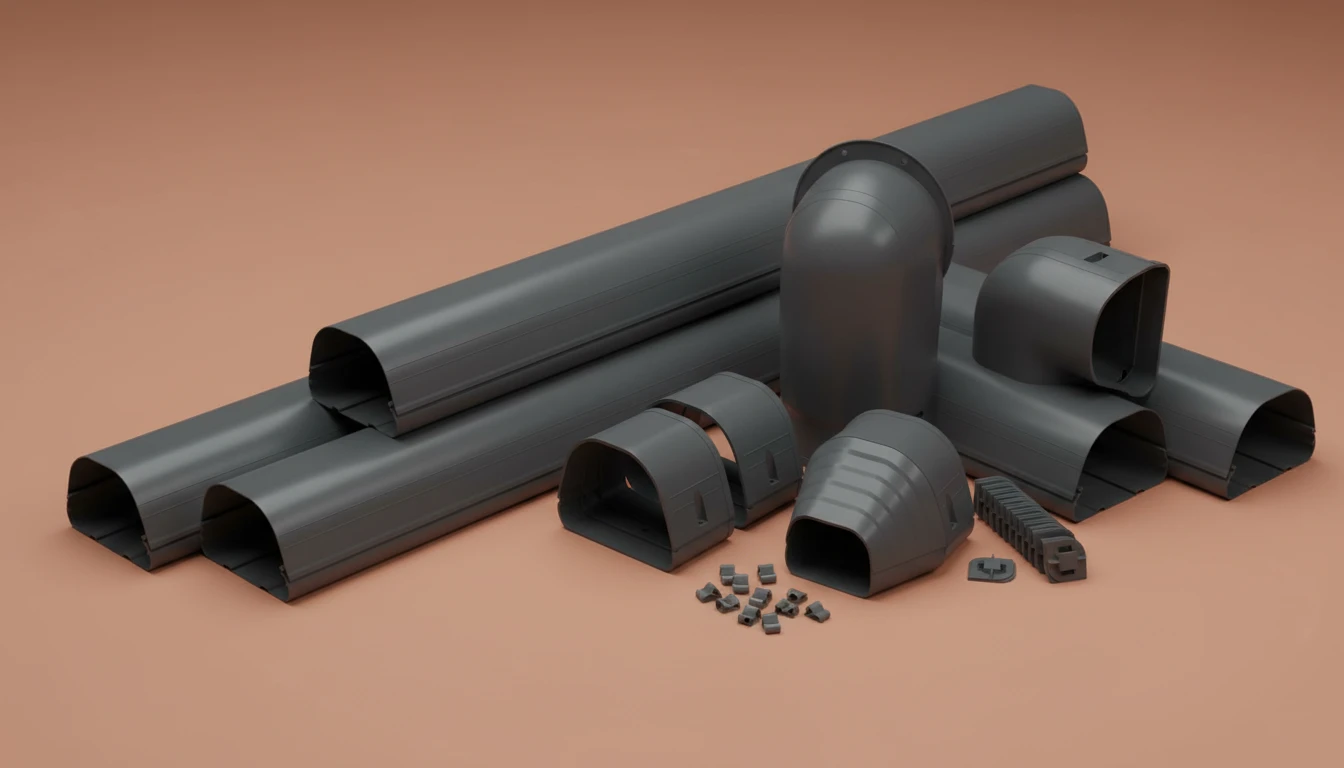
Manufacturing HVAC plastic components at scale introduces challenges that do not appear during prototype or short-run production. We’ve encountered — and solved — all of the following over our 20+ years in production.
Warpage in large flat panels is one of the most persistent challenges. A 600 mm × 400 mm air-handler front panel with uniform 3 mm wall thickness can warp 5–8 mm if cooling is not balanced across the mold surface. Our solution is conformal cooling channels machined close to the part surface, combined with strategic ribbing that adds stiffness without adding sink risk. We’ve reduced warpage defects by 85% on our largest HVAC panel tooling by implementing this approach.
Weld lines at structural locations are another frequent quality issue. When two melt flow fronts meet inside the mold cavity, they create a weld line — a zone of reduced strength where the polymer chains did not fully intermesh. In glass-fiber-reinforced materials, weld-line strength can be 30–50% lower than the surrounding matrix. We mitigate this by repositioning gates, adjusting injection speed to increase melt temperature at the weld front, and designing structural ribs perpendicular to anticipated weld-line orientations.
Moisture-induced defects in hygroscopic resins like PA66 and PBT can cause silver streaks, splay, and surface blistering that are often mistaken for contamination. Our pre-process drying protocol specifies time and temperature requirements for each resin grade, and we use online moisture meters to verify readiness before each production run.
あなたの工場はHVAC部品生産においてどのような認証を保持していますか? matters for aesthetic HVAC components like grilles and bezels. We maintain master color standards and use closed-loop colorimetric measurement on every production lot to ensure ΔE < 1.0 from standard — a threshold invisible to the naked eye but critical for matching multi-part assemblies.
Tool wear and dimensional drift over high-volume production runs are managed through our preventive maintenance schedule. Steel core and cavity surfaces are inspected every 500,000 shots, with polishing or hard-chrome touch-up applied as needed to maintain dimensional compliance throughout the mold’s designed service life of 1–2 million shots.
What Quality Standards Must HVAC Plastic Components Meet?
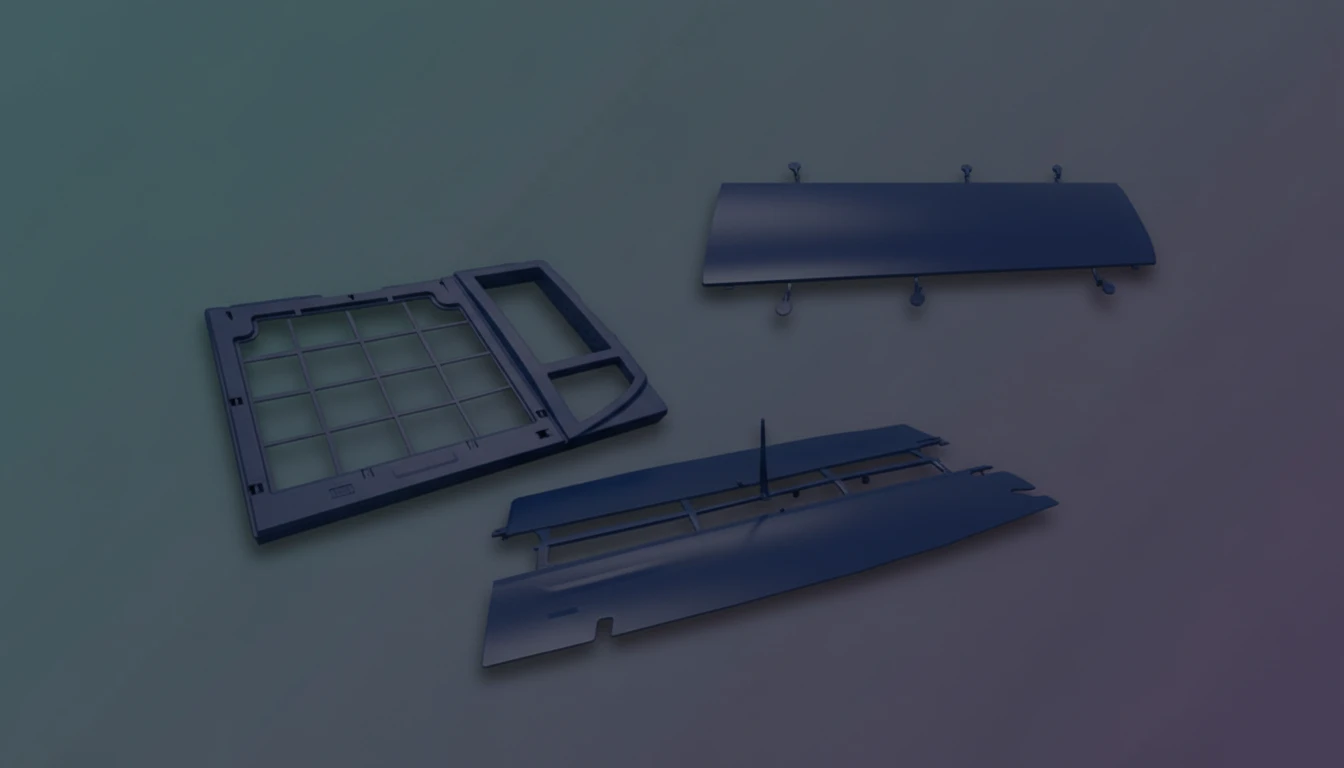
Our quality system is built on ISO 90014 certification, with additional ISO 13485 certification for HVAC components that are incorporated into medical-grade climate control equipment. Here is an overview of the key standards that govern our HVAC plastic component production.
Dimensional standards are verified using CMM (Coordinate Measuring Machine) inspection on first articles and statistically sampled production lots. Critical dimensions — particularly sealing surfaces, mounting hole patterns, and snap-fit engagement depths — are 100% inspected using dedicated gauges.
Flammability standards are mandatory for any HVAC plastic that is installed inside an occupied building. Most applications require UL 94 V-0 or V-2 classification. Our material library flags the flammability rating of every resin so engineers cannot inadvertently specify a non-compliant material for a regulated application.
ASHRAE standards5 govern HVAC system performance more broadly, but they influence component design by specifying airflow rates, pressure drops, and temperature ranges that plastic parts must accommodate. Our engineering team reviews ASHRAE 15, 52.2, and 90.1 when evaluating component designs for OEM customers subject to these standards.
Chemical and environmental standards include RoHS, REACH, and — for outdoor rooftop units — UV exposure resistance per ISO 4892-2 (xenon arc weathering).
✗ “ISO 9001 certification alone guarantees that HVAC plastic components will meet application-specific performance requirements”False
ISO 9001 certifies that a manufacturer has a documented quality management system — it does not certify the performance of specific products. A factory with ISO 9001 can still produce HVAC components from the wrong material, with incorrect wall thickness, or without appropriate flammability classification. Application-specific performance must be validated through material data sheets, functional testing, and compliance with HVAC-specific standards such as UL 94, ASHRAE, and relevant regional building codes. ISO 9001 is necessary but not sufficient for HVAC component qualification.
✓ “Glass-fiber reinforcement significantly extends the service life of injection-molded HVAC plastic parts in high-temperature applications”True
Adding 30% glass fiber to PA66 raises the heat deflection temperature from approximately 70°C (unfilled, 1.82 MPa) to over 220°C, and increases tensile strength by 80–100%. In HVAC applications near compressors or heat exchangers — where ambient temperatures routinely reach 90–120°C — unfilled PA66 will creep and deform under sustained mechanical load, while PA66-GF30 maintains dimensional stability throughout a 20+ year service life. We specify glass-fiber reinforced grades as the baseline for all structural HVAC plastic components operating above 80°C.
How Does Our Factory Produce HVAC Components That Last 20+ Years?
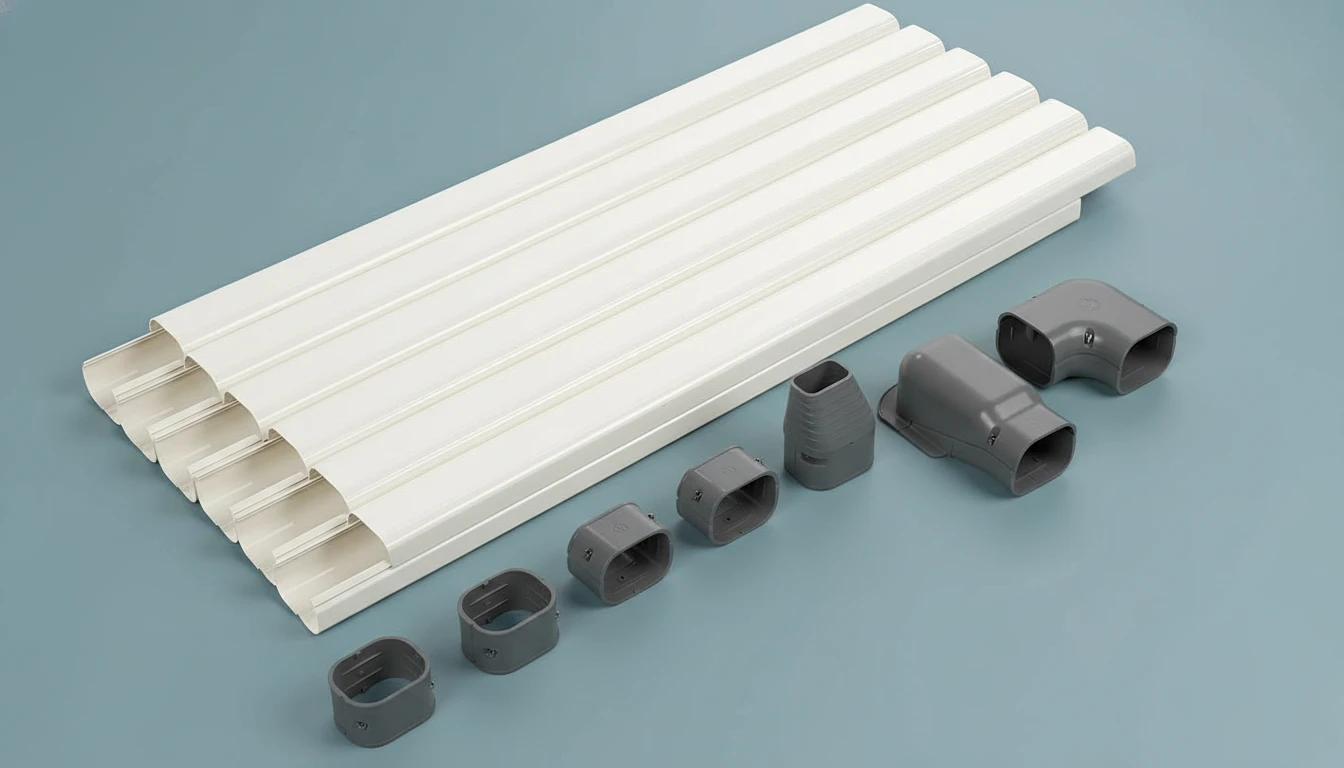
In our HVAC production facility, a 20-year service life is not an aspiration — it is a design target that we engineer from the very first customer conversation. Here is the step-by-step process our teams follow to turn a customer’s HVAC component requirement into a part that will still be performing two decades later.
Step 1 — Application deep-dive. Our application engineers interview the customer to understand the thermal environment (operating range, cycling frequency), chemical exposure (refrigerant type, cleaning agents), mechanical loads (pressure, vibration, snap-fit cycles), and regulatory requirements (UL 94 class, RoHS, regional building codes). This information populates a requirements specification that guides every downstream decision.
Step 2 — Material selection from our 400+ resin library. We match the requirements specification against our curated material database. For each candidate resin, we cross-check continuous-use temperature, chemical compatibility, flammability class, moisture absorption, and regulatory status. We’ve found that 80% of premature HVAC component failures reported to us by customers can be traced to material selection errors made before the part ever reached a mold.
Step 3 — DFM (Design for Manufacturability) review. Our mold engineers review the customer’s 3D model against our 14-point DFM checklist: wall thickness, draft angles, corner radii, gate locations, ejection strategy, tolerance stack-up, and assembly interface geometry. We return a detailed DFM report with recommended changes before tooling begins.
Step 4 — Mold flow simulation. Every new HVAC tool goes through Moldex3D simulation. We analyze fill pattern, weld-line locations, air-trap risk zones, residual stress, warpage prediction, and cooling efficiency. Simulation allows us to optimize gate placement and cooling layout virtually — changes that would cost $5,000–$15,000 to make in steel.
Step 5 — Steel mold fabrication. Our toolroom uses P20, H13, or S136 steel depending on the production volume and resin type. High-temperature resins like PPS require H13 with surface hardening; corrosive resins like PVC require S136 stainless tooling. CNC machining holds ±0.02 mm on critical cavity dimensions, followed by EDM finishing for complex textures and shut-off surfaces.
Step 6 — T1 trial and first-article inspection. The first shots from a new mold are measured against 100% of the drawing requirements using CMM inspection. We photograph and document every part, including weld-line locations, gate vestiges, and surface finish. Any deviation from specification triggers an engineering hold before production commences.
Step 7 — Process validation and SPC implementation. Once first articles are approved, we run a process validation study (typically 3 × 30-shot runs at different process corners) to establish the proven acceptable range (PAR) for all key process parameters. Statistical process control charts are then implemented on critical dimensions for ongoing production monitoring.
Step 8 — Ongoing production with periodic requalification. Our production quality plan specifies sampling frequency, measurement methods, and requalification triggers (e.g., after every 100,000 shots, after any mold repair, or after a material lot change). We maintain traceability from raw material lot to finished component shipment.
FAQ
What plastic materials are most commonly used for HVAC system components?
The most common engineering plastics in HVAC applications are PA66-GF30 (glass-filled nylon) for structural housings and high-temperature parts, PPS for extreme heat and chemical resistance, PBT for sensor enclosures and electrical components, ASA for UV-exposed outdoor units, and PP-GF for drain pans and condensate management parts. We also work extensively with PC/ABS blends for thermostat and control panel housings where impact resistance and dimensional stability must be balanced.
How long do injection-molded HVAC plastic components last compared to metal alternatives?
When the correct engineering polymer is specified and the part is properly designed for injection molding, plastic HVAC components routinely match or exceed the 15–20 year service life of equivalent sheet-metal parts — often at significantly lower system weight and cost. The key variables are resin selection (must suit the thermal and chemical environment), wall thickness (must avoid stress concentrations), and processing quality (must eliminate residual stress and voids). In our experience, metal parts often outlast plastic only when the plastic was incorrectly specified or processed.
What is the minimum order quantity for custom injection-molded HVAC components?
Minimum order quantities vary depending on part size, tooling complexity, and material cost. For standard HVAC components molded in multi-cavity tools, our practical MOQ is typically 5,000–10,000 pieces per run. For large, complex single-cavity parts (such as full air-handler housings), MOQs can be as low as 500–1,000 pieces. We offer OEM and ODM programs with flexible tooling amortization arrangements to help customers manage upfront investment.
Can you produce HVAC components that meet both UL 94 V-0 and RoHS requirements simultaneously?
Yes. Many of the halogen-free flame-retardant (HFFR) additive systems available today achieve UL 94 V-0 classification without using the brominated or chlorinated compounds restricted by RoHS. We maintain a library of pre-qualified HFFR resin grades for each polymer family and can provide full material compliance documentation — including RoHS declaration of conformity and UL Yellow Card reference — with every shipment.
How do you prevent warpage in large HVAC plastic panels during injection molding?
We use a multi-pronged approach: (1) conformal cooling channels to achieve uniform part temperature at ejection; (2) strategic ribbing to add stiffness without increasing nominal wall thickness; (3) balanced gate design to minimize flow-induced orientation effects; (4) post-mold fixturing for fiber-reinforced parts to hold geometry during final cool-down; and (5) mold flow simulation before steel cutting to identify and correct high-warpage-risk designs. For our most demanding large-panel HVAC customers, we achieve flatness within 1.5 mm over 800 mm span — consistently, in production.
What certifications does your factory hold for HVAC component production?
HVACシステム部品:射出成形ガイド.
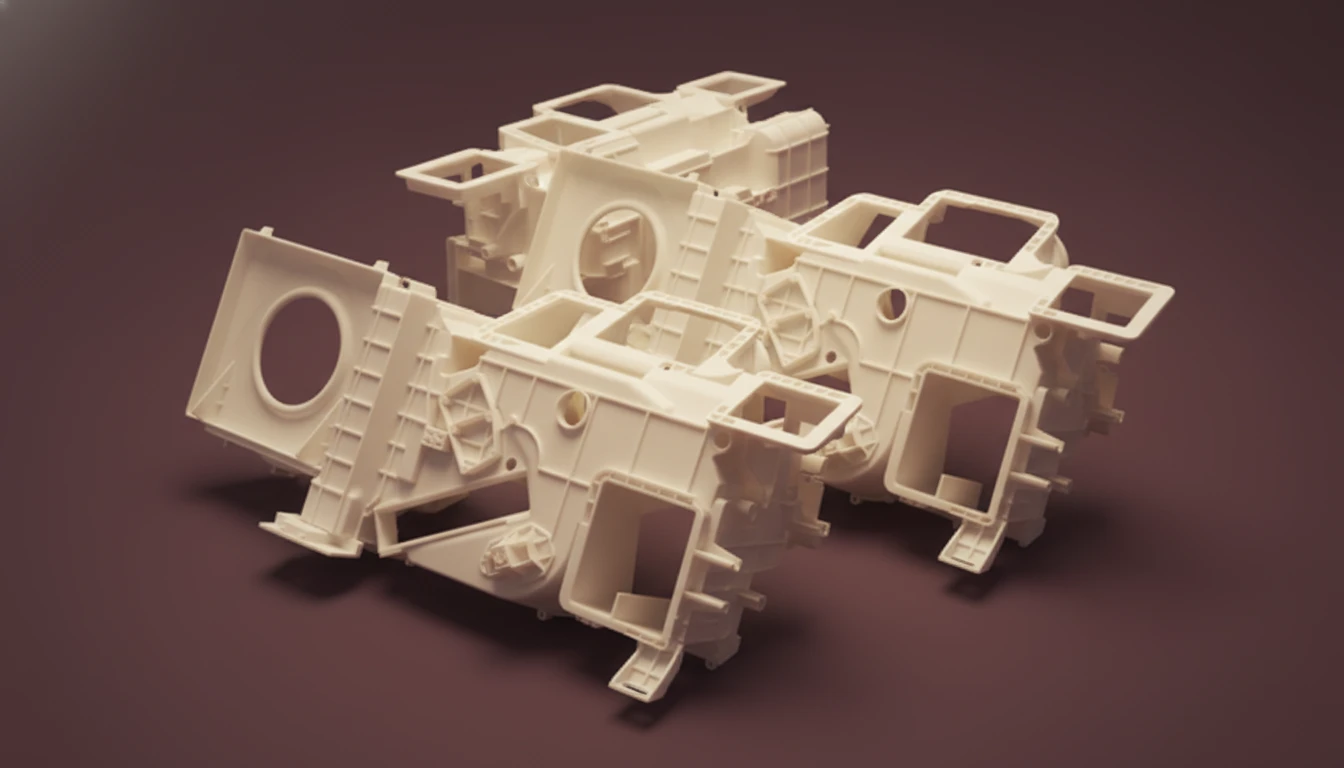
Summary
HVAC system components span a wide range of functions — from refrigerant containment and heat transfer to air distribution, condensate drainage, and climate control. In our HVAC production facility, we’ve spent 20+ years refining the material science, mold design practices, and process controls that transform engineering polymers into components trusted by OEM customers worldwide to last 20 years or more in demanding service environments.
The journey from a customer’s HVAC component requirement to a production-ready injection-molded part involves eight disciplined steps: application deep-dive, material selection from 400+ resins, DFM review, mold flow simulation, precision steel tooling, first-article inspection, process validation, and ongoing SPC-controlled production. Each step exists to eliminate a specific failure mode — because in HVAC applications, a failed plastic component doesn’t just mean a warranty claim. It can mean refrigerant leaks, water damage, or compromised indoor air quality.
Our 45 injection molding lines, ±0.1 mm dimensional capability, ISO 9001/13485 certification, and RoHS & REACH compliance give our customers a single-source partner capable of handling everything from the smallest sensor housing to the largest air-handler cabinet — all with the engineering rigor that 20+ year service life demands.
If you are designing or sourcing HVAC plastic components and want to discuss how injection molding can help you achieve better longevity, tighter tolerances, or lower assembly costs, we invite you to contact our engineering team for a no-obligation DFM review of your current designs.
-
Injection molding: A manufacturing process in which molten polymer is injected under high pressure into a precision steel mold cavity, producing net-shape plastic parts with tight dimensional tolerances. ↩
-
Thermal cycling: The repeated heating and cooling of a component through a defined temperature range. In HVAC systems, thermal cycling occurs thousands of times over the product’s service life and is a primary driver of fatigue failure in plastic components with inadequate material selection or design. ↩
-
Mold flow analysis: Computer simulation of the polymer melt flow inside an injection mold cavity, used to predict fill pattern, weld-line locations, air traps, residual stress, and warpage before tooling is manufactured. ↩
-
ISO 9001: The international standard specifying requirements for a quality management system (QMS). Organizations certified to ISO 9001 have demonstrated the ability to consistently provide products and services that meet customer and regulatory requirements. ↩
-
ASHRAE standards: Technical standards published by the American Society of Heating, Refrigerating and Air-Conditioning Engineers covering HVAC system design, energy efficiency, refrigerant safety, and indoor air quality. Relevant standards include ASHRAE 15 (Safety Standard for Refrigeration Systems), ASHRAE 52.2 (Air Filter Testing), and ASHRAE 90.1 (Energy Standard for Buildings). ↩





