

- A good HVAC injection molding service is chosen by process control, resin knowledge, and validation discipline, not by the lowest quote alone.
- For HVAC parts, the right supplier should discuss UL94 class, operating temperature, tolerance stack-up, and airflow sealing before tooling starts.
- Most sourcing failures begin with weak DFM review, unclear annual volume, or resin changes made after mold steel is already cut.
- Buyers should compare tooling strategy, capability data, traceability, and quality response time before placing a production order.
I have seen HVAC buyers get three quotes for the same plastic part and still feel they are guessing. One supplier promises a cheap mold, another promises a fast sample, and a third talks only about tonnage. That is where procurement usually goes sideways. injection molding service is the full package of tooling, molding, validation, and repeat production that turns a plastic HVAC concept into shipped parts. In our factory, the right decision rarely comes from the lowest number on page one. It comes from asking how the supplier controls warpage, resin drying, flame class, and dimensional drift before the first steel cut.

What should an HVAC buyer expect from an injection molding service?
A good HVAC buyer should expect 5 deliverables: DFM, tooling, validation, stable production, and corrective action. If a supplier only talks about making parts, you are not really buying a service. You are buying machine time. For HVAC programs, that gap matters because plastic housings, dampers, grilles, and sensor covers often sit near heat, moving air, UV exposure, or condensation. Those conditions punish weak process control fast.
In our factory, we define service quality by what happens before production and after the first problem appears. A serious supplier will ask for annual volume, sealing surfaces, assembly interfaces, operating temperature, and any flame requirement such as UL94 V-01. They will also review where tolerances actually matter. A snap fit may need ±0.08 mm on one feature while the cosmetic flange can live with ±0.20 mm. When a supplier cannot separate critical dimensions from general ones, the quote may look simple, but the launch will not be simple.
“A real molding service starts before the tool is built.”True
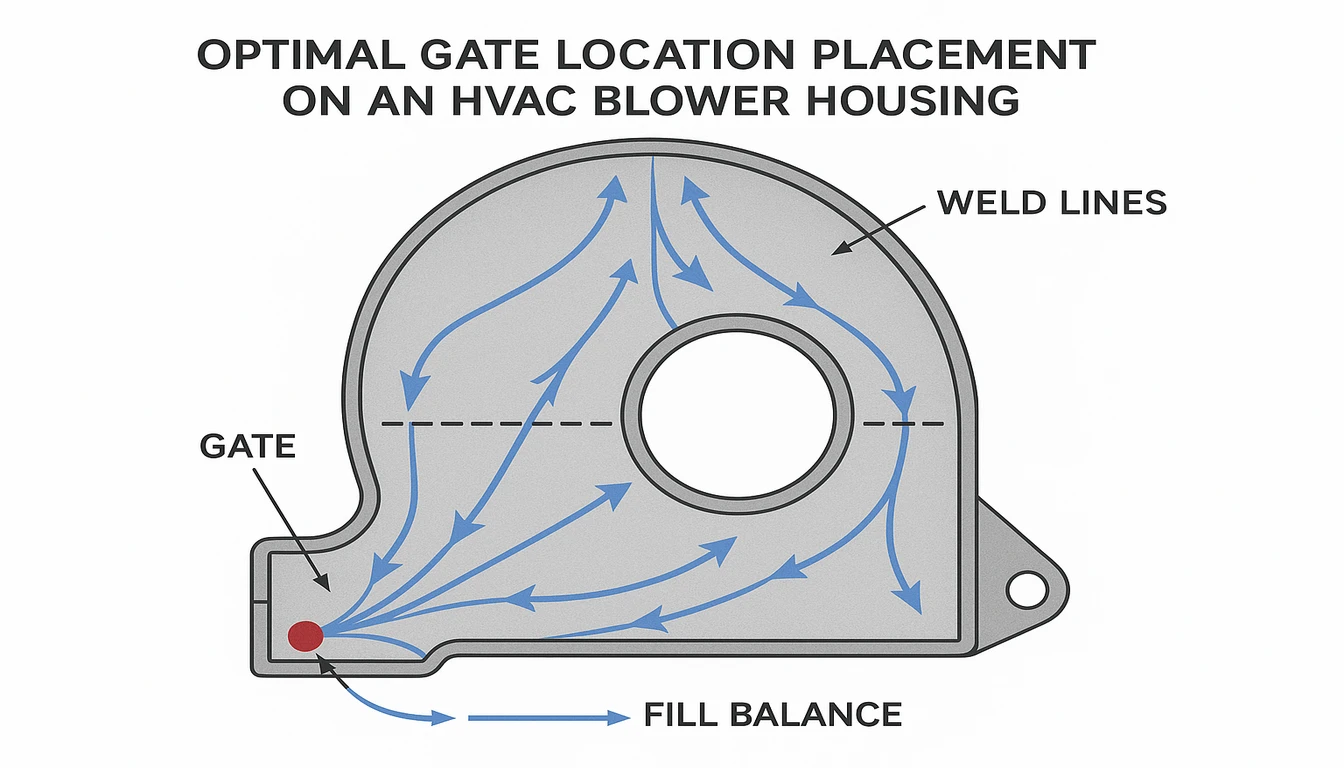
Good suppliers reduce risk in DFM, steel selection, gate location, and resin choice before any machining begins.
“A molding service is only about pressing parts once the mold exists.”False
If the supplier ignores sampling plans, capability targets, and field conditions, the program will absorb those costs later.
I also tell buyers to look for evidence of system thinking. If the molder understands airflow leakage, screw boss cracking, weld line visibility, and long-term creep, the conversation changes. That is one reason we align design targets with the process window before quoting, instead of leaving manufacturing to clean up avoidable design mistakes.
How do you evaluate whether a supplier understands HVAC plastics?
You can evaluate HVAC plastics knowledge with 4 signals: resin logic, environment awareness, tolerance discipline, and validation depth. HVAC plastics are not generic consumer housings. A return-air grille, an actuator cover, and a condensate-related component can all need different resin behavior. ABS may be fine for interior appearance parts, but a hotter zone near a motor or heat exchanger may push you toward PC-ABS or glass-filled nylon2. If the supplier cannot explain that tradeoff in plain language, they probably learned the part after the quote instead of before it.
Ask direct questions. What drying condition do you use for hygroscopic resins? How do you manage sink on ribs deeper than 60 percent of wall thickness? What shrink rate are you using for PP versus nylon? How do you test parts that cycle between 5°C shipping conditions and 70°C cabinet temperatures? We have found that experienced HVAC molders answer with ranges, examples, and caution points. Inexperienced ones answer with slogans.
The supplier should also know existing application paths. For example, if you are comparing materials for dampers or housings, it helps when they can point to use cases such as HVAC damper parts, ABS plastic HVAC, and glass-filled nylon HVAC. That kind of conversation is grounded in component behavior, not brochure language.
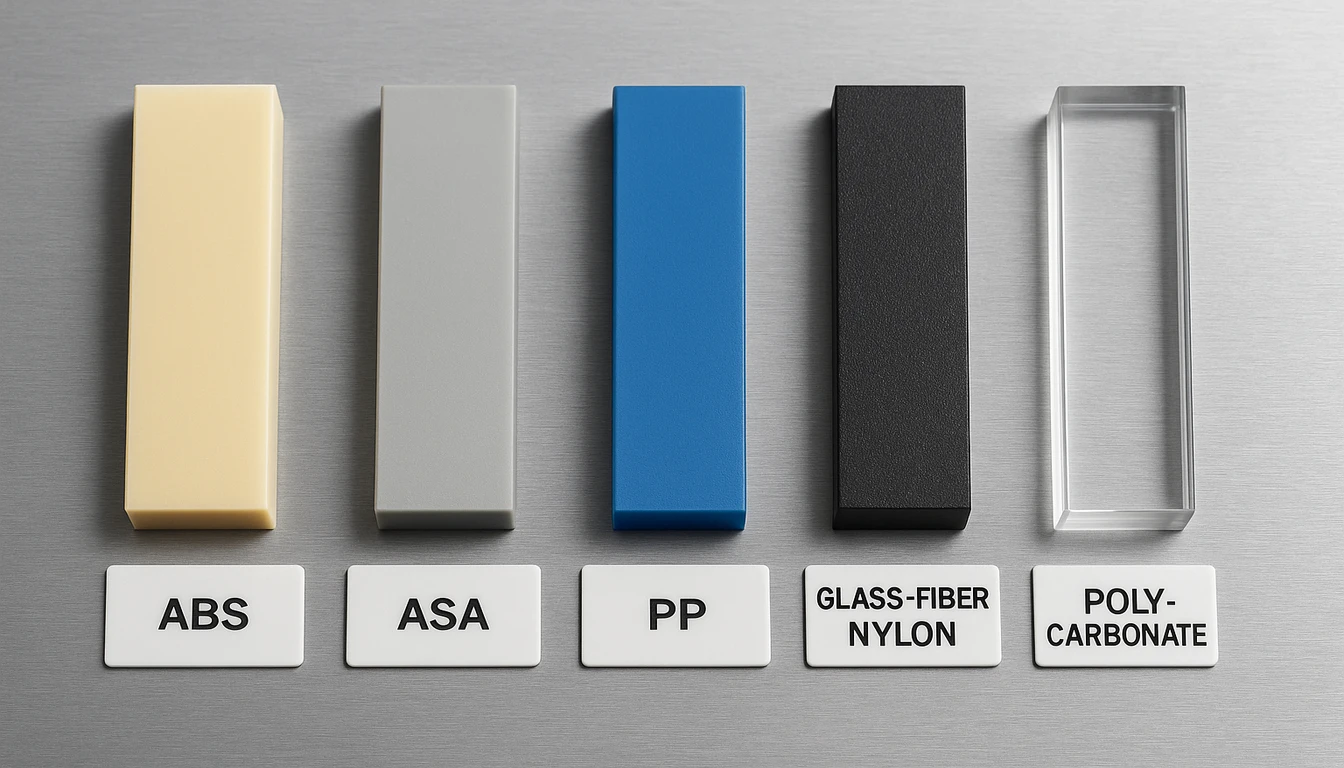
Which materials matter most when sourcing HVAC injection molded parts?
For most HVAC programs, 4 materials matter most: ABS, PP, PC-ABS, and glass-filled nylon. Each one solves a different factory problem. ABS is easy to mold and gives stable cosmetic performance for covers and bezels, but it is not my first pick near sustained heat. PP resists moisture well and keeps cost down, yet its stiffness and dimensional control can be less forgiving on tight assemblies. PC-ABS gives stronger impact performance and better thermal margin, which is useful for more demanding housings. glass-filled nylon is often the workhorse when the part sees structural load, elevated temperature, or screw retention stress.
| Material | Typical use | Operating concern | Buyer note |
|---|---|---|---|
| ABS | Interior covers and trim | Heat aging above about 80°C | Good cosmetics and easy processing |
| PP | Airflow parts and moisture-exposed pieces | Higher shrink and lower stiffness | Cost-effective for non-cosmetic parts |
| PC-ABS | Equipment housings and impact zones | Higher resin price and drying discipline | Balanced toughness and thermal margin |
| Glass-filled nylon | Structural brackets and loaded parts | Moisture conditioning and fiber-induced warp | Best for stiffness and creep resistance |
This is also where buyers should confirm test expectations, not just resin names. We normally ask whether the application needs flame performance, UV resistance, dimensional stability after heat aging, or repeated snap-fit cycles. One HVAC customer asked for a low-cost resin and later added a flame requirement, which forced a resin change after mold completion. That sort of late shift affects shrink, venting, filling pressure, and sometimes even gate balance. It is why resin selection belongs in the first engineering call, not after first shots.
If the application is new, I usually recommend a prototype path first. Our article on rapid prototyping HVAC covers how we reduce mold investment risk before production steel is frozen. That step is not mandatory for every program, but it is often cheaper than correcting a warped assembly after T1.
How should buyers compare tooling, sampling, and lead time?
Most buyers should compare 3 phases separately: tooling lead time, sample validation time, and production ramp time. Too many quotes compress all three into one headline promise. In practice, a 25-day tool build with weak T1 data can lose to a 35-day build with disciplined dimensional review. For HVAC components, I care less about the fastest first shot and more about how quickly the supplier reaches a stable approved shot.
A proper tooling review should mention steel grade, expected mold life, cooling layout, gate concept, and whether the part uses a hot runner4 or a cold runner. For annual demand above roughly 150,000 pieces, a hot runner can reduce runner waste and improve cost per part, but only if color change frequency and maintenance discipline fit the program. For lower volume service parts, a simple cold runner can still be the smarter option because the mold is cheaper and easier to service.
Sampling discipline matters just as much. We usually want CMM data on critical dimensions, visual review for sink and flash, assembly check results, and a clear list of remaining risks after T1. At HVACore, we often reach first-pass approval above 90 percent on mature part families because we flag wall transitions, draft angle, and gate witness early. That is the sort of factory insight buyers should ask for directly, not assume from the quotation format.
“Lead time only matters when the sample data is usable.”True
A fast mold that needs repeated steel changes can delay SOP more than a slower build with stronger validation.
“The shortest quoted tool lead time is usually the safest sourcing choice.”False
Without tool design transparency and structured sampling, aggressive timing often hides launch risk instead of removing it.

What quality data should an injection molding service provide?
A reliable supplier should provide 6 quality data sets: traceability, dimensions, settings, capability, defects, and change records. I never trust a supplier that says quality is good but cannot show resin lot tracking or cavity-specific dimensional data. HVAC parts are often hidden in assemblies, which makes weak traceability even more dangerous because the issue appears late and spreads quietly through stock.
For critical dimensions, I prefer to see actual numbers tied to print requirements and process capability targets such as CpK3 1.33 or higher for mature mass production. The target can vary by feature, but the mindset should be the same: quality is measured, not declared. If a supplier cannot explain why one dimension is checked every lot and another only at setup, they probably do not understand the failure mode of the part.
At HVACore, we treat HVAC plastic parts as functional assemblies rather than commodity moldings. On recurring housing and damper programs, our in-process checks typically cover cavity balance, gate vestige height, snap-fit force, and key interface dimensions at setup, after the first hour, and once each stable run interval. That rhythm catches drift before cartons build up.
I also ask buyers to inspect the supplier’s corrective action logic. If a part flashes, do they adjust clamp force blindly, or do they review vent wear, parting line condition, and cavity pressure behavior? If a boss cracks, do they slow packing or review resin moisture, knit line position, and screw engagement? Those answers separate experienced injection molding service teams from shops that only react one symptom at a time.
How do cost drivers change in an HVAC plastic molding project?
In HVAC molding, 5 cost drivers matter most: geometry, resin, tooling complexity, validation, and annual volume. Buyers often focus on mold price because it is visible. In reality, scrap, cycle time, insert handling, and packaging can move the total cost just as much across a 12-month program. A slightly more expensive tool with better cooling may lower cycle time by several seconds, which matters once the order volume scales.
Geometry is usually the first hidden cost. Deep ribs, undercuts, cosmetic A-surfaces, and unstable wall transitions increase tooling and process risk together. Material changes also move cost in both direct and indirect ways. A flame-retardant PC-ABS grade may cost more per kilogram, but it can avoid redesign if the HVAC assembly sits near a hot electrical zone. The cheap resin is only cheap until it creates a field issue.
Packaging and logistics matter more than many buyers expect. A thin louver or large grille can deform in transit if carton stacking and bagging are treated casually. We often design pack-out rules during PPAP-style review because damage that happens after molding still shows up as supplier quality in the customer system. That is why injection molding service should include shipment discipline, not stop at the machine.
What common sourcing mistakes create the most trouble later?
The 4 mistakes I see most are vague prints, rushed resin selection, unrealistic cosmetic expectations, and supplier approval based on price alone. Vague prints create endless interpretation. One engineer thinks ±0.10 mm applies everywhere. The molder assumes only the sealing face is critical. That mismatch becomes argument, delay, and emergency sorting. A strong supplier will push back early and ask for functional priorities before quoting.
The second mistake is treating material selection as a purchasing detail. It is an engineering decision with cost consequences. If the part later needs better creep resistance, moisture stability, or flame performance, you may not be able to keep the same shrink assumptions. Third, many buyers request cosmetic perfection on parts that are hidden inside the unit. That raises tool polish and processing cost without helping function.
The last mistake is ignoring service response. Every supplier looks organized during the quote stage. The real test is what happens when a trial dimension misses by 0.18 mm or a field sample warps after heat aging. We tell buyers to ask for one real corrective action example from a similar HVAC component. If the supplier cannot explain the root cause and permanent fix, they are not ready for a demanding program.
How can you build a lower-risk supplier approval process?
A lower-risk approval process needs 6 checkpoints: review, resin confirmation, tooling approval, validation, ramp-up, and change control. The biggest improvement is simple: do not merge engineering approval with commercial approval. A supplier can be affordable and still be the wrong technical fit for HVAC plastics.
I recommend scoring each candidate on response quality, not just final numbers. Did they challenge weak rib design? Did they identify likely warp zones? Did they propose a better gate location? Did they discuss mold maintenance interval, cavity steel wear, and dimensional studies? We have found that the best long-term customers are the ones who evaluate our thinking process, not only our quoted cycle time.
If sealing, waterproofing, or multi-material assembly matters, it is also worth checking whether the supplier can extend into adjacent processes such as overmolding HVAC. Even when the current part is single-shot, future platform changes often are not. A supplier with that process range gives engineering more room later.
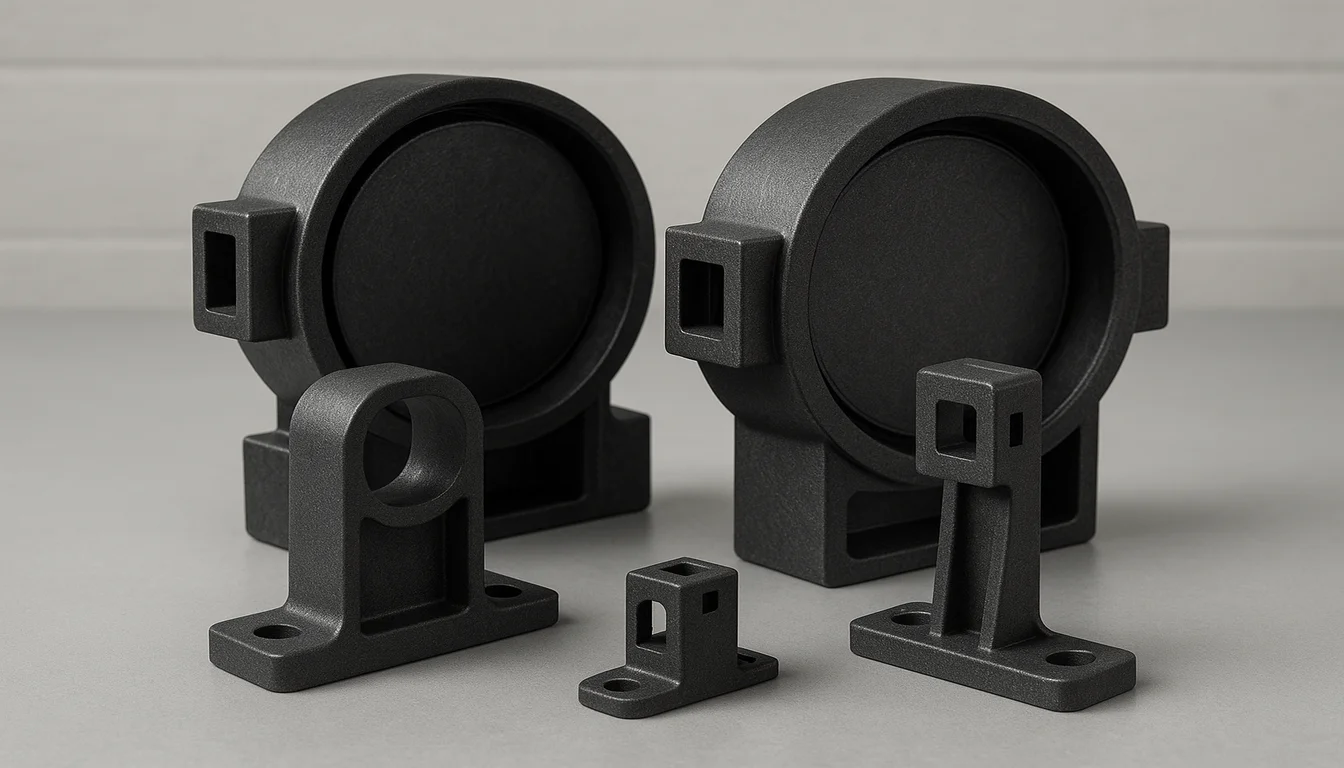
The practical goal is not to eliminate all risk. That is impossible. The goal is to make the remaining risk visible, priced, and controlled before production tooling is frozen. In our factory, that is the difference between a program that ramps smoothly and one that burns months in reactive troubleshooting.
Frequently asked questions about injection molding service?
What is injection molding service?
Injection molding service is the combination of part review, tool building, sampling, production molding, and quality control used to deliver repeatable plastic parts. In HVAC work, that service usually includes DFM feedback, resin advice, dimensional validation, and packaging control because the part must fit an assembly and survive heat, airflow, or moisture. If a supplier only offers molding time without engineering support, traceability, and corrective action, it is not a complete service for most HVAC buyers. It should also include documentation, trial feedback, and corrective action if dimensions or appearance drift after sampling.
How does injection molding service work?
Injection molding service works by moving a part from design input to stable production in stages. First the supplier reviews the drawing, resin, tolerance, and use environment. Then the mold is designed and machined, followed by T1 samples, measurements, and steel corrections if needed. After approval, the supplier locks the process window for melt temperature, mold temperature, fill time, and packing conditions. For HVAC plastic parts, the service should also include assembly checks, appearance review, and shipment controls because production success is broader than making one acceptable sample.
What are the advantages of injection molding service?
The main advantages are repeatability, scale, and engineering control. Once the tool and process are stabilized, injection molding can deliver thousands of HVAC plastic components with consistent geometry, predictable cycle time, and tight feature control on critical interfaces. It also supports a wide material range, from economical PP to more demanding flame-retardant or glass-filled grades. For buyers, the biggest advantage is not just low unit cost at volume. It is knowing the supplier can turn design intent into production data, corrective action, and stable field performance.
How much does injection molding service cost?
Injection molding service cost depends on tooling, resin, part geometry, annual volume, and validation depth. A simple HVAC cover may use a relatively modest single-cavity tool, while a larger component with sliders, cosmetic surfaces, and tight tolerance zones can cost much more before production starts. Unit price then depends on cycle time, material price, scrap rate, and pack-out efficiency. Buyers should compare total program cost instead of only mold price because a well-cooled tool and a stable process often save more over a year than they add on day one.
What materials are used in injection molding service?
Common materials include ABS, PP, PC-ABS, and nylon, with additives chosen for flame performance, UV resistance, stiffness, or impact strength. HVAC applications often need more than general-purpose resin selection because parts may face warm air streams, condensation, fasteners, or long service life. That is why suppliers should discuss drying conditions, shrink rate, and heat aging behavior before tooling starts. Material selection is not only a purchasing choice. It directly affects warpage, tolerance, surface quality, and long-term reliability in the field.
How long does injection molding service take?
The timeline depends on tool complexity and validation needs, but buyers should think in three stages instead of one. Tool manufacturing may take several weeks, initial samples add measurement and correction time, and production launch requires process locking plus approval paperwork. For HVAC parts, schedules can extend if engineers add flame requirements, assembly testing, or packaging reviews late in the project. A realistic supplier will separate mold build timing from approved-part timing, because those are not the same milestone even when quotes present them that way.
-
UL94 V-0: UL94 V-0 is a vertical flammability classification in which a plastic specimen stops burning within 10 seconds without flaming drips. ↩
-
glass-filled nylon: Glass-filled nylon is an engineering thermoplastic reinforced with glass fibers to increase stiffness, heat resistance, and dimensional stability. ↩
-
CpK: CpK is a process capability index measured in relation to specification limits and actual process variation. ↩
-
hot runner: A hot runner is a heated runner system that keeps melt flow paths open so resin stays molten between the barrel and the cavity. ↩





