20+ Years OEM/ODM Experience
+86 152 2111 0591
🇫🇷

HVAC Industry Solutions

空気配分ブログ | カスタムHVACソリューション | HVACore

Latest Blog

Stay updated with the latest trends, innovations, and insights from the HVAC manufacturing industry.

Read More
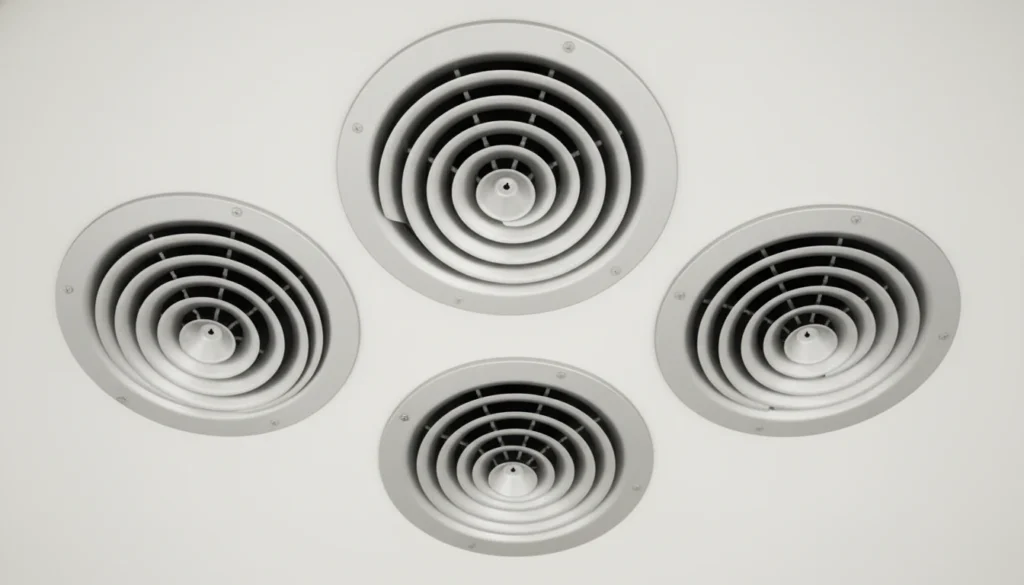
Four circular ceiling vent grilles with spiral design, used in HVAC systems for air distribution.
12月 24, 2025

ABSは初期段階ではより頑丈ですが、ASAは屋外での耐久性が長く続きます。

In the manufacturing of outdoor HVAC components, few quality issues generate as many field complaints as cosmetic degradation. I have stood on factory rooftops inspecting condenser units that looked pristine when they left our injection molding facility, only to turn a sickly, chalky yellow after just one summer of exposure. Preventing plastic yellowing in HVAC1 systems is not just an aesthetic concern; it is a structural one. The same photo-oxidative degradation that causes yellowing also causes brittleness, leading to cracked vents and compromised internal components. This guide details the technical approach to selecting UV stable plastics2, optimizing process parameters, and avoiding common manufacturing pitfalls based on real-world production trials. Key […]
Read More
Read More
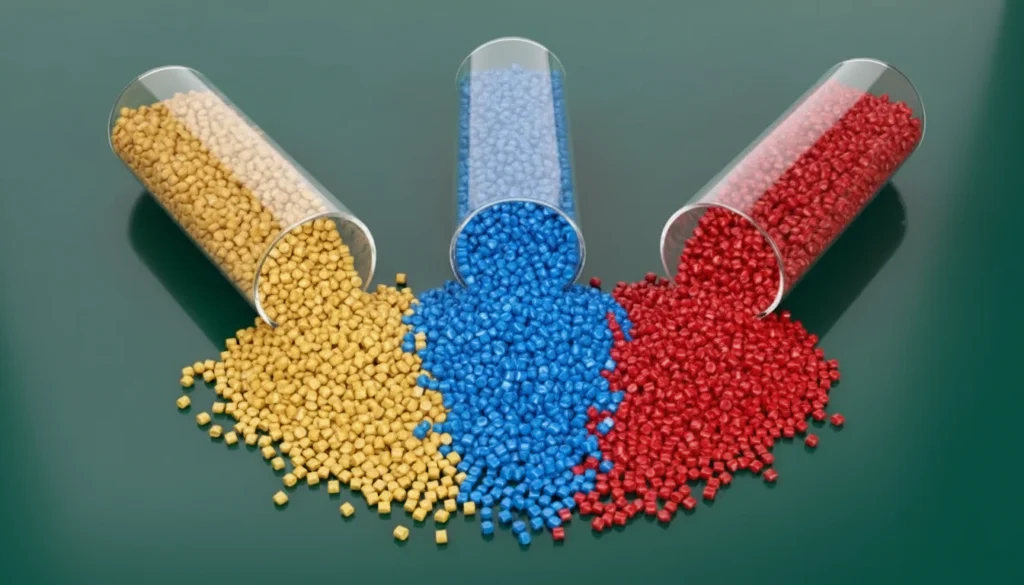
Three tubes spilling multicolor plastic pellets: yellow, blue, and red on a green background, showcasing diversity in materials.
12月 22, 2025

達成するために

Key Takeaways – UL 94 determines a material’s tendency to either extinguish or spread a flame once ignited. – V-0 rated plastics offer the highest level of safety for vertical burning, extinguishing within 10 seconds without dripping flaming particles. – Material thickness significantly impacts certification; a resin certified at 3.0mm may fail at 0.8mm. – Proper processing prevents thermal degradation of flame retardants, ensuring regulatory compliance manufacturing. What Is the UL 94 Standard and Why Is It Critical for Safety? The Underwriters Laboratories (UL) 94 standard is the globally recognized benchmark for testing the flammability of plastic materials used in parts in devices and appliances. It evaluates how a material […]
Read More
Read More
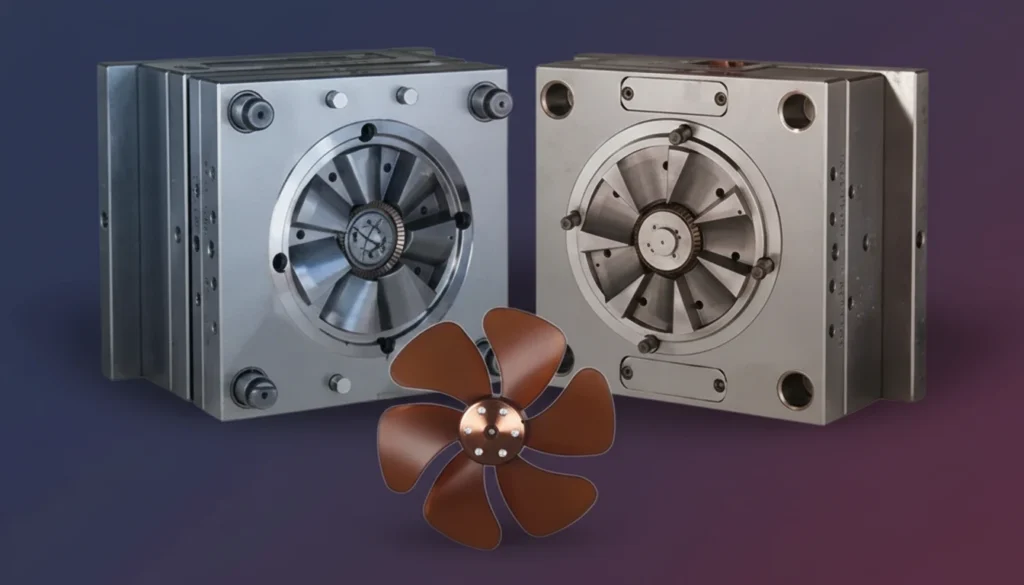
Metal molding tools for HVAC fan blades with a finished brown fan blade in front, illustrating precision-engineered manufacturing parts.
12月 19, 2025

目的:

Key Takeaways – Precision in plastic fan blade manufacturing directly correlates to aerodynamic efficiency and noise reduction in HVAC systems. – Mold flow analysis is critical for predicting fiber orientation and warpage, ensuring the final airfoil geometry matches design intent. – High-performance polymers like Glass-Fiber Reinforced Polypropylene (PP-GF) offer the best balance of weight, stiffness, and cost. – Gate location and cooling channel design significantly impact the dynamic balance and structural integrity of injection molded fans. What Defines High-Efficiency Plastic Fan Blade Manufacturing? Plastic fan blade manufacturing for Heating, Ventilation, and Air Conditioning (HVAC) is the process of creating complex, airfoil-shaped impellers using injection molding technologies. Unlike metal stamping or […]
Read More
Read More
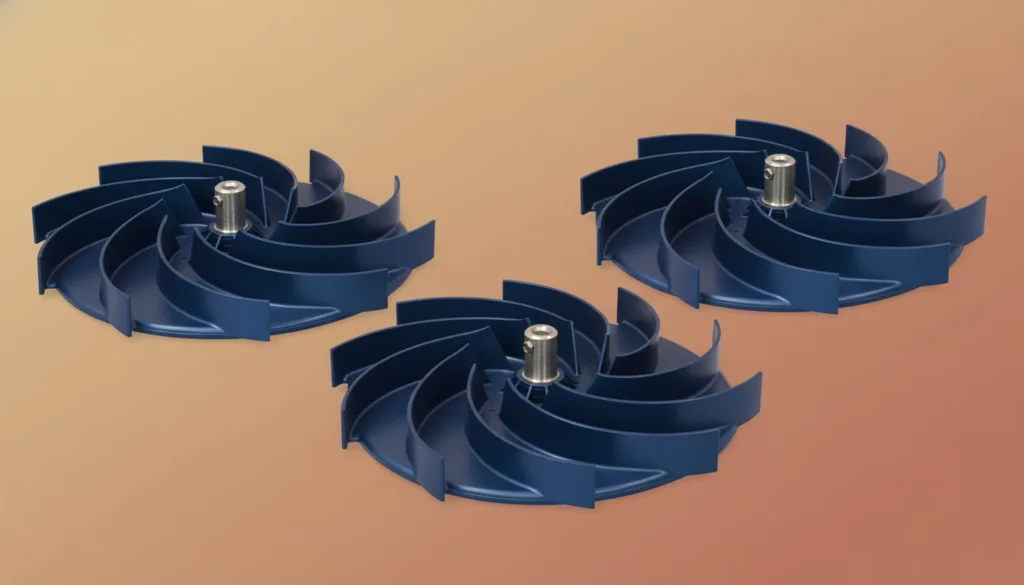
Three blue plastic HVAC fan blades with central metal hubs displayed on a warm gradient background, showing precision design.
12月 17, 2025

振動抑制のプロセスは、精密なマルチショットシーケンスを含みます。

主なポイント – 精密射出成形により、プレス加工金属では実現できない翼型断面(可変厚さ)が可能となり、空気の乱流を大幅に低減します。 – プラスチック材料はアルミニウムや鋼鉄よりも自然に高い内部減衰率を有し、モーター振動が音に変わる前に吸収します。 – ワンショット**ブロアホイール射出成形**により、優れた同心性を持つ一体成形部品が作られ、プレス加工金属ホイールに固有の揺れを低減します。 – 鋸歯状後縁や掃引チップなどの高度な機能は、プラスチックではコスト効率が高い一方、金属製造では法外に高価になります。プラスチックファンブレード設計がHVACシステムを静粛化する なぜ金属ファンがほとんどのHVAC騒音の原因なのか? 従来のHVAC設計では、移動する空気は通常[…]
Read More
Read More
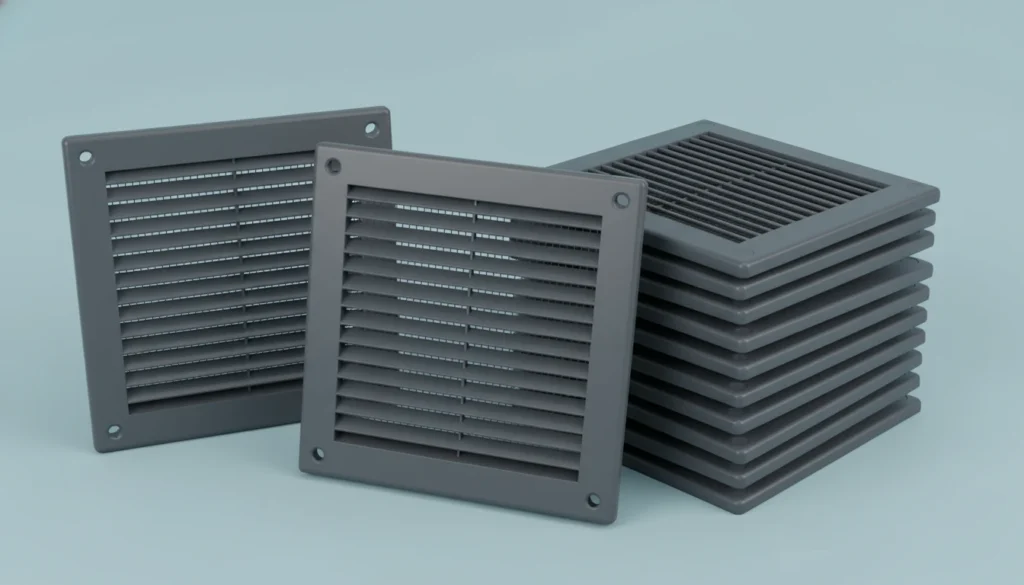
Stack of gray plastic vent covers for HVAC systems, showing their vented design and mounting holes, on a light blue background.
12月 15, 2025

吸湿

In the Heating, Ventilation, and Air Conditioning (HVAC) industry, the shift from metal to plastic requires materials that can withstand aggressive thermal cycling, exposure to refrigerants, and continuous mechanical stress. This article provides a technical comparative analysis of three dominant high-performance thermoplastics: Polyetheretherketone (PEEK), Polyphenylene Sulfide (PPS), and Polyamide (PA/Nylon), specifically focusing on their viability for high heat plastic injection molding. Key Takeaways – PEEK offers the highest thermal and chemical resistance but comes at the highest raw material cost. – PPS provides an optimal balance of cost and performance for hot, humid HVAC environments due to low moisture absorption. – Glass-filled Nylon (PA66) is a cost-effective solution for structural […]
Read More
Read More
ポリブチレンテレフタレート
12月 12, 2025

ポリブチレンテレフタレート

Key Takeaways – Metal-to-plastic conversion can reduce overall HVAC component weight by 30% to 50%, significantly lowering shipping and installation costs. – Engineered thermoplastics like Polyamide 66 (PA66) and Polyphenylene Sulfide (PPS) offer inherent corrosion resistance, extending system lifespans in humid environments. – Injection molding allows for part consolidation, often replacing multi-piece metal assemblies with a single net-shape plastic component. – Strategic material selection ensures compliance with flammability standards such as UL 94 V-0 while maintaining structural integrity. What Is Metal-to-Plastic Conversion in the Context of HVAC? Metal-to-plastic conversion is the engineering process of replacing metal components (typically made from steel, aluminum, or brass) with parts manufactured from high-performance engineered […]
Read More
Chat on WhatsApp