

– Plastic molding — primarily injection molding — produces over 60% of HVAC component housings, enclosures, and duct fittings because it delivers complex geometries at high volume with ±0.1 mm tolerance.
– Material selection (ABS, ASA, PC, glass-filled nylon) is the single most consequential decision in plastic molding for HVAC: the wrong resin causes warpage, UV yellowing, or chemical failure within two to three seasons.
– Processing parameters — melt temperature, injection speed, cooling time, and hold pressure — must be dialed in for each HVAC part geometry to eliminate sink marks, weld lines, and flash.
– At HVACore, our 45 injection molding lines, in-house mold tooling, and 400+ material options let OEM partners scale from prototype to 500,000-unit production runs without changing suppliers.
| Why Plastic Molding for HVAC? | Steel | Plastic |
|---|---|---|
| Part weight | High (~7.8 g/cm³) | Low (~1.05 g/cm³) |
| Complex shapes | Multi-part welded | Single-shot molded |
| Corrosion resistance | Requires coating | Inherent |
| Unit cost (high vol.) | High | Low ($0.10–$1.00) |
In our HVAC component manufacturing facility, we run 45 injection molding machines around the clock. Every machine is optimized for a specific family of parts — fan shroud housings, damper actuator brackets, duct connectors, control panel enclosures. What we’ve learned in 20-plus years is that plastic molding for HVAC is deceptively demanding. The part looks simple; the engineering underneath is not. A single incorrect gate location or wrong wall thickness creates warpage that sends an entire batch to scrap. This guide covers everything engineers and procurement teams need to know about plastic molding in HVAC applications — from material selection to defect prevention to cost optimization.

What Is Plastic Molding and Why Does HVAC Rely on It?
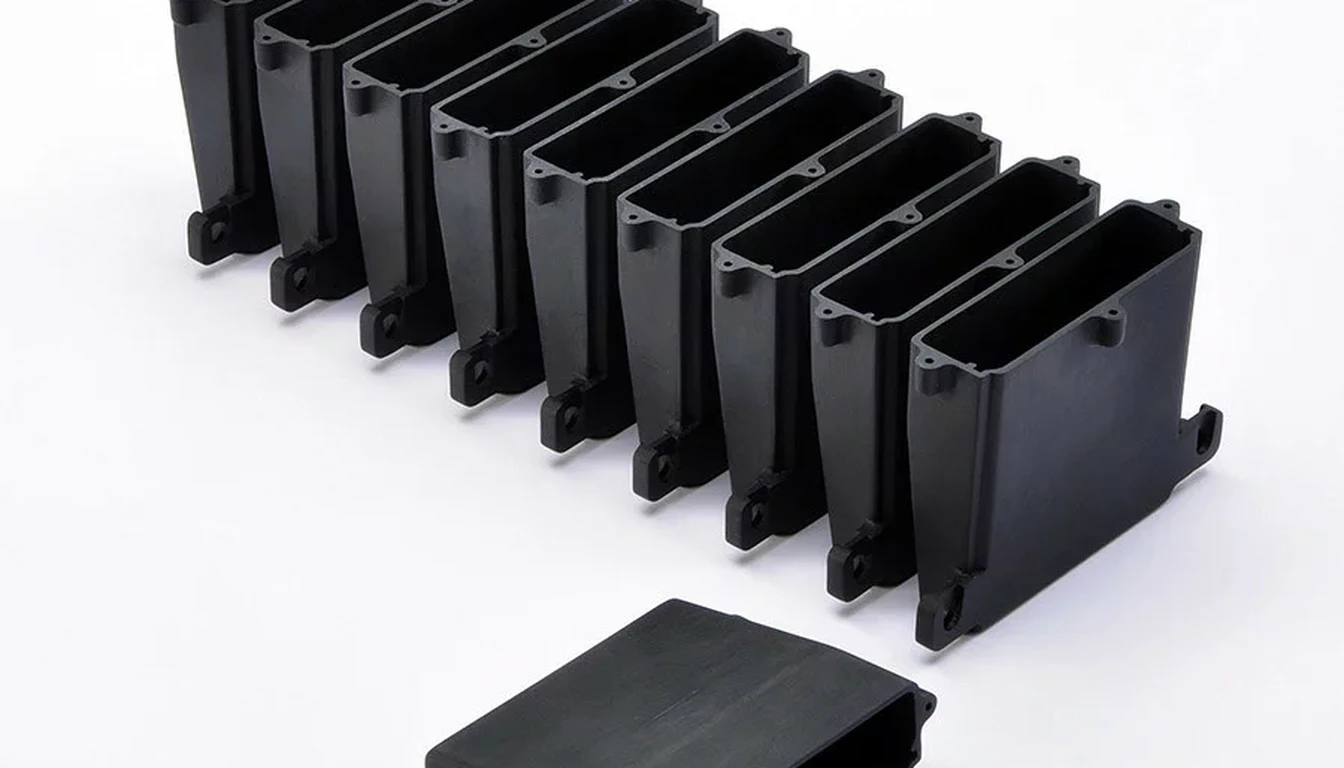
Plastic molding is a manufacturing process in which molten thermoplastic resin is forced into a shaped cavity under pressure, cooled, and ejected as a finished or near-finished part. In HVAC manufacturing, injection molding dominates because it can produce the thin walls, integrated snap-fits, living hinges, and multi-diameter apertures that HVAC components require — all in a single shot, without secondary machining.
HVAC systems contain hundreds of plastic-molded components across four broad categories:
- Air distribution: diffuser housings, grille frames, damper blades, louver assemblies
- Refrigerant circuit: compressor base pads, line set covers, condensate pans and traps
- Electrical enclosures: control board housings, thermostat covers, wire management clips
- Structural: fan shrouds, blower wheel nozzles, coil mounting brackets
Sheet metal was once the default for these parts, but injection-molded plastics now outperform metal in corrosion resistance, thermal insulation, acoustic dampening, and per-unit cost at volumes above a few thousand units.
“Injection molding can achieve tighter tolerances than sheet metal forming for HVAC parts — True”True
Well-designed injection molds hold ±0.1 mm dimensional tolerances across HVAC housings, which is tighter than typical stamped sheet metal (±0.3–0.5 mm). This precision is critical for damper-to-housing seals and sensor probe fits in variable air volume terminal units.
“Plastic molding is only suitable for small, decorative HVAC parts — False”False
Injection-molded plastics now produce structural HVAC components including full-size fan shrouds, damper housings exceeding 600 mm, and blower wheel nozzles that handle continuous airflows above 2,000 CFM. Material advances (glass-filled nylon, PC/ABS blends) make molded plastic mechanically competitive with sheet metal at a fraction of the weight.
Which Plastic Materials Are Used in HVAC Molding?
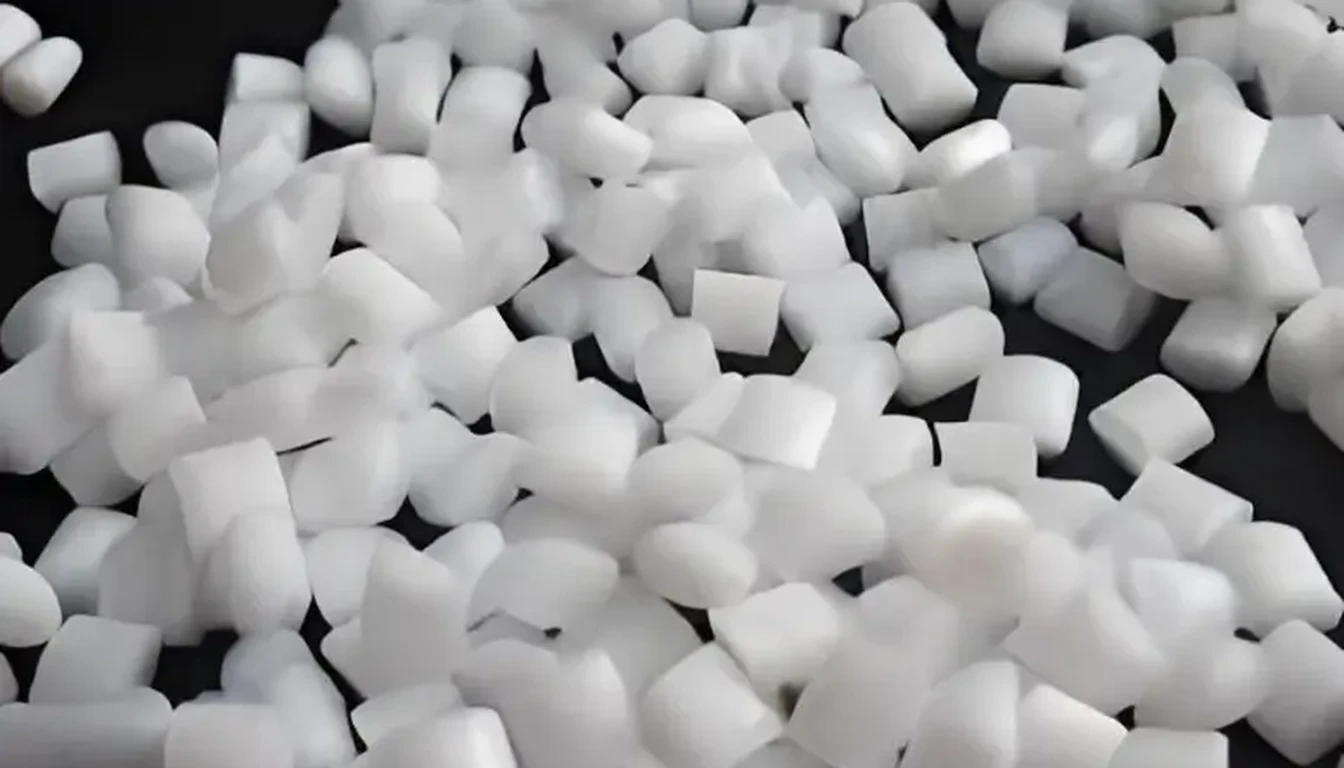
Material selection for HVAC plastic molding requires balancing heat resistance, UV stability, flame retardancy, chemical resistance, and mechanical strength. We work with more than 400 grades across our production lines. The most commonly specified materials for HVAC applications are:
| Material | Key Properties | Typical HVAC Application | Max Continuous Temp |
|---|---|---|---|
| ABS | Impact resistant, easy to process, paintable | Indoor control panels, thermostat housings, grilles | 80°C |
| ASA | UV stable, weatherproof, superior outdoor durability | Outdoor condenser covers, line set covers, louvers | 85°C |
| PC/ABS blend | High impact + heat resistance, good dimensional stability | Fan shrouds, damper housings, electrical enclosures | 110°C |
| Glass-filled nylon (PA6-GF30) | High stiffness, low creep, excellent heat resistance | Actuator brackets, structural clips, high-load housings | 130°C |
| Polypropylene (PP) | Chemical resistant, low density, living hinge capable | Condensate pans, filter frames, drain fittings | 100°C |
| Flame-retardant ABS (UL 94 V-0) | Self-extinguishing, meets fire code | Control board housings, plenum-rated enclosures | 80°C |
In our facility, we’ve shifted many outdoor HVAC cover applications from ABS to ASA (Acrylonitrile Styrene Acrylate)1 after tracking five-year field performance. ASA maintains color stability after 3,000 hours of UV exposure without a protective coating, while standard ABS parts typically show chalking and micro-cracking within 18 months in direct sunlight.
How Does the Injection Molding Process Work for HVAC Parts?
Injection molding for HVAC components follows a repeatable cycle, but each phase has parameters that must be tailored to the part geometry, material, and wall thickness. Here’s how a typical HVAC housing is produced in our facility:
- Mold clamping: The two mold halves close under 50–2,000 tonnes of clamping force, depending on the projected surface area of the part. A 300 mm × 300 mm HVAC housing typically requires 400–600 tonnes.
- Injection: Molten plastic at 200–280°C (material-dependent) is injected into the cavity at 50–150 mm/s. We use multi-stage injection profiling — fast fill, then deceleration near end-of-fill — to prevent jetting defects in thin HVAC grille frames.
- Pack and hold: After cavity fill (95–98% full), hold pressure (70–80% of injection pressure) is applied for 5–15 seconds to compensate for shrinkage and prevent sink marks on thick bosses.
- Cooling: Conformal cooling channels in the mold core carry 15–25°C water to extract heat uniformly. Cooling time typically equals 2–3× the injection time for HVAC wall thicknesses of 2.0–3.5 mm.
- Ejection: Ejector pins push the cooled part out. Draft angles of 1–2° on all vertical walls are mandatory to prevent drag marks.
- Part removal and inspection: Our robots remove parts and place them on conveyor CMM stations for 100% dimensional verification of critical features.
| Process Stage | Parameter | HVAC Target |
|---|---|---|
| Plastication | Barrel temp | 220–260°C (ABS) |
| Injection | Pressure | 80–120 MPa |
| Cooling | Coolant temp / time | 20–50°C / 15–40 s |
| Ejection | Force | <5 kN (no part damage) |
Cycle times for mid-size HVAC housings run 25–45 seconds, enabling output rates of 800–1,400 parts per day per cavity. With multi-cavity molds (2, 4, or 8 cavities), production volumes scale proportionally.

How Should You Design HVAC Parts for Plastic Molding?
Design for manufacturability (DFM) is the single biggest cost lever in HVAC plastic component development. Parts designed without molding constraints in mind routinely require expensive mold rework or generate chronic scrap rates of 3–8%. Here are the design principles we apply to every HVAC plastic part:
Wall thickness uniformity: Target 2.0–3.5 mm for most HVAC housings and maintain ±25% variation across the part. Abrupt thickness transitions cause packing differentials that create sink marks and warpage. We redesign transition zones using coring (hollow boss interiors) and ribbing to achieve uniform flow.
Draft angles: Minimum 1° per side on all features parallel to the draw direction. Textured surfaces require 3–5° of draft to prevent scuffing during ejection. HVAC damper blades with textured finishes regularly come to us with 0.5° draft specified — we push back to 3° every time.
| Design Rule | Guideline | Reason |
|---|---|---|
| Wall uniformity | ±10% variation max | Prevents sink marks |
| Draft angle | ≥1.5° | Clean ejection |
| Corner radius | R ≥ 0.5 mm | Reduces stress |
| Rib height | ≤3× wall thickness | No sink on opposite face |
Gate location: Gates should be placed at the thickest wall section, away from visible Class-A surfaces and functional sealing surfaces. For large HVAC housings, we use hot runner systems with sequential valve gates to eliminate weld lines at corners.
Rib design: Ribs add stiffness without mass. Target rib thickness at 60% of the adjacent wall thickness, and rib height at no more than 3× the wall thickness. Oversized ribs cause sink marks on the opposite surface — a common defect we see in HVAC panel designs from structural engineers who over-specify rib geometry.
Boss design: Bosses for self-tapping screws in HVAC assemblies should have an outer diameter 2.5× the screw diameter, a wall thickness of 60% of the nominal wall, and gusset ribs to the main wall for load distribution.
We run snap-fit assemblies2 in many HVAC enclosures to eliminate fasteners. A properly designed cantilever snap-fit in PC/ABS can deflect 2.5–3.0 mm over a 30 mm beam length without exceeding the material’s strain limit.
“Conformal cooling channels reduce cycle times and improve dimensional accuracy in HVAC plastic molding — True”True
Conformal cooling channels — manufactured via metal 3D printing — follow the part geometry within 5–10 mm, achieving uniform temperature distribution across complex HVAC housings. We’ve measured 25–35% cycle time reductions and warpage improvements of 0.3–0.5 mm on large CAV box housings after switching from straight-drilled to conformal cooling.
“Thicker walls always make injection-molded HVAC parts stronger — False”False
Excessive wall thickness increases cycle time, material cost, and the risk of sink marks and internal voids. For HVAC housings, 2.5–3.5 mm walls with properly designed ribbing provide superior stiffness-to-weight ratios compared to 5+ mm solid walls, while reducing cycle times by 30–40%.

How Do You Ensure Quality in HVAC Plastic Molded Parts?
Quality in HVAC plastic molding is defined by three layers of control: process parameter monitoring, in-process dimensional verification, and end-of-line functional testing.
Scientific molding approach: We establish a documented “molding window” for each HVAC part — the range of melt temperature, injection speed, hold pressure, and cooling time that produces parts within specification. Cavity pressure sensors monitor fill pressure in real time, and any shot outside ±5% of the baseline pressure triggers an automatic reject gate.
Statistical process control (SPC): Critical dimensions on HVAC housings — sealing groove widths, mounting hole diameters, flatness of mating faces — are tracked with SPC charts. We target Cpk ≥ 1.67 on all critical dimensions per IATF 16949 principles, even for non-automotive HVAC clients.
| Quality Test | Method | Criterion |
|---|---|---|
| Dimensional | CMM (5/batch) | ±0.2 mm |
| Surface finish | Visual inspection | No burrs, sink marks |
| Leakage | 1.5× design pressure | <5% bypass |
| Thermal cycling | −20°C to +60°C × 10 | No cracking |
Visual inspection standards: HVAC plastic parts are graded by surface class. Class-A visible surfaces (outer enclosure faces) require zero sink marks, no weld lines in visible areas, and no gate vestige above 0.3 mm. Internal non-visible surfaces permit minor flow marks and weld lines that don’t affect structural integrity.
Material certification: Every resin batch entering our facility is verified against the material datasheet for melt flow index (MFI), moisture content (must be <0.02% for PC/ABS before processing), and color matching. Moisture above threshold causes silver streaks and hydrolytic degradation — a common cause of brittleness in HVAC parts returned from the field.
We perform acoustic dampening3 evaluations on fan shroud and blower housing designs, measuring noise reduction coefficient against the baseline design before approving production molds.

What Are the Key Applications of Plastic Molding in HVAC Systems?
Plastic molding enables HVAC components that would be impractical or cost-prohibitive in any other material or process. Here are the application families where injection molding delivers the clearest advantage:
Fan and blower assemblies: Injection-molded fan blades and shrouds achieve the complex aerodynamic profiles needed for high-efficiency impellers. We mold centrifugal blower wheels in glass-filled PP that spin at 1,800 RPM continuously — the glass fiber reinforcement controls creep under centrifugal load that would deform unreinforced PP within weeks.
Damper systems: VAV and CAV damper blades require precise flatness (≤0.5 mm per 300 mm span) and consistent hinge geometry to achieve rated leakage classes. Injection-molded PVC and ABS damper blades meet AMCA 511 leakage requirements that extruded aluminum struggles to achieve without expensive machining.
| HVAC Segment | Plastic Component | Volume |
|---|---|---|
| Residential split systems | Grilles, drain pans, fan shrouds | Millions/yr |
| Commercial AHUs | Damper bodies, sensor housings | 100k–500k/yr |
| Industrial ventilation | Fan blades, diffusers | 10k–100k/yr |
| Data center cooling | Air guides, blanking panels | Rapidly growing |
Condensate management: Condensate pans, P-traps, drain connectors, and pump housings are almost universally injection-molded in PP or HDPE. The seamless single-piece construction eliminates the weld seams that are the primary leak point in fabricated metal pans. In our facility, we’ve eliminated condensate pan warranty claims by switching to a one-piece PP molded pan with integrated overflow port.
Electrical and control enclosures: Overmolded4 control board housings and sensor enclosures in flame-retardant ABS or PC provide the IP54+ sealing and UL 94 V-0 fire resistance required by NEC and ASHRAE 90.1 in HVAC electrical compartments.
Air distribution terminals: Ceiling diffusers, grilles, registers, and louvers are predominantly injection-molded in ABS or ASA, enabling the complex blade geometries needed for directional airflow control without the manual bending operations that sheet metal requires.

How Do You Troubleshoot Common Plastic Molding Defects in HVAC Parts?
Plastic molding defects in HVAC components follow predictable patterns. Here are the defects we encounter most often, their root causes, and the corrective actions we’ve proven effective:
| Defect | Root Cause | Corrective Action |
|---|---|---|
| Warpage | Uneven cooling, asymmetric wall thickness, high mold temperature differential | Balance cooling circuit, add conformal cooling, redesign wall transitions, extend cooling time 20–30% |
| Sink marks | Insufficient hold pressure, thick boss roots, early gate freeze-off | Increase hold pressure by 15–20%, core out thick sections, move gate closer to sink location |
| Weld lines | Melt front meeting from two directions (around holes or at junctions) | Increase melt temperature, increase injection speed, add overflow wells at weld line locations |
| Flash | Worn mold parting line, insufficient clamping force, low viscosity melt | Increase clamp force by 10%, regrind parting line, reduce melt temperature 5–10°C |
| Short shots | Insufficient injection pressure, blocked gate, cold slug | Increase injection pressure, increase melt temperature, add cold slug well, check gate diameter |
| Silver streaks | Moisture in resin (>0.02% for PC/ABS), excessive screw speed | Dry resin to spec (4 hrs at 80–100°C for ABS), reduce screw RPM, decrease back pressure |
Warpage is by far the most problematic defect in large HVAC panel molding. A 600 mm × 400 mm CAV terminal box housing that warps 1.5 mm at the corners will fail to seal against its sheet metal shell, creating conditioned air bypass. We’ve found that placing cooling channels within 8 mm of the part surface reduces warpage by 40–60% on asymmetric HVAC geometries, compared to conventionally drilled cooling at 12–15 mm depth.

How Do You Manage Costs in HVAC Plastic Molding Projects?
Cost in injection molding falls into two buckets: tooling (the one-time mold investment) and piece price (per-unit production cost). Understanding the levers in each bucket is essential for HVAC OEM procurement teams.
Mold tooling costs: A single-cavity HVAC housing mold in P20 steel runs $8,000–$25,000 depending on part complexity. A 4-cavity hot runner mold for a smaller damper blade can run $30,000–$60,000. Tooling cost is amortized over the production run — at 200,000 units, a $30,000 mold adds only $0.15 per part. Key tooling cost drivers are cavity count, part complexity (undercuts, side actions), steel type (P20 vs. H13 for abrasive glass-filled resins), and surface finish requirements.
| Cost Driver | Range | Reduction Strategy |
|---|---|---|
| Tooling (simple) | $5k–$15k | Family mold, modular inserts |
| Tooling (complex) | $30k–$150k | Higher volume amortization |
| Resin (ABS/PP) | $1.20–$2.50/kg | Regrind up to 20%, bulk buy |
| Per-part (100k vol.) | $0.15–$0.80 | Optimize gate, reduce cycle |
Piece price drivers: Material cost is typically 60–70% of piece price for HVAC plastic parts. Cycle time (30–60 seconds for medium housings) and machine tonnage ($/hour × cycle time / cavities) make up the rest. Reducing wall thickness from 3.0 to 2.5 mm drops material weight ~17% and cycle time ~20% — a significant piece price reduction at high volumes.
Total cost of ownership: HVAC plastic components that use overmolding or ultrasonic welding5 to integrate sealing, fastening, and color in a single assembly often cost 20–35% less than multi-piece metal-and-plastic assemblies in total production cost, even with higher per-component mold investment.
In our experience, the most significant cost reduction opportunity in HVAC plastic molding is early design involvement. When our mold engineers join the HVAC product design team at the concept stage, we consistently achieve 15–25% lower piece prices compared to adapting a design delivered as a final drawing.

FAQ
What is the most common plastic used in HVAC injection molding?
ABS (Acrylonitrile Butadiene Styrene) is the most widely used plastic in HVAC injection molding for indoor components, due to its excellent impact resistance, ease of processing, and compatibility with flame-retardant additives (UL 94 V-0 grades). For outdoor applications, ASA increasingly replaces ABS because of its superior UV and weathering resistance without requiring a protective coating.
How thick should walls be in HVAC plastic molded parts?
Optimal wall thickness for HVAC injection-molded housings is 2.0–3.5 mm, with a target of 2.5–3.0 mm for medium-size enclosures. Wall thickness below 1.5 mm risks short shots and structural weakness; above 4.0 mm increases the risk of sink marks, voids, and excessive cycle time. Maintaining ±25% maximum variation across the part is as important as the absolute thickness value.
How long does it take to develop an injection mold for a new HVAC component?
Mold development for a typical HVAC housing takes 4–8 weeks from final CAD data to first article parts. Simple single-cavity molds (small brackets, clips, fittings) run 3–4 weeks. Complex multi-cavity hot runner molds with side actions for undercuts take 8–12 weeks. Adding DFM review and mold flow analysis before cutting steel avoids rework that adds 3–6 weeks to the timeline.
What flame retardancy rating is required for HVAC plastic components?
HVAC components used in plenum-rated applications (above drop ceilings, in air handling ducts) must meet UL 94 V-0 at the actual wall thickness of the finished part. Parts in electrical compartments (control boards, thermostat housings) typically require V-0 or V-1. Components outside plenums and away from electrical sources may only need HB (horizontal burn) rating per local code. Always verify with the applicable edition of NFPA 90A and local AHJ requirements.
Can plastic molded HVAC parts withstand outdoor temperatures?
Yes, when the correct material is specified. ASA maintains mechanical properties from −40°C to +85°C continuous service and passes ASTM D4329 UV weathering at 3,000 hours with no significant color shift or surface degradation. PC/ABS blends handle intermittent temperatures to 110°C. Standard ABS is not recommended for unprotected outdoor use where direct sun exposure causes yellowing and surface micro-cracking within 12–18 months in climates above 30°C average summer temperatures.
What is the minimum production volume where injection molding is cost-effective for HVAC parts?
Injection molding becomes cost-competitive with CNC machining or fabricated metal at approximately 1,000–5,000 units per year for simple single-cavity molds, depending on part size and material cost. For HVAC housings requiring complex multi-cavity tools, the break-even is typically 10,000–30,000 units. Below these thresholds, SLA or SLS rapid prototyping or CNC machined prototypes are more economical while volumes ramp up.
Summary
Plastic molding — and injection molding in particular — is the foundational manufacturing technology behind modern HVAC systems. From damper blades and fan shrouds to condensate pans and control panel enclosures, injection-molded plastic components deliver the geometric complexity, dimensional precision, and material versatility that HVAC engineers require at production volumes from prototype to millions of units.
The keys to successful HVAC plastic molding are: choosing the right resin for the thermal, UV, and chemical environment; designing parts with uniform walls, proper draft, and DFM-compliant feature geometry; running scientific molding processes with real-time cavity pressure monitoring; and engaging manufacturing partners early enough to influence tooling and design decisions before they become expensive commitments.
At HVACore, we bring 20-plus years of HVAC plastic component manufacturing to every project — 45 injection molding lines, in-house mold tooling, 400+ material options, and an engineering team fluent in both the HVAC system requirements and the molding process constraints. If you’re developing a new HVAC component or scaling production of an existing design, contact us for a DFM review and manufacturing roadmap.
-
ASA (Acrylonitrile Styrene Acrylate) is a thermoplastic terpolymer with acrylic ester rubber as the impact modifier, replacing the polybutadiene rubber found in ABS. The acrylic rubber phase provides superior UV and ozone resistance, making ASA the preferred material for outdoor HVAC applications where ABS would degrade within one to two years of sun exposure. ↩
-
Snap-fit joints are interlocking plastic features — typically cantilever, annular, or torsional beam designs — that engage elastically during assembly and lock mechanically, eliminating screws or adhesives. In HVAC plastic enclosures, properly designed snap-fits in PC/ABS can withstand 50+ assembly and disassembly cycles without fatigue failure at deflections within 2–3% of the beam length. ↩
-
Acoustic dampening in the context of HVAC plastic housings refers to the material’s capacity to absorb and dissipate sound energy generated by fans, compressors, and airflow turbulence. Injection-molded thermoplastics with higher density and lower stiffness (such as filled ABS or TPE overmold layers) reduce structure-borne noise transmission by 3–8 dB compared to equivalent-thickness sheet aluminum. ↩
-
Overmolding is a two-shot or two-step injection molding process in which a second material (typically a soft TPE or TPU) is molded over a rigid plastic substrate. In HVAC applications, overmolding creates integrated gaskets, vibration-isolating mounts, and IP-rated seals without secondary assembly operations, reducing part count and assembly labor. ↩
-
Ultrasonic welding uses high-frequency mechanical vibrations (20–40 kHz) transmitted through a titanium or aluminum horn to generate frictional heat at the joint interface of two thermoplastic HVAC components, melting and fusing them within 0.1–1.0 seconds. The process creates hermetic seals on condensate housings and electrical enclosures without adhesives, solvents, or fasteners. ↩





